
Transitioning your baby to solid foods is an exciting developmental milestone, but it often comes with a fair share of spilled meals and flying tableware. A stainless steel baby suction plate offers an excellent balance of durability, hygiene, and stability, making it a popular choice for parents navigating the self-feeding stage. To choose the right plate, you must evaluate the suction base design, verify the physical dimensions against your highchair tray, and inspect the material quality and edge safety. By focusing on these practical specifications, you can find a plate that stays firmly in place and supports your child’s developing motor skills.
Evaluating Suction Mechanisms and Base Strength
The primary purpose of a suction plate is to remain anchored to the feeding surface, preventing your little one from tossing their meal onto the floor. When evaluating these products, you will generally encounter two main suction designs: integrated full-base silicone suction plates and plates with removable silicone suction rings. Integrated full-base designs feature a single piece of silicone that covers the entire bottom of the stainless steel plate. This design typically offers reliable stability because the suction force is distributed evenly across a larger surface area, making it much harder for a toddler to leverage and lift. However, these integrated designs can sometimes be bulkier to store and require careful cleaning around the permanent connection points.
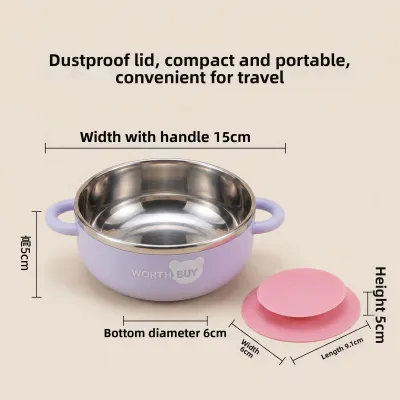
On the other hand, plates with removable suction rings offer greater versatility. You can detach the silicone suction base entirely, allowing you to use the stainless steel plate as a standard dish once your child outgrows the throwing phase. This modular design also simplifies deep cleaning, as you can wash and dry each component separately. The trade-off is that the connection between the removable ring and the steel plate must be exceptionally tight; if it is loose, a determined toddler might manage to separate the plate from its base, leaving the suction ring stuck to the table while the food goes airborne.
Products mentioned in this guide
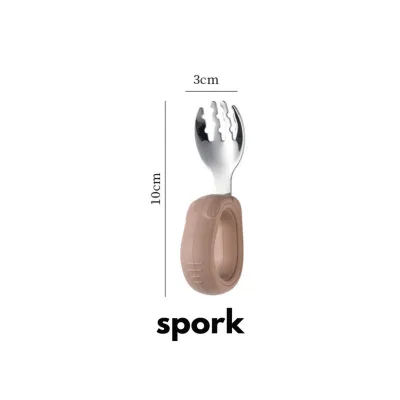

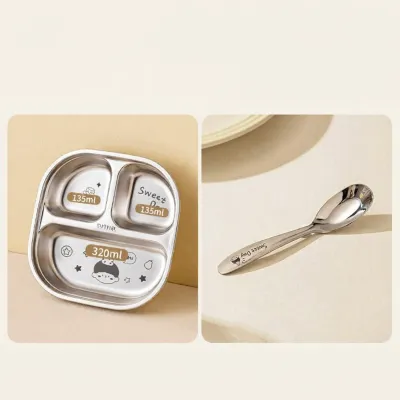
![[Korea]🇰🇷 Grosmimi Stainless SUS304 Baby Food Tray with Suction](https://img.lazcdn.com/g/p/032deb69f053fedc8692273879b91b05.jpg_400x400q80.jpg_.webp)
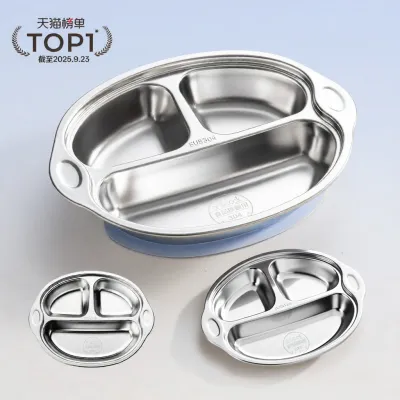
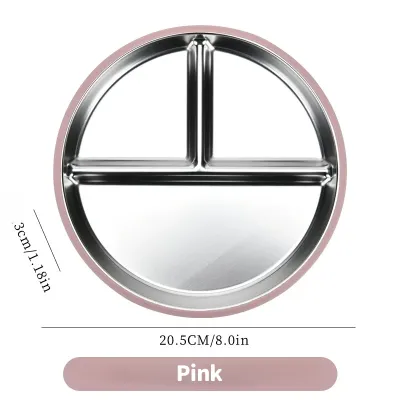
Prices are valid at publication and may change. Please refer to the product page for the latest price.
Before purchasing, you must perform a surface compatibility check. Suction bases rely on creating a vacuum seal, which requires a completely smooth, non-porous surface. Standard highchair trays made of textured plastic, matte-finished wood, or those with curved surfaces often allow air to seep under the silicone, causing the suction to fail almost instantly. If your highchair tray has a textured finish, you may need to use the plate on a smooth glass, laminate, or polished stone dining table instead. Always check the manufacturer’s specifications regarding surface compatibility to ensure the plate will adhere to your specific setup.
Another critical feature to examine is the suction release mechanism. A strong suction base is only helpful if you can remove it easily without spilling leftovers, yet it must remain secure against your baby’s attempts to pull it up. Look for designs that feature a hidden or low-profile pull-tab on the silicone base. Ideally, this tab should face away from the child or be designed in a way that requires adult dexterity to lift. If the release tab is too prominent or easy to reach, your baby will quickly learn to pull the tab themselves, defeating the purpose of the suction base entirely.
Matching Plate Size and Depth to Feeding Stages
Selecting the right physical dimensions for a baby plate is essential for both practical usability and developmental support. Before browsing online marketplaces or physical stores, measure the usable flat surface of your highchair tray. Many modern highchairs feature compact or contoured trays that cannot accommodate wide plates. If a plate is even slightly too large, its suction base will sit over the edge of the tray or on a curved boundary, preventing a proper vacuum seal from forming. Compare the manufacturer’s listed plate diameter against your tray measurements, leaving at least a one-centimeter margin around the edges for a secure fit.

The layout of the plate is another key consideration, and your choice should align with your baby’s current feeding stage and appetite. Divided plates, which typically feature two to four separate compartments, are highly beneficial during the early stages of weaning. They allow you to introduce different food groups—such as proteins, vegetables, and grains—without them mixing, which can help babies identify distinct textures and flavors. Divided sections also serve as a visual guide for portion control. Conversely, open, undivided plates or shallow bowls are often better suited for older infants and toddlers who are eating mixed meals like pasta, stews, or rice dishes, as they provide more space for mixing and scooping.
Pay close attention to the wall depth and the interior curvature of the plate’s compartments. For babies learning to feed themselves with a spoon or fork, flat-bottomed plates with shallow, vertical walls can be highly frustrating. As the child tries to scoop up food, the utensil simply pushes the food over the edge of the plate. Look for plates that feature deep walls with a gentle, inward-curving interior contour. This curved design acts as a natural barrier, guiding the food onto the spoon when your baby pushes against the side of the compartment. This small design detail significantly boosts your child’s self-feeding confidence and reduces frustration during mealtimes.
Verifying Material Safety and Edge Design
When it comes to feeding accessories, material safety is paramount. Stainless steel is highly regarded for being non-porous, durable, and resistant to harboring bacteria, but not all stainless steel is created equal. When evaluating options, look for clear product labels indicating the use of food-grade stainless steel, such as 304 grade or 18/8 stainless steel (which contains 18% chromium and 8% nickel). These grades offer excellent corrosion resistance and durability, ensuring the plate will not rust or degrade after repeated washings. Avoid products that lack specific material grade labeling or those that use generic terms like “high-quality metal” without verification.
Because these plates combine two distinct materials—stainless steel and silicone—you must carefully inspect how they join together. Some designs feature a permanent bond, while others use a slip-on silicone sleeve or ring. Inspect the seal between the steel and silicone for any visible gaps, loose edges, or deep crevices. If the seal is imperfect, water, milk, and food particles can easily become trapped inside. Over time, this trapped moisture creates a breeding ground for mold and bacteria, which can compromise your child’s health. If you choose a model with a non-removable silicone border, ensure the transition between the two materials is completely seamless and flush.
Physical safety also extends to the edges and corners of the plate. Babies and toddlers frequently touch, grab, and sometimes chew on the edges of their plates. Inspect the rim of the stainless steel plate to ensure it is rolled, smoothly finished, or completely encased in food-grade silicone. Sharp or thin metal edges pose a risk of cuts or scrapes to your baby’s sensitive lips, tongue, and fingers. A well-designed plate will have a thick, rounded rim that is comfortable to handle for both you and your child, providing a safe tactile experience during self-feeding practice.
Regardless of the plate’s material durability, caregiver supervision is essential during every mealtime. Parents should regularly inspect the plate before use for any signs of wear, such as peeling silicone, loose seals, or scratches in the metal. If you notice any structural damage or degradation of the materials, stop using the plate immediately and consult the manufacturer’s guidelines or a pediatric professional for advice on safe feeding alternatives.
Assessing Cleaning Practicality and Heat Tolerance
A baby plate must fit seamlessly into your daily kitchen routine, which means cleaning and maintenance should be as straightforward as possible. Always check the manufacturer’s care instructions regarding dishwasher safety. While stainless steel itself is highly dishwasher-safe, the accompanying silicone suction base may have different temperature limits. Some brands specify that the entire plate is dishwasher-safe, while others recommend placing only the stainless steel portion in the dishwasher and hand-washing the silicone base to prevent heat degradation over time. If you prefer a quick cleanup, look for options where all components are explicitly rated as top-rack dishwasher safe.
Understanding the thermal properties of stainless steel is also crucial for safe feeding. Stainless steel is an excellent conductor of heat, meaning it can quickly absorb and retain the temperature of the food placed on it. If you serve hot food directly onto a metal plate, the steel can become uncomfortably warm to the touch, posing a minor burn risk to your baby’s hands. To prevent this, allow warm foods to cool slightly before transferring them to the plate, or choose a design that features a double-walled insulated construction or a protective outer silicone sleeve. These features help insulate the outer surface, keeping it cool to the touch regardless of the food’s temperature.
For thorough sanitization, a fully removable silicone base is highly advantageous. Over time, fine dust, soap residue, and moisture can accumulate underneath the suction base, even with regular washing. Being able to completely detach the silicone ring allows you to wash, sanitize, and thoroughly dry both parts independently. This prevents the buildup of musty odors and ensures that no hidden bacterial colonies develop in the hard-to-reach areas where the metal and silicone meet. If the manufacturer permits, periodic boiling of the detached silicone components can provide an extra level of sanitization.
Building Your Purchase Checklist
To simplify your decision-making process when shopping on ecommerce platforms or in physical stores, it helps to have a clear framework of essential features versus optional extras. Use the following guidelines to evaluate and compare different stainless steel baby suction plates before making your final selection.
| Feature Category | Must-Have Specifications | Nice-to-Have Additions |
|---|---|---|
| Material Quality | Food-grade 304 (18/8) stainless steel; 100% food-grade silicone; BPA-free certification. | Double-walled insulation; decorative engravings or child-friendly patterns. |
| Suction Performance | Wide, flat silicone base; hidden or low-profile release tab; compatibility with smooth surfaces. | Extra replacement suction rings; multi-surface adhesive adapters. |
| Design & Usability | Rounded or silicone-encased edges; curved interior walls for easy scooping; fits highchair tray. | Matching stainless steel utensils; matching airtight lid for food storage. |
| Maintenance | Removable silicone base for deep cleaning; top-rack dishwasher-safe components. | Fully submersible design; stain-resistant silicone formulation. |
When reading user reviews and product descriptions, keep an eye out for potential red flags. Be cautious of products that do not explicitly state the grade of stainless steel used, as lower-grade metals may rust or leach after repeated exposure to acidic foods like tomatoes or citrus. Another common warning sign is a high volume of feedback complaining about weak suction or a base that warps after a few washes, which indicates low-quality silicone. Finally, always double-check the exact outer dimensions of the plate against your specific highchair model; a plate that is even slightly too wide will not seal properly, rendering the suction feature useless.
Frequently Asked Questions (FAQ)
Can stainless steel plates be used in the microwave?
No, solid stainless steel plates must never be used in a microwave. Metal reflects microwave radiation, which can cause sparks, damage your appliance, and pose a serious fire hazard. If you need to warm your baby’s food, always heat it in a microwave-safe glass or ceramic container first, stir thoroughly to eliminate hot spots, check the temperature, and then transfer the warm food onto the stainless steel plate for serving.
How do I remove a suction plate without breaking the seal?
To remove a suction plate safely without damaging the silicone base or spilling food, locate the designated release tab on the edge of the silicone suction ring. Gently lift this tab with your finger to allow air to enter underneath the base, which instantly breaks the vacuum seal and allows you to lift the plate effortlessly. Avoid pulling the plate upward by its metal edges with force, as this can stretch, tear, or warp the silicone over time, permanently reducing its suction capability.
Will the silicone base stain from tomato or curry sauces?
Silicone is a porous material that can absorb strong pigments from foods like tomato sauce, carrots, or curry, leading to cosmetic discoloration over time. To minimize staining, rinse the silicone components with cold water immediately after use before washing them with warm, soapy water. If staining occurs, check the manufacturer’s care instructions; some brands allow you to place the silicone parts in direct sunlight for a few hours, which naturally fades many organic food stains without damaging the material.
Community discussion
Share your experience or ask a question. Comments are reviewed before publication.