
Finding a safe travel cot requires looking past attractive designs and focusing on verified international safety certifications. While many brands market their portable cribs as secure, the most reliable way to protect your infant is to identify products that comply with rigorous global standards like EN 716 or ASTM F406. By understanding how these standards work and how to verify them, you can confidently select a travel cot that ensures a secure, breathable, and stable sleep environment for your baby, whether you are staying at a local hotel or visiting family.
When evaluating travel cots, safety must always take precedence over convenience, weight, or aesthetics. Portable sleep environments present unique engineering challenges because they must be lightweight enough to carry, simple to fold, and yet sturdy enough to support an active infant. By learning to identify genuine certification marks and performing basic physical checks, you can easily filter out substandard products and build a shortlist of trusted options that guarantee peace of mind.
Understanding Key Travel Cot Safety Standards
Portable sleep environments require much stricter safety standards than permanent wooden cribs. Because travel cots rely on folding joints, lightweight frames, and flexible fabric or mesh walls, they are inherently more vulnerable to structural failures. These design elements introduce specific risks, such as accidental frame collapse, fabric suffocation, or finger entrapment in folding mechanisms. International safety standards are designed to eliminate these hazards through rigorous laboratory testing.
Products mentioned in this guide
![[SG Stock]Brotish Multifunctional 2 Layer Portable Infant Baby Cot Playpen Travel Cot Bed Double-deck Playpen Sleep Bed](https://img.lazcdn.com/g/p/9306630fe674b3e82e74c940f19a16cd.jpg_400x400q80.jpg_.webp)
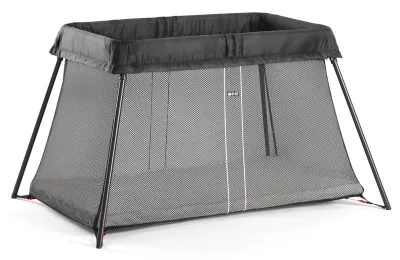
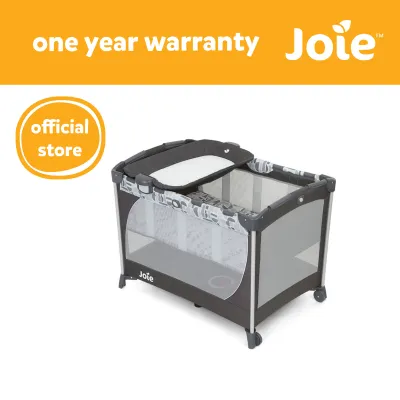
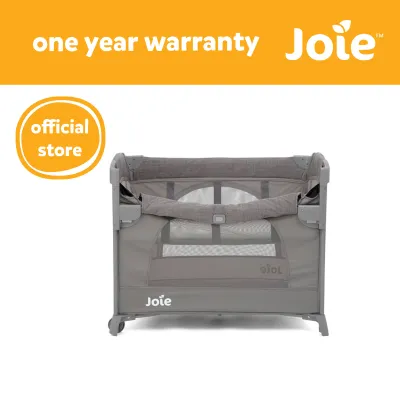
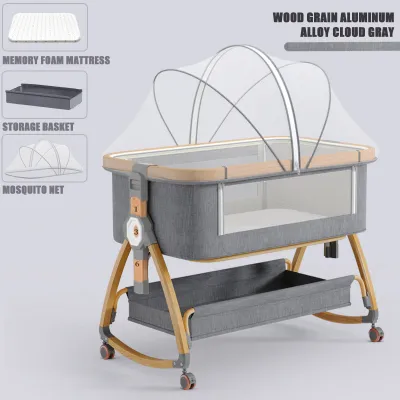
Prices are valid at publication and may change. Please refer to the product page for the latest price.
The European standard EN 716 is one of the most comprehensive safety benchmarks for children’s cots and folding cots designed for domestic use. This standard applies to cots with an internal length between 900 mm and 1400 mm. It subjects the cot to demanding physical tests, including dropping heavy weights repeatedly onto the base to simulate a jumping toddler, and applying force to the sides to ensure the frame does not bend or break. It also regulates the spacing of mesh holes and frame gaps to prevent a child’s head, limbs, or fingers from becoming trapped.
In North America, the primary benchmark is ASTM F406, which governs non-full-size baby cribs and play yards. This standard mandates strict performance requirements for side-rail strength, floor integrity, and latch durability. It ensures that folding mechanisms require a dual-action motion to unlock, preventing accidental collapse if a child bumps against the joint. ASTM F406 also includes stringent tests for mattress firmness and the structural attachment of the mesh siding to the frame.
It is important to distinguish between mandatory government regulations and voluntary third-party testing marks. While some countries enforce strict import laws requiring all children’s furniture to meet specific national standards, other regions rely on voluntary compliance. In Singapore, consumer goods like children’s folding cots are monitored under safety regulations overseen by Enterprise Singapore. While there may not be a unique local manufacturing standard, products sold in the market are expected to comply with established international standards such as EN or ASTM.
When prioritizing standards for your purchase, look for compliance with either EN 716 or ASTM F406. These standards are updated regularly to reflect the latest pediatric safety research and accident data. A travel cot that carries these certifications has undergone independent laboratory testing, making it significantly safer than a product that has only been self-certified by the manufacturer.
How to Verify Safety Certifications Before You Buy
To ensure a travel cot is genuinely certified, you must know where to look for physical proof on the product itself. A certified travel cot must feature permanent safety labels stitched or printed directly onto the fabric or frame. These labels are typically located on the underside of the cot floor, on the mattress base, or on the inner fabric lining. They should clearly state the specific standard number, such as “Complies with EN 716-1:2017,” along with the manufacturer’s name, model number, and production date.

In addition to standard numbers, look for mandatory warning tags that provide critical safety instructions. These tags must be highly visible and written in clear language. They typically include warnings regarding the maximum weight or height limit for the child, instructions to never add a second mattress, and reminders to ensure all locking mechanisms are fully engaged before placing a child inside. The absence of these permanent warning labels is a major indicator of a substandard or counterfeit product.
If a brand claims third-party certification, you can easily cross-reference these claims using official testing body databases. Reputable manufacturers submit their products to independent laboratories such as SGS, TÜV Rheinland, or Intertek for testing. These laboratories issue official test reports and certificates of conformity. You can request the certificate number from the manufacturer or retailer and enter it into the online verification portal of the respective testing body to confirm the certificate is authentic, active, and covers the exact model you are purchasing.
Be highly skeptical of vague marketing phrases and red flags on product listings. Phrases like “tested to international standards,” “designed with safety in mind,” or “meets safety guidelines” are often used to mislead consumers when a product has not actually undergone independent testing. If a listing does not specify the exact standard number (such as EN 716 or ASTM F406) or if the seller refuses to provide a copy of the test report, it is best to avoid the product entirely.
Physical Safety Checks for Travel Cots (Beyond the Label)
Even if a travel cot carries a safety label, you should perform physical checks immediately upon delivery or when viewing the product in-store. Start by assessing the folding mechanism locks and hinges. A safe travel cot must feature a dual-action locking system, meaning it requires two distinct, consecutive manual actions to unlock the frame. Try pushing down firmly on the top rails and shaking the frame; the joints must remain completely rigid and locked in place without any play or wobbling.
Next, evaluate the mattress fit and firmness. The mattress supplied with the travel cot must fit snugly against all four sides of the frame, leaving no gaps wider than 3 cm (roughly two fingers) between the edge of the mattress and the fabric walls. If a gap exists, an infant can roll into it and become trapped, posing a severe suffocation hazard. The mattress must also be exceptionally firm; when you press your hand down on it, it should not conform to your hand or leave a lasting impression.
Inspect the mesh siding thoroughly, as this is critical for ventilation and safety, especially in warm and humid climates. The mesh weave must be tight enough that small fingers, toys, or clothing buttons cannot get caught in the holes. Check the stitching where the mesh meets the fabric frame; there should be no loose threads, fraying seams, or weak spots. The mesh must remain taut when pressure is applied, preventing the baby’s face from sinking into the fabric if they roll against the side of the cot.
Finally, verify the overall stability of the base and inspect the frame for physical hazards. Press down firmly on the center of the cot floor to ensure it does not sag excessively or touch the ground. The legs of the cot should be spaced widely to prevent the unit from tipping over if a toddler stands up and leans against the side. Run your hands along the entire frame to ensure there are no sharp edges, exposed metal joints, or protruding screws that could scratch your baby or catch on their clothing.
Building Your Shortlist: Evaluating Brands and Retailers
When building your shortlist of travel cots, you must actively engage with brands and retailers to verify their safety claims. If certification details are not clearly displayed on the product page, contact the brand’s customer service department directly. Ask them to provide the official test report or certificate of conformity showing compliance with EN 716 or ASTM F406 for the specific model you are considering. A reputable brand will readily share this documentation or direct you to an official safety page on their website.
Establish clear criteria for eliminating products from your shortlist. If a brand or retailer responds to your safety inquiries with vague answers, claims the testing information is proprietary, or fails to provide verifiable documentation within a reasonable timeframe, remove them from your list immediately. While a cheaper, uncertified cot might save you S$50 to S$100 upfront, the potential safety risks associated with structural failure or toxic materials far outweigh any financial savings.
Before finalizing your purchase, carefully review the retailer’s return policy and understand your consumer rights. Ensure you have the right to return the travel cot for a full refund if, upon delivery, you discover it lacks the physical safety labels, standard numbers, or warning tags promised in the product description. Under local consumer protection laws, goods sold must be of satisfactory quality and fit for purpose. If a product is advertised as certified but arrives without the necessary markings, you are fully entitled to a return or replacement.
Frequently Asked Questions (FAQ)
Is it safe to add an extra mattress to a travel cot?
No, it is highly dangerous to add an extra or thicker mattress to a travel cot. Travel cots are designed and safety-tested to be used only with the thin, firm mattress supplied by the manufacturer. Adding a secondary mattress reduces the distance between the top of the sleep surface and the top rail of the cot, making it much easier for an active child to climb or fall out. Furthermore, a thicker mattress can create soft, compressible gaps along the sides where an infant’s head can become wedged, leading to a severe risk of suffocation.
How often should I check the locking mechanisms on a used or second-hand travel cot?
You must inspect the locking mechanisms, hinges, and frame joints of a second-hand travel cot before every single use. Over time, wear and tear can weaken plastic joints, loosen internal springs, or strip screws, which may prevent the rails from locking securely. If you notice any stiffness, cracks in the plastic, loose hardware, or if a rail fails to lock with a distinct click, retire the cot immediately. Additionally, always check online recall databases to ensure the second-hand model has not been recalled and still complies with current safety standards.

Community discussion
Share your experience or ask a question. Comments are reviewed before publication.