
Trimming a baby’s tiny fingernails can be one of the most nerve-wracking tasks for new parents. A specialized baby nail clipper designed with targeted safety features is essential to prevent accidental cuts to delicate fingertips. While standard adult grooming tools rely entirely on manual precision, infant-specific tools incorporate physical barriers, visual aids, and ergonomic designs to minimize the risk of injury. Choosing the right tool requires understanding how these safety mechanisms work together to protect your child’s hands.
Why Standard Nail Clippers Pose Risks to Babies
Infant nails are fundamentally different from adult nails, requiring a completely different approach to grooming. A newborn’s fingernails are incredibly soft, thin, and flexible, often resembling paper more than keratin. Because they are so pliable, they tend to grow rapidly and can easily develop sharp, jagged edges that lead to self-scratching. However, the most challenging aspect of trimming them is their physical relationship with the surrounding tissue.
The nail plate of an infant is closely attached to the underlying nail bed, with almost no defined “free edge” during the first few weeks of life. This means the sensitive, blood-rich skin of the fingertip sits directly beneath the thin nail, making the boundary between the two exceptionally difficult to see. When using standard adult clippers or household scissors, the blades are far too large and thick to slide safely beneath such a tiny nail.
Products mentioned in this guide
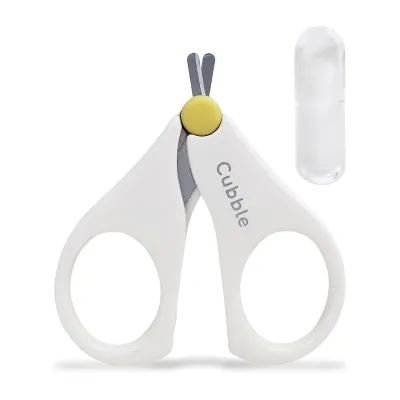
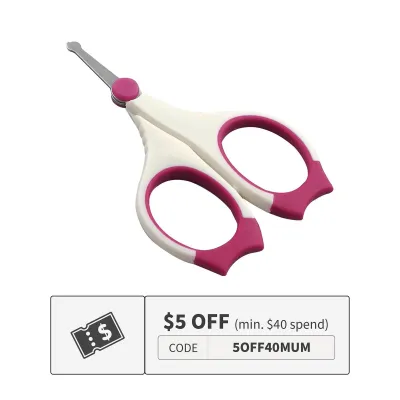
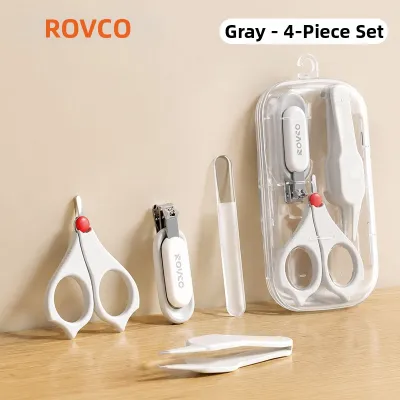
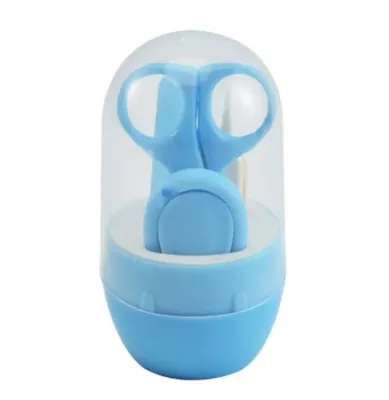
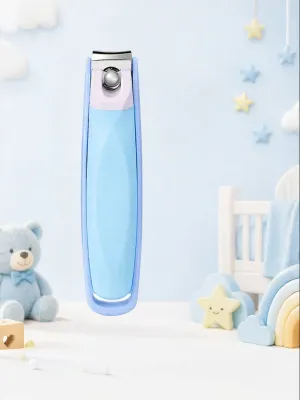

Prices are valid at publication and may change. Please refer to the product page for the latest price.
Adult clippers are also designed with a curved blade that matches the arc of mature fingernails. When applied to a tiny baby finger, this curve can easily overlap with the fleshy pad of the fingertip, resulting in a painful pinch or a deep cut. Standard household scissors present an even greater danger due to their long, pointed blades, which can easily puncture delicate skin if the baby makes a sudden, involuntary movement.
Essential Safety Features in Baby Nail Clippers
To overcome these anatomical challenges, modern baby nail clippers incorporate specific engineering elements designed to protect delicate fingertips. When shopping for grooming tools, looking for these targeted safety features can significantly reduce anxiety and prevent injuries.

Illumination and Magnification
One of the primary difficulties in grooming a baby is the scale of the task. A baby’s fingernail is often only a few millimeters wide, making it incredibly hard to see where the nail ends and the skin begins. This challenge is compounded when parents attempt to trim nails in dim lighting, such as during naptime or nighttime sleep when the baby is most still. In many Singapore apartments, overhead lighting can cast shadows directly over your hands, making visual precision even more difficult.
To solve this visibility issue, many high-quality baby nail clippers feature built-in LED lights. These lights are positioned to shine directly onto the cutting area, casting a bright, focused beam that illuminates the separation between the nail plate and the nail bed. Additionally, some clippers come equipped with an integrated magnifying glass that folds over the cutting head. This magnifying lens enlarges the view of the tiny fingertip, allowing caregivers to verify blade placement with absolute clarity before applying pressure.
Rounded or Blunt Tips
Unlike adult grooming scissors that taper to sharp, fine points, dedicated baby nail scissors and clippers feature rounded or blunt tips. This design choice is a critical safety barrier against sudden physical movements. Infants do not have full control over their motor skills and are prone to sudden startle reflexes, jerks, or unexpected wriggling.
If a baby flinches while a sharp-pointed tool is near their hand, the risk of a puncture wound to the palm, fingers, or even the eyes is high. Rounded tips ensure that if the tool makes contact with the skin during a sudden movement, it slides harmlessly off the surface rather than piercing it. This feature is equally important if you prefer to trim your baby’s nails while they are asleep, as they may transition between sleep cycles and move unexpectedly.
Protective Guards and Shields
Some of the most innovative baby nail clippers include physical barriers, often referred to as safety guards or aperture shields. These mechanisms limit how much of the nail can enter the cutting zone. By restricting the opening between the blades, the guard prevents the thick, fleshy pad of the fingertip from being drawn into the path of the blade.
While these guards are incredibly helpful for preventing deep cuts, caregivers must treat them as supportive aids rather than foolproof guarantees. A safety guard cannot completely eliminate risk if the tool is positioned incorrectly or if the baby pulls away violently. It is vital to perform a visual check before every single snip, ensuring that only the free edge of the nail is positioned within the cutting path.
Ergonomic and Non-Slip Grips
The safety of a grooming tool is heavily dependent on how securely the caregiver can hold and control it. Standard metal clippers can be incredibly slippery, particularly when held with fingers that are tense or damp. In Singapore’s warm, humid climate, minor hand perspiration is common, which can cause a basic metal tool to slip at a critical moment.
To prevent slippage, look for baby nail clippers designed with wide, ergonomic handles and textured, rubberized grips. Loop handles, similar to those found on scissors, allow the caregiver to insert their fingers fully, providing superior leverage and stability. An ergonomic grip ensures that you can maintain a steady hand and apply precise pressure, even if you have to hold your baby in an awkward position to access their hands.
Comparing the Safety of Different Baby Nail Trimming Tools
When assembling a baby grooming kit, parents are often faced with several distinct tool categories. Each option offers unique safety mechanisms, advantages, and limitations depending on your comfort level and your baby’s age.
The table below outlines the primary safety mechanisms, target age groups, and learning curves associated with the three most common infant nail grooming tools.
| Tool Type | Primary Safety Mechanism | Best Age Group | Learning Curve |
|---|---|---|---|
| Traditional Baby Clippers | Small cutting aperture, rounded metal edges, and integrated magnifying lenses. | 1 month and older (always check manufacturer packaging). | Moderate; requires precise alignment and a steady hand. |
| Baby Nail Scissors | Short, rounded blades that allow for highly controlled, visible cuts. | Newborn to toddlerhood. | Moderate; requires practice to master the sliding motion. |
| Electric Baby Nail Files | Rotating, cushioned abrasive pads that gently grind the nail without blades. | Newborn onwards (highly recommended for the first few weeks). | Low; very forgiving, though requires patience. |
Traditional baby nail clippers remain a popular choice because they offer a quick, clean cut. However, they require the caregiver to align the blade perfectly with the nail edge. If your baby is highly active, this alignment can be challenging, making the protective guards and built-in lights on premium models highly desirable.
Baby nail scissors offer excellent visibility because the blades are thin and the handle configuration allows you to see the entire cutting surface clearly. The short blades provide excellent leverage, allowing you to make small, incremental trims rather than one large, risky cut. This makes them a favorite among parents who find the blind-spot of standard clippers intimidating.
Electric baby nail files, or nail trimmers, completely eliminate the risk of cutting the skin because they do not use sharp blades. Instead, they utilize battery-powered rotating discs covered in a gentle sandpaper-like material. While they are exceptionally safe, they do have trade-offs. The filing process takes significantly longer than clipping, and the gentle vibration or motor hum may cause sensory discomfort or startle some infants. Additionally, caregivers must monitor the process closely to avoid holding the spinning pad in one spot for too long, which can generate friction heat and cause discomfort. Always verify the manufacturer’s age and weight recommendations on the product packaging to select the correct grit pad for your baby’s developmental stage.
Safe Trimming Techniques to Complement Safety Features
Even the most advanced safety features cannot replace proper technique, careful supervision, and a controlled environment. Implementing a few strategic habits during grooming sessions can virtually eliminate the risk of accidental cuts.
Timing is everything when it comes to baby nail care. Attempting to trim the nails of an awake, highly active infant is a recipe for frustration and injury. The optimal time to groom your baby is when they are deeply asleep, such as during the first thirty minutes of a nap, or immediately after a bath when their nails are at their softest. Alternatively, trimming during a quiet feeding session can work well, as the baby is distracted and relaxed.
Your physical grip on the baby’s hand is just as important as your grip on the tool. When preparing to trim a nail, hold the baby’s finger securely between your thumb and index finger. Use your thumb to gently press the fleshy pad of the baby’s fingertip downward and away from the nail edge. This simple action pulls the sensitive skin out of the cutting path and exposes the free edge of the nail clearly.
When using clippers or scissors, always cut straight across the nail rather than rounding the corners deeply. Rounding the edges too closely to the skin can encourage ingrown nails, which can become painful and infected. For any remaining sharp corners, use a gentle baby emery board to smooth the edges.
If your baby is particularly squirmy or distressed, do not attempt to force the session. Instead, employ the “two-person” method. Have one caregiver hold, comfort, or distract the baby with a toy or song, while the second caregiver focuses entirely on the precision of the trim. If the baby becomes overly agitated, stop immediately and try again later. Forcing the issue increases the likelihood of a sudden movement and a subsequent injury.
First Aid for Accidental Fingertip Cuts
Despite taking every precaution and using specialized safety tools, accidental cuts can still happen. If you accidentally nick your baby’s fingertip, the most important first step is to remain calm. Babies react strongly to their caregiver’s emotions; a calm response will help keep your baby from becoming overly distressed.
First, gently wash the affected area under cool, clean running water to clear away any debris and assess the nick. Next, apply gentle, direct pressure to the cut using a clean cloth, sterile gauze, or a clean tissue. Hold the pressure steadily for a few minutes. Because babies have a high heart rate, even a tiny scratch can bleed surprisingly fast, which can look alarming but is usually easily controlled with steady pressure.
Once the bleeding has stopped, you may choose to apply a tiny smear of plain petroleum jelly to keep the wound moist and protected. However, you must never apply standard adhesive bandages or plasters to a baby’s fingers or hands. Infants constantly put their hands in their mouths, and a loose plaster presents an immediate, severe choking hazard if it becomes detached.
While most minor nicks heal quickly on their own, you should seek professional medical help if the bleeding does not stop after several minutes of continuous, gentle pressure. Additionally, consult a healthcare professional if the cut appears deep, if you notice signs of infection—such as increased redness, swelling, warmth, or pus—in the days following the incident, or if you are concerned about the wound’s healing progress.
Frequently Asked Questions (FAQ)
At what age can I start using a baby nail clipper?
You can begin caring for your baby’s nails from birth, as some newborns are born with long, sharp nails that can scratch their delicate faces. However, during the first few weeks of life, a baby’s nails are incredibly soft and closely fused to the skin. Many pediatric guidelines recommend avoiding metal clippers entirely during this initial newborn phase. Instead, use a gentle manual emery board or an electric baby nail file to softly file down the sharp edges until the nails harden slightly and separate more clearly from the nail bed, typically around four to six weeks of age.
Are electric baby nail files safer than clippers?
Yes, electric baby nail files are generally considered much safer than traditional clippers because they do not utilize sharp metal blades that can accidentally snip the skin. They work by gently grinding down the nail using cushioned abrasive pads. However, they are not entirely without risk; caregivers must still exercise caution. If held in one position for too long, the friction can generate heat, and pressing too hard can irritate the surrounding skin. They also require battery power and take longer to achieve the same results as a quick clip.
How often should I trim my baby's nails?
A baby’s fingernails grow remarkably fast and typically require trimming once or twice a week to prevent them from becoming sharp enough to cause self-scratches. In contrast, toenails grow much more slowly and usually only need to be trimmed once or twice a month. A good rule of thumb is to inspect your baby’s hands daily and trim the nails whenever you notice they extend past the edge of the fingertip or feel sharp to the touch.
Community discussion
Share your experience or ask a question. Comments are reviewed before publication.