
Selecting the ideal portable baby play mat for outdoor use in Singapore requires balancing tropical weather resilience with reliable infant safety. With high humidity, sudden afternoon downpours, and intense solar heat, a standard indoor mat will rarely suffice. The best outdoor options are those from brands that prioritize high-density, non-toxic materials like TPU or XPE, feature robust water-resistant backings, and fold down into compact, travel-friendly packages. By focusing on verifiable material standards and practical design elements, parents can secure a safe, comfortable play space for their little ones at East Coast Park, the Botanic Gardens, or any outdoor venue.
Quick Guide to Outdoor Play Mats
When preparing for an outdoor excursion in Singapore, your choice of baby play mat directly impacts both your child’s comfort and your ease of travel. The primary decision revolves around the trade-off between cushioning thickness and overall portability. While a thick, plush mat offers excellent impact protection on hard surfaces, it often proves bulky and difficult to carry alongside a stroller and diaper bag. Conversely, ultra-lightweight mats fold down easily but may offer minimal protection against hard ground or hidden pebbles. While basic utility mats may cost around S$30, premium durable mats designed for outdoor wear can range from S$80 to S$150.
For outdoor settings, a surface that is water-resistant and easy to clean is non-negotiable. Damp grass, spilled milk, and muddy footprints are inevitable parts of outdoor play, making porous fabrics highly impractical. Before making a purchase, parents must look past marketing claims and perform core safety checks. This involves verifying non-toxic material certifications and checking for physical hazards like loose stitching or small detachable parts on the product label.
Products mentioned in this guide
![Seamless Antibacterial Baby Play Mat 150x100cm [8-Layer] | 4cm Thick Dust-Free Non-Toxic Floor Mat](https://img.lazcdn.com/g/p/986c17b709e66fd3d8ec7d9f2616ba8f.jpg_400x400q80.jpg_.webp)
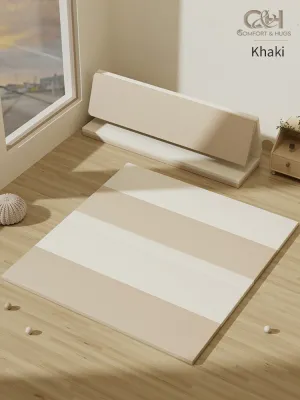
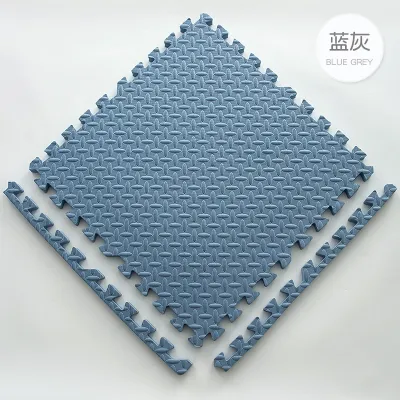
![[24PCS] 1.2cm Thick Interlocking Foam Floor Tiles 30x30cm EVA Foam Play Mats for Babies and Toddles Puzzle PlayMat](https://img.lazcdn.com/g/p/bbc6cd029e4450e02e24887c788e3f09.jpg_400x400q80.jpg_.webp)
![[Smart Kiz] Korean Anti Slip Baby Mat](https://img.lazcdn.com/g/p/dbb995615208c75b3a4de04c9824831c.jpg_400x400q80.jpg_.webp)
Prices are valid at publication and may change. Please refer to the product page for the latest price.
Key Features to Look for in an Outdoor Baby Play Mat
To find a mat that truly performs well in Singapore’s unique outdoor environments, you must evaluate specific design elements and technical specifications.

Portability and Folding Mechanisms An outdoor mat is only useful if it is easy to transport. Look closely at how the mat packs away. Some designs feature accordion-style folding, which allows for rapid setup and pack-up, while others roll up and secure with straps. Evaluate the packed dimensions to ensure the mat fits comfortably in your stroller basket or can be slung over your shoulder. Carrying straps should be wide and securely stitched to distribute weight comfortably during long walks from the car park to your picnic spot.
Surface Properties and Weather Resistance Singapore’s tropical climate demands high-performance surface properties. Check product labels for explicit water resistance ratings. A high-quality outdoor mat should repel water on both the top and bottom layers to prevent ground moisture from seeping through. Sand repellency is another critical feature if you plan to visit beaches like those on Sentosa; look for smooth, tightly woven surfaces that allow sand to be brushed off effortlessly. Additionally, some manufacturers specify UV protection or UV-resistant coatings on their fabrics, which helps prevent the material from degrading and cracking under intense sunlight.
Base Layer Grip and Stability An outdoor play mat must stay securely in place, even when placed on dry grass, loose sand, or smooth concrete patios. Examine the underside of the mat for non-slip features. High-quality mats often utilize textured patterns, rubberized dots, or specialized high-friction backings to prevent the mat from sliding when your baby attempts to crawl or roll. A shifting mat can frustrate a developing infant and increase the risk of minor slips.
Thermal Insulation and Heat Protection The tropical sun can heat outdoor ground surfaces rapidly, making thermal insulation a key safety consideration. Review the manufacturer’s specifications for heat reflection or thermal resistance rather than relying on promotional lifestyle images. Materials like cross-linked polyethylene (XPE) contain tiny, closed air cells that provide natural thermal insulation, keeping the mat’s surface cool even when laid on warm grass or paving stones. Avoid thin, dark-colored plastic mats that absorb and retain heat.
Evaluating Materials and Safety Standards
Safety should always be the primary filter when choosing baby gear. Because infants explore their world through touch and taste, the chemical and physical integrity of the play mat is paramount.
Verifying Non-Toxic Certifications Always read the physical product labels or official manufacturer user manuals to verify non-toxic certifications. Look for explicit statements confirming the mat is free from bisphenol A (BPA), phthalates, lead, formaldehyde, and polyvinyl chloride (PVC). PVC is commonly used in cheap waterproof mats but often contains harmful plasticizers; instead, look for safer alternatives like thermoplastic polyurethane (TPU) or food-grade XPE. Ensure the product complies with recognized international safety standards, such as EN71 in Europe or ASTM F963 in the United States, which govern mechanical and chemical safety for children’s products.
Inspecting for Physical Hazards Before laying your baby down, conduct a thorough physical inspection of the mat. Check all edges for loose threads, frayed seams, or weak stitching that a curious baby could pull and potentially wrap around their fingers. If the mat features zippers, ensure they are recessed or covered by a fabric flap to prevent scratches or pinching. Avoid mats with small detachable parts, decorative buttons, or long tassels, as these present immediate choking and strangulation hazards.
Assessing Thickness and Density Claims Do not rely solely on visual estimates of thickness from online product listings. Check the actual manufacturer specifications for the mat’s thickness, usually measured in millimeters or centimeters. For outdoor use on uneven ground, a thickness of at least 1 centimeter is generally recommended to cushion against small pebbles and twigs. However, density is just as important as thickness; high-density foam provides firm support that does not bottom out under a baby’s weight, whereas low-density foam compresses completely, offering little actual protection.
Understanding Waterproof vs. Water-Resistant Limits It is vital to understand the practical limits of “waterproof” versus “water-resistant” claims. A truly waterproof mat has an impermeable barrier that prevents any liquid from passing through, making it ideal for wet grass or heavy spills. Water-resistant mats, on the other hand, can repel light moisture for a limited time but may eventually absorb water if left on damp ground for hours. Always check the manufacturer’s care instructions to see if the waterproof barrier can be damaged by certain cleaning agents or machine washing.
Practical Scenarios and Setup Tips
Different outdoor environments in Singapore present unique challenges. Adapting your setup routine ensures your baby remains safe and comfortable.
Park and Grass Setups Before laying down your mat on the grass at the Singapore Botanic Gardens or Bishan-Ang Mo Kio Park, carefully inspect the ground. Clear away any hidden debris, such as sharp twigs, dry leaves, stones, or discarded trash. Even a thick mat can be punctured by sharp objects, which poses a safety risk to your child. If the grass is visibly damp from morning dew or a recent shower, ensure your mat’s waterproof backing is facing down, and consider placing a lightweight tarp underneath for an extra layer of moisture protection.
Beach and Sand Environments When setting up on the beach, sand management is your biggest challenge. To minimize sand intrusion, choose a spot slightly away from the active shoreline where the sand is dry but firm. Lay the mat flat and immediately establish a “no-shoes” rule for anyone stepping onto the play area. Keep a small brush or dry towel nearby to sweep away any sand that blows onto the surface. Because beach winds can be unpredictable, ensure the corners of the mat are secured safely.
Picnic and Patio Use On hard surfaces like concrete patios, wooden decking, or tiled picnic areas, cushioning is your top priority. Ensure your mat has sufficient density to protect your baby’s knees and head during tumbles. Hard surfaces also heat up much faster than grass. Always set up your play area in complete shade, such as under a park pavilion, a large tree, or a portable UV-blocking canopy. Regularly touch the surface of the mat with the back of your hand to verify that it has not absorbed excessive heat from the ground.
Supervision Boundaries and Environmental Limits An outdoor play mat is not a substitute for active adult supervision. Establish a clear visual boundary around the mat and never leave your baby unattended, even for a moment. In Singapore’s tropical climate, keep a close eye on the weather and your baby’s physical condition. If you notice signs of overheating, such as flushed cheeks, sweating, or fussiness, move your baby to an air-conditioned indoor space immediately. Be prepared to pack up quickly if dark clouds gather, as tropical downpours can develop rapidly.
Cleaning and Maintenance After Outdoor Use
Proper cleaning and maintenance are essential to keep your portable play mat hygienic and extend its lifespan. Outdoor exposure subjects materials to sweat, dirt, sunscreen, and environmental microbes.
Immediate On-Site Cleaning Your maintenance routine should begin before you leave the outdoor site. Once playtime is over, lift the mat and shake it vigorously to remove loose dirt, sand, and grass clippings. Use a baby wipe or a damp cloth to quickly spot-clean any immediate spills, sunscreen smudges, or bird droppings. Wiping the mat down before folding it prevents dirt from being transferred from the dirty bottom layer to the clean top play surface during transit.
Deep Cleaning Protocols Once home, perform a deeper clean based strictly on the manufacturer’s instructions. Some fabric-based portable mats are machine washable on a gentle cycle, while foam-based mats (like TPU or XPE) must be cleaned by hand. For hand cleaning, use a mild, baby-safe detergent diluted in warm water. Avoid harsh chemical cleaners, bleach, or abrasive scrubbing brushes, as these can degrade the waterproof coatings and fade the printed designs. Gently wipe the entire surface with a soft sponge or microfiber cloth.
Drying Requirements to Prevent Mold In Singapore’s high humidity, mold and mildew can develop rapidly on damp materials. Never fold or store a play mat while it is still wet. After cleaning, hang the mat to dry completely in a well-ventilated area. Avoid placing foam mats in direct, intense sunlight to dry, as prolonged UV exposure can warp the foam, cause colors to fade, and break down the material’s structural integrity. Ensure both the top play surface and the bottom backing are bone-dry to the touch before packing.
Optimal Storage Conditions Store your clean, dry play mat in a cool, dry indoor location away from direct sunlight and pests. Avoid storing it in hot, unventilated spaces like a car boot or an outdoor storage riser, as extreme heat can cause foam materials to degrade or stick together. If the mat came with a dedicated storage bag, use it to protect the surface from dust and physical damage while not in use.
Frequently Asked Questions (FAQ)
Can I use an indoor foam play mat outdoors?
Using an indoor-specific foam play mat outdoors is generally not recommended. Indoor mats, especially those made of puzzle-piece EVA foam, often have textured, porous surfaces that easily trap dirt, sand, and outdoor allergens, making them incredibly difficult to clean thoroughly afterward. Furthermore, indoor mats typically lack UV-resistant stabilizers, meaning exposure to Singapore’s intense sunlight can cause the foam to degrade, discolor, and become brittle. Moisture from damp grass can also seep into the seams of puzzle mats, leading to mold growth. Always check the manufacturer’s guidelines; if a mat is not explicitly rated for outdoor use, keep it indoors to preserve its safety and longevity.
How do I keep a portable play mat from blowing away in the wind?
To secure a lightweight portable play mat against sudden gusts of wind, always use safe, baby-proof anchoring methods. Place heavy, soft items like your diaper bag, a packed cooler bag, or clean water bottles on the corners of the mat, ensuring these items remain outside your baby’s immediate play zone. If you are using natural anchors like smooth, rounded stones from the park, ensure they are large enough not to pose a choking hazard and are placed well out of your baby’s reach. Never use sharp tent stakes, heavy metal pegs, or sharp-edged rocks near the mat, as these can cause serious injury if your baby rolls off the mat or if the wind shifts the fabric unexpectedly.
Community discussion
Share your experience or ask a question. Comments are reviewed before publication.