
A comfortable breastfeeding pillow is defined by four core dimensions: a supportive fill material that maintains its shape, a highly breathable outer cover that manages heat and moisture, an ergonomic shape tailored to your body type, and secure adjustability features to eliminate gaps. Selecting the right pillow is not merely about finding a soft cushion; it is a critical decision that directly impacts your physical recovery, feeding posture, and your baby’s positioning during nursing. By choosing a pillow that elevates your baby to the correct height while offering stable support, you can prevent the repetitive strain injuries often associated with early parenthood.
Why Posture and Support Matter During Nursing
Breastfeeding is a beautiful bonding experience, but it is also a physically demanding task that requires holding a newborn for hours every single day. During the first few months, a baby may nurse up to twelve times in a twenty-four-hour cycle, with each session lasting anywhere from fifteen to forty-five minutes. This cumulative holding time puts immense pressure on a mother’s musculoskeletal system. Without proper support, caregivers naturally tend to hunch forward, drop their shoulders, and bend their wrists to bring their baby closer to the breast. Over time, this repetitive, unnatural posture can lead to chronic neck strain, upper back pain, tension headaches, and wrist conditions like De Quervain’s tenosynovitis.
A dedicated breastfeeding pillow acts as a supportive bridge between your lap and your baby. Its primary ergonomic purpose is to elevate your baby to the level of your nipple, allowing you to maintain a neutral, upright spine. When the pillow bears the baby’s weight, your shoulder, neck, and arm muscles can fully relax, which is also beneficial for your milk letdown reflex, as physical tension and stress can inhibit milk flow. By keeping your baby’s body aligned and stable, a high-quality pillow helps you focus on achieving a deep, comfortable latch rather than struggling to keep your baby from slipping. Understanding how different fills, covers, shapes, and fasteners interact will help you choose a model that supports your body through every feeding session.
Products mentioned in this guide
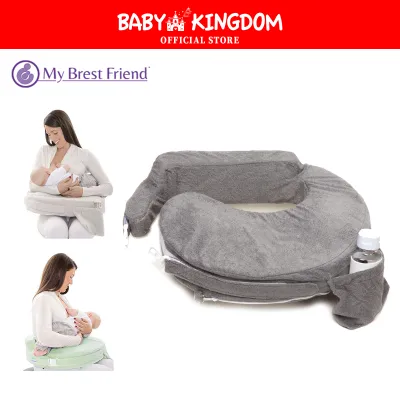
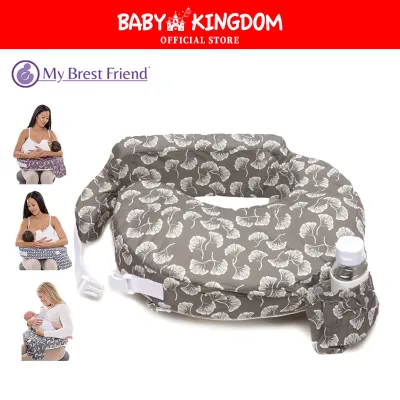
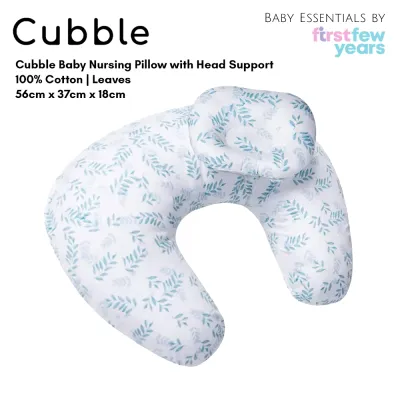
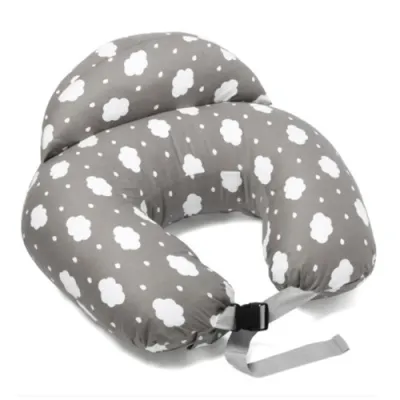
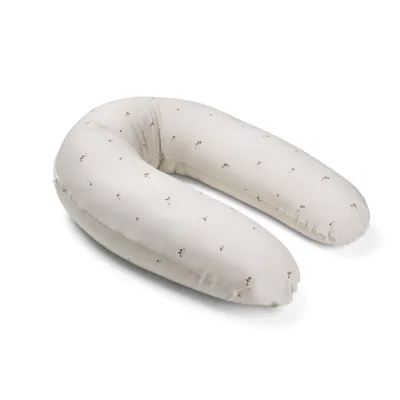
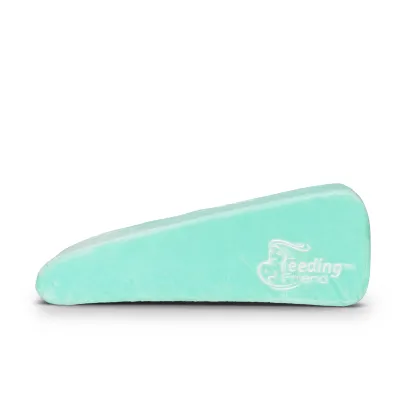
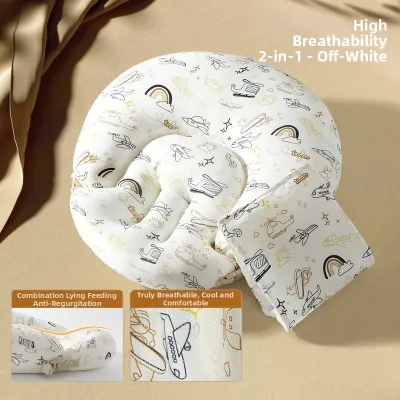
Prices are valid at publication and may change. Please refer to the product page for the latest price.
Comparing Fill Materials for the Right Firmness and Feel
The internal fill of a breastfeeding pillow determines how well it supports your baby’s weight and how long it retains its structural integrity. A fill that is too soft will compress completely under your baby’s weight, forcing you to lean forward and defeating the ergonomic purpose of the pillow. Conversely, a fill that is too rigid may feel uncomfortable against your baby’s delicate body or fail to conform to your torso. Evaluating the distinct characteristics of memory foam, microbeads, and polyester fibre allows you to choose the exact balance of firmness and flexibility that suits your needs.

Memory Foam for Contoured Support
Memory foam is highly regarded for its dense, pressure-relieving qualities, offering a highly stable and structured platform for nursing. When your baby lies on a memory foam breastfeeding pillow, the material slowly contours to their shape, distributing their weight evenly without flattening or creating pressure points. This density is particularly beneficial during the early weeks when newborns require maximum stability to maintain a secure latch.
However, traditional memory foam is known to retain body heat, which can become uncomfortable during long feeding sessions, particularly in Singapore’s warm, humid climate. To mitigate this, look for memory foam pillows designed with open-cell structures, ventilation channels, or cooling gel infusions that promote airflow. Additionally, pairing a memory foam core with a highly breathable, moisture-wicking outer cover is highly recommended. Because memory foam cannot be submerged in water or machine-washed, you must verify the manufacturer’s care label; typically, only the outer cover can be washed, making a high-quality, liquid-resistant inner liner a valuable feature to protect the foam from milk spills. Finally, when purchasing a foam pillow, verify the product labels for recognized safety certifications, such as CertiPUR-US, to ensure the foam is manufactured without harmful flame retardants, heavy metals, or high volatile organic compound (VOC) emissions.
Microbeads for Adjustable Molding
Microbead fills consist of thousands of tiny, lightweight polystyrene beads that shift dynamically as you move. This fluid movement allows you to mold and sculpt the pillow in real-time, pushing the beads to one side to create a custom incline or a supportive dip that perfectly positions your baby’s head for an optimal latch angle. The highly customizable nature of microbeads makes them excellent for mothers of different heights or those recovering from a Caesarean section, as the pillow can be gently shaped to avoid putting pressure on surgical incisions.
Another major benefit of microbead pillows is their exceptionally lightweight profile. You can easily reposition, adjust, or carry a microbead pillow with a single hand while holding your baby in the other. However, because these tiny beads are highly mobile, they do not offer the rigid, unyielding support of memory foam, and they may shift over time if the cover is too loose. From a safety perspective, microbeads present a serious choking hazard if they escape the pillow. It is vital to inspect the pillow’s construction before purchase, verifying that it features double-stitched inner seams, heavy-duty stitching, and a secure, childproof outer zipper that prevents any accidental bead leakage.
Polyester Fibre for Softness and Washability
Polyester fibre is the most traditional and widely available fill material for breastfeeding pillows, offering a familiar, plush, cloud-like softness. This material provides a gentle cushioning effect that many babies find highly comforting. Because fibre-filled pillows are typically more pliable than foam, they can easily be squeezed, folded, or tucked into various positions to suit different chairs or nursing angles.
One of the greatest advantages of polyester fibre is its ease of maintenance. Unlike memory foam, many polyester-filled pillows can be placed directly into a washing machine and tumble-dried, making it incredibly simple to sanitize the entire pillow after heavy milk spit-ups or diaper leaks. However, you must always verify the manufacturer’s specific care instructions, as some budget options may clump or lose their shape when washed. Over months of regular use, polyester fibres naturally compress and migrate, which can lead to lumpy, uneven support. To maintain a supportive, level surface, you will need to regularly fluff the pillow manually or tumble-dry it with clean tennis balls to restore its original loft and distribution.
Choosing Breathable Cover Fabrics for Humid Climates
The material of your breastfeeding pillow cover plays a massive role in both your comfort and your baby’s skin health. In Singapore’s tropical, humid environment, skin-to-skin contact and close physical proximity during nursing can quickly lead to sweating, heat rashes, and general discomfort for both of you. Selecting a cover fabric that actively manages moisture and heat is essential for maintaining a pleasant feeding experience.
When comparing fabrics, prioritize natural and semi-synthetic fibres over standard, low-grade synthetic polyesters. Natural cotton is highly breathable, soft, and exceptionally durable, easily withstanding dozens of trips through the washing machine. Organic cotton is an even better choice for sensitive newborn skin, as it is grown without synthetic pesticides. Bamboo-derived viscose is another outstanding option for warm climates; it is naturally hypoallergenic, incredibly silky to the touch, and possesses excellent moisture-wicking properties that help pull sweat away from your baby’s skin, keeping them cool and dry. Standard synthetic polyester covers, while durable and stain-resistant, tend to trap heat and moisture, which can exacerbate baby acne or heat rashes on your infant’s delicate face.
Spills, drool, and spit-ups are inevitable during feeding, making a removable, zippered outer cover an absolute necessity. Attempting to spot-clean a non-removable cover is highly inconvenient and can lead to deep-set stains and unpleasant odors over time. When evaluating zippered covers, pay close attention to the zipper placement and design. The zipper should be recessed, covered by a fabric flap, or positioned on the outer perimeter away from where your baby’s head, face, and limbs will rest, preventing any accidental scratches.
To ensure the highest level of safety for your baby’s sensitive skin, always check product tags and manufacturer documentation for reputable textile safety certifications, such as OEKO-TEX Standard 100. This independent certification verifies that every component of the fabric, from the threads to the zippers, has been tested and found free from harmful levels of toxic substances and allergens. Avoid covers with rough textures, heavy decorative seams, or non-breathable, crinkly waterproof backings on the side that touches the baby. While waterproof barriers are excellent for protecting the inner fill, a cheap, non-breathable plastic backing will trap heat and create a sweaty, uncomfortable surface for your infant. If you want liquid protection, look for specialized, breathable water-resistant inner covers that sit beneath a soft, natural outer cover.
Evaluating Ergonomic Shapes and Adjustability
The physical silhouette of a breastfeeding pillow dictates how it positions your baby relative to your body and which nursing holds you can comfortably execute. Additionally, the presence of adjustable fastening systems can mean the difference between a pillow that stays securely in place and one that constantly slides away, creating a hazardous gap.
C-Shape, U-Shape, and Wedge Designs
The shape of your nursing pillow should align with your body type, your preferred feeding positions, and your primary nursing environment.
- C-Shape Pillows: These are the most common designs, featuring a semi-circular curve that wraps snugly around the front of your waist. They are highly effective for standard cradle, cross-cradle, and football holds, providing a level, wrap-around platform. When choosing a C-shape pillow, it is crucial to evaluate the depth and flexibility of the inner curve. If you have a larger torso, a rigid, narrow C-shape pillow may squeeze your waist uncomfortably or sit too high, while a petite mother might find a wide C-shape leaves a large, unsupported gap in front.
- U-Shape Pillows: Often larger and more symmetrical, U-shape pillows extend further along your sides, offering excellent forearm support and even integrated lower back support. These designs are highly popular for twin nursing (tandem feeding) or for mothers who want a pillow that can pull double duty as a pregnancy support cushion during sleep. The main trade-off is their bulk; U-shape pillows are heavy, take up substantial space on a chair or sofa, and are highly impractical for travel or nursing on the go.
- Wedge and Flat Designs: Incline wedges and stackable, multi-layered flat pillows offer targeted elevation. These are excellent for older, heavier babies who do not require a full wrap-around cushion but still need their heads elevated to prevent reflux. They are highly portable and fit easily into diaper bags, making them ideal for travel. However, they require more manual positioning and do not offer the hands-free forearm resting support of C- or U-shaped models.
Adjustable Straps and Fasteners
A common frustration with standard nursing pillows is their tendency to shift forward or slide outward as the baby moves, creating an empty space between the pillow and your abdomen. If a baby slips into this gap, it can disrupt their latch, cause physical discomfort, or create a safety hazard. Adjustable straps and fastening systems solve this issue by locking the pillow securely against your body.
Look for pillows equipped with wide, adjustable fabric straps that wrap completely around your back and fasten with a quick-release buckle or silent hook-and-loop closure. This wrap-around design ensures a custom, gap-free fit regardless of your waist size or the chair you are sitting in. When evaluating these fasteners, prioritize designs that allow for easy, one-handed adjustment. As a nursing mother, you will often find yourself holding a sleeping or fussy baby with one arm while trying to position and secure your pillow with the other. A buckle that requires two hands to adjust or a loud, aggressive Velcro strap that wakes a sleeping baby can be highly frustrating. Furthermore, check the placement of the strap and buckle to ensure they are padded or positioned in a way that prevents them from digging into your ribs, spine, or hips when you lean back.
Safety Boundaries, Supervision, and Maintenance
While a breastfeeding pillow is an invaluable comfort tool, it must be used with strict adherence to safety guidelines to protect your baby from harm. Nursing pillows are designed solely as active feeding supports for awake babies and awake caregivers; they are never safe for unsupervised sleep, lounging, or propping.
Because of their contoured, angled surfaces, nursing pillows present a severe suffocation and positional asphyxiation hazard if a baby is left unattended. If an infant falls asleep on a nursing pillow, their heavy head can easily tilt forward onto their chest, causing airway-blocking chin-to-chest positioning, or they can roll over and press their face into the soft fabric. Therefore, you must never leave your baby sleeping on a breastfeeding pillow, and you should never use it as a sleeping aid in a crib, bassinet, or playpen. If your baby falls asleep during a feeding session, gently transfer them to a flat, firm, dedicated sleep surface.
During use, maintain active, hands-on supervision. This means keeping at least one hand on your baby at all times to prevent them from rolling, sliding, or shifting into an awkward position. Additionally, always consult the manufacturer’s documentation to verify the specific weight limits, age ranges, and developmental stage requirements for your pillow. Do not assume a pillow is suitable for your growing infant simply based on its product category or name.
Proper maintenance is also a key factor in ensuring ongoing safety and hygiene. Over time, exposure to milk spills, sweat, and household humidity can lead to the growth of mold, mildew, and bacteria within the pillow’s core. Regularly inspect your pillow for signs of wear and tear. You should stop using and replace the pillow immediately if the inner fill loses its supportive firmness and sags, if the seams begin to tear and expose the internal fibers or microbeads, if the zippers break, or if the cover or core develops persistent odors, dampness, or visible mold spots that do not resolve after thorough washing according to the manufacturer’s care instructions. If you ever experience persistent latching difficulties, infant feeding discomfort, or severe physical pain while nursing, stop using the pillow and consult a certified lactation consultant or a qualified healthcare professional for personalized guidance.
Frequently Asked Questions (FAQ)
Can I use a regular bed pillow instead of a dedicated breastfeeding pillow?
Regular bed pillows are generally not recommended as a substitute for a dedicated nursing pillow because they lack the necessary firmness and structural design. Standard household pillows compress easily under a baby’s weight, which fails to provide stable elevation and forces you to lean forward, leading to neck and back strain. Furthermore, bed pillows do not wrap around your waist or feature securing straps, meaning they will easily slide away during a feeding session, requiring constant manual adjustment and increasing arm fatigue.
How do I know if the pillow is the right height for my baby?
You can verify if your breastfeeding pillow is at the correct height by observing your baby’s physical alignment and your own posture. When positioned correctly, your baby’s nose should naturally align with your nipple without you having to hunch forward or lean down, and your baby’s ear, shoulder, and hip should form a straight, comfortable line. If you feel a painful pull on your nipple, if your baby has to turn their neck sharply to latch, or if you find yourself shrugging your shoulders to support them, the pillow height is incorrect. You can adjust the height by tightening the waist strap, shifting the fill, or placing a small, firm towel underneath the pillow to elevate it.
Are breastfeeding pillows safe for tummy time or learning to sit?
A breastfeeding pillow should only be used for secondary activities like tummy time or sitting support if the manufacturer explicitly states in the product documentation that it is designed and certified for those specific developmental stages. Never infer suitability simply because a pillow is soft or shaped like a crescent. If the manufacturer does approve these uses, you must maintain direct, hands-on adult supervision at all times; never leave your baby unattended or resting on an elevated, contoured surface where they could roll off or suffocate.
Community discussion
Share your experience or ask a question. Comments are reviewed before publication.