
Setting up a nursery requires balancing immediate practical needs with long-term utility. Among the most frequently used pieces of nursery furniture is the changing table, a dedicated station where you will spend countless hours tending to your infant. While it may seem like a simple platform, a poorly chosen table can lead to chronic back strain, storage frustration, and avoidable safety hazards.
To make an informed purchase, you must look beyond aesthetic appeal and focus on the technical specifications that dictate daily usability. The ideal station prioritises robust safety guardrails, aligns ergonomically with your height, offers highly accessible storage, and adapts as your child grows. Evaluating these key features systematically ensures you select a safe, comfortable, and space-efficient solution for your home.
Safety Specifications: Guardrails, Straps, and Anti-Tip Hardware
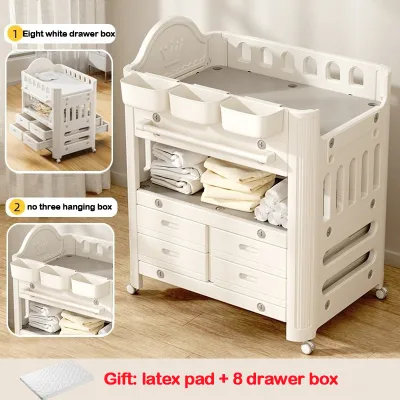
Safety is the absolute priority when selecting any nursery furniture, particularly a raised platform. Guardrails serve as the primary physical barrier to prevent accidental falls. When comparing designs, you will generally encounter three-sided and four-sided guardrail configurations. Three-sided guardrails are typically integrated into tables designed to sit flush against a wall, leaving the front open for easy access. Four-sided guardrails enclose the entire perimeter, providing an extra layer of security on all sides, though they require you to lift the baby over the front barrier. The height of these barriers is critical; deeper guardrails provide a more reliable boundary as your baby becomes more active and begins to roll.
Products mentioned in this guide
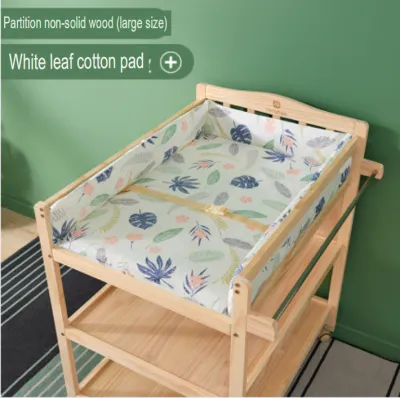
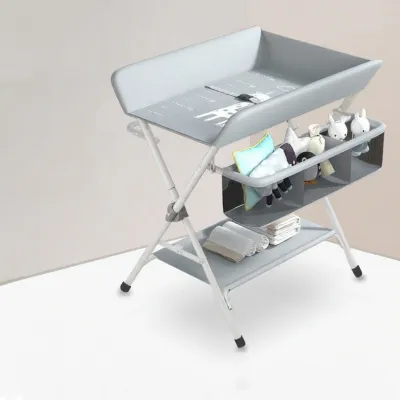
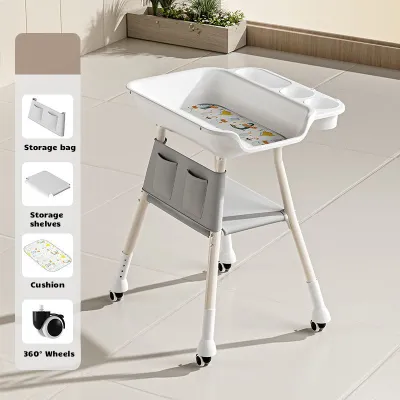
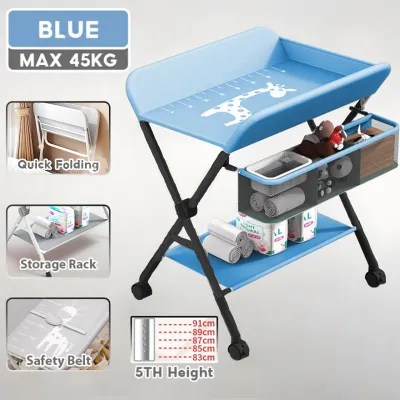
![[SG SELLER] Multifunctional Diaper Changing Table Foldable Strong Load Bearing Baby Care Table Baby Diaper Changing Table Massage Touch Bath Table](https://img.lazcdn.com/g/p/a84244d8c8d4139f7d675c82cc9ebfd2.jpg_400x400q80.jpg_.webp)

Prices are valid at publication and may change. Please refer to the product page for the latest price.
Beyond physical barriers, safety straps and anti-tip hardware are essential components of a secure setup. Safety straps keep your baby centered on the changing pad, though they must always be treated as a secondary aid rather than a replacement for constant caregiver supervision. Because changing units often feature drawers or shelves that can become front-heavy when loaded or climbed on, anti-tip hardware is mandatory. This hardware secures the frame directly to your wall, eliminating the risk of accidental tipping.
To ensure the unit is safe for your specific child, always verify the manufacturer’s stated weight limit and safety warnings. This information is typically printed on the physical warning label attached to the furniture frame or detailed in the official user manual. Avoid making assumptions about weight limits based on the visual size of the table, as material strength and structural design vary significantly between models.
Ergonomics and Footprint: Matching Height to the Caregiver
Diaper changes are repetitive tasks that occur multiple times a day and night, making ergonomics a vital consideration for caregiver health. A changing table that is too low forces you to bend at an awkward angle, putting repetitive stress on your lower back. To prevent lumbar strain, the ideal changing surface should align comfortably near the primary caregiver’s waistline, allowing your elbows to bend at a natural 90-degree angle during tasks.

Because standard heights vary across different brands, you should check the exact height measurements on the product’s specification sheet before buying. If possible, visit a physical showroom to stand next to the unit and test the height in person. This hands-on check is particularly useful if multiple caregivers of different heights will be using the station, allowing you to find a comfortable middle ground.
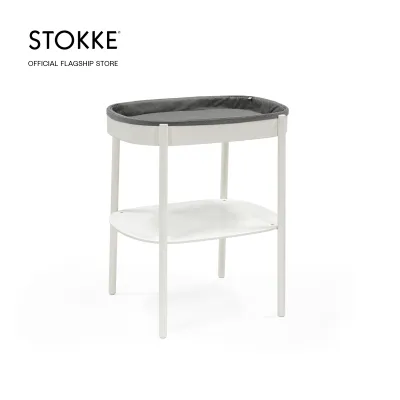
In addition to height, you must carefully measure the physical footprint of the unit to ensure it fits your nursery layout. In compact living spaces, such as Singapore apartments, floor space is at a premium. Do not rely on generic size labels; measure your available wall space and compare it against the product’s external dimensions. Crucially, remember to account for clearance space. A table might fit perfectly against the wall, but you must ensure there is ample room to stand comfortably in front of it and fully extend drawers, cabinet doors, or pull-out utility trays without blocking walkways.
Storage Layouts: Open Shelves vs. Drawers for One-Handed Access
The structural layout of your changing table’s storage directly impacts your daily efficiency and safety. During a diaper change, a fundamental safety rule applies: you must always keep one hand on your baby at all times. This physical constraint means that all essential supplies—such as diapers, wipes, creams, and change clothes—must be within arm’s reach and accessible using only your free hand.
Open shelving units excel at providing quick, unobstructed access to your supplies. You can easily see and grab what you need with one hand without having to navigate doors or drawers. However, open shelves have distinct trade-offs. Exposed items can collect dust quickly, and in humid climates, open storage may expose sensitive items like cotton pads or clean clothes to ambient moisture. Additionally, open shelves can easily look cluttered unless you invest in secondary storage baskets to organize the space.
Drawers and closed cabinets offer a cleaner aesthetic, keeping supplies hidden from view and protected from dust. This layout is excellent for long-term organization, but it introduces operational challenges. Opening a drawer often requires you to bend down or use two hands, which can be difficult or unsafe when you are actively securing a wiggling baby. When evaluating a drawer-based system, look for smooth, quiet glider tracks and easy-open handles that can be operated with minimal effort, ensuring you never have to turn your back or release your hold on your child.
Convertibility: Evaluating Removable Toppers for Long-Term Use
A dedicated changing table has a relatively short functional lifespan, as children typically outgrow the need for diaper changes within a few years. To maximize the value of your investment, consider convertible designs that transition into standard furniture. Many modern changing tables feature a removable topper—a secure wooden frame that holds the changing pad in place on top of a standard chest of drawers or storage cabinet. Once your child outgrows diapers, you can remove the topper, leaving behind a fully functional piece of bedroom furniture.
Before purchasing a convertible model, examine the physical details of the attachment mechanism. Some toppers screw directly into the top surface of the dresser, which can leave permanent, visible screw holes, scratches, or discoloration when removed. High-quality convertible models typically secure the topper from the back of the unit, preserving the pristine finish of the dresser’s top surface for its next phase of life.
You should also evaluate the base dresser as a standalone piece of furniture. Check that its depth, height, and overall aesthetic are practical for a growing child’s room. A dresser that is too shallow may not accommodate standard clothes hangers or bulkier toddler clothing later on, defeating the purpose of a long-term convertible investment.
Pad Compatibility and Surface Materials: What to Check Before Buying
The utility of a changing table depends heavily on the changing pad that sits on top of it, making compatibility a crucial pre-purchase check. Some tables are built with non-standard dimensions, requiring proprietary, brand-specific changing pads. This can lead to high replacement costs and limited options if the original pad becomes damaged or worn out. Opting for a table that accommodates standard-sized, universally available changing pads ensures you can easily find replacements or alternative designs.
Surface materials must also be evaluated for durability and hygiene. Diaper changes are inherently messy, requiring frequent cleaning and sanitization. The changing table frame and the pad surface must be waterproof, non-porous, and easy to wipe clean. Check the manufacturer’s care instructions to ensure the materials can withstand regular exposure to mild sanitizers without warping, peeling, or losing their finish.
Finally, always read the “What’s in the Box” section of the product listing carefully. Retailers frequently use styled lifestyle photos showing a complete setup with a plush changing pad, decorative covers, and toys. In many cases, however, the changing pad is sold separately. Verifying exactly what is included in your purchase prevents unexpected extra costs and ensures you have all necessary components ready before your baby arrives.
Frequently Asked Questions (FAQ)
Is a changing table necessary, or can I use a regular dresser?
While a dedicated changing table is highly convenient, it is not strictly necessary. You can safely repurpose a sturdy, standard dresser by adding a secure, contoured changing pad. To do this safely, ensure the dresser’s top surface is deep enough to accommodate the pad completely without any overhang. The changing pad must be firmly anchored to the back of the dresser using safety straps or brackets, and the dresser itself must be secured to the wall with an anti-tip kit to prevent tipping hazards.
How do I verify the weight limit and safety standards of a changing table?
To verify these critical specifications, locate the maximum weight limit printed on the physical warning label attached to the furniture frame, or consult the manufacturer’s official user manual. Look for explicit statements of compliance with recognized local or international safety standards for children’s furniture. Caregivers must stop using the table for diaper changes immediately once the child reaches the stated weight limit, exceeds the height of the guardrails, or begins to show the physical ability to climb out of the unit.

Community discussion
Share your experience or ask a question. Comments are reviewed before publication.