
Choosing the right baby silicone spoon is one of the most important decisions you will make when transitioning your infant to solid foods. The ideal spoon must protect your baby’s delicate, developing gums while providing the structural integrity needed to navigate early motor skills. Because infants explore their world through their mouths, the material composition of their first utensil must be entirely free from harmful chemical fillers, heavy metals, and volatile organic compounds. By evaluating a spoon’s material purity, ergonomic design, and stage-specific features, you can ensure a safe, supportive, and developmentally appropriate weaning experience.
Introducing solids is a major developmental milestone that usually begins around six months of age, depending on your child’s readiness cues. During this phase, a baby’s oral motor control is transitioning from a primitive suckling reflex to more complex chewing and swallowing patterns. Standard metal or hard plastic household spoons can easily bruise sensitive gum tissue, trigger a hyperactive gag reflex, or cause oral aversion if they scrape against the roof of the mouth. A high-quality silicone spoon provides a soft, flexible alternative that cushions accidental impacts while helping your baby learn to clear food from the utensil using their upper lip.
To make an informed choice, you must look beyond aesthetic designs and marketing buzzwords on packaging. This guide will walk you through the precise physical checks, material certifications, and ergonomic shapes that define a truly safe and functional silicone utensil. By matching these physical characteristics to your baby’s current developmental stage, you can select a tool that fosters independence, safety, and confidence at the dining table.
Products mentioned in this guide
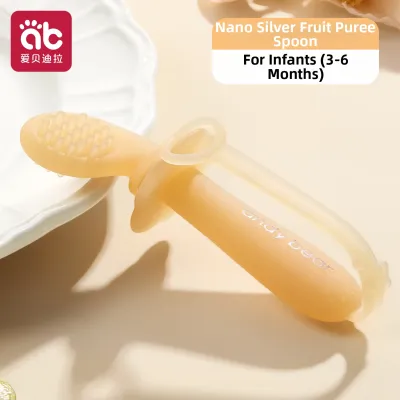
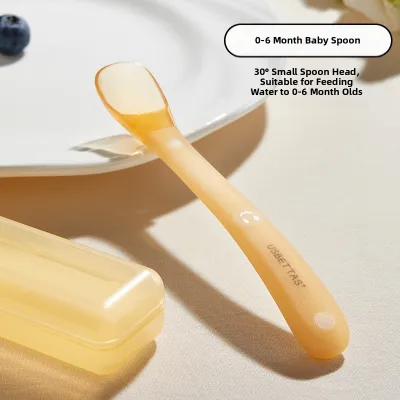
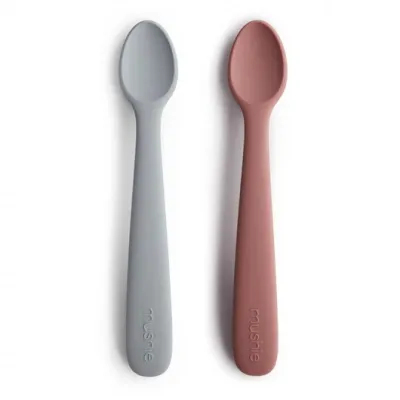
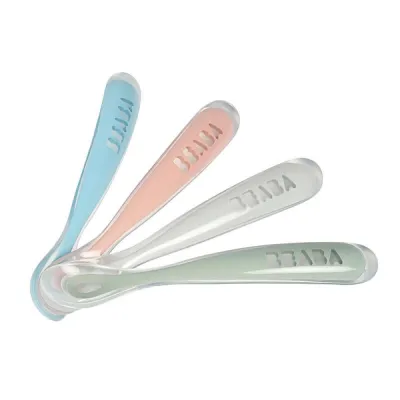
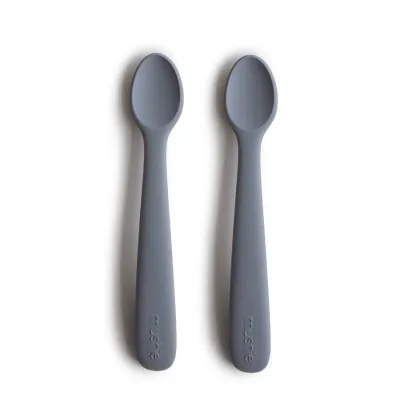
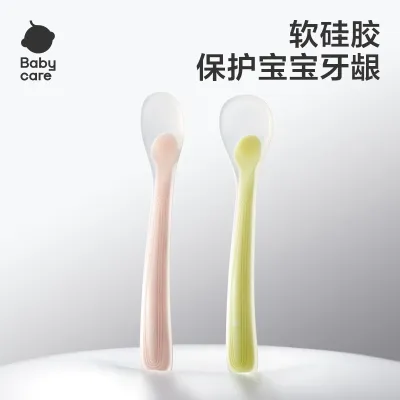
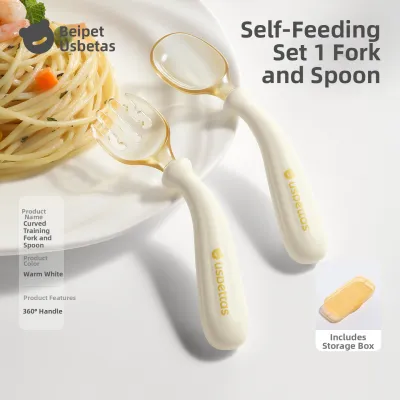
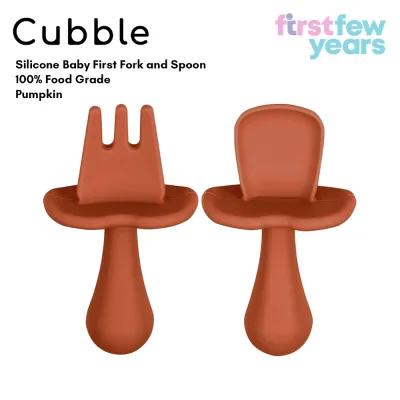
Prices are valid at publication and may change. Please refer to the product page for the latest price.
Quick Guide: Essential Features of a Safe Silicone Spoon
When starting your baby’s weaning journey, you need a reliable framework to quickly separate high-quality utensils from poorly manufactured alternatives. The sheer volume of baby products available on online marketplaces and in local retail stores can be overwhelming for parents. To simplify your decision-making process, focus on three non-negotiable pillars of utensil safety and design: material purity, ergonomic functionality, and active physical safety features.
- Verified Material Purity: The spoon must be constructed from 100% food-grade or medical-grade silicone that is completely free from bisphenol A (BPA), bisphenol S (BPS), lead, phthalates, and PVC. This ensures that no harmful chemicals leach into warm purees or milk-based foods.
- Ergonomic Design: The handle and bowl shapes must align with your baby's current motor skills. Early weaning requires parent-led designs with long, slender handles, while self-feeding requires short, thick, textured grips that accommodate a primitive palmar grasp.
- Built-In Safety Barriers: Self-feeding utensils should feature integrated choke guards or wide collars. These physical barriers prevent your baby from over-inserting the spoon into their throat, reducing the risk of choking or severe gagging during independent meals.
As you progress through this guide, you will learn how to verify these features using simple physical tests and packaging checks. Understanding these details will help you select a spoon that supports your baby’s growth and ensures their safety during every meal.
Material Safety and Quality Indicators
Not all silicone utensils are created equal, and understanding the differences in material quality is vital for your baby’s health. Many low-cost spoons sold online feature a soft silicone outer layer wrapped around a rigid inner core made of nylon or cheap plastic. While these hybrid designs provide structural stiffness, low-quality options may use inferior bonding agents that can degrade over time, or the outer silicone layer may split, exposing the inner core to moisture and bacterial growth. When shopping, prioritize one-piece molded silicone spoons or those from reputable manufacturers who explicitly state the composition of any internal structural supports.

To ensure maximum safety, always verify the regulatory standards met by the product. Look for packaging that explicitly states compliance with recognized global standards, such as the US Food and Drug Administration (FDA) guidelines or the more stringent European LFGB (Lebensmittel- und Futtermittelgesetzbuch) standards. LFGB-certified silicone undergoes tougher testing protocols and is less likely to contain volatile organic compounds or chemical byproducts. Do not rely solely on bold marketing terms like “BPA-free” printed on the front of a box; instead, flip the packaging over to check for manufacturer details, batch numbers, and official safety marks.
Parents can perform several simple sensory checks to evaluate the quality of a silicone spoon after unboxing it. First, conduct the “pinch test” by gripping a flat section of the silicone and twisting or stretching it firmly. If the white color of an inner filler shows through the stretched area, the silicone likely contains plastic fillers rather than being 100% pure. Pure silicone will retain its consistent color throughout the stretch. Additionally, high-quality silicone should be completely odorless. If you notice a strong, sweet, or chemical plastic smell upon opening the package, this indicates the presence of volatile chemical residues, and the product should not be used.
Finally, avoid purchasing unbranded, generic, or poorly labeled spoons from unauthorized online sellers. These products often bypass standard consumer safety checks and may contain recycled plastics, heavy metals, or industrial-grade silicone. If a manufacturer does not provide a clear brand name, physical address, customer support contact, or explicit care instructions on the packaging, it is best to choose an alternative. Investing in a verified, high-quality product ensures that your baby’s mouth only comes into contact with pure, stable materials.
Design Features That Support Self-Feeding
The physical anatomy of a baby spoon directly influences how quickly and safely your child learns to eat independently. Pediatric feeding specialists emphasize that a utensil is not merely a vehicle for food, but a developmental tool that trains oral motor skills and hand-eye coordination. By examining the handle, the bowl, and the safety features of a spoon, you can choose a design that matches your baby’s physical abilities.
Handle Length and Grip
The length and shape of a spoon handle dictate who is in control of the feeding process. Long, slender, and slightly curved handles are designed for parent-led feeding, allowing you to easily scrape food from deep jars or bowls and guide the spoon into your baby’s mouth at a comfortable angle. Conversely, spoons designed for self-feeding feature short, chunky handles. These stubby designs are ideal for a baby’s palmar grasp, where they wrap their entire fist around the handle.
To prevent the spoon from slipping out of wet or greasy hands, look for handles with integrated tactile features. Raised silicone ridges, textured bumps, or contoured finger rests help babies maintain a secure hold. A secure grip builds confidence and reduces the frustration of dropped utensils, turning mealtime into a positive learning experience.
Spoon Bowl Depth and Angle
For babies just beginning their weaning journey, the depth of the spoon bowl is critical. A deep spoon bowl is highly frustrating for an infant because they do not yet possess the tongue coordination or lip strength to scoop food out of a deep recess. Instead, look for an ultra-shallow, virtually flat spoon bowl. This flat design allows your baby to easily clear the puree off the spoon using only their upper lip, promoting correct oral muscular development.
As your baby transitions to scooping solid foods, the angle of the spoon bowl becomes important. Some advanced self-feeding spoons feature a slightly angled or offset bowl. This design allows babies to successfully bring food from a plate to their mouth with minimal wrist rotation, compensating for their still-developing motor coordination and reducing spills.
Built-in Choke Guards
A built-in choke guard is a crucial safety feature for any spoon intended for self-feeding. This guard is typically a wide, circular collar or shield integrated into the handle just behind the spoon bowl. It acts as a physical barrier that prevents the baby from pushing the spoon too far into their oral cavity, protecting them from gagging or choking.
When evaluating a choke guard, ensure it is wide enough to block over-insertion but not so bulky that it obstructs your baby’s view of the food or interferes with their grip. The guard should be molded as a single piece with the rest of the spoon to eliminate crevices where food particles and bacteria can hide.
Choosing the Right Spoon for Your Baby's Weaning Stage
Your baby’s feeding journey is a dynamic process divided into distinct developmental milestones. A spoon that is perfect for a six-month-old tasting their first puree will likely be frustrating or ineffective for a twelve-month-old attempting to scoop rice or pasta. To support your child’s progress, select a spoon that matches their current developmental stage.
Early Weaning (Introduction to Solids)
During the initial stage of weaning, which typically occurs between five and seven months, the primary goal is introducing new textures and flavors rather than bulk consumption. At this stage, feeding is almost entirely parent-led. You need a spoon with a long handle that allows you to maintain a comfortable posture while feeding your baby. The tip of the spoon must be exceptionally soft and flexible to protect sensitive, teething gums.
- Material Softness: Choose premium, ultra-flexible silicone that bends easily under light pressure to prevent oral discomfort.
- Bowl Dimensions: Look for a very narrow, shallow bowl that easily fits into a small infant mouth without stretching the lips.
- Sensory Features: Some early weaning spoons feature textured bumps on the underside of the bowl. These bumps stimulate the baby's tongue and desensitize their oral reflexes, preparing them for more complex food textures.
Active Self-Feeding (Developing Motor Skills)
Around eight to ten months, many babies show a strong desire to feed themselves, often reaching for the spoon during meals. This is the ideal time to introduce baby-led weaning utensils. These spoons should be short, lightweight, and easy for small hands to maneuver. The focus shifts from parent control to encouraging hand-to-mouth coordination.
- Chunky Handles: Look for rounded, bulbous handles that fit comfortably inside a closed fist.
- Pre-spoon Designs: Some self-feeding spoons feature flat, slotted heads instead of traditional bowls. These "pre-spoons" allow purees to cling to the surface regardless of how the baby holds the utensil, eliminating the need for precise balancing.
- Safety Shields: Ensure any self-feeding spoon used at this stage has an integrated choke guard to keep your baby safe during independent exploration.
Advanced Scooping (Independent Eating)
By twelve to eighteen months, most toddlers have developed the wrist rotation and fine motor control required to scoop food from a bowl. At this stage, they need a utensil that behaves more like an adult spoon but retains the safety of silicone. They will begin tackling denser foods, such as mashed vegetables, oatmeal, and small pasta shapes.
- Deeper Bowls: A deeper spoon bowl helps retain food as the toddler navigates the journey from the plate to their mouth.
- Stiffer Construction: Look for spoons with a firmer silicone formulation or a reinforced inner core. This added rigidity is necessary to scoop heavier, denser foods without the spoon bending or spilling the contents.
- Extended Handles: The handle should be slightly longer than early self-feeding spoons, allowing the toddler to reach into deeper bowls and containers independently.
Practical Care: Cleaning, Staining, and Heat Limits
Maintaining the hygiene and structural integrity of your baby’s silicone spoons is essential for their long-term safety. Silicone is a highly durable, non-porous material that resists bacterial growth, but it requires proper care to prevent degradation. Always read and follow the manufacturer’s specific cleaning and care instructions printed on the product packaging before your first use.
While many silicone spoons are labeled as dishwasher-safe, placing them on the bottom rack can expose them to intense, direct heat from the dishwasher’s heating element, which may cause warping or degrade any inner plastic cores. To extend the lifespan of the utensils, always place them on the top rack of the dishwasher. If hand washing, use a mild, fragrance-free dish soap and a soft sponge. Avoid abrasive scrubbing pads or steel wool, which can create microscopic scratches on the silicone surface where bacteria and food particles can accumulate.
A common issue parents face is that silicone can absorb chemical fragrances and oils from standard dish soaps, leaving a soapy taste on the spoon. If you notice a soapy taste or smell, you can neutralize it by boiling the spoon in clean water for five minutes, provided the manufacturer’s instructions explicitly permit boiling. Alternatively, create a paste using food-grade baking soda and water, coat the spoon, let it sit for thirty minutes, and then rinse it thoroughly with warm water. Using fragrance-free, plant-based dish soaps can prevent this absorption from occurring in the first place.
Cosmetic staining is another common occurrence, especially when feeding your baby highly pigmented local foods like pumpkin, sweet potato, carrots, or tomato-based purees. While these bright orange and red stains may look unappealing, they are purely cosmetic and do not mean the spoon is unsafe or degraded. To minimize staining, rinse the spoon with cold water immediately after use. If a stain persists, placing the clean spoon in direct sunlight for a few hours can help naturally fade the discoloration without using harsh chemical bleaches.
Finally, be mindful of silicone’s thermal limits. Although pure silicone has high heat resistance, baby spoons are not designed for high-heat cooking or extended exposure to boiling liquids. Never leave a silicone spoon resting inside a hot pot on the stove, and do not expose it to direct open flames. If you notice any signs of material degradation, such as stickiness, deep cracks, tears, or a change in texture, discard the spoon immediately and replace it.
Quick Comparison: Matching Spoon Features to Your Priorities
To help you choose the right utensil for your home, the table below compares common parental priorities with recommended design features and their associated trade-offs. Use this matrix to identify which spoon characteristics align best with your baby’s current developmental needs and your daily routine.
| Parent Priority | Recommended Design Traits | Potential Trade-offs |
|---|---|---|
| Maximum Safety & Purity | One-piece, 100% LFGB-grade solid silicone construction. | Often more expensive; lacks a rigid inner core, making it less effective for scooping heavy, dense foods. |
| Encouraging Self-Feeding | Short, chunky handles with integrated choke guards and textured grips. | Easily outgrown as the baby's motor skills improve; bulky handles do not fit well in standard travel cases. |
| Easy Cleaning & Hygiene | Seamless, one-piece molded designs with no crevices or detachable parts. | Limited flexibility in handle shapes; cannot be disassembled for compact storage. |
| Travel-Friendly Design | Compact spoons that come with a dedicated, hard-shell plastic storage case. | May feature multi-piece designs that require extra care to clean thoroughly. |
| Budget-Conscious | Simple, classic spoon shapes sold in multi-packs from reputable brands. | May lack advanced features like choke guards or specialized textured grips. |
Frequently Asked Questions (FAQ)
Can I sterilize silicone baby spoons in boiling water?
Many high-quality, 100% pure silicone spoons can withstand boiling water for sterilization, but you must always verify the manufacturer’s specific care instructions on the packaging before doing so. If the spoon features an internal plastic or nylon core, or if it is a multi-piece design with wooden accents, boiling can warp, crack, or damage the utensil. If boiling is permitted, limit the sterilization time to three to five minutes, ensuring the spoon does not touch the hot bottom or sides of the pot.
Why does my silicone spoon taste like soap after washing?
Silicone is a highly durable material, but its porous structure can absorb chemical fragrances, oils, and surfactants from standard household dish soaps. This often results in a lingering soapy taste or smell that can transfer to your baby’s food. To resolve this issue, switch to a mild, fragrance-free, plant-based dish soap for all baby utensils. You can remove existing soap residues by soaking the spoon in a mixture of warm water and food-grade white vinegar, or by applying a baking soda paste, letting it sit, and rinsing it thoroughly.
Are silicone spoons safe for babies to chew on during teething?
While food-grade silicone is soft and gentle on sore gums, baby spoons are designed as feeding utensils rather than dedicated teething toys. You should always supervise your baby while they are using a spoon. Regularly inspect the spoon before and after every meal for any signs of wear, deep bite marks, punctures, or tearing. If your baby’s sharp new teeth have compromised the structural integrity of the silicone, discard the spoon immediately to prevent any loose pieces from becoming a choking hazard.
Community discussion
Share your experience or ask a question. Comments are reviewed before publication.