
Selecting a baby changing cabinet for a nursery in Singapore requires balancing tight spatial constraints with ergonomic safety, diapering storage efficiency, and material resilience against high tropical humidity. In compact local homes, every square meter counts. A well-chosen baby changing cabinet serves as a dedicated station that streamlines diaper changes, keeps essentials organized, and protects your back from repetitive strain.
By carefully evaluating dimensions, storage configurations, safety mechanisms, and material durability, you can select a piece of furniture that fits seamlessly into your home and supports your daily parenting routine for years to come.
Measure Your Nursery Layout and Space Constraints
In Singapore, residential layouts—particularly in newer HDB Build-To-Order (BTO) flats and modern condominiums—often feature compact bedrooms where floor space is limited. When planning your nursery layout, start by measuring the exact footprint of the designated zone. It is crucial to account for the swing radius of bedroom doors, wardrobe doors, and the placement of the baby cot. Caregivers require at least 60 to 80 cm of clear, unobstructed walking space directly in front of the changing station to stand comfortably and move safely during a change.
Products mentioned in this guide
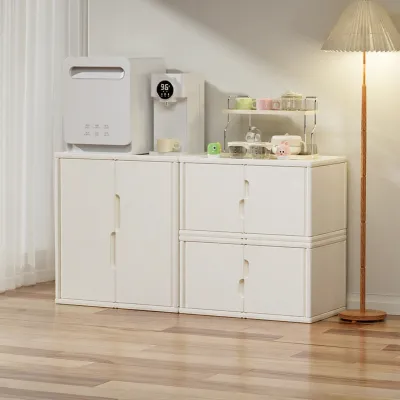
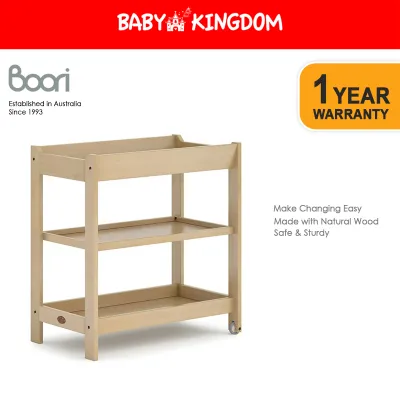
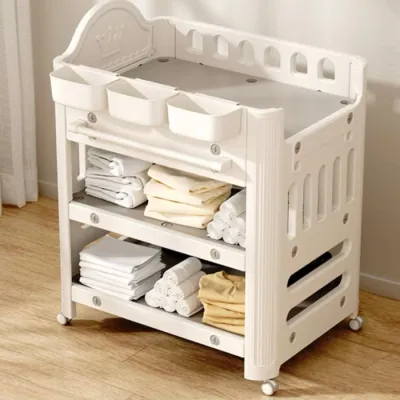
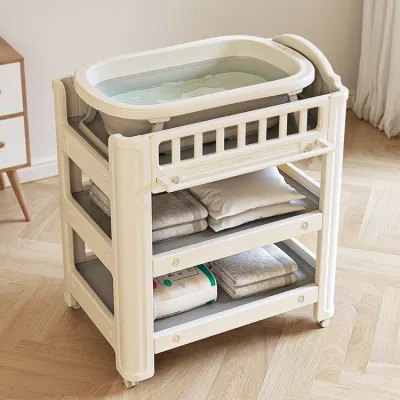
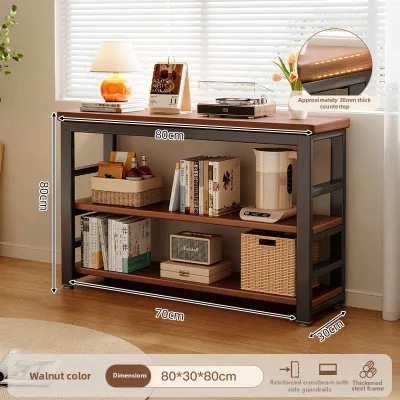
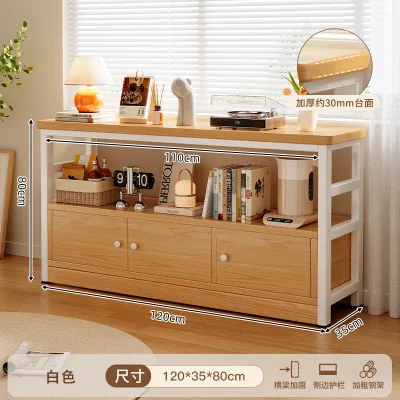
Prices are valid at publication and may change. Please refer to the product page for the latest price.
Choosing between a wide, low-profile dresser and a tall, narrow changing unit depends heavily on your room’s proportions. Wide dressers offer a generous surface area and extensive drawer space, making them highly versatile, but they require a long, uninterrupted wall. Conversely, tall and narrow changing units are excellent space-savers for tight corners, though they offer less storage volume and a smaller changing surface.
Before finalizing any purchase, verify the logistics of delivery and installation. Measure your home’s entry points, including the width of standard bedroom doors (typically 80 to 90 cm), corridor turns, and elevator dimensions. If you live in a condominium or HDB flat with tight elevator access, a pre-assembled solid wood cabinet might be difficult to maneuver. Opting for flat-pack delivery with on-site assembly can bypass these physical bottlenecks.
Ergonomics should guide your height selection. The changing surface should align comfortably with the primary caregiver’s waistline—typically between 85 cm and 105 cm from the floor. Diaper changes occur up to ten to twelve times a day in the early months, and an improperly sized cabinet can lead to severe lower back strain. Test the height by standing upright and ensuring you can reach the surface without bending your spine excessively.
Audit Your Storage Needs for Daily Diapering Routines
A highly functional diapering station requires a systematic approach to storage. Parents must organize supplies into two main categories: immediate-reach essentials and bulk storage. Immediate-reach items include diapers, baby wipes, barrier creams, and cotton balls. Bulk storage accommodates extra boxes of diapers, seasonal clothing, swaddles, and bedding.

During an active diaper change, caregiver safety rules dictate that one hand must remain on the baby at all times to prevent accidental falls. Therefore, accessibility is a primary consideration. Open shelving or top drawers equipped with smooth, high-quality drawer runners allow for easy, one-handed access. Deep drawers are ideal for concealing bulkier items, while shallow top drawers or open cubbies keep daily essentials visible and reachable.
When evaluating a baby changing cabinet, use a structured framework to audit its storage compartments. Check the internal drawer depth—drawers should be at least 15 to 20 cm deep to accommodate stacked diapers vertically. Review the manufacturer’s specified weight capacity for each drawer to ensure the runners can support the weight of fully loaded compartments without sagging or jamming over time.
Consider the utility of integrated side caddies or hooks. These accessories keep diaper disposal bags, hand sanitizers, and clean changes of clothes within arm’s reach of the caregiver, yet safely out of the baby’s grasp. Keeping sanitizing products and small plastic bags elevated prevents accidental ingestion or choking hazards as your baby becomes more active and curious.
Verify Essential Safety and Stability Mechanisms
Safety is the paramount consideration when selecting any nursery furniture. Tipping accidents pose a severe risk to infants and toddlers as they begin to pull themselves up on furniture. To mitigate this hazard, verify that the baby changing cabinet includes a dedicated anti-tip kit and wall-anchoring hardware. Check the product documentation to confirm compatibility with your specific wall type. In Singapore, HDB flats typically feature solid concrete walls that require masonry wall plugs and concrete drill bits for secure installation, whereas some modern condominiums use drywall partitions that require specialized toggle bolts.
The changing pad itself must remain completely secure on top of the cabinet. Look for cabinets that feature a recessed changing topper with raised safety rails on at least three, and preferably four, sides. The changing pad should fit snugly within these rails without any gaps. Verify that the changing pad has a non-slip base or includes safety straps that screw directly into the back of the cabinet frame to prevent the pad from sliding during sudden baby movements.
Inspect the drawer mechanisms for safety features. High-quality cabinets utilize soft-close drawer runners to prevent pinched fingers as your child grows and begins exploring. Additionally, look for drawer safety stops or limiters that prevent the drawers from being pulled completely out of the frame. Installing child-proof locks on lower drawers is highly recommended to restrict access to hazardous items like diaper creams, medicines, and wipes.
Always locate and verify the manufacturer’s stated weight limit for the changing surface. Most standard changing cabinets are rated for babies up to 11 kg or 15 kg, but these limits vary widely by brand and construction. Check the product manual for specific age or developmental warnings; for instance, manufacturers often advise stopping use of the changing table once the baby can roll over, sit up, or pull themselves up independently. Never leave your baby unattended on the changing surface under any circumstances. If the unit shows signs of structural instability, cracks, or loose joints, stop use immediately and consult a professional.
Select Materials Built for Tropical Humidity
Singapore’s tropical climate presents unique challenges for nursery furniture, with indoor relative humidity levels often exceeding 80% when air conditioning is not in use. This persistent moisture can cause low-quality materials to warp, swell, split, or develop mold. When choosing a baby changing cabinet, check the manufacturer’s technical specifications for moisture-resistant finishes and high-quality materials.
Treated solid hardwoods, such as rubberwood, beech, or birch, offer excellent durability and natural resistance to warping when properly sealed. If opting for engineered wood, ensure the product specifications detail the use of high-grade, moisture-resistant Medium Density Fibreboard (MDF) or High Density Board (HDB). These materials should feature low-formaldehyde emissions, which you can verify by looking for specific safety standards or certifications (such as ASTM, EN 12221, or GREENGUARD Gold) mentioned in the product manual.
Pay close attention to the quality of the edge banding and sealing. Poorly sealed edges allow humid air and accidental liquid spills to penetrate the core material, leading to unsightly swelling and peeling. Inspect the cabinet to ensure all exposed edges are tightly sealed with high-quality PVC or ABS edge banding, particularly around the top changing surface where liquids are most likely to pool.
The cabinet surfaces must be non-porous, easy to wipe clean, and resistant to frequent sanitization and common nursery stains. Review the manufacturer’s care labels and material guides to confirm the finishes are water-resistant and can withstand regular cleaning with mild, baby-safe detergents. Before applying any cleaning agents or sanitizers, check the manufacturer’s care instructions for both the cabinet and the changing pad. If instructions conflict or the material is unidentified, contact the manufacturer directly. Avoid assuming a cabinet’s durability based solely on its brand name or aesthetic appearance; always verify the actual material composition and coating details.
Plan for Long-Term Use and Furniture Transition
A high-quality baby changing cabinet represents a significant financial investment, with budget-friendly options starting under S$200, mid-range modular units ranging from S$300 to S$600, and premium solid wood convertible dressers exceeding S$800. To maximize the value of this investment, plan for how the furniture will transition once your child outgrows the diapering phase, which typically occurs around two years of age.
Modular designs offer excellent long-term utility. Many modern changing cabinets feature a removable changing topper. Once diapering is no longer necessary, you can easily unscrew or detach the topper to reveal a flat, standard dresser top. This allows the furniture to remain highly functional as a bedroom chest of drawers throughout your child’s toddler years and into adolescence.
When selecting a cabinet, evaluate its aesthetic neutrality and structural durability. Neutral colors like white, soft grey, or natural wood tones, combined with classic, understated hardware, ensure the piece blends seamlessly into evolving room decors. High-quality drawer runners, robust joinery, and durable finishes ensure the cabinet survives years of daily use, potentially transitioning into a guest room or hallway storage unit later in its lifecycle.
Parents should carefully weigh the trade-offs between a dedicated, single-purpose changing table and a multi-purpose dresser. A dedicated changing table is often more affordable and lightweight, but its utility drops sharply after the first two years. In contrast, a multi-purpose dresser paired with a secure, removable changing pad requires a higher upfront cost but offers a lifespan of a decade or more, making it a highly sustainable choice for growing families.
Frequently Asked Questions (FAQ)
Can I use a regular dresser instead of a dedicated baby changing cabinet?
Yes, you can repurpose a regular dresser for diaper changes, provided you implement critical safety and ergonomic adjustments. First, compare the height and depth of the dresser against standard changing units. The dresser must stand at an ergonomic height (ideally 85 to 105 cm) to prevent caregiver back strain during frequent daily changes.
Additionally, safety modifications are mandatory. The dresser must be securely anchored to the wall using a compatible anti-tip kit to prevent tipping accidents. You must also install a secure, non-slip changing pad with safety straps, or mount a dedicated wooden changing topper frame firmly to the dresser top to ensure the pad cannot slide or shift during use.
Community discussion
Share your experience or ask a question. Comments are reviewed before publication.