
Choosing a baby bed rail guard requires balancing your child’s developmental milestones with the physical dimensions of your bed frame and mattress. In Singapore, where families often transition toddlers from cribs to single, super single, or shared queen beds, finding a secure fit is essential to prevent accidental falls and dangerous entrapment gaps. To make the right choice, you must evaluate your child’s mobility, measure your mattress depth, and verify that the guard’s anchoring system is fully compatible with your specific bed base. Taking the time to assess these factors ensures a secure sleeping environment that supports your child’s independence while giving you peace of mind.
Assess Your Child's Developmental Stage and Safety Needs
Transitioning from a crib to a toddler bed or a standard adult bed is a major milestone in your child’s early years. This transition typically occurs when a child begins climbing out of their crib or shows signs of readiness for a more open sleeping arrangement, usually between the ages of one and a half and three years. A baby bed rail guard serves as a temporary protective barrier during this phase, helping to prevent a sleeping child from rolling out of bed onto the floor. However, it is important to remember that these guards are designed for children who can get in and out of bed independently, rather than as a containment tool to keep an active toddler from leaving their room.
Your child’s unique sleep patterns play a significant role in determining the type of rail you need. Active sleepers who constantly shift, roll, and rotate throughout the night require robust, full-length coverage to ensure they remain safely on the mattress. For these restless sleepers, a longer rail that covers a significant portion of the bed’s length is ideal to prevent them from slipping out at the corners. Conversely, calmer sleepers who tend to stay in one position may only need a partial rail to provide a gentle physical boundary, helping them sense the edge of the bed without completely enclosing them.
Products mentioned in this guide
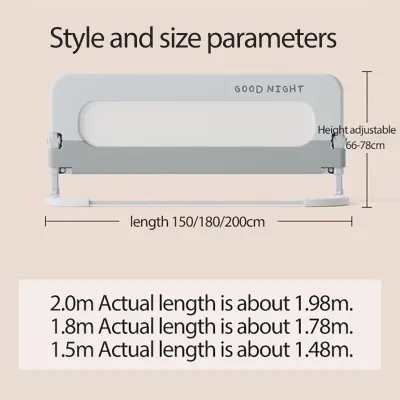
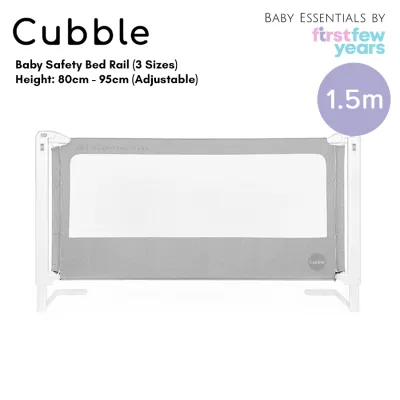
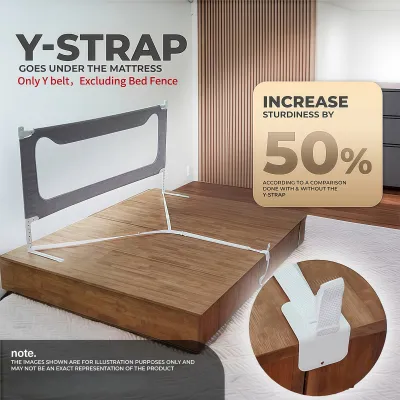
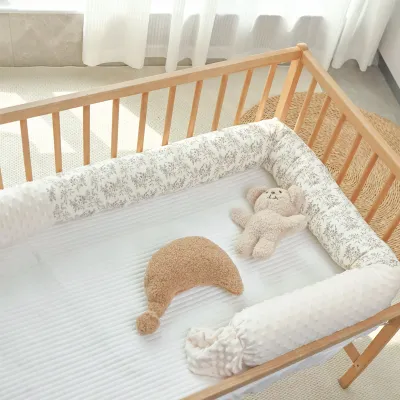
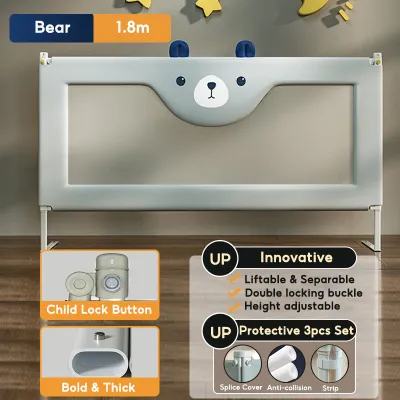
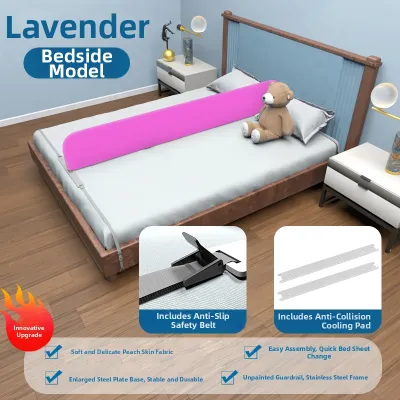
Prices are valid at publication and may change. Please refer to the product page for the latest price.
It is crucial to recognize the warning signs that indicate a standard bed rail may no longer be safe or appropriate for your child. If your child is highly agile, capable of climbing over the rail, or exceeds the manufacturer’s specified weight and height limits, the rail itself can become a climbing hazard. In such cases, the risk of a fall from a climbed rail is often greater than a fall from the bed itself. Transitioning to a floor bed or removing the rails entirely is often the safest course of action to prevent high-fall injuries. Always supervise your child and observe their physical capabilities to determine if they are ready for this transition.
Match the Bed Rail to Your Bed Frame and Mattress
A bed rail must physically match your bed frame size to function safely and effectively. In Singapore, standard bed sizes include single, super single, and queen, each with distinct dimensions that affect how a rail sits against the mattress. Before purchasing a baby bed rail guard, check the manufacturer’s specifications to ensure the rail length does not overhang the bed frame or leave insufficient coverage at the head or foot of the bed. An ill-fitting rail can create unstable pressure points, cause the rail to lean outward, or leave large, hazardous gaps that compromise safety.

Mattress thickness and weight are critical factors for the anchoring system of any bed rail. Many bed rails rely on flat metal or plastic anchor plates that slide underneath the mattress, secured by the mattress’s weight or additional tension straps. If your mattress is exceptionally light, thin, or thick, the anchoring system may not sit flush or maintain the necessary tension. Always verify that your mattress depth falls within the manufacturer’s approved range to ensure the rail remains upright and rigid. A mattress that is too light may allow the rail base to slide out, while a mattress that is too thick can reduce the effective height of the rail, making it easier for a child to roll over the top.
Preventing gaps is the most critical safety step when matching a rail to your bed. A dangerous gap between the mattress and the rail can lead to entrapment, where a child becomes wedged in the space, posing a severe suffocation risk. To eliminate this risk, measure your mattress carefully and select a rail that presses firmly and flush against the side of the mattress. There should be no space or “give” when lateral pressure is applied to the rail. If a gap exists, do not use the rail; instead, adjust the anchoring straps or seek a compatible model designed specifically for your mattress profile.
Evaluate Key Safety Features and Mechanisms
When evaluating a baby bed rail guard, the locking and hinge mechanisms deserve close inspection. Look for secure, child-proof double-lock systems that require a two-step physical action to fold or lower the rail. This design prevents curious toddlers from accidentally releasing the mechanism from the inside, ensuring the rail remains locked in its upright, protective position throughout the night. Avoid rails with loose or easily accessible single-button releases that a child could easily manipulate while playing in bed.
Mesh breathability and visibility are essential for both safety and peace of mind. The fabric panel of the rail should consist of a high-density, breathable mesh that allows continuous airflow, reducing the risk of suffocation if a child sleeps with their face pressed against the guard. Additionally, transparent mesh allows you to easily monitor your child from across the room or via a baby monitor without needing to enter the bedroom and disturb their sleep. Ensure the mesh is tightly woven and securely attached to the frame to prevent small fingers from getting caught.
Structural stability depends heavily on the base frame and the securing straps. A high-quality bed rail features a sturdy steel or reinforced aluminum frame that resists bending under pressure. The base should be equipped with adjustable safety straps that wrap around the opposite side of the bed frame or box spring, anchoring the rail tightly in place. This setup ensures that even if an active child rolls forcefully against the rail, the barrier cannot slide outward or tip over. Check that the straps are made of durable, non-stretch material that maintains tension over time.
Compare Common Bed Rail Types for Your Setup
Fold-down mesh rails are highly popular for shared family beds, such as queen or super single setups. These rails feature hinges that allow the entire mesh panel to swing downward, providing easy access for parents to make the bed, change sheets, or sit with their child during bedtime stories. However, they require sufficient clearance space alongside the bed frame to fold down completely, making them less suitable for tight bedroom layouts where the bed is positioned close to a wall or other furniture. If you choose a fold-down model, ensure the folding mechanism is located well away from the child’s reach.
Fixed wooden or metal rails are typically designed for dedicated toddler beds or single beds with built-in wooden frames. These rails remain permanently in place and do not fold down, offering exceptional structural rigidity and a classic aesthetic that matches wooden furniture. Because they do not have moving parts or hinges, they have fewer points of potential mechanical failure, making them a highly durable option for long-term use in a dedicated child’s bedroom. They are ideal for older toddlers who can navigate around the end of the rail to get in and out of bed independently.
Portable travel rails are lightweight, compact, and designed for temporary setups, such as hotel stays or visits to relatives. These rails often feature inflatable designs or folding metal frames that fit easily into travel luggage. While convenient, portable rails have strict limitations regarding compatible bed types and mattress weights. They should never be used as a permanent daily solution, and caregivers must carefully verify the safety of the temporary bed setup before installation. Always inspect the temporary mattress to ensure the portable rail can be anchored securely without creating dangerous gaps.
Safe Installation, Daily Checks, and Transitioning Out
Proper installation is paramount to ensuring the effectiveness of any baby bed rail guard. Begin by carefully reading the manufacturer’s instruction manual and identifying all included components. Secure the anchoring plates or straps tightly beneath the mattress, ensuring the tension is adjusted so that the rail is pulled flush against the mattress side. Once installed, perform a physical push-and-pull test to confirm there is zero movement or gap between the rail and the mattress edge. If the rail wobbles or pulls away, re-tighten the straps or reinstall the base plates.
A daily inspection routine helps identify potential safety hazards before they lead to an accident. Before putting your child to bed each night, take a moment to check for loose screws, shifted base frames, or worn tension straps. Inspect the mesh fabric for any tears, frayed seams, or broken zippers that could compromise the rail’s structural integrity. If you notice any damage or shifting, discontinue use immediately until the rail is adjusted or replaced. Regular maintenance ensures the rail remains a reliable barrier throughout its period of use.
Knowing when to transition out of a bed rail is just as important as knowing when to install one. As your child grows, their physical capabilities and coordination improve. When your child can easily climb in and out of bed independently without assistance, or when they reach the manufacturer’s maximum height and weight thresholds, the rail should be removed. Transitioning to a standard bed without rails, or using a low floor bed, encourages independence while maintaining a safe sleeping environment. Celebrate this milestone with your child to help them feel confident in their new sleeping setup.
Frequently Asked Questions (FAQ)
Can I use a bed rail on a bunk bed or a bed with a slatted base?
Standard baby bed rail guards are generally unsafe and incompatible with bunk beds, especially the top bunk. Elevated beds present a high risk of falls, and standard rails are not designed to withstand the unique structural demands or height risks of a top bunk. For beds with a slatted base, you must ensure that the anchoring straps or base plates do not slip between the slats or damage the frame. Use a solid board or a rail specifically designed with a wide, flat base plate that spans multiple slats to ensure a stable, secure foundation.
At what exact age or weight should I remove the baby bed rail guard?
There is no universal age or weight for removing a bed rail, as children develop at different rates. Instead, look for key physical milestones, such as when your child can safely climb in and out of bed independently without tripping or struggling. Additionally, always consult your specific product’s manual to verify the manufacturer’s maximum weight and height limits. Once your child approaches these limits or demonstrates the agility to climb over the rail, it is time to remove the guard to prevent accidental falls.
Community discussion
Share your experience or ask a question. Comments are reviewed before publication.