
To maximize milk output with the Spectra S1 pump, you must strategically navigate between its Massage and Expression modes while finding your unique “maximum comfortable vacuum.” Pumping should never cause pain. Instead of simply turning the suction to the highest level, the key to efficient milk expression lies in mimicking a baby’s natural nursing patterns—starting with fast, light stimulation to trigger a let-down, followed by slower, deeper draws to drain the breast.
By understanding how to customize the cycle speeds and vacuum strengths on your Spectra S1, you can establish an efficient, comfortable routine that supports your lactation journey.
Understanding the Spectra S1 Modes and Control Panel
The Spectra S1 is a hospital-grade double electric breast pump favored by many parents for its portability, built-in rechargeable battery, and highly customizable settings. To get the most out of this device, it is essential to understand what each button on the control panel does and how the two primary operating modes function.
Products mentioned in this guide
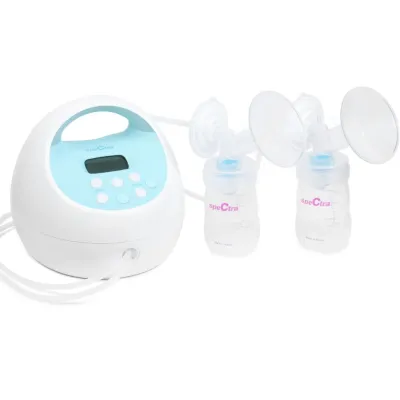
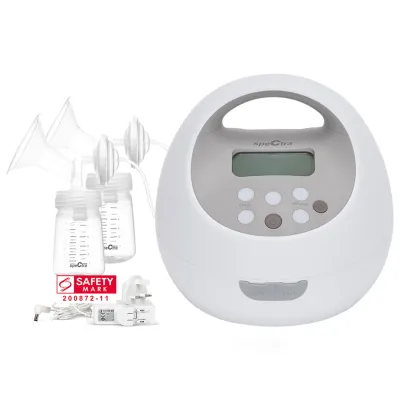
Prices are valid at publication and may change. Please refer to the product page for the latest price.
The control panel features an intuitive LCD screen surrounded by several tactile buttons: the power button in the center, a cycle adjustment button (which controls how many times the pump sucks per minute), vacuum adjustment buttons (which control the strength of the suction), a night-light button with two brightness levels, and a mode button represented by two wavy lines. The screen displays your current mode, cycle speed, vacuum level, a timer, and the remaining battery life.
The pump operates in two distinct phases:
- Massage Mode (Stimulation Phase): Activated by pressing the mode button (wavy lines), this mode is characterized by a fast, shallow pumping rhythm. The cycle speed is fixed at 70 cycles per minute (CPM), while the vacuum strength can be adjusted from level 1 to 5. This mode mimics the rapid, light sucking a baby performs at the start of a feed to signal your body to release milk.
- Expression Mode (Extraction Phase): This is the default mode when the pump is turned on for the first time. It features a slower, deeper sucking pattern. In this mode, you can adjust both the cycle speed (ranging from 38 to 54 CPM) and the vacuum strength (ranging from level 1 to 12). This mode mimics the slow, steady swallowing rhythm of a baby once milk is actively flowing.
While mastering these settings is crucial, even the most optimized program cannot compensate for an incorrect flange size. If your breast shield (flange) is too small or too large, it can compress your milk ducts, cause friction, and significantly reduce your total output. Before adjusting your machine settings, measure your nipple diameter (excluding the areola) and consult the manufacturer’s sizing guidelines to ensure a proper fit.
A Step-by-Step Pumping Routine for Optimal Milk Yield
Establishing a consistent settings sequence during each session helps train your body to respond quickly to the pump. Here is a reliable, step-by-step routine designed to maximize milk extraction while prioritizing tissue comfort.

Step 1: Start in Massage Mode
Begin your session by turning on the pump and pressing the mode button to enter Massage Mode. Set the cycle speed to 70 and adjust the vacuum to a low, comfortable level, typically starting at level 2 or 3. Keep the suction gentle; the goal is to stimulate the nerves in your nipple to trigger the oxytocin reflex, which contracts the milk ducts and pushes milk forward. Stay in this mode for approximately 2 to 3 minutes, or until you see milk start to drip or spray into the bottle.
Step 2: Transition to Expression Mode
Once your milk begins to flow steadily, press the mode button again to switch to Expression Mode. The pump will transition to a slower rhythm. It is common to start this phase at a cycle speed of 54 CPM and a vacuum level of 4 or 5.
Step 3: Gradually Increase the Vacuum
Slowly increase the vacuum level one step at a time. Your goal is to find your “maximum comfortable vacuum.” This is the highest suction level you can tolerate without feeling any pain, pinching, or pulling discomfort. If you feel any pain, immediately lower the vacuum by one or two levels. Pain triggers the release of adrenaline, a hormone that actively inhibits the let-down reflex and constricts your milk ducts, resulting in less milk expressed.
Step 4: Adjust the Cycle Speed
As your milk flows, you can adjust the cycle speed to match the rate of your flow. When milk is flowing rapidly, keeping the cycle speed higher (around 50 or 54 CPM) can help maintain the momentum. As the flow begins to slow down and transition from steady streams to drips, lower the cycle speed to 46, 42, or 38 CPM while slightly increasing the vacuum level if comfortable. This slower, stronger pull mimics how a baby sucks more deeply to extract the thicker, fat-rich hindmilk at the end of a feed.
Safety Boundary: Pumping should never be a test of endurance. If you experience pain, nipple blanching (where the nipple turns white or blue due to restricted blood flow), or if your breast tissue is being pulled excessively into the flange tunnel, stop the pump immediately. Reduce the suction level and verify your flange alignment before restarting.
Fine-Tuning Settings to Maximize Output and Comfort
To elevate your pumping sessions from standard extraction to maximum yield, you can employ several advanced settings strategies that work in harmony with your body’s natural physiology.
One of the most effective techniques for increasing output is triggering multiple let-downs. During a typical 20-minute pumping session, your milk flow will naturally slow down or pause after the initial let-down is drained. Instead of continuing to pump in Expression Mode with no milk flowing, switch the Spectra S1 back to Massage Mode (Cycle 70) for 2 to 3 minutes. This rapid stimulation can trick your body into releasing a second or even third wave of oxytocin, starting another milk flow. Once the milk starts flowing again, switch back to Expression Mode.
It is a common myth that higher suction levels yield more milk. In reality, excessive suction causes micro-trauma to the delicate breast tissue, leading to localized swelling and inflammation. This swelling can physically block the milk ducts, making it harder for the pump to empty your breasts completely. Prioritizing physical comfort and relaxation is far more effective for maintaining a robust milk supply.
The Spectra S1 features an automatic memory function that saves your last used settings. When you turn the pump on, it will resume at the exact cycle speed and vacuum level you used when you turned it off. While this is highly convenient, always exercise caution. If your previous session ended on a high vacuum level, you may want to manually lower the suction before placing the flanges on your breasts to avoid a sudden, painful start.
Additionally, physical alignment plays a major role in your overall output. If you use a hands-free pumping bra, ensure it is not compressing your breasts too tightly. Overly tight bras can restrict milk flow in the outer ducts. Ensure you sit in a comfortable, upright position, leaning slightly forward to let gravity assist the downward flow of milk into the collection bottles.
Troubleshooting Low Milk Output and Discomfort
If you experience a sudden drop in milk volume or feel persistent discomfort while using the Spectra S1, the issue is often related to mechanical wear or physical factors rather than your body’s actual capacity to produce milk.
If you experience pain or nipple trauma during or after pumping, your first step should be to lower the vacuum settings. Next, re-evaluate your flange fit. Nipple size can change throughout your postpartum journey, meaning the flanges that fit perfectly in the first week may no longer be suitable a few months later. If adjusting the settings and changing the flange size does not resolve the pain, stop using the pump and consult a certified lactation consultant (IBCLC) or a healthcare professional.
When you notice low milk volume despite using your usual high suction settings, inspect your pump’s consumable parts. The silicone duckbill valves and backflow protector membranes are subject to wear and tear. Over time, these flexible parts stretch, warp, or develop microscopic tears, causing a significant loss of vacuum pressure. In Singapore’s warm and humid climate, ensuring these parts are completely dry after washing is also crucial for maintaining a proper vacuum seal. As a general maintenance rule, replace your duckbill valves every 1 to 3 months and your backflow membranes every 3 to 6 months, depending on how frequently you pump.
If you feel that your breasts are not completely empty at the end of a session, try incorporating “hands-on pumping.” This involves gently massaging your breasts, applying warm compresses, or performing light compressions while the pump is running. This manual assistance helps move milk from the back of the breast tissue toward the nipple, ensuring more thorough drainage.
Always consult the official Spectra S1 user manual for device-specific maintenance guidelines, error codes, and safety limits. For persistent supply concerns, painful breast lumps, or signs of infection such as mastitis, seek professional medical advice immediately.
Frequently Asked Questions (FAQ)
How long should I stay in Massage Mode before switching to Expression Mode?
You should typically stay in Massage Mode for 2 to 5 minutes, or until you see milk actively dripping or spraying into the bottles. However, because every body is different, your response time can vary based on your stress levels, fatigue, hydration, and even the time of day. If you do not see milk flowing after 5 minutes, try taking a few deep breaths, applying a warm compress, and continuing in Massage Mode for another minute before switching.
Does a higher suction level on the Spectra S1 produce more milk?
No, a higher suction level does not guarantee more milk and can actually decrease your output. If the suction is too high, it causes pain and anxiety, which triggers adrenaline production. Adrenaline blocks oxytocin, the hormone required to release milk from your ducts. For the best results, always pump at your maximum comfortable vacuum level, where you feel a strong but painless pull.
Can I use the Spectra S1 settings to power pump?
Yes, the Spectra S1 is excellent for power pumping, which mimics cluster feeding to help boost your milk supply. A standard 1-hour power pumping session using the S1 settings involves:
- Pump for 20 minutes: Start with 2 minutes in Massage Mode, then switch to Expression Mode.
- Rest for 10 minutes: Turn the pump off completely.
- Pump for 10 minutes: Start with 1 to 2 minutes in Massage Mode, then switch to Expression Mode.
- Rest for 10 minutes: Turn the pump off completely.
- Pump for a final 10 minutes: Use the same Massage-to-Expression transition to finish the session.
Community discussion
Share your experience or ask a question. Comments are reviewed before publication.