
Selecting the right breast pump is a highly personal decision that directly impacts your breastfeeding journey, comfort, and daily schedule. In Singapore’s fast-paced environment, where many mothers transition back to work or manage busy households, finding an efficient and reliable pump is essential. When comparing the Jevon baby pump to other popular brands in the market, the ideal choice depends on matching your specific pumping frequency with the verified technical specifications provided by each manufacturer. Rather than relying on unverified performance claims, smart buyers look closely at measurable parameters such as suction adjustability, flange compatibility, and battery portability to determine which model fits their lifestyle.
To make an informed decision, you must understand how to read and compare product labels and user manuals. Different brands offer varying levels of customization, and what works for one mother may not suit another. By focusing on objective criteria—such as material safety, ease of cleaning, and local warranty support—you can confidently evaluate the Jevon baby pump alongside other market alternatives without relying on marketing hype.
Core Comparison Criteria and Initial Assessment
When evaluating any breast pump, suction strength and cycle modes are the primary technical specifications to verify. Suction pressure is typically measured in millimeters of mercury (mmHg). Most standard electric pumps offer a range between 150 mmHg and 300 mmHg. It is important to check the product manual to ensure the pump offers adjustable levels, as using a suction level that is too high can cause discomfort and tissue damage without increasing milk yield. Look for pumps that feature distinct phases: a rapid, light stimulation phase to mimic a baby’s initial latch and trigger milk letdown, followed by a slower, deeper expression phase for efficient milk removal.
Products mentioned in this guide
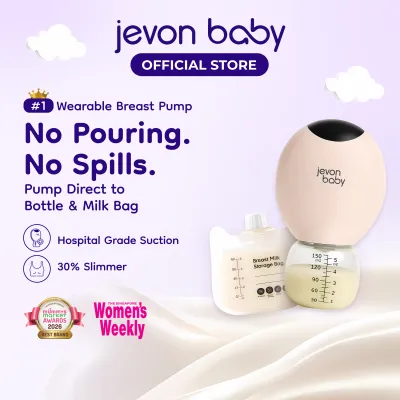
Prices are valid at publication and may change. Please refer to the product page for the latest price.
Flange sizing and compatibility are equally critical for comfort and effective milk expression. The flange is the funnel-shaped part that fits directly over your breast. An improperly sized flange can cause friction, pain, and blocked milk ducts. Before purchasing the Jevon baby pump or any alternative, measure your nipple diameter at the base using a standard measuring tool. Check the product packaging to see what flange sizes are included in the box and whether the brand offers compatible silicone inserts or alternative flange sizes. Some brands only provide one standard size, requiring you to purchase third-party inserts, while others offer a range of sizes directly.
Power options and portability determine how easily you can integrate pumping into your daily routine. For mothers who pump on the go, during commutes, or at the office, a compact and lightweight motor unit is highly beneficial. Review the battery specifications in the user manual to verify if the pump uses a built-in rechargeable lithium-ion battery, how many pumping sessions a single charge supports, and whether it charges via a standard USB-C cable. USB-C charging offers high convenience, allowing you to power the device using common phone chargers, laptops, or portable power banks while away from home.
Evaluating the Jevon Baby Pump Against Market Standards
Material safety is a non-negotiable factor when choosing feeding equipment. Because breast milk comes into direct contact with several pump components, you must verify that all plastic parts are certified BPA-free (Bisphenol A) to prevent harmful chemicals from leaching into the milk. Inspect the product packaging and manufacturer documentation for certifications showing the use of food-grade silicone and high-quality, durable plastics. These materials not only ensure safety but also withstand repeated sterilization cycles without degrading quickly.

Ease of cleaning and assembly directly affects your daily workload, especially during late-night pumping sessions. A pump with too many small, intricate parts can be tedious to wash and assemble correctly. Review the user manual to see how many components require washing after each use and whether they are dishwasher-safe. Additionally, check the manufacturer’s instructions regarding sterilization methods, as some silicone parts can degrade prematurely when exposed to high-heat steam or UV sterilizers, requiring more frequent replacements.
Smart features can add convenience, but they should be weighed against basic functionality and reliability. Some modern breast pumps feature LED or LCD screens that display the elapsed pumping time, current mode, and battery level, which helps you track your sessions without needing a separate timer. Other models include memory functions that automatically start the pump at your last-used settings. While these digital features are helpful, ensure that the physical buttons or touch controls are responsive and that the digital components do not compromise the overall durability of the motor unit.
Warranty and after-sales support are essential considerations for an appliance you will use multiple times a day. Before purchasing, verify the warranty terms offered by the seller or manufacturer. Check if there is an authorized local distributor or service center in Singapore that can handle repairs or replacements quickly. A warranty that requires shipping the unit back overseas can leave you without a pump for weeks, which is highly impractical for exclusive pumpers who rely on consistent daily use.
Matching Pump Types to Your Feeding Routine
Choosing the right category of breast pump depends heavily on your lifestyle, working arrangements, and breastfeeding goals. Manual breast pumps are hand-operated, lightweight, and completely silent, making them excellent for occasional use, travel, or as a backup in your diaper bag. They do not require electricity or batteries but do require continuous manual effort, which can be tiring for frequent sessions. Electric breast pumps use a motorized unit to automate the suction cycles, saving physical effort and offering consistent performance for regular use.
Single electric pumps allow you to express milk from one breast at a time, which is useful if you are nursing your baby on the opposite side or only need to pump occasionally. Double electric pumps express milk from both breasts simultaneously. This design not only cuts your pumping time in half but also helps stimulate higher prolactin levels, which can assist in maintaining or increasing your overall milk supply over time. For mothers returning to full-time work, a double electric pump is often the most efficient choice.
Wearable and hands-free breast pumps fit entirely inside your nursing bra without external tubes or wires, offering maximum mobility. This design is highly favored by busy mothers who need to pump while multitasking, working at a desk, or managing household chores. However, wearable pumps often have smaller milk collection cups and may have different suction dynamics compared to traditional double electric pumps. You must evaluate whether your priority is absolute mobility or maximum extraction efficiency.
To help guide your choice, consider this conditional decision framework:
- Choose a double electric pump if you are exclusively pumping, returning to full-time work, or need to maximize your milk expression in a limited timeframe.
- Verify a wearable model if you require hands-free mobility, need to pump discreetly in shared spaces, and have confirmed that the pump's weight and shape fit comfortably inside your standard nursing bras.
- Opt for a manual pump if you primarily direct-feed, only need to pump occasionally to relieve engorgement, or want a reliable, battery-free backup for short outings.
Purchasing Safely and Verifying Authenticity
When shopping for breast pumps on online marketplaces or ecommerce platforms, it is crucial to identify official brand stores or authorized retailers. Avoid buying from unverified third-party sellers who offer prices that seem unusually low, as these listings may involve counterfeit goods or parallel imports that lack local warranty coverage. Authorized sellers will typically display official distributor badges and provide clear warranty registration details.
Upon delivery, inspect the product packaging thoroughly before opening it. Look for intact factory seals, holographic security stickers, and clear branding. Locate the serial number on the box and match it with the serial number printed on the pump motor itself. If the packaging appears tampered with, or if the serial numbers do not match, contact the seller immediately and avoid using the device.
Because breast pumps are personal hygiene products, most retailers and manufacturers in Singapore enforce strict no-return policies once the outer seal or packaging is opened. Ensure you have selected the correct model and verified all specifications before breaking the seal. If you receive a defective unit, you will typically need to go through the official warranty claim process rather than a standard product return.
Immediately after purchase, register your pump on the manufacturer’s official website using the serial number. Keep your physical receipt or digital invoice in a safe place, as local service centers will require valid proof of purchase to honor any warranty claims or provide replacement parts. Proper registration ensures you receive timely support and access to genuine replacement components when needed.
Frequently Asked Questions (FAQ)
How often should I replace the silicone parts of my breast pump?
Silicone parts such as valves, membranes, and diaphragms are subject to wear and tear and should generally be replaced every one to three months, depending on how frequently you pump. Inspect these parts regularly for stretching, cloudiness, or tiny tears, which can cause a sudden drop in suction strength. Frequent sterilization, especially using high-heat methods or harsh chemicals, can accelerate the degradation of silicone, making regular replacement essential to maintain optimal pump performance. Always use manufacturer-recommended replacement parts to ensure a proper fit and maintain consistent suction.
Can I use a breast pump if I have sensitive skin or nipple trauma?
If you are experiencing nipple trauma, severe pain, or bleeding, you should stop pumping immediately and consult a lactation consultant or healthcare professional to address the underlying cause. Pumping through severe pain can worsen tissue damage and lead to infections like mastitis. For mild sensitivity, ensure you are using the correct flange size, as an ill-fitting flange is a primary cause of friction and irritation. You can also adjust your pump to its lowest comfortable suction setting and apply a safe, nipple-friendly balm after each session to support skin recovery.
Are second-hand or pre-loved breast pumps safe to use?
Using a second-hand breast pump is generally not recommended unless it is a certified multi-user, hospital-grade pump designed with a closed system. Most personal-use breast pumps are open systems or single-user closed systems where internal motor components cannot be fully sanitized. If milk or moisture enters the motor of an open-system pump, it can harbor mold, bacteria, and viruses that are impossible to clean out, posing a contamination risk to your baby. Manufacturers explicitly warn against sharing personal-use pumps, and doing so voids any remaining warranty. If you must use a pre-loved pump, ensure it is a true closed system and replace all washable parts—including flanges, tubing, valves, and bottles—with brand-new, original manufacturer components.
Community discussion
Share your experience or ask a question. Comments are reviewed before publication.