
Transitioning your child from a crib to a toddler bed is a major milestone, but it brings critical questions about their sleep setup. A toddler mattress should be medium-firm to firm. While it can be slightly more forgiving than the rock-hard surface required for a newborn, it must still provide substantial, flat support to protect your child’s developing body. Choosing the right firmness is not just about comfort; it directly impacts their skeletal development and overall sleep safety.
Why Toddler Mattress Firmness Matters for Safety and Growth
A toddler’s body undergoes rapid physical development, making the support level of their bed highly influential. During sleep, growth hormones are released, and the spine needs a flat, stable surface to remain aligned. If a mattress is too soft, the heavier parts of your child’s body—such as the hips and shoulders—will sink too deeply. This misalignment can cause muscle strain and affect bone development during these crucial formative years.
Safety remains a primary concern even after infancy. While toddlers are stronger and more mobile than infants, an overly soft mattress still poses risks. If a child rolls over onto their stomach on a surface that contours too deeply, it can restrict their breathing or cause entrapment in deep crevices. A firm surface ensures that your child’s face remains clear of the mattress material, even if they roll over during the night.
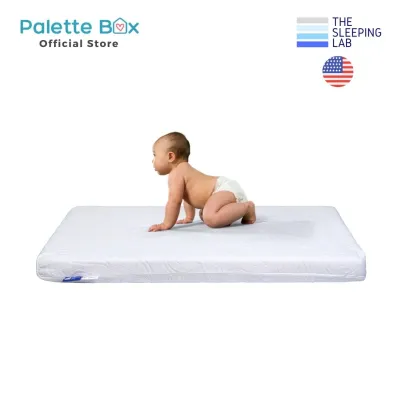
Products mentioned in this guide
![[PRE-ORDER] Getha Sunny 5 Kids Mattress / Eco Latex Mattress](https://img.lazcdn.com/g/p/0d0e2c046017d2c742bed193ef79dfaf.jpg_400x400q80.jpg_.webp)
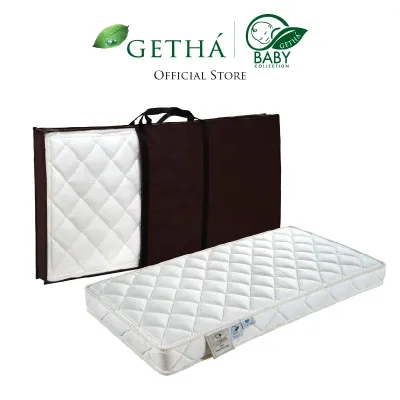
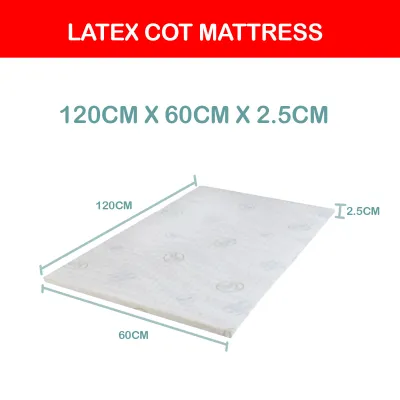
Prices are valid at publication and may change. Please refer to the product page for the latest price.
Furthermore, toddlers require a transitional sleeping surface. They have graduated from the ultra-firm, rigid support needed to prevent Sudden Infant Death Syndrome (SIDS) in infancy, but they are not yet heavy enough or structurally ready for a plush, contouring adult bed. A medium-firm mattress provides the necessary middle ground, offering a hint of pressure relief while keeping the spine perfectly supported.
Choosing the Ideal Firmness Level for a Toddler Mattress
When shopping for a toddler mattress, the ideal target is a medium-firm to firm rating. It is important to understand that adult perceptions of comfort do not apply to young children. An adult might lie on a toddler bed and find it uncomfortably hard, but a toddler’s lightweight frame does not compress the mattress materials the way an adult’s body does. What feels rigid to you provides the exact right amount of supportive pushback for a child weighing between 10 and 20 kilograms.

Adult-style plush, pillow-top, or deep-sinking memory foam mattresses are highly unsuitable for toddlers. These designs rely on a heavy body weight to sink into the comfort layers, whereas a lightweight toddler will simply rest on top of a soft layer that can unevenly sag under their concentrated weight.
To find the right match, always check the product labels and manufacturer documentation. Avoid relying on generic adult firmness scales (such as “soft,” “medium,” or “firm” designed for adults). Instead, look specifically for “toddler-specific” firmness ratings or certified dual-sided mattresses. Dual-sided options are particularly practical: they feature an ultra-firm side engineered for infants and a slightly more cushioned, yet highly supportive, side designed specifically for toddlers. Always verify the manufacturer’s age, weight, and developmental milestones before selecting or flipping a mattress. In Singapore, quality options typically fall within a broad price band of S$150 to S$400, depending on organic certifications and materials.
How to Physically Check Mattress Firmness Before Buying
Whether you are testing a mattress in a physical showroom in Singapore or evaluating a home-delivery model during its trial period, you should perform several physical checks to verify its support.
The Hand Press Test
To assess the core support, place your hand flat in the center of the mattress and press down firmly. Apply significant pressure, then release your hand. A safe toddler mattress should resist deep sinking and immediately snap back to its original flat shape. If your hand leaves a lasting indentation or if the foam takes several seconds to recover, the material is too soft and may pose a contouring hazard. Repeat this test around the edges and corners to ensure uniform density.
The Edge Support Check
Toddlers do not always sleep perfectly centered; they roll, sit on the edge to play, and climb in and out of bed independently. Sit or press heavily on the perimeter of the mattress. The edge should remain stable and not collapse outward or downward. Strong edge support prevents the child from rolling off the bed if they sleep near the side and ensures they can safely sit on the edge without the mattress sliding or folding.
The Flat Object Test
For a visual assessment of surface sag, place a heavy, flat, rigid object—such as a large hardcover book—in the middle of the mattress. Observe the surface from eye level. The mattress should support the weight of the book without any visible dipping, bowing, or deep sagging around the object. If the book tilts or sinks noticeably into a pocket, the mattress lacks the uniform surface tension required for a growing child.
Evaluating Dual-Sided Mattresses
If you purchase a dual-sided mattress, carefully inspect the cover and tags to identify which side is which. Manufacturers typically print clear labels directly on the fabric or sew-in tags indicating the “Infant Side” and “Toddler Side.” Physically press both sides to feel the difference: the infant side will feel exceptionally rigid with almost no give, while the toddler side will offer a slightly softer initial feel while maintaining a firm, supportive core. Ensure you install the mattress with the correct side facing up according to your child’s developmental stage.
Signs Your Toddler's Current Mattress Needs Replacing
A mattress does not last forever, and its structural integrity will degrade over time. You should regularly inspect your child’s bed for signs of wear. If you notice visible body impressions, permanent sagging, or a deep hollow where your child sleeps, the mattress has lost its supportive capacity and must be replaced immediately. Another indicator is if your child sinks deeply into the surface or wakes up complaining of stiffness or body aches.
Conversely, a mattress can sometimes be unsupportive by being too rigid or degraded. If your toddler is unusually restless, tosses and turns constantly, or actively avoids their bed in favor of the floor or your bed, the sleeping surface may be causing uncomfortable pressure points.
Be particularly cautious with hand-me-down or older mattresses. Over time, internal springs can weaken, and foam can break down, especially in Singapore’s humid climate where moisture can accelerate material degradation. If a mattress has lost its flat, uniform structure, or if you cannot verify its history and safety compliance, it is time to invest in a new, supportive toddler mattress to protect your child’s sleep health.
Frequently Asked Questions (FAQ)
Can I just flip my baby's crib mattress to the toddler side?
Yes, if you own a dual-sided mattress specifically designed for this transition. These mattresses feature a highly rigid infant side and a slightly softer, more pressure-relieving toddler side. Before flipping the mattress, always verify the manufacturer’s specific guidelines regarding age, weight, and developmental milestones. If your mattress is single-sided and designed solely for infants, do not attempt to use it as a modified toddler surface; instead, check the manufacturer’s instructions or transition to a dedicated toddler mattress.
Is memory foam safe and firm enough for toddlers?
Traditional, slow-rebound memory foam is generally unsafe for toddlers because it contours deeply to the body, retains heat, and can pose suffocation or entrapment risks if a child rolls over. In Singapore’s warm climate, heat retention can also lead to sleep discomfort. If you prefer foam, look for high-density, highly breathable, toddler-specific polyurethane foam or natural latex alternatives that are certified firm. Always check the product’s safety labels, certifications, and age recommendations to ensure the foam recovers its shape instantly under pressure.
Community discussion
Share your experience or ask a question. Comments are reviewed before publication.