
Selecting the right sleep surface for your infant is one of the most critical decisions you will make when preparing your nursery. A baby mattress must be exceptionally firm—much firmer than any adult mattress—feeling almost completely unyielding to the touch. This high level of firmness is essential to keep a baby’s airway clear and prevent accidents. While a plush, cozy baby cushion might look comfortable for supervised daytime lounging, it is entirely unsafe for unsupervised sleep.
Understanding the difference between adult comfort preferences and infant safety requirements is the first step toward creating a secure nursery. This guide explains why a firm surface is non-negotiable, how to evaluate mattress firmness before buying, and how to spot potential safety hazards in your baby’s sleeping area.
Why a Firm Sleep Surface Is Critical for Infant Safety
Parents often project their own sleep preferences onto their newborns, assuming that a soft, pillowy mattress will help them sleep better. However, what feels luxurious to an adult poses a severe suffocation risk to an infant. During the first few months of life, babies lack the motor skills and neck strength to lift their heads or turn away if they roll onto a soft surface.
Products mentioned in this guide
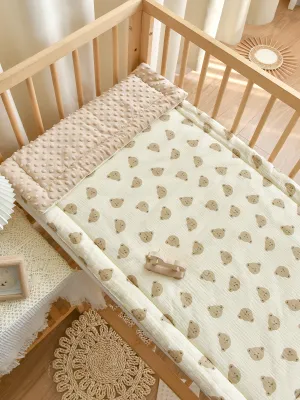
Prices are valid at publication and may change. Please refer to the product page for the latest price.
If a baby’s face sinks into a plush mattress, their nose and mouth can easily become blocked by the yielding material. This can lead to localized oxygen deprivation or the rebreathing of exhaled carbon dioxide, both of which are highly dangerous. A firm, flat sleep surface ensures that even if an infant rolls over onto their stomach, the surface remains rigid enough to keep their airway completely open and unobstructed. Pediatric safety guidelines universally agree that a firm mattress is the single most important factor in preventing sleep-related accidents.
Defining the Right Firmness Level for Baby Mattresses
To an adult, a safe baby mattress will feel surprisingly hard. When you press your hand against the surface, it should resist the pressure immediately rather than contouring to your hand or body shape. There should be no sinking feeling or lingering indentation when you lift your hand.

It is important to distinguish between a primary sleep surface and recreational baby gear. A dedicated crib mattress is designed for unsupervised overnight sleep and naps, and must meet strict firmness requirements. On the other hand, a soft baby cushion, padded lounger, or play mat is intended solely for supervised, awake floor play. These soft items should never be used as a substitute for a proper mattress.
In addition to safety, a firm surface supports healthy skeletal and spinal development. A baby’s bones are soft and growing rapidly; they require a stable, flat foundation to maintain proper spinal alignment. A soft mattress can cause the baby’s heavier midsection to sag, placing unnecessary strain on their developing spine.
Environmental factors also play a role in material selection, particularly in Singapore’s hot and humid climate. High humidity can cause low-density polyurethane foams to soften prematurely over time, compromising their supportive qualities. Additionally, dense, non-breathable foams can trap body heat, leading to discomfort and heat rash. Opting for high-resilience, breathable materials—such as food-grade polymer matrices or high-density, open-cell foam—helps maintain consistent firmness while allowing heat to dissipate efficiently.
Practical Tests to Check Mattress Firmness Before Buying
You do not have to guess whether a mattress is firm enough. There are straightforward, hands-on tests you can perform in a retail showroom or at home to verify that a mattress meets safety standards before allowing your baby to sleep on it.
The Hand Press and Resilience Test
To check the core resilience and rebound speed of the mattress, place it on a flat surface and press your palm firmly down into the center, as well as several points near the edges. Apply significant downward pressure, then release your hand quickly.
The mattress should resist your hand and snap back to its original flat shape immediately. There should be no lasting impression, handprint, or slow-rebounding contour left behind. If the material takes more than a second to recover its shape, or if it feels like it is slowly cradling your hand, it lacks the necessary resilience. Avoid memory foam, gel-infused contouring foams, or plush pillow-top designs, as these materials are designed to conform to pressure and are unsafe for infant sleep.
The Edge Support and Gap Check
A safe mattress must maintain its structural integrity right up to its edges. Press down firmly along the perimeter and corners of the mattress. The edges should remain rigid and not collapse or sag under localized weight. Weak edge support increases the risk of the mattress sloping downward, which can cause a rolling baby to slide and become trapped between the mattress and the crib side.
Next, verify the physical fit within your specific cot or crib using the “two-finger rule.” Once the mattress is placed inside the crib, try to slide your index and middle fingers between the edge of the mattress and the wooden crib frame. If you can fit more than two fingers into this space, the mattress is too small, creating a dangerous gap where a baby’s limbs or head could become wedged.
Finally, run your hand across the entire surface to confirm it is completely flat. There should be no elevated borders, decorative tufting, quilted ridges, or built-in sloping sections. The entire sleep plane must be uniform and level.
Red Flags and Unsafe Comfort Additions
One of the most common nursery mistakes is trying to soften a safe, firm mattress. Adding soft mattress toppers, thick quilted protectors, folded blankets, or placing a plush baby cushion inside the crib completely defeats the purpose of the firm mattress and introduces severe hazards. Keep the sleep surface bare: use only a tight-fitting, breathable fitted sheet over the mattress.
Using second-hand or hand-me-down mattresses is another significant risk. Over years of use, the internal core of a mattress—whether foam, spring, or fiber—can degrade, developing invisible soft spots or sagging areas that no longer provide adequate support. Additionally, older mattresses may have accumulated moisture, mold, or dust mites, which can trigger allergies in sensitive infants.
Before finalizing your purchase, always check the product label, packaging, and manufacturer instructions. Verify that the mattress is explicitly certified and intended for unsupervised infant sleep in a cot or crib. Avoid items labeled only for “lounging,” “supervised play,” or “temporary rest” if you intend to use them for overnight sleep. Always defer to the manufacturer’s age, weight, and setup instructions, and if instructions conflict with your crib design, consult a nursery specialist or the manufacturer directly.
Frequently Asked Questions (FAQ)
Can a baby sleep on a soft baby cushion or lounger?
No, a baby should never sleep unsupervised on a soft baby cushion, positional lounger, or padded nest. These products are designed strictly for supervised, awake lounging on the floor. Because of their soft, raised sides and plush filling, they pose a high risk of suffocation if a baby rolls over or turns their head. They should never be placed inside a crib, bassinet, or playpen for sleep.
Will a firm mattress negatively affect my baby's bone development?
No, a firm mattress will not hurt your baby’s bones; in fact, it is highly beneficial. A firm, flat surface is the pediatric standard for supporting healthy skeletal and spinal development. Unlike adults, infants do not experience pressure point discomfort on firm surfaces because their bodies are light and highly flexible. A stable base gives them the resistance they need to push up, roll, and build motor strength safely.
Community discussion
Share your experience or ask a question. Comments are reviewed before publication.