
A baby crib mattress must be exceptionally firm—much firmer than any mattress an adult would find comfortable. The sleep surface must remain flat and rigid under your baby’s weight to prevent the mattress from conforming to their face, keeping their airways completely clear. Understanding how manufacturers engineer this firmness and how to verify it at home is essential for creating a safe sleep environment.
Why Mattress Firmness Matters for Infant Safe Sleep
Unlike adults, who benefit from pressure-relieving, contouring surfaces, infants require a rigid and flat surface for safe sleep. A firm mattress prevents the surface from indenting or molding around a baby’s nose and mouth. If a baby rolls onto their stomach on a soft surface, the material can pocket their exhaled breath, leading to carbon dioxide rebreathing or physical suffocation.
Another critical risk of inadequate firmness is the “hammock” effect. When a mattress sags or indents significantly under weight, it creates a sloped pocket. A sleeping infant can easily roll into this dip and become trapped, especially if they have not yet developed the neck strength and motor skills to roll back over.
Products mentioned in this guide
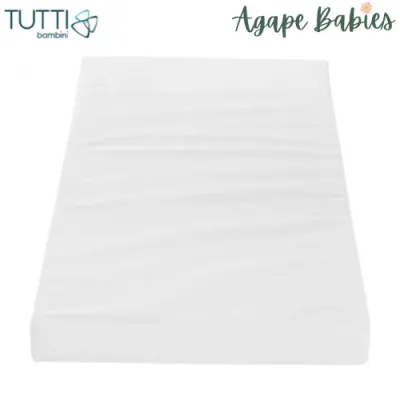
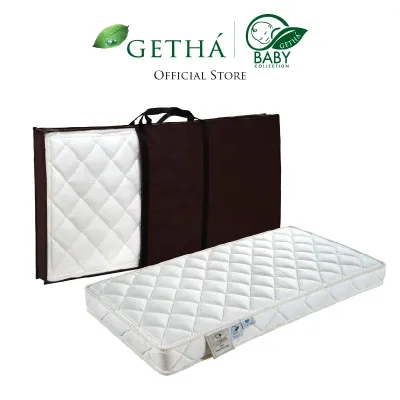
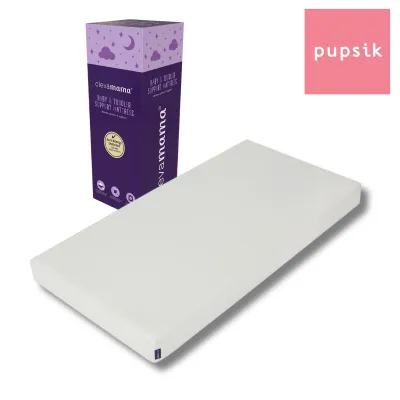
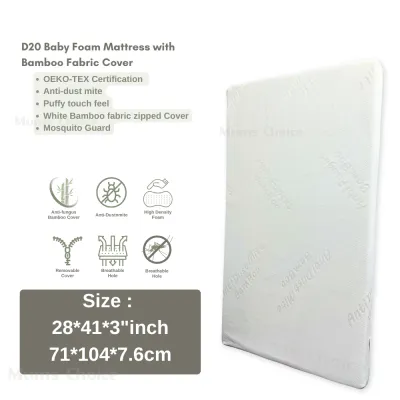
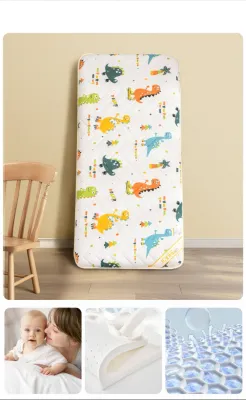

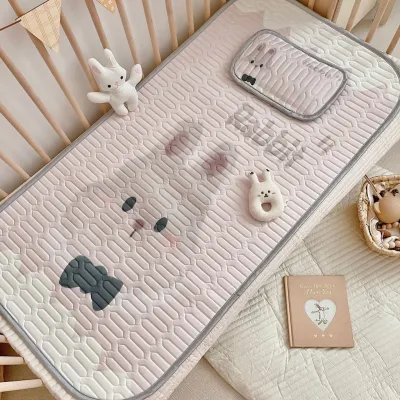
Prices are valid at publication and may change. Please refer to the product page for the latest price.
Adults often mistake a rock-hard mattress for an uncomfortable one, but infants do not have the same pressure points as older children or adults. Their developing bones and muscles are best supported by a flat, unyielding surface. Altering this surface in search of perceived comfort can introduce severe safety hazards.
While general safe sleep guidelines apply to all healthy infants, individual health needs can vary. If your baby has specific medical conditions, such as severe gastroesophageal reflux or developmental delays, consult your pediatrician or a qualified healthcare professional for personalized guidance regarding their sleep setup.
How to Test and Verify Crib Mattress Firmness at Home
You can easily evaluate whether a crib mattress meets the necessary firmness standards before and after purchase using simple, observable checks.

The Hand Press Test To perform this test, press your hand down firmly in the center of the mattress, and then repeat the test along the edges and corners. The mattress should resist the downward pressure and spring back to its completely flat shape immediately when you lift your hand. If the mattress leaves a lasting indentation, feels spongy, or slowly recovers its shape, it is too soft for an infant and should not be used.
The Two-Finger Rule While not a direct test of surface firmness, checking the physical fit of the mattress inside the crib frame is a critical safety step. Ensure there is no gap wider than two fingers between the outer edge of the mattress and the inner crib rails. A gap larger than this poses an entrapment hazard where a baby could slide off the firm surface and become wedged.
A Warning Against Soft Additions Never attempt to soften a firm mattress. Parents often worry that a firm surface is uncomfortable and try to add plush mattress toppers, memory foam pads, pillows, thick blankets, or sheepskins. These additions introduce severe suffocation and entrapment hazards. Always follow the manufacturer’s instructions regarding acceptable fitted sheets, and check the label of any mattress pad to ensure it is specifically approved for infant use.
If a mattress fails the hand-press test, feels spongy, or sags under minor pressure, stop using it immediately. Do not attempt to modify the mattress core to make it firmer; instead, replace it with a model that meets infant safety standards.
How Different Brands Approach and Deliver Firmness
Manufacturers utilize different engineering techniques and materials to achieve the necessary rigidity for infant sleep. Understanding these structural differences helps you navigate the market and choose a model that retains its support over time.
Innerspring vs. High-Density Foam Constructions
Innerspring mattresses rely on a network of tempered steel coils to provide support. This construction naturally delivers a highly rigid, unyielding surface. Brands often vary the gauge (thickness) of the steel and the total coil count to adjust the firmness. A lower gauge number indicates thicker, stiffer wire, which generally offers more robust edge support and prevents the borders of the mattress from sagging when a baby stands or rolls near the edge.
High-density foam mattresses achieve their firmness through specialized polyurethane or poly-foam formulations. Unlike adult memory foam, which is designed to contour to the body, infant foam must resist compression. When evaluating foam models, look for high-density specifications rather than overall thickness; a high-density foam maintains its structural integrity and resists sagging far better over years of use than lower-density alternatives.
Dual-Sided Designs for Infants and Toddlers
Many modern brands design dual-sided (or dual-firmness) mattresses to extend the product’s lifespan. These models feature an extra-firm side engineered specifically for the safety requirements of infants, and a slightly softer, more resilient side designed for toddler comfort.
To use these safely, you must carefully identify which side is which. Manufacturers typically print clear labels directly onto the mattress core or cover, or use color-coded foam layers. Keep the infant side facing up initially. Do not flip the mattress to the toddler side until your child has transitioned to a toddler bed or has met the specific age and weight milestones defined in the manufacturer’s instruction manual.
Natural Materials Like Coir and Latex
For parents seeking organic or natural options, brands often utilize materials like coconut coir (fibres bound with natural latex) to create a highly supportive core. Coir is naturally fibrous and rigid, providing an excellent, breathable foundation that resists compression.
Natural latex is another common material, valued for its durability and elasticity. However, because natural latex can vary in density, it must be specifically formulated and tested to meet infant firmness standards. Before using any natural-material mattress, verify that it passes the physical hand-press test and check the manufacturer’s documentation to ensure it complies with recognized safety standards.
Key Specifications and Labels to Check Before Buying
When shopping for a baby crib mattress, look past marketing terms like “orthopedic,” “pediatrician-approved,” or “luxury comfort.” These terms are unregulated and do not guarantee safety. Instead, focus on verifiable technical specifications and safety certifications.
- Weight and Density: For foam mattresses, a heavier overall weight often indicates a higher foam density. While not a universal rule, heavier foam models generally resist sagging and maintain their firm support longer than lightweight, cheap foam alternatives.
- Cover Fit and Materials: The mattress cover plays a critical role in safety. Ensure that any included waterproof or breathable cover fits exceptionally tight over the mattress core. Loose, bunching, or highly quilted covers can create soft folds that pose a suffocation risk, undermining the firmness of the underlying mattress.
- Safety Standards and Compliance: Always check the product labeling for compliance with recognized safety standards. In Singapore, look for products that meet international standards such as the US Consumer Product Safety Commission (CPSC) guidelines, European Standards (EN 16890), or local enterprise safety regulations.
Always verify these certifications directly on the manufacturer’s official website or packaging. If a brand cannot provide verifiable documentation of compliance with infant safe sleep standards, do not purchase the product.
Frequently Asked Questions (FAQ)
Can I use a soft mattress topper to make the crib more comfortable?
No, you should never use a soft mattress topper, memory foam pad, or extra cushioning in an infant’s crib. These soft layers conform to a baby’s face, creating an immediate suffocation hazard and increasing the risk of SIDS. The sleep surface must remain flat and rigid. If you are concerned about comfort, remember that infants do not experience firmness the way adults do; a rigid surface is both comfortable and safe for them.
When is it safe to flip to the softer toddler side of a dual mattress?
You should only flip a dual-sided mattress to the toddler side when your child has transitioned to a toddler bed, or when they reach the specific age (typically around 12 months or older) and weight milestones outlined in the mattress manufacturer’s instructions. Always consult your pediatrician and review the product’s manual to ensure your child has developed the necessary neck strength and motor skills before making the switch.
Does a heavier foam mattress always mean it is firmer?
Not necessarily, but there is a strong correlation. A heavier foam mattress typically indicates higher material density, which provides more resilient support and prevents the mattress from sagging over time. However, weight alone does not guarantee infant safety. You must still perform the physical hand-press test to ensure the surface does not easily compress, and check the manufacturer’s labeling to verify that the mattress is explicitly certified for infant safe sleep.
Community discussion
Share your experience or ask a question. Comments are reviewed before publication.