
To ensure safe infant sleep and minimize suffocation risks, a baby bed nest must have a completely firm, flat, and unyielding base. Any sleep surface that conforms to the shape of an infant’s head or face is unsafe. While parents often seek cozy environments, pediatric health guidelines globally emphasize that structural firmness is the absolute foundation of safe infant sleep.
Newborns and young infants possess highly flexible skeletons and very weak neck muscles. If a baby rolls over or turns their face against a soft surface, they lack the motor control and strength to lift their head to clear their airway. A soft surface allows the head to sink, blocking the nose and mouth almost instantly.
When an infant’s face sinks into a plush or conforming surface, a pocket of stale air forms around their nose and mouth. This leads to rebreathing exhaled carbon dioxide, which rapidly depletes oxygen levels. Because a baby’s arousal reflex is not yet fully developed, they may not wake up when oxygen levels drop, making soft surfaces a leading contributor to Sudden Infant Death Syndrome (SIDS).
Products mentioned in this guide
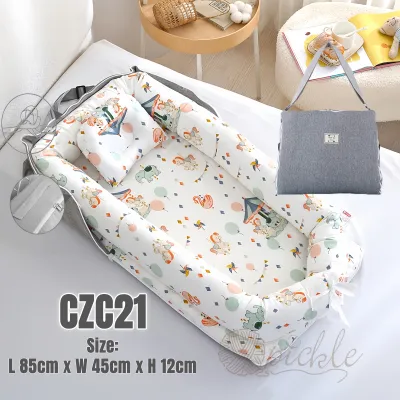

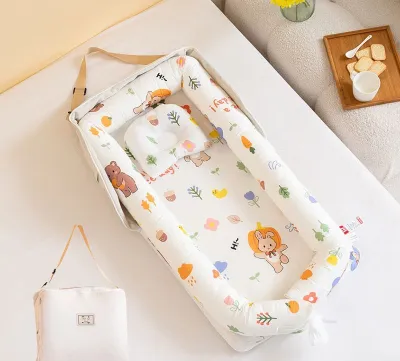


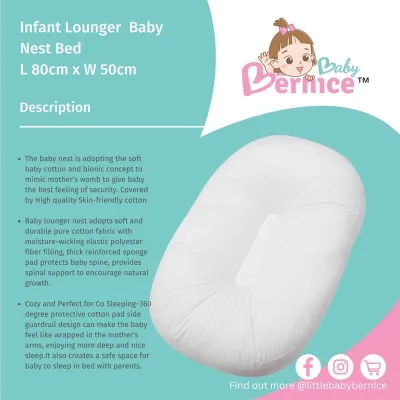
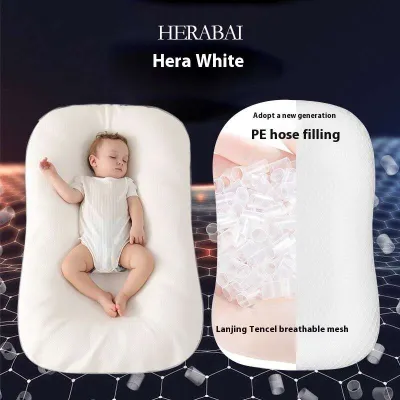
Prices are valid at publication and may change. Please refer to the product page for the latest price.
Many well-meaning parents assume that a mattress must feel soft and plush to be comfortable, projecting adult preferences onto their newborn. In reality, babies do not experience comfort the same way adults do; their developing spines require a flat, supportive plane to grow correctly. A firm surface provides the necessary resistance for physical development without causing discomfort.
It is important to distinguish between a surface that is firm and one that is uncomfortably hard. A safe infant mattress or nest base offers high structural integrity, meaning it resists compression under the baby’s weight but still provides a smooth, uniform surface. The goal is to prevent any indentation or sinking rather than creating a rigid, concrete-like feel.
How to Test the Firmness of Your Baby Bed Nest at Home
Parents should never rely solely on marketing terms like “orthopaedic” or “extra firm” when selecting a baby bed nest. Manufacturers use these terms loosely, and there is no universal regulatory standard for what constitutes “firm” in commercial descriptions. Performing simple, objective physical tests at home is the most reliable way to evaluate the safety of any infant sleep surface.
To perform the hand press test, place the baby bed nest on a flat, stable floor and press your hand firmly down into the center of the base pad. Apply moderate pressure, mimicking the localized weight of an infant’s head and torso, and then release. A safe, sufficiently firm surface will resist deep indentation and rebound immediately to its original flat shape without leaving any lingering handprint or depression. Repeat this test along the edges and corners to ensure consistent support across the entire surface.
Another effective method is to observe your baby’s body alignment while they are lying flat on their back in the nest. Look closely at the alignment of their hips, shoulders, and head. If you notice any hammocking—where the baby’s heavier midsection sinks deeper than their head and feet—the mattress is too soft. The infant’s spine should remain perfectly straight and parallel to the surface, with no visible dipping or contouring around the body.
Examine the product’s label and documentation to verify the internal materials used in the base pad. Look for high-density polyurethane foam or densely packed polyester fiberfill, which are engineered to maintain structural integrity over time. Avoid materials like memory foam, latex with high elasticity, or plush pillow-tops, as these are specifically designed to conform to body heat and pressure, creating dangerous indentations.
The padded bumpers or side walls of the baby bed nest also require close inspection. Press your hand against the inner sides of the bumpers to test their structural resistance. The bumpers should be firm enough to maintain their shape and not easily collapse inward or flatten when light pressure is applied. If the sides are floppy or collapse under minimal force, they present a high risk of trapping a baby’s face if they roll to the side.
Red Flags: Signs Your Baby Nest Is Unsafe for Sleep
Recognizing the warning signs of an unsafe baby bed nest can prevent dangerous sleep accidents before they occur. Even if a product is marketed as a sleep aid, structural wear and tear or poor design can quickly compromise its safety. Parents must remain vigilant and inspect the nest regularly for physical changes that indicate it is no longer safe for use.

One of the most hazardous red flags is when the padded bumpers fold inward or roll over under the baby’s weight. This physical failure creates a pocket or gap between the base pad and the side wall. If a baby shifts or rolls into this gap, their face can become wedged against the soft bumper, leading to rapid suffocation. If you observe any sagging, folding, or loose fabric along the inner edges, stop using the nest immediately.
If your baby turns their head to the side and their cheek or nose sinks even slightly into the base mattress or the surrounding bumper, the surface is dangerously soft. A safe surface must support the head so that the nose and mouth remain entirely clear of any fabric, even when the baby is lying on their side. Any visible depression around the infant’s face is an immediate signal to transition them to a firmer sleep environment.
A high-quality baby nest must have a rigid, supportive base pad that does not bend or fold easily. To test this, lift the empty nest from the center of its base; if the bottom pad bows, folds, or loses its flat shape, it lacks the internal structural support required for safe sleep. A flimsy base pad can easily bunch up under the baby’s movements, creating uneven surfaces and entrapment hazards.
In Singapore’s tropical, high-humidity climate, material breathability is directly linked to infant safety. Overly soft, plush, or dense synthetic materials tend to trap body heat and moisture, leading to rapid overheating. Because overheating is a known risk factor for SIDS, parents in Singapore should verify that the nest materials promote active airflow and avoid heavy, heat-retaining fabrics. If the baby feels hot to the touch or shows signs of sweating while resting in the nest, the material is likely trapping too much heat.
What to Do If Your Baby Nest Fails the Firmness Test
If your baby bed nest fails any of the firmness or safety checks, you must take immediate action to protect your child. Continuing to use an unsafe sleep surface increases the risk of preventable accidents. Fortunately, there are safe ways to repurpose the product or transition your baby to a secure sleep environment without compromising their safety.
A baby nest that is too soft for unsupervised sleep does not necessarily have to be discarded immediately. It can be safely repurposed for supervised, awake activities such as tummy time, active lounging, or visual stimulation exercises. During these times, a caregiver must keep their eyes on the baby at all times, ensuring the infant remains active, awake, and safe from any positional hazards.
For sleep, the safest alternative is to transition your baby to a safety-approved cot or crib equipped with a certified, firm, and flat mattress. Ensure the mattress fits snugly within the crib frame, leaving no gaps larger than two fingers between the mattress edge and the crib sides. This setup complies with international pediatric safety standards and provides the optimal environment for uninterrupted, safe sleep.
Always read the manufacturer’s user manual, product labels, and safety warnings to understand the specific weight limits, age ranges, and developmental milestones for your baby bed nest. Most manufacturers explicitly state that you must stop using the nest as soon as your baby shows any signs of attempting to roll over, push up on their hands and knees, or exceed the weight limit. Adhering strictly to these guidelines is essential for preventing falls and entrapment.
Under no circumstances should you attempt to fix a soft baby nest by adding aftermarket boards, extra blankets, towels, or unprescribed mattress inserts. These DIY modifications often create uneven surfaces, loose fabric, and new entrapment zones that are far more dangerous than the original soft surface. Altering the product also voids any manufacturer warranties and safety certifications, leaving your baby vulnerable to unmeasured risks. If you are ever unsure about your baby’s sleep safety or physical development, consult your pediatrician or a certified sleep consultant for professional guidance.
Frequently Asked Questions (FAQ)
Can I make a soft baby nest firmer by adding a board underneath?
No, placing a rigid wooden board or a piece of plastic under a soft baby bed nest does not resolve the safety hazard. The primary danger of a soft nest is the surface indentation where the baby’s body and face actually rest, which remains soft regardless of what is underneath it. Additionally, inserting rigid materials can create unstable edges, uneven pressure points, or gaps that increase the risk of physical injury or entrapment. Altering the product in this manner voids all manufacturer safety certifications and testing, creating an unpredictable and highly dangerous sleep environment.
Is a firm baby bed nest safe for co-sleeping in an adult bed?
No, placing even a firm baby bed nest inside an adult bed does not make co-sleeping safe. Adult mattresses, heavy duvets, plush pillows, and sheets pose severe suffocation, entrapment, and strangulation risks to an infant. When a baby nest is placed on a soft adult mattress, the weight of the adults can cause the nest to tilt, roll, or sink, completely compromising its flat and stable surface. Pediatric health organizations worldwide recommend room-sharing—where the baby sleeps in their own firm, flat cot or crib in the same room—rather than bed-sharing to minimize sleep-related risks.
Community discussion
Share your experience or ask a question. Comments are reviewed before publication.