
Determining whether Hoppi wet wipes are safe for your newborn requires a careful look beyond marketing claims to inspect the physical packaging, verify the complete ingredient list, and monitor your baby’s unique skin response. While many modern baby wipes are formulated with mild ingredients, newborn skin is exceptionally delicate and has a developing barrier that reacts differently to topical products than older infant skin. Because there is no universal standard that guarantees a product is completely free of potential irritants for every single infant, parents must take an active role in evaluating what goes onto their baby’s skin. By learning how to read product labels, identify potential allergens, and perform a simple home patch test, you can make an informed purchase decision that protects your newborn’s comfort and health.
Choosing diapering products in Singapore often involves navigating a wide array of options on online marketplaces and retail shelves, where terms like “organic,” “natural,” and “ultra-gentle” are frequently used. However, these terms are not always standardized, and what works perfectly for one infant might trigger redness or dryness in another. To ensure the highest level of safety, you should treat any new pack of wipes as a candidate for verification, checking the actual formulation printed on the back of the package rather than relying solely on front-of-pack promotional text. This systematic approach allows you to identify any hidden additives, understand the role of mild preservatives, and establish a safe diapering routine from day one.
Understanding Newborn Skin and Wipe Ingredients
A newborn baby’s skin is vastly different from adult skin, possessing an outer layer that is significantly thinner and more permeable. During the first few months of life, the skin barrier—specifically the stratum corneum—is still developing its protective function, making it highly susceptible to absorbing topical substances and losing moisture rapidly. This increased permeability means that any chemical, fragrance, or preservative applied to the diaper area can penetrate deeper into the skin layers, potentially causing irritation, contact dermatitis, or localized sensitivity. Consequently, selecting diapering products requires a much higher level of scrutiny than choosing skincare items for older children or adults.
Products mentioned in this guide
![[Upgraded Formula] Hoppi Premium 99% Baby Water Wipes (20 Wipes x 5 Packs)](https://img.lazcdn.com/g/ff/kf/S160221c0481b4cc7816c67f8616b47e6H.jpg_400x400q80.jpg_.webp)
Prices are valid at publication and may change. Please refer to the product page for the latest price.
The diaper area is particularly vulnerable because it is frequently exposed to moisture, friction, and biological waste, which can break down the skin’s natural defenses. When you use a wet wipe, you are not only cleaning the skin but also leaving behind a thin film of the wipe’s liquid solution. If this solution contains harsh surfactants, synthetic fragrances, or strong alcohol, it can strip away the skin’s natural lipids and disrupt its delicate pH balance. Over time, this disruption can lead to painful diaper rash, persistent dryness, and localized inflammation that makes diaper changes uncomfortable for both you and your baby.
To protect this fragile barrier, parents should look for formulations that avoid known irritants such as ethyl alcohol, isopropyl alcohol, and synthetic perfumes. Alcohol is often used in adult wipes for its quick-drying properties, but on newborn skin, it acts as a severe dehydrating agent that can cause immediate stinging and peeling. Similarly, synthetic fragrances are among the leading causes of cosmetic-induced allergic contact dermatitis in infants. Even if a product smells pleasant, those scent compounds are often complex mixtures of chemicals that serve no functional purpose in cleansing and only increase the risk of an adverse skin reaction.
Preservatives are another critical category of ingredients that require careful evaluation. While preservatives are absolutely necessary to prevent the growth of harmful bacteria, mold, and yeast in a moist pack of wipes, some older or harsher preservatives can be highly irritating to newborn skin. Ingredients such as parabens, methylisothiazolinone (MIT), and formaldehyde releasers have largely been phased out of reputable baby products due to safety concerns, but it is still vital to verify their absence. Modern baby wipes typically utilize milder, food-grade, or skin-friendly preservative systems that keep the product sterile without compromising the integrity of the infant’s skin barrier.
Understanding the difference between general marketing terms and verifiable ingredient transparency is the first step toward safe product selection. A package may prominently display words like “hypoallergenic” or “gentle on sensitive skin,” but these claims are often self-declared by manufacturers and do not follow a single, legally binding global standard. True safety is found in the ingredient list, which lists every component in descending order of concentration. By learning to read this list, you move away from relying on vague brand promises and instead base your diapering decisions on concrete, verifiable chemical facts.
How to Evaluate Hoppi Wet Wipes for Newborn Use
When evaluating Hoppi wet wipes or any other brand for your newborn, the physical product packaging is your most reliable source of information. Before purchasing a pack or using it during a diaper change, turn the package over to locate the full ingredient list, which is typically printed in small text near the barcode or manufacturing details. If a pack of wipes does not display a complete, clear ingredient list, it is best to avoid using it on a newborn, as transparency is essential for identifying potential allergens. Take the time to read through each ingredient, looking for simple, recognizable components and noting any chemical names you do not recognize.

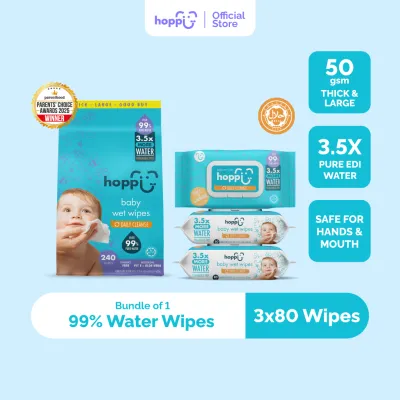
One of the most common claims on modern baby wipes is the use of “pure water” or “99% water” formulations. While these claims suggest a highly purified product, you must verify them by checking the actual ingredient list to see what constitutes the remaining percentage. In a high-quality newborn wipe, the primary ingredient should be water (often listed as aqua), followed by a very short list of mild conditioning agents, pH adjusters, and gentle preservatives. If you find a long list of complex chemicals, synthetic polymers, or botanical extracts that you cannot verify, the wipes may not be as simple or pure as the front-of-pack marketing implies.
In addition to the ingredients themselves, you must inspect the physical integrity and manufacturing details of the wipe packaging. Look closely at the manufacturing date and the expiration date, which are usually stamped directly onto the plastic film. Using expired wet wipes is highly discouraged, as the preservative system may have degraded over time, allowing bacteria or mold to multiply inside the dark, moist environment of the pack. Furthermore, check the seal or plastic lid to ensure it closes tightly and has not been punctured or damaged during transit, as a compromised seal can lead to premature drying and contamination.
When examining the ingredient list of Hoppi wet wipes, pay close attention to the presence of any botanical extracts or essential oils. While these are often marketed as “natural” soothing agents, such as chamomile, aloe vera, or tea tree oil, they can occasionally trigger allergic reactions in highly sensitive newborns. Natural does not automatically mean safe or non-irritating; in fact, many plant-derived compounds contain natural allergens that can cause redness or hives on delicate skin. If your baby has a family history of eczema or sensitive skin, opting for a wipe with the fewest possible botanical additives is generally the safest approach.
Finally, consider the physical material of the wipe itself, as the texture and fiber composition can affect skin safety. Wipes made from high-quality, non-woven fabrics or plant-based fibers like spunlace non-woven cotton are generally softer and less abrasive than those containing high percentages of synthetic polyester. A rough wipe material can cause micro-tears in the skin barrier during wiping, especially when cleaning sticky messes. By choosing a wipe that is both chemically mild and physically soft, you minimize both chemical irritation and mechanical friction, providing a much gentler experience for your newborn’s diaper area.
Safety Labels and Certifications to Verify
To help parents navigate the complex world of baby product ingredients, manufacturers often seek third-party testing and certifications to validate their safety claims. When looking at a pack of Hoppi wet wipes, you may see labels such as “dermatologically tested,” “hypoallergenic,” or “pH-balanced.” Understanding what these terms actually mean is crucial for making an accurate safety assessment. “Dermatologically tested” indicates that the product has been reviewed by a dermatologist, usually through patch testing on human volunteers, to check for immediate irritation. However, because testing protocols can vary widely between laboratories, this label should be viewed as a helpful indicator rather than an absolute guarantee of safety.
The term “hypoallergenic” is another common label that parents frequently look for when shopping for newborn essentials. This claim suggests that the product has been formulated to minimize the risk of allergic reactions, typically by excluding common allergens like synthetic fragrances, dyes, and harsh preservatives. While a hypoallergenic label is a positive sign, it is important to remember that it does not mean “allergy-proof.” Every baby’s immune system and skin chemistry are unique, and an infant can still develop a localized reaction to an ingredient that is generally considered safe for the majority of the population.
A “pH-balanced” label is particularly important for diaper-area products because healthy newborn skin has a slightly acidic natural pH, typically between 4.5 and 5.5. This acidic environment, often referred to as the acid mantle, plays a vital role in protecting the skin against harmful bacteria and maintaining barrier function. Standard soaps and alkaline cleansing agents can disrupt this natural pH, leaving the skin vulnerable to infection and irritation. A pH-balanced wet wipe is formulated to match the skin’s natural acidity, helping to preserve the protective barrier even during frequent diaper changes throughout the day.
When verifying these safety labels and certifications, it is highly recommended to consult the brand’s official channels or physical packaging rather than relying on third-party retail descriptions. Online marketplaces and reseller listings can sometimes contain outdated information, inaccurate translations, or exaggerated claims that do not match the actual product formulation. By cross-referencing the labels on the physical pack with official manufacturer documentation, you can ensure that you are getting accurate, up-to-date safety information before the product ever touches your baby’s skin.
Ultimately, third-party certifications and safety labels serve as an excellent screening tool to narrow down your choices, but they should never replace personal vigilance. A certification indicates that a product has met a specific set of testing standards at a particular point in time, but it cannot account for individual skin sensitivities, environmental factors, or changes in a baby’s health. Treating these labels as a baseline of quality rather than a shield of absolute safety encourages you to remain observant and responsive to how your newborn’s skin actually reacts to the product in daily use.
Safe Usage Practices and Monitoring for Reactions
Even if you have thoroughly evaluated the ingredient list and verified all safety certifications, introducing any new product to a newborn’s routine should be done with caution. The safest way to start using a new brand of wet wipes, such as Hoppi, is to perform a simple patch test on a small, discreet area of your baby’s skin. To do this, gently wipe a small patch of skin on the baby’s inner arm or thigh with a single wet wipe, then wait 24 to 48 hours to observe the area. If no redness, swelling, dryness, or irritation occurs during this period, it is generally safe to proceed with using the wipes on other parts of the body.
During the first few weeks of using a new wipe, make it a habit to closely monitor your newborn’s skin during and after diaper changes. Look for early visual signs of irritation, which can include localized redness, dry or flaky patches, small red bumps, or skin that feels unusually warm to the touch. In some cases, a baby may show signs of discomfort or fussiness when the wipe is applied, which can indicate a stinging or burning sensation that may not be immediately visible to the eye. Paying close attention to these subtle behavioral cues can help you identify a mild reaction before it develops into a severe diaper rash.
To minimize the risk of irritation during daily use, avoid rubbing or scrubbing the baby’s skin with the wipe. Newborn skin is incredibly delicate, and mechanical friction from vigorous wiping can damage the skin barrier just as easily as harsh chemicals. Instead, use gentle, patting motions to clean the area, allowing the moisture in the wipe to lift away waste without scraping the skin. If a mess is particularly difficult to clean, you can hold the damp wipe over the area for a few seconds to soften the residue before gently wiping it away in a single, smooth motion.
Another important practice is to ensure the diaper area is completely dry before putting on a fresh diaper. Trapping moisture from a wet wipe inside a tight, plastic-lined diaper creates a warm, humid environment that is highly conducive to bacterial and fungal growth, as well as friction-induced chafing. After cleaning your baby with a wipe, allow the skin to air-dry for a few moments, or gently pat it dry with a clean, dry cotton cloth. This simple step can significantly reduce the occurrence of diaper rash, regardless of the brand of wipes you choose to use.
If you observe any persistent redness, swelling, peeling, or if your baby seems to be in pain during diaper changes, stop using the wipes immediately. While mild skin irritation can often be managed at home by switching to water-only cleansing, you should consult a pediatrician or qualified healthcare professional if the symptoms do not improve within a few days, or if you notice signs of infection such as blisters, pus, or bleeding. A medical professional can provide an accurate diagnosis, recommend safe topical treatments, and help you identify the specific ingredient that may have triggered the reaction.
What to Do If Skin Irritation Occurs
If your newborn develops signs of skin irritation or diaper rash after you introduce a new brand of wet wipes, taking immediate, gentle action can help soothe the skin and prevent the condition from worsening. The first and most important step is to discontinue the use of the wipes immediately to eliminate the potential source of irritation. Even if you suspect the rash might be caused by a diaper or a dietary change, removing the wipes from the routine temporarily is a safe precautionary measure that allows the skin barrier a chance to recover without further chemical exposure.
To clean the irritated area during diaper changes, switch to using plain, lukewarm water and soft, reusable cotton cloths or cotton balls. Gently rinse the skin by squeezing water from a wet cotton ball over the area, avoiding any rubbing or scrubbing that could further inflame the sensitive skin. If you are dealing with a sticky mess, you can use a small amount of a mild, fragrance-free, liquid baby cleanser formulated specifically for sensitive skin, ensuring that you rinse it off completely with plain water afterward.
After cleansing, it is crucial to dry the skin thoroughly but gently. Avoid using a hair dryer or rubbing the skin with a towel; instead, use a clean, dry cotton cloth to pat the area dry, or let your baby enjoy some diaper-free air time on a waterproof mat. Air circulation is one of the most effective natural remedies for healing irritated skin, as it eliminates the trapped moisture and friction that contribute to diaper rash. Giving your baby a few minutes of diaper-free time each day can work wonders for speeding up the skin’s natural healing process.
While it can be tempting to apply various creams, ointments, or home remedies to soothe the redness, you should avoid using unprescribed products without professional medical guidance. Many over-the-counter creams contain fragrances, preservatives, or botanical extracts that can further irritate an already compromised skin barrier. If a barrier cream is necessary, consult your pediatrician to recommend a safe, fragrance-free zinc oxide or petroleum-based ointment that is suitable for newborns. Always apply a thin layer of the recommended cream only after the skin is completely clean and dry, creating a protective barrier against future moisture.
Keep a close eye on the irritated area over the next 24 to 48 hours to monitor for any changes. In most cases of simple contact irritation, switching to water-only cleansing and keeping the skin dry will lead to a noticeable improvement within a couple of days. However, if the redness spreads, becomes more intense, or if your baby develops a fever or shows signs of extreme discomfort, seek professional medical advice promptly. A pediatrician can evaluate the rash to rule out yeast infections or other conditions that require specific prescription treatments.
Frequently Asked Questions (FAQ)
Can I use Hoppi wet wipes on a newborn's face and hands?
While some baby wipes are formulated to be gentle enough for general use, you should always check the physical packaging for specific face-safe or hand-safe claims before using them on these sensitive areas. The skin on a newborn’s face is thinner and more sensitive than the skin on their diaper area, and it is located close to the eyes and mouth, where accidental ingestion or eye irritation can occur. If you do use wipes on your baby’s face or hands, ensure they are completely fragrance-free and avoid the immediate eye area and lips. For daily facial cleansing, using a soft cotton cloth dampened with plain, lukewarm water remains the gentlest and safest method.
Are water-only wipes always the safest choice for newborns?
Water-only wipes are highly popular because they minimize the number of chemical ingredients touching a baby’s skin, but they are not entirely without trade-offs. Because water is a breeding ground for bacteria, mold, and fungi, even wipes marketed as pure water must contain some form of mild preservative system to remain sterile and safe for use over time. Truly preservative-free wipes would have an extremely short shelf life and would need to be used almost immediately after opening to prevent contamination. Therefore, the safest approach is to read the ingredient list to confirm that the water-based wipe uses a very mild, skin-safe preservative system rather than assuming it contains absolutely zero additives.
How should I store open packs of baby wipes to maintain safety?
Proper storage of open baby wipe packs is essential for preventing bacterial contamination and ensuring the ingredients remain stable and effective. Always seal the plastic lid or adhesive tab tightly after pulling out a wipe to prevent the remaining wipes from drying out and to keep airborne dust and bacteria from entering the pack. Store the wipes in a cool, dry place away from direct sunlight, heating vents, or damp areas like the bathroom, as high temperatures and humidity can accelerate the degradation of the preservative system. If you notice any change in the smell, color, or texture of the wipes, or if the pack has been left open for an extended period, discard it immediately to protect your newborn’s health.

Community discussion
Share your experience or ask a question. Comments are reviewed before publication.