
When managing back pain, choosing a hip seat carrier requires looking past generic marketing claims to evaluate how a carrier’s physical structure interacts with your body. No single brand offers a universal cure for back discomfort, as individual spinal alignment, core strength, and pain points vary. Instead, the key to finding relief lies in identifying a carrier whose structural design matches your unique physical needs. By evaluating specific ergonomic features—such as waistband rigidity, seat angles, and strap configurations—and understanding how they redistribute your baby’s weight, you can select a model that actively supports your posture and minimizes spinal strain.
How Hip Seat Mechanics Impact Your Back
To understand why certain carriers relieve back pain, it helps to look at the basic physics of carrying a child. When you hold a baby in your arms or in a standard soft structured carrier, the child’s weight naturally pulls your upper body forward. To keep from falling over, your back muscles must constantly contract, and your spine must arch backward to compensate. This constant muscular tension and spinal hyporextension are primary contributors to lower back fatigue and strain.
A hip seat carrier alters this dynamic by introducing a solid, shelf-like seat that rests on your pelvis. This design shifts the primary load of the baby from your delicate cervical and thoracic spine down to your pelvic girdle, which is structurally built to handle heavy loads. By transferring the weight to your hips, the carrier allows your skeletal system, rather than your spinal muscles, to bear the brunt of the force.
Products mentioned in this guide
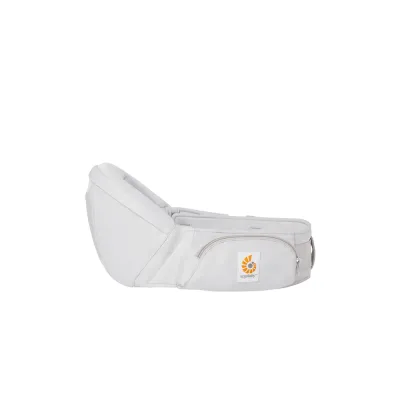
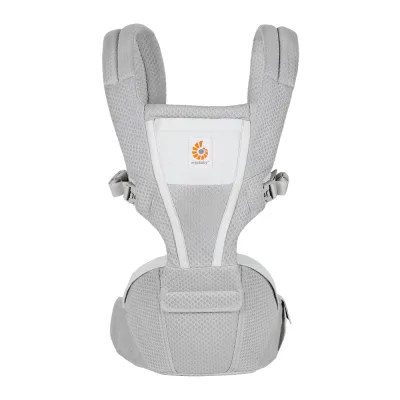
![[Ready stock]Ergo baby Alta Hip Seat Baby Carrier](https://img.lazcdn.com/g/p/ca5c5e8220b9b8ea9cb4913bc083a66e.jpg_400x400q80.jpg_.webp)
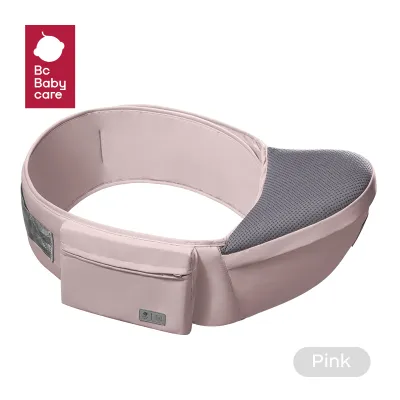
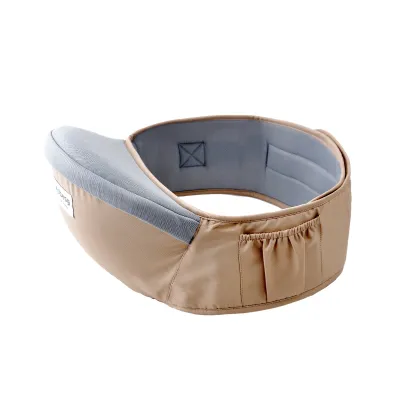
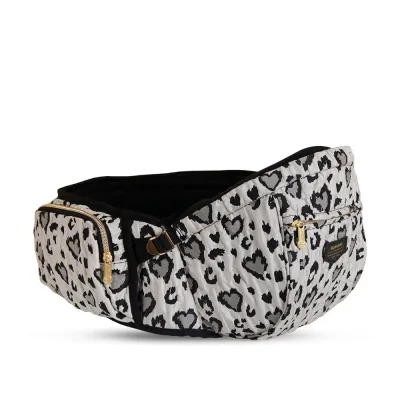
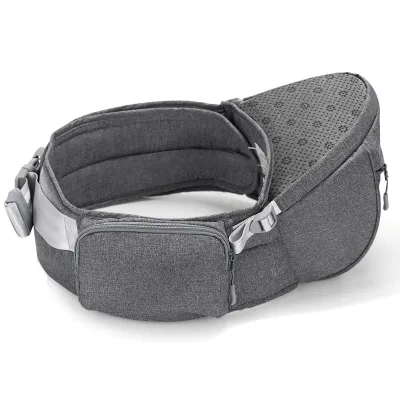
Prices are valid at publication and may change. Please refer to the product page for the latest price.
However, the effectiveness of this weight transfer depends entirely on how close the baby remains to your torso. If a carrier allows the baby to slump outward or slide away from your body, the center of gravity shifts forward. This outward pull creates a rotational force, known as torque, on your lower back. To counter this, you will instinctively lean backward, compressing your lumbar discs and straining your lower back muscles. A properly designed hip seat must keep the baby’s torso snug against yours to maintain your natural, upright posture.
Essential Ergonomic Features for Lumbar and Shoulder Support
When evaluating different models, the waistband is the most critical component to inspect. A high-quality waistband must be exceptionally wide, typically measuring between 13 and 15 centimeters vertically. This wide profile distributes the downward pressure over a larger surface area of your hips and lower back, preventing the belt from digging into your flesh. Additionally, look for a waistband with high-density EVA foam or internal structural panels. Flimsy, overly soft waistbands will crease and fold under the baby’s weight, concentrating the load onto a narrow, painful strip around your waist.

The fastening system of the waistband also plays a vital role in lumbar support. Many ergonomic carriers utilize a dual-closure system consisting of a wide strip of heavy-duty Velcro topped with a robust plastic buckle. This combination provides a highly secure, corset-like compression around your abdominal and lumbar regions. This compression acts similarly to a weightlifting belt, stabilizing your core muscles and reducing the micro-movements of your spine that can trigger spasms or nerve irritation.
While the waistband carries the majority of the weight, the shoulder straps are responsible for stabilizing the upper portion of the carrier. Look for straps that feature thick, open-cell foam padding to cushion your collarbones and shoulders. Pay close attention to the strap configuration: cross-back (or X-style) straps are highly beneficial for parents with back pain. By crossing over your upper back, these straps distribute the remaining weight diagonally across the large, strong muscles of your mid-back, rather than letting the straps pull straight down on your neck and shoulders as traditional H-style straps can do.
The design of the seat base itself is another essential feature. The seat should feature a built-in upward angle, usually between 15 and 30 degrees, when empty. This incline is intentional; when your baby sits on the platform, their weight compresses the seat down to a level position. If the seat starts completely flat, the baby’s weight will cause it to slope downward and outward, forcing the baby to slide away from you and pulling your shoulders forward. The internal support material of the seat should be made of lightweight, shock-absorbing material, such as expanded polypropylene (EPP), which maintains its shape under heavy loads without adding bulk to the carrier.
Matching Carrier Features to Your Specific Pain Points
Because back pain manifests differently for everyone, you should prioritize carrier features based on where you experience discomfort. If your primary issue is lower back pain (lumbar strain or sciatica), your main focus must be the waistband. Look for carriers that feature dedicated lumbar support pads—thick, reinforced inserts that sit directly against your lower spine to fill the natural curve of your back. This extra padding prevents your lower back from flattening or arching excessively while carrying.
If you suffer from upper back, neck, or shoulder tension, the shoulder strap design and chest clip adjustment are your top priorities. Ensure the carrier has a highly adjustable chest strap that can slide vertically along the shoulder straps. Positioning this chest clip lower down, near the middle of your shoulder blades, helps pull the shoulder straps inward and prevents them from slipping outward, which can cause you to round your shoulders and strain your neck.
Your physical build also dictates which carrier features will provide the best support. Petite parents with shorter torsos should look for waistbands with a slightly narrower vertical profile or contoured edges. A waistband that is too tall can press painfully against your ribcage or the tops of your thigh bones when you sit down. Conversely, taller parents or those with wider hips need longer shoulder straps and a highly adjustable waistband that can be positioned securely on the iliac crest without riding up.
If the carrier will be shared between multiple caregivers of different sizes, adjustability is paramount. Look for models with easily accessible adjustment straps that can be tightened or loosened with one hand while wearing the carrier. Avoid models with fixed, non-removable lumbar supports that cannot be centered properly when the waistband is adjusted for a smaller or larger waist. A poorly centered support pad can actually worsen spinal misalignment.
How to Evaluate and Screen Hip Seat Models Before Buying
When shopping for a hip seat carrier, it is easy to get overwhelmed by marketing jargon. To make an objective decision, start by carefully reading the manufacturer’s technical specifications. Check the minimum and maximum weight limits, as well as the recommended age range. Most hip seat carriers are designed for babies who have achieved full head and neck control, typically around six months of age, and can support weights up to 15 or 20 kilograms. Never purchase a carrier that does not clearly state these limits, as the internal structural components may not be rated to safely support your child’s weight.
In warm and humid climates, such as Singapore, thermal comfort directly impacts your posture. If you are hot and sweaty, you are more likely to fidget, shift your weight, and compromise your carrying posture. Look for carriers that feature zip-down front panels revealing breathable 3D mesh, or those constructed from lightweight, moisture-wicking fabrics. This ventilation keeps both you and your baby cool, allowing you to maintain a stable, comfortable posture during longer walks in local parks or shopping malls.
Because physical fit is highly subjective, prioritize purchasing from retailers or online marketplaces that offer clear return policies or trial periods. When your carrier arrives, test the fit at home before removing any tags. Put on the carrier and secure your baby (or a weighted doll of similar weight) for a 15-minute trial run. Walk around your living space, practice sitting and standing, and pay close attention to any pressure points, rubbing, or immediate muscle fatigue. If you feel a dull ache in your lower back within minutes, the carrier’s structural design may not align with your body shape.
Be highly skeptical of brands that make vague, sweeping medical or orthopedic claims without providing structural evidence. Phrases like ‘pediatrician approved’ or ‘orthopedic design’ are often used loosely in product descriptions. Instead of relying on these labels, look for concrete descriptions of the carrier’s physical attributes: the exact width of the waistband, the density of the foam, the angle of the seat, and whether the seat supports the baby’s hips in the healthy ‘M-position’ (where the baby’s knees are higher than their hips). A brand that is transparent about its materials and engineering is far more reliable than one that relies on unsubstantiated health promises.
Safe Wearing Techniques and Posture Adjustments
Even the most ergonomically advanced hip seat carrier will cause back pain if it is worn incorrectly. To protect your spine, always put the waistband on before placing your baby in the seat. Position the waistband high on your torso, well above your hips and close to your natural waistline, near your belly button. Fasten the belt as tightly as you comfortably can. When you let go, the waistband should remain firmly in place and not slide down over your hip bones. If the waistband is too loose, the baby’s weight will pull the front of the carrier downward, tilting your pelvis forward and placing immense strain on your lower back.
Once your baby is secured in the carrier, perform a quick posture check in a mirror. Stand sideways and look at your alignment. Your shoulders, hips, knees, and ankles should form a straight vertical line. A common mistake is to push your hips forward and lean your upper body backward to create a shelf for the baby. This posture, known as swayback, compresses your lumbar vertebrae and can lead to severe lower back pain. If you find yourself leaning, tighten the waistband and adjust the shoulder straps to pull the baby’s torso closer to your chest, which brings the center of gravity back over your feet.
Finally, listen to your body and know when to stop. While a hip seat carrier is an excellent tool for managing the physical demands of parenting, it is not a substitute for medical care. If you experience sharp pain, numbness, tingling down your legs, or a persistent ache that worsens after use, stop using the carrier immediately. These symptoms can indicate underlying spinal issues, such as a herniated disc or nerve impingement, which require evaluation by a qualified healthcare professional, such as a physiotherapist or orthopedic specialist.
Frequently Asked Questions (FAQ)
Can a hip seat carrier completely eliminate my back pain?
No, a hip seat carrier cannot completely eliminate back pain, as it is a mechanical tool designed for weight redistribution rather than a medical treatment. While a well-designed carrier significantly reduces the muscular strain of holding your baby, it cannot cure underlying spinal conditions, poor core strength, or pre-existing injuries. For chronic or severe back pain, you should consult a healthcare professional to address the root cause of your discomfort through targeted physical therapy or core strengthening exercises.
At what baby weight should I transition away from a hip seat to protect my back?
While many manufacturers rate their hip seat carriers to support weights up to 15 or 20 kilograms, your personal physical limit may be reached much sooner. As your baby approaches 10 to 12 kilograms, the sheer physical load on your pelvis and spine increases significantly. You should transition away from using the carrier if you notice your posture breaking down, if you must lean backward to balance the weight, or if you experience persistent muscle soreness after short carrying sessions, regardless of the manufacturer’s stated maximum limit.

Community discussion
Share your experience or ask a question. Comments are reviewed before publication.