
Choosing between premium baby bottle brands like Hegen and Pigeon depends heavily on your newborn’s latch preference, your daily cleaning routine, and your budget for initial starter sets. While Hegen is widely recognized for its unique square design and PPSU material, Pigeon offers a broad range of materials and specialized nipple shapes. Both brands occupy a premium space in the infant care market, but they approach bottle-feeding with distinct design philosophies. Hegen focuses on a minimalist, multi-functional system, while Pigeon emphasizes material variety and highly researched nipple shapes designed to mimic natural breastfeeding. Deciding between them requires evaluating how their physical designs, material safety profiles, and nipple structures align with your newborn’s feeding cues and your household’s daily workflow.
Core Design and Ergonomics: Square vs Round Bottles
The physical shape of a baby bottle influences more than just aesthetics; it directly affects how comfortably you can hold the bottle during long night feeds and how efficiently you can store it. Hegen bottles feature a patented square-round design. This flat-sided structure is engineered to prevent the bottle from rolling away if tipped over, a common occurrence during hectic feeding sessions. For caregivers, the square profile offers a distinct grip that fits naturally into the palm, allowing for a stable hold without requiring excessive finger tension. Furthermore, the square footprint is highly space-efficient. In compact kitchens, refrigerators, or sterilizers, these bottles can be stacked or lined up side-by-side with minimal wasted space, making them highly practical for organized storage.
In contrast, Pigeon bottles utilize a traditional round or gently contoured cylindrical design. This classic shape is highly familiar to most caregivers and fits universally into standard bottle warmers, insulated travel bags, and stroller cup holders without requiring specialized adapters. The rounded body allows for smooth rotation in the hand, enabling caregivers to adjust the feeding angle easily as the baby moves. While round bottles do not stack flat against one another like square ones, their slim profile makes them easy to slip into diaper bag pockets. When choosing between these shapes, caregivers should observe the baby’s physical comfort and handling dynamics during actual feeds. Some infants may eventually prefer holding a square bottle due to the flat surfaces, while others find the familiar round shape easier to grasp as their motor skills develop.
Products mentioned in this guide
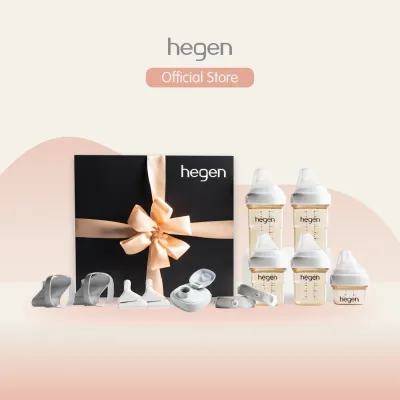
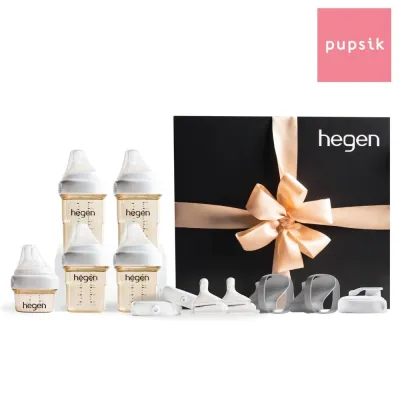
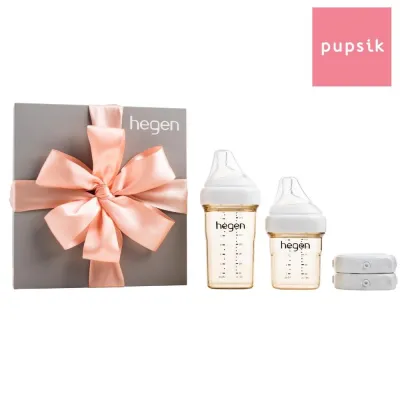
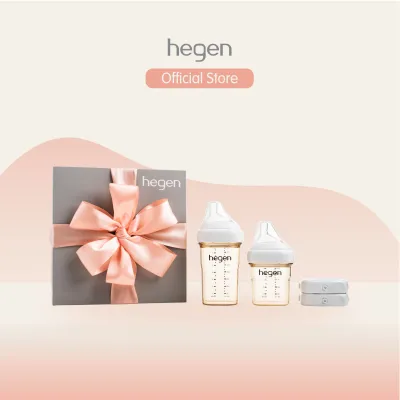
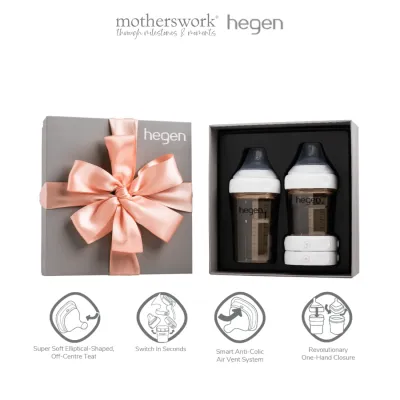
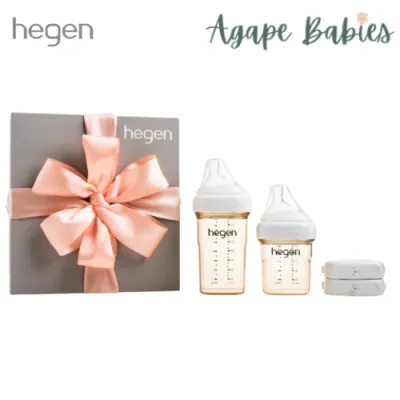
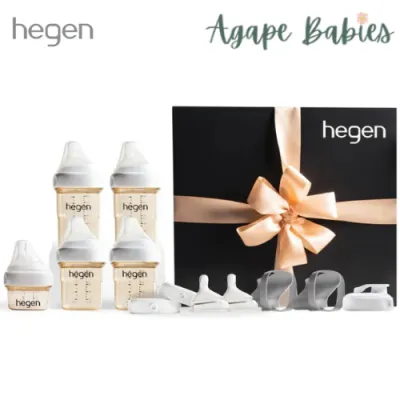
Prices are valid at publication and may change. Please refer to the product page for the latest price.
Material Breakdown: PPSU, Glass, and Plastics
Selecting the right bottle material involves weighing durability, weight, heat resistance, and maintenance requirements. Hegen focuses almost exclusively on PPSU, a medical-grade thermoplastic known for its high durability and distinct honey-colored tint. PPSU combines the lightweight, shatter-proof benefits of plastic with the high heat resistance of glass. It can withstand repeated sterilization cycles without degrading quickly. Pigeon, on the other hand, offers a broader spectrum of materials to suit different parental preferences and budgets. Their lineup includes high-quality borosilicate glass, PPSU, and standard plastics such as polypropylene (PP) and T-Ester. This variety allows parents to choose the exact material that fits their lifestyle and safety priorities.

Each material presents distinct practical trade-offs that you must consider for daily use. Glass bottles are highly resistant to scratching, do not retain odors or stains, and offer excellent thermal conductivity for quick warming and cooling. However, glass is significantly heavier, making it more tiring to hold during extended feeds, and it carries a risk of shattering if dropped on hard kitchen tiles. PPSU is lightweight and virtually shatter-resistant, making it an excellent choice for travel or for when babies begin holding their own bottles. However, PPSU is more susceptible to surface scratches from abrasive cleaning brushes and may gradually discolor over time when exposed to certain detergents or UV sterilizers. Standard plastics like PP are highly affordable and lightweight but have a lower heat tolerance and tend to degrade faster under frequent sterilization. Before purchasing, always verify heat resistance limits, BPA/BPS-free certifications, and dishwasher safety guidelines directly on the product packaging to ensure safe handling.
Nipple Design and Anti-Colic Valves
A successful bottle-feeding experience depends heavily on how well the nipple design supports your newborn’s natural latch and swallowing reflex. Hegen bottles feature an off-center, elongated nipple designed to mimic the natural asymmetry of a mother’s breast. This off-center placement allows the bottle to be held at a more upright angle, reducing the need to tilt the bottle steeply to keep the nipple filled with milk. This design helps minimize the risk of milk backflow and air ingestion. Additionally, Hegen integrates a built-in anti-colic air vent directly into the nipple collar, eliminating the need for extra internal tubes or valves that require specialized cleaning brushes.
Pigeon approaches nipple design with its highly researched peristaltic nipples, such as the SofTouch range. These nipples are crafted from ultra-soft, thick silicone that stretches and flexes to encourage a natural latch-on, mimicking the peristaltic tongue movement observed during breastfeeding. The matte-textured surface helps the baby maintain a secure, slip-free seal. Pigeon’s anti-colic system relies on a small ventilation valve located at the base of the nipple, which regulates air pressure inside the bottle to ensure a smooth, continuous flow of milk. When selecting nipples for a newborn, always check the manufacturer’s age and flow-rate guidelines to ensure a slow-flow or super-slow-flow option is selected. It is important to remember that anti-colic effectiveness varies significantly by baby; caregivers should monitor their infant for signs of fussiness, excessive gas, or spitting up, and consult a pediatrician if feeding difficulties persist.
Assembly, Cleaning, and Daily Maintenance
The ease of cleaning and assembling baby bottles is a major factor in maintaining proper hygiene and reducing daily caregiver stress. Hegen’s design philosophy centers on simplicity with its “Press-to-Close, Twist-to-Open” (PCTO) mechanism. This allows caregivers to snap the lid on with one hand and twist it off with a simple turn, avoiding the tedious threading required by traditional screw-cap bottles. Because the bottle has a wide mouth and a square shape, it is easy to reach the bottom with a standard sponge, often eliminating the need for specialized bottle brushes. The minimal part count—consisting only of the bottle, the collar with the integrated nipple, and the cap—makes assembly quick and reduces the risk of misplacing small parts during washing.
Pigeon bottles utilize a traditional screw-on collar system that requires aligning the threads correctly to prevent leaks. While assembly is straightforward, it requires two hands to screw the collar securely onto the bottle. Pigeon’s wide-neck bottles are relatively easy to clean, but their rounded contours and narrower base may require a dedicated bottle brush to clean the bottom corners thoroughly. To maintain hygiene, caregivers should establish a routine inspection checklist. Before and after each use, inspect the silicone nipples for signs of wear, such as tears, thinning, stickiness, or changes in elasticity. If any defects are found, replace the nipple immediately. Always follow the specific sterilization and cleaning instructions provided in the user manual for each respective brand to avoid damaging the materials.
Starter Kits and Long-Term Value
When preparing for a newborn, purchasing a starter kit can offer convenience and initial cost savings, but it is essential to evaluate the long-term utility of the components. A typical Hegen starter set often includes bottles of various sizes, slow-flow nipples, and storage lids. One of Hegen’s key selling points is its multi-functional design; by swapping the nipple collar for a solid storage lid, the bottle instantly converts into an airtight breast milk storage container or a snack cup. This adaptability extends the usable lifespan of the bottles well beyond the infant stage. However, Hegen’s premium positioning means the initial investment is relatively high, and replacement nipples or accessories must be purchased within their proprietary ecosystem.
Pigeon newborn gift sets generally offer a practical assortment of bottles, nipples, and cleaning accessories, often at a more accessible price point. Pigeon’s extensive market presence means replacement nipples, collars, and caps are widely available at local pharmacies, baby specialty stores, and online marketplaces. While Pigeon bottles do not typically convert into snack cups as seamlessly as Hegen’s, their standard neck sizes are highly compatible with a wide range of third-party breast pumps and accessories, offering excellent flexibility for pumping mothers. When comparing options, check current pricing in S$ on official brand websites or authorized online retailers, keeping in mind that promotions and stock availability vary. Consider the ongoing cost of upgrading nipple sizes as your baby grows and the compatibility of the bottles with your existing pumping equipment.
Final Decision Framework: Which Brand Fits Your Needs?
Choosing between these two premium brands ultimately comes down to your specific lifestyle preferences and your baby’s unique feeding behavior. Hegen is highly suitable for parents who prioritize a minimalist design with fewer parts to wash, a space-saving stackable square shape, and the long-term versatility of bottles that convert into storage containers. Its lightweight PPSU construction is ideal for active families who travel frequently. On the other hand, Pigeon is an excellent choice if your baby shows a strong preference for a traditional round nipple shape, such as the SofTouch design, or if you prefer the hygiene and scratch-resistance of glass bottles. Pigeon also offers greater budget flexibility and wider retail availability for replacement parts. Before making a final decision, verify if your baby has specific latch challenges or if your pediatrician recommends a particular flow rate or material type to ensure the safest and most comfortable feeding experience.
Frequently Asked Questions (FAQ)
Can I mix Hegen and Pigeon bottles for the same baby?
Yes, many parents successfully use both brands, but it requires careful observation of your baby’s feeding behavior. Alternating between Hegen’s off-center, asymmetrical nipple and Pigeon’s symmetrical, peristaltic nipple can sometimes cause nipple confusion or latch challenges due to the different silicone textures and shapes. If you decide to introduce both brands, monitor your baby’s latch, feeding efficiency, and comfort level closely. If you notice increased air intake, fussiness, or refusal of one bottle, it may be best to stick to the brand your baby prefers.
How often should I replace PPSU bottles and silicone nipples?
You should always check the specific manufacturer recommendations for replacement intervals printed on the product packaging. Generally, silicone nipples should be replaced every one to three months, or immediately if you observe signs of wear such as stretching, thinning, tears, or stickiness. PPSU bottles are highly durable but should typically be replaced every six to twelve months, or sooner if you notice persistent cloudiness, deep scratches, micro-cracks, or stubborn odors that do not disappear after thorough sterilization.
Community discussion
Share your experience or ask a question. Comments are reviewed before publication.