
Choosing the right baby bottle material is a pivotal decision for your daily feeding routine, especially when investing in a premium system like Hegen. While both polyphenylsulfone (PPSU) and borosilicate glass options offer distinct benefits, the ideal choice depends on your lifestyle, who is feeding the baby, and whether you prioritize lightweight portability or long-term stain resistance. Understanding how these materials perform under daily sterilization, drop tests, and self-feeding milestones will help you select the option that fits seamlessly into your household.
For parents navigating busy schedules, commuting, or preparing for daycare transitions, the physical properties of the bottle material can directly impact daily convenience. Both materials are designed to support breast milk preservation and seamless feeding, but they cater to different environments and handling preferences. By evaluating how each material behaves during cleaning, warming, and active use, you can build a bottle collection that minimizes stress and maximizes comfort for both you and your baby.
Understanding the Hegen Design and Material Baseline
Hegen bottles are widely recognized for their unique square-round (sqround) shape, which is designed to be ergonomic for small hands and prevent the bottles from rolling away when dropped. Both the PPSU and glass bottle lines share this signature silhouette, along with the patented press-to-close, twist-to-open (PCTO) cap design that allows for quick, one-handed assembly. This design consistency means that teats, collars, and storage lids are fully interchangeable across both material ranges, allowing you to swap components easily as your baby’s feeding demands evolve.
Products mentioned in this guide
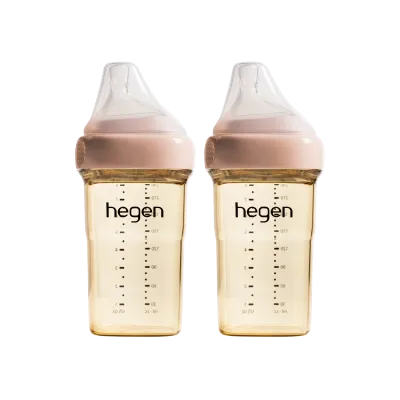
Prices are valid at publication and may change. Please refer to the product page for the latest price.
Despite sharing the same functional design, the two lines diverge significantly in their material composition. PPSU is a medical-grade thermoplastic known for its high heat resistance, lightweight feel, and natural amber tint. It combines the durability of plastic with the safety profile of glass, making it a popular choice for active households. Borosilicate glass, on the other hand, is a traditional, heavy-duty material valued for its exceptional thermal shock resistance, clarity, and resistance to scratching. Caregivers should check the product packaging of their specific bottle set to verify the exact material specifications and compliance standards.
The choice between these materials is not merely about aesthetics; it affects how the bottle interacts with heat, how it wears over months of sterilization, and how comfortable it is to hold during long feeding sessions. While PPSU represents modern polymer engineering designed to withstand rigorous medical-grade sterilization, borosilicate glass remains a time-tested standard for purity and longevity. Understanding these baseline differences is the first step in determining which material aligns best with your family’s daily habits.
Daily Usability: Weight, Grip, and Handling
The physical weight of a baby bottle plays a major role in daily feeding comfort, particularly during late-night feeds when hand fatigue is common. PPSU bottles are exceptionally lightweight, making them easy to hold for extended periods without straining your wrist. This featherweight quality is also highly beneficial when your baby reaches the developmental milestone of wanting to hold their own bottle, as they can manage the weight more securely and with greater control.

In contrast, borosilicate glass bottles are transitionally heavier, providing a solid, premium feel in the hand that some parents prefer. While this weight offers stability on flat surfaces, it can contribute to hand fatigue during long feeding sessions and makes self-feeding more challenging for older infants. Grip is another key factor; when your hands are wet from washing or slippery from breast milk or formula, the textured surface of PPSU can feel more secure than the smooth exterior of glass.
For parents in Singapore managing warm, humid climates where condensation on cold bottles is common, a secure grip is particularly important. A slippery glass bottle requires more careful handling, especially when multitasking or feeding on the go. Before purchasing a complete multi-pack system, it is highly recommended to handle both bottle types in person to assess how the weight and grip feel in your hands, keeping in mind how the bottle will feel when fully filled with milk.
Durability, Drop Resistance, and Replacement Signs
Durability is a primary concern for busy parents, especially when bottles are frequently moved from the kitchen to the diaper bag. PPSU is virtually shatterproof and highly resilient against high-impact drops on hard kitchen tiles, outdoor pavements, or playgroup floors. This drop resistance makes it an excellent choice for travel, daycare, or playdates where accidental drops are inevitable, giving caregivers peace of mind during hectic transitions.
However, PPSU is susceptible to surface scratches over time from bottle brushes, which can eventually harbor milk residue if not cleaned thoroughly. Borosilicate glass is highly resistant to scratching and maintains its crystal-clear appearance indefinitely, but it remains inherently fragile compared to plastic. A drop onto a hard floor can chip, crack, or completely shatter a glass bottle, posing a safety hazard in the nursery that requires immediate cleanup and disposal.
To maintain a safe feeding environment, caregivers must establish a regular inspection routine for both bottle types. For PPSU, look out for signs of wear such as persistent cloudiness, deep scratches, discoloration, or a sticky texture, and follow the manufacturer’s guidelines to replace plastic bottles every six months. For glass bottles, run a finger carefully along the rim and threads to check for chips, and hold the bottle up to the light to inspect for internal hairline cracks before every single feed.
Cleaning, Sterilization, and Warming Routines
Integrating your bottles into a seamless cleaning and sterilization routine is essential for maintaining hygiene. Both Hegen PPSU and glass bottles are generally dishwasher-safe when placed on the top rack, though hand washing with a soft sponge is often recommended to prevent surface wear. When it comes to sterilization, both materials can withstand standard methods, including boiling water, steam sterilizers, and UV sterilizers.
However, because UV exposure can accelerate the aging of certain plastics, you should verify the maximum temperature limits and recommended exposure times in your specific sterilizer manual. Glass is completely unaffected by UV light and can withstand extreme sterilization temperatures without any risk of material degradation over time. This makes glass a highly convenient option for parents who prefer heavy-duty sterilization methods without worrying about material wear.
Warming milk is another area where the two materials behave differently due to their thermal conductivity. Glass conducts heat more rapidly than PPSU, allowing breast milk or formula to warm up faster in a bowl of warm water or a bottle warmer, which is a lifesaver when dealing with a hungry, crying baby. Conversely, glass also loses heat more quickly, whereas PPSU tends to retain warmth slightly longer once removed from the heat source, keeping the milk at a stable temperature during slower feeds. Always check the compatibility guidelines of your breast pump adapters and bottle warmers to ensure they accommodate the square shape and material of your chosen Hegen bottles.
Decision Framework: Choosing the Right Material for Your Routine
To finalize your choice, consider how your daily routine aligns with the strengths of each material. PPSU is the ideal option if you are frequently on the go, need to pack bottles for daycare, or want to encourage your baby to self-feed safely. Its lightweight, shatterproof nature provides peace of mind during travel and reduces the risk of accidents when handled by older infants or tired caregivers who might drop bottles during late-night routines.
On the other hand, glass is highly suited for a home-centric routine where bottles rarely leave the kitchen or nursery. If you prioritize a material that is completely resistant to food stains, does not absorb milk odors, and offers rapid warming times, glass is an excellent investment. If your baby requires a specialized medical feeding system, note that standard Hegen teats may not be compatible, so verify this with a healthcare professional first.
Additionally, if you plan to mix both materials in your rotation, introduce them gradually to ensure your baby accepts the difference in weight and temperature feel without disrupting their feeding rhythm. By matching the bottle material to your specific lifestyle, cleaning preferences, and your baby’s developmental stage, you can create a stress-free feeding routine that supports your parenting journey.
Frequently Asked Questions (FAQ)
Can I mix Hegen PPSU and glass bottles in the same feeding routine?
Yes, you can mix both materials in your daily routine, as they share the same teat design and collar connection. However, some babies are highly sensitive to tactile changes and may notice the difference in weight, texture, and temperature between PPSU and glass. To ensure a smooth transition, keep the teat size and flow rate identical across both bottle types so the feeding pace remains consistent.
Do Hegen PPSU bottles contain BPA or other harmful chemicals?
Hegen PPSU bottles are inherently free from Bisphenol A (BPA), Bisphenol S (BPS), and other harmful plasticizers by virtue of their medical-grade material composition. PPSU is engineered to withstand high temperatures without leaching chemicals into the milk. To ensure complete peace of mind, always verify the safety certifications, compliance marks, and manufacturing standards printed directly on the product packaging or the official brand documentation.
Community discussion
Share your experience or ask a question. Comments are reviewed before publication.