
Transitioning your baby to a fast flow teat is a significant milestone in their feeding journey, marking a shift in their oral development and swallowing coordination. As infants grow, their sucking reflex matures, and they require a faster flow of milk to match their increased feeding efficiency. Choosing the right premium teat involves evaluating how different brands handle material durability, flow consistency, and anti-colic venting. Hegen, Pigeon, and Dr. Brown’s are three of the most prominent premium options available to parents in Singapore, each utilizing distinct engineering philosophies to support this transition.
Rather than relying on universal claims of superiority, caregivers should compare the physical attributes, latch designs, and maintenance demands of these brands to find the most suitable match for their baby’s unique feeding style. This guide breaks down the structural and practical differences to help you select the best fit for your baby’s feeding pace and your daily maintenance capacity, relying on observable product features rather than unverified performance claims.
Material Quality and Silicone Durability
Evaluating the physical properties and lifespan of the silicone used in premium teats is essential for ensuring safety and long-term value. Caregivers should inspect product packaging to verify the silicone grading, looking for food-grade or medical-grade designations, as well as clear BPA- and BPS-free certifications. These material standards indicate that the silicone has undergone testing for chemical safety and heat resistance, which is critical for components subjected to daily sterilization.
Products mentioned in this guide




Prices are valid at publication and may change. Please refer to the product page for the latest price.
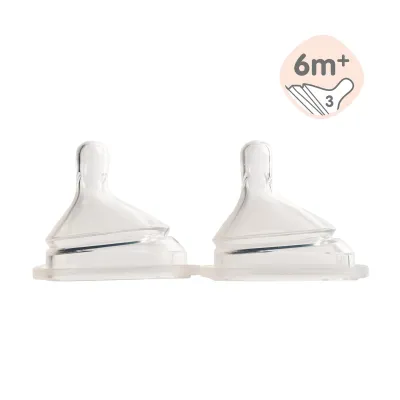
Structural design differences significantly affect how a teat performs under active suction. Hegen fast flow teats feature relatively thick silicone walls and an asymmetrical, off-centre shape. This added thickness provides robust squeeze resistance, helping the teat maintain its structural integrity even when an older baby bites or pulls during feeding. The firmer silicone is designed to withstand the stronger jaw movements of developing infants without collapsing.
In contrast, Pigeon SofTouch teats utilize a highly flexible, ultra-soft silicone designed to mimic the natural elasticity of a mother’s breast. While this softness supports natural tongue movement, the thinner walls may be more susceptible to temporary collapse if the baby’s suction is exceptionally strong or if the ventilation valve is partially blocked. Dr. Brown’s teats offer a middle ground, utilizing a soft, medical-grade silicone that balances flexibility with the structural support needed to interface with their internal venting hardware.
Regardless of the brand, silicone is subject to gradual wear and tear from saliva, milk fats, and heat exposure. Caregivers should inspect teats daily for observable signs of material degradation, such as a sticky texture, yellow or cloudy discoloration, micro-tears around the feeding orifice, or a loss of elasticity. The presence of any of these indicators means the teat must be replaced immediately to prevent tearing or choking hazards.
Flow Rate Consistency and Anti-Colic Mechanisms
Managing milk flow speed and air intake during fast feeding is critical for preventing discomfort, gas, and spit-up. When a baby sucks milk from a sealed bottle, a vacuum naturally forms inside. To maintain a consistent flow and prevent the teat from collapsing, the bottle must have a mechanism that allows air to enter and equalize the internal pressure. Each of these premium brands approaches this engineering challenge differently.

Hegen utilizes an integrated anti-colic air vent located near the collar of the teat. This ventless-style collar design relies on a simple pressure-differential valve that opens slightly during suction, allowing air to enter the bottle above the milk line. Because this mechanism is molded directly into the silicone, it requires no extra tubes or parts, though caregivers must ensure the valve slit is clear and fully open before starting a feed.
Pigeon SofTouch employs a similar integrated ventilation system at the base of the teat flange. This small valve must be gently massaged before the first use and after cleaning to ensure the silicone has not stuck together, which would block air entry and cause the teat to collapse. Both Hegen and Pigeon rely on these streamlined, built-in valves to minimize assembly steps while managing air intake.
Dr. Brown’s is engineered with a dedicated internal green or blue reservoir tube and vent system. This active venting system channels air from the collar threads directly through the tube to the bottom of the bottle, completely bypassing the milk. This design prevents air bubbles from mixing with the liquid, which is intended to minimize milk aeration. However, this multi-part system requires precise assembly and alignment to function correctly without leaking.
Before introducing a new fast flow teat to your baby, perform a simple visual flow test. Invert a filled bottle; a properly functioning fast flow teat should initially release a rapid drip or a very brief stream that quickly slows to a steady, controlled drip. If the milk pours out in a continuous, heavy stream, the orifice may be damaged or too large for your baby’s current swallowing capacity.
Caregivers must monitor behavioral cues during feeding to ensure the flow rate matches the baby’s needs. Signs that the flow is too fast include choking, sputtering, coughing, rapid swallowing, or milk leaking excessively from the corners of the mouth. Conversely, if the flow is too slow, the baby may exhibit frustration, pull away repeatedly, suck aggressively enough to collapse the teat, or fall asleep from exhaustion before finishing their standard feed volume.
Latch Compatibility and Teat Shape
Matching the physical shape of the teat to your baby’s latch preference is crucial for a successful feeding experience, especially when transitioning between breast and bottle. The shape of the teat dictates how the baby’s lips seal around the base and how the tongue moves to express milk.
Hegen features an asymmetrical, off-centre teat designed to mimic the natural slant of a mother’s breast. This unique shape allows the baby to feed in an upright position, which can help reduce the risk of milk flowing into the middle ear and minimize spit-up. The wide, square-to-round base encourages a wide-angle latch, closely resembling the latch required for direct breastfeeding.
Pigeon SofTouch utilizes a symmetrical, wide-neck design with a textured surface near the tip to help the baby secure a firm, non-slip latch. The teat features a visible “latch-on line” molded into the silicone, providing a clear visual guide for parents to ensure the baby has taken the correct amount of the teat into their mouth to stimulate the palate properly.
Dr. Brown’s offers both wide-neck and narrow, traditional cylindrical shapes. The narrow teat is highly suited for babies with a narrower latch style or those transitioning from hospital-grade feeding systems. The length of the teat, the width of the base, and the placement of the nipple tip all influence palate stimulation and the baby’s natural swallowing reflex, meaning a baby accustomed to a narrow latch may initially struggle with a very wide base.
When purchasing replacement teats, carefully verify bottle collar compatibility. Premium teats are engineered to seal exclusively with their proprietary bottle necks and collar rings. For example, a Hegen teat cannot be stretched over a Pigeon collar, and a Pigeon teat will not seal properly in a Dr. Brown’s ring. Forcing mismatched parts compromises the seal, leading to severe leaking, improper venting, and potential choking hazards.
Cleaning, Sterilization, and Wear Indicators
Maintaining strict hygiene through proper cleaning and sterilization is vital for protecting your baby’s developing immune system. The complexity of the teat’s design directly impacts the time and effort required for daily maintenance.
Dr. Brown’s internal vent system requires a multi-step disassembly process. Caregivers must separate the teat, collar, vent insert, and reservoir tube, cleaning each component individually. This system requires the use of a specialized, narrow wire brush to thoroughly clean the inside of the reservoir tube where milk residue can easily accumulate.
Hegen and Pigeon offer much simpler maintenance routines due to their minimal-part designs. Hegen’s two-piece assembly (teat and collar) and Pigeon’s simple teat-and-ring design can be quickly washed with standard bottle brushes. This simplicity reduces the number of crevices where bacteria can hide and speeds up the daily washing routine.
When sterilizing silicone teats, caregivers can utilize boiling water, steam sterilizers, or UV sterilization systems. However, it is critical to verify the manufacturer’s specified temperature limits on the packaging. Continuous exposure to high heat or UV radiation can accelerate the aging of silicone, leading to premature warping, cloudiness, or brittleness. Always follow the manufacturer’s guidelines regarding maximum exposure times and temperatures.
To preserve the integrity of the silicone, avoid using harsh, abrasive brushes or metal-tipped cleaning tools inside the teat. Abrasive scrubbing can create microscopic scratches on the inner surface of the silicone. These micro-scratches act as breeding grounds for bacteria and weaken the material, making the teat more susceptible to tearing under suction.
Ecosystem Value and Replacement Costs
Choosing a premium bottle brand involves a long-term financial and practical commitment. In Singapore, replacement teats are typically sold in single packs or twin packs, with multi-packs generally offering a lower per-unit cost in S$. Caregivers should factor these recurring costs into their overall budget, as teats should ideally be replaced every two to three months, or sooner if signs of wear appear.
Ecosystem lock-in is a significant consideration when selecting a brand. Hegen’s square-shaped bottles require proprietary Hegen collars and teats. If your baby rejects the Hegen teat shape, you cannot easily swap in a competitor’s teat, meaning you may need to replace the entire bottle system. However, Hegen’s “press-to-close, twist-to-open” (PCTO) ecosystem allows the bottle bodies to convert into breast milk storage containers or snack cups with alternative lids, extending their usable lifespan.
Pigeon offers excellent flexibility, as their SofTouch wide-neck teats are widely compatible with various standard wide-neck bottles from other brands, though official compatibility is not guaranteed. Replacement parts for both Pigeon and Dr. Brown’s are highly accessible in Singapore, stocked across local pharmacies, maternity specialty stores, and official online brand channels, making it easy to source replacements quickly.
Decision Framework: Choosing the Right Fast Flow Teat
To select the most suitable fast flow teat for your baby, consider the following condition-based guidelines:
- Choose Hegen if: You prefer an upright feeding position to minimize spit-up, value a highly durable PPSU bottle ecosystem that transitions into storage containers, and want a simple, two-part cleaning routine with minimal parts to wash.
- Choose Pigeon if: Your baby prefers a very soft, highly flexible silicone texture, you want a clear visual guide (latch-on line) to assist with proper positioning, and you require easy, widespread retail availability for replacement parts in Singapore.
- Choose Dr. Brown's if: Your baby struggles with severe colic, gas, or reflux, and you are willing to manage the multi-part cleaning routine of an active internal vent system to minimize air ingestion.
Before making a final purchase, verify if your baby has shown a preference for specific silicone textures or shapes in the past. Additionally, check your home sterilization setup; if you exclusively use UV sterilization, verify the manufacturer’s material limits to ensure the silicone will not degrade prematurely under continuous UV exposure.
Frequently Asked Questions (FAQ)
How do I know if my baby is ready for a fast flow teat?
Look for consistent behavioral cues during feeding rather than relying solely on age guidelines. If your baby exhibits frustration, bites or collapses the teat, pulls away repeatedly, or takes longer than 20 to 30 minutes to finish a standard feed, they may be struggling with a flow rate that is too slow. Conversely, age recommendations on packaging serve as a general starting point, but your baby’s individual swallowing coordination and comfort should always dictate when you upgrade the flow rate.
Can I use a Hegen fast flow teat on a Dr. Brown's or Pigeon bottle?
No, premium teats are engineered to seal exclusively with their proprietary bottle necks and collar rings. Hegen’s unique square-to-round design is completely incompatible with the round collars of Pigeon and Dr. Brown’s bottles. Attempting to force mismatched parts together will compromise the seal, leading to severe leaking, improper venting, and potential choking hazards. Always check the manufacturer’s official compatibility guidelines before attempting to mix brands.
Community discussion
Share your experience or ask a question. Comments are reviewed before publication.