
Verifying the compliance of a Graco 3-in-1 car seat in Singapore requires checking specific manufacturer labels and understanding local regulatory frameworks. Because safety certifications can vary by specific model number, manufacturing date, and regional specifications, buyers must actively confirm that their chosen seat meets the necessary safety standards before use.
In Singapore, child restraint systems must conform to recognized international standards to be legally compliant on the roads. The Traffic Police and Land Transport Authority (LTA) accept several major international standards, including the European UN ECE R44/04 and UN R129 (i-Size) standards, as well as the United States Federal Motor Vehicle Safety Standard (FMVSS 213). Because Graco manufactures different versions of its 3-in-1 seats for various global markets, you must physically inspect the certification labels on the seat itself to ensure it is legally compliant for use.
Understanding Car Seat Safety Standards in Singapore
Under Singapore’s Road Traffic Act, anyone under 1.35 metres in height must be secured with an approved child restraint appropriate for their height and weight when travelling in a passenger vehicle. The regulatory framework relies on established international testing regimes rather than local testing. This means that any car seat used must carry a certification mark from an approved international body. The most common standards found on compliant seats in Singapore are the European Union’s ECE R44/04 or R129 standards, and the United States’ FMVSS 213 standard.
Products mentioned in this guide
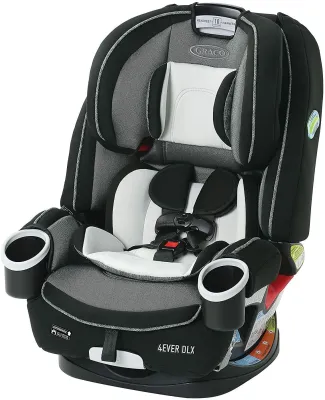
Prices are valid at publication and may change. Please refer to the product page for the latest price.
Relying on third-party marketing claims or unverified online reviews is a significant risk when purchasing safety gear. A product listing on an online marketplace might claim a seat is “safety approved” or “globally certified,” but these terms have no legal standing. Only the official regulatory markings on the physical seat prove compliance. If a seat lacks these markings, it is not considered compliant under Singapore law, regardless of what the retailer’s description promises.
Furthermore, regional variations in manufacturing mean that a Graco 3-in-1 model purchased from an overseas online marketplace may not carry the same certifications as one sold by an authorized local distributor in Singapore. For example, a model designed for the European market will feature different harness systems, chest clips, and installation mechanisms compared to a model designed for the United States market, even if they share a similar product name. You must ensure the specific unit you purchase matches the standards accepted by local authorities.
How to Verify Graco 3-in-1 Compliance Before Purchase
The most reliable way to verify compliance is to locate the physical certification label permanently affixed to the car seat’s plastic shell. For European-certified seats, look for an orange label containing the “E” mark (such as E11 or E4) along with the regulation number (ECE R44/04 or R129). For US-certified seats, look for a white or black label stating that the restraint conforms to all applicable Federal Motor Vehicle Safety Standards (FMVSS 213). This label is typically located on the side or back of the seat shell.

Before making a purchase, especially when shopping online or through parallel importers, ask the seller to provide a clear photograph of these exact labels on the specific unit you will receive. You should also locate the sticker containing the model number, serial number, and date of manufacture. If a seller is unable or unwilling to provide these details, it is best to look elsewhere, as you cannot verify the seat’s compliance without them.
Cross-reference these details with the official Graco website or contact their customer support to confirm the seat’s origin and intended market. Authorized local retailers in Singapore typically stock models that are pre-verified to meet local road safety requirements, making them a safer purchasing route than unverified parallel imports. Additionally, buying from an authorized local source often ensures you receive a valid local warranty and access to customer support.
Finally, review the user manual, which can often be downloaded in PDF format prior to purchase. The manual will explicitly state which safety standards the seat complies with and outline any regional limitations. If the manual does not reference a recognized standard, or if the seller cannot provide proof of the physical label, you should avoid purchasing that specific unit.
Evaluating the 3-in-1 Design for Your Child's Growth
A 3-in-1 car seat is designed to transition through multiple stages: rear-facing, forward-facing with a harness, and high-back booster mode. However, you must verify the specific height and weight limits for each mode on the physical label of your exact model. These limits can vary significantly between US-specification and European-specification Graco seats, and exceeding them compromises the seat’s protective capabilities.
Transitioning your child between these modes must be guided by physical milestones rather than age alone. For instance, keeping your child rear-facing for as long as possible is widely recommended by safety experts, often up to the maximum weight or height limit allowed by the seat in that mode. Do not rush to turn the seat forward-facing simply because your child has reached a certain age, provided they still fit within the rear-facing limits.
When evaluating the seat, check how the harness system and headrest adjust. A compliant and safe 3-in-1 seat should allow you to adjust the headrest and harness height simultaneously without needing to rethread the straps manually, or if rethreading is required, it must be done strictly according to the manual. Ensure there are no gaps between the child’s shoulders and the harness slots, and that the headrest provides adequate lateral support at every height setting.
The structural integrity of the seat must remain uncompromised during these adjustments. If any mechanism feels loose, sticky, or fails to lock securely into place, the seat may be defective or damaged. Always test these adjustments before installing the seat in your vehicle, and ensure that the harness can be tightened sufficiently to pass the “pinch test” (where you cannot pinch any slack in the harness strap at the child’s collarbone).
Installation Requirements and Safety Boundaries
Proper installation is critical to the seat’s performance in a collision. You must determine whether to install the Graco 3-in-1 using the ISOFIX system (often referred to as LATCH in US models) or the vehicle’s seat belt. Refer to both your vehicle’s owner’s manual and the Graco instruction manual to identify the approved installation methods for each seating position.
Note that ISOFIX and LATCH systems have strict weight limits. Once your child reaches a certain weight (typically combined weight of the child and the seat, or a specific child weight limit specified in the manual), you must transition from ISOFIX to a seat belt installation. Failing to make this transition can overload the anchor points in a crash. Always verify the maximum weight limit for ISOFIX installation in your specific car seat manual.
Achieving the correct recline angle is another vital safety step, particularly for newborns and young infants who lack head control. Graco 3-in-1 seats feature built-in recline indicators, such as a bubble level or a color-coded dial. You must adjust the seat’s recline angle so the indicator falls within the designated zone for your child’s weight and direction of travel. An incorrect angle can cause the infant’s head to flop forward, potentially restricting their airway.
Many car seats are installed incorrectly without the parents realizing it. Common errors include loose harness straps, loose vehicle seat belt routing, or incorrect belt paths. If the installed seat can move more than 2.5 centimetres (one inch) side-to-side or front-to-back at the belt path, it is not secure. If you are unsure about the installation, stop using the seat and consult a certified Child Passenger Safety Technician (CPST) in Singapore for a professional assessment.
Maintenance, Expiration, and Replacement Triggers
Car seats do not last indefinitely. Over time, exposure to heat, sunlight, and temperature fluctuations inside a parked vehicle in Singapore’s tropical climate can degrade the plastic shell and webbing of the harness. You must locate the manufacture date sticker, usually found on the underside or back of the seat, to determine its age.
Graco car seats typically have an expiration period of 7 to 10 years from the date of manufacture, but this varies by model. Refer to your specific manual to find the exact lifespan of your seat. Do not use a seat that has passed its expiration date, even if it looks perfectly fine on the surface. The structural integrity of the plastic may be compromised, making it unable to withstand the forces of an impact.
A car seat must be replaced immediately after any vehicle accident. Even a minor fender bender can introduce microscopic fractures in the plastic or stretch the harness webbing, compromising its ability to protect your child in a subsequent crash. While some manufacturers allow continued use after very minor incidents meeting specific criteria, the safest approach is to replace the seat, and many motor insurance policies in Singapore cover child car seat replacement.
Regularly inspect the seat for signs of wear and tear. Look for frayed harness straps, cracked plastic, rusted metal components, or missing parts. If you notice any of these issues, or if the harness buckle does not click securely into place, discontinue use immediately. Do not attempt to repair the seat with unauthorized parts or adhesives; always contact the manufacturer for approved replacement components.
Frequently Asked Questions (FAQ)
Can I use a US-specification Graco car seat in Singapore?
Yes, US-specification Graco car seats that conform to the FMVSS 213 standard are generally accepted by Singapore’s Traffic Police. However, you must ensure the seat carries the official FMVSS certification label. Keep in mind that importing a US model means you may not have access to local warranty coverage or replacement parts through Singapore distributors. You must also verify that your vehicle’s seat belts and anchor systems are fully compatible with the US-style installation mechanisms, such as the chest clip and tether strap.
How do I check if my specific Graco model has been recalled?
To check for active safety recalls, locate the model number, serial number, and manufacture date on the white sticker affixed to your car seat. Visit the official Graco safety recall database online and enter these details. It is highly recommended to register your purchase directly with Graco using the registration card included in the box or via their website. This ensures you will receive direct notifications from the manufacturer if a safety recall is issued for your specific model.
Is it safe to buy a second-hand Graco 3-in-1 car seat?
Buying a second-hand car seat is generally not recommended due to significant safety risks. It is impossible to verify the seat’s complete history, including whether it has been involved in a collision, washed with harsh chemicals that degrade the harness strength, or stored in conditions that accelerate material degradation. Additionally, second-hand seats may be expired, missing crucial safety components, or lacking the original instruction manual. If you must use a pre-owned seat, only accept one from a trusted source where you can personally guarantee its entire history and verify it is well within its expiration date.
Community discussion
Share your experience or ask a question. Comments are reviewed before publication.