
In Singapore’s typical high-density housing, such as Housing & Development Board (HDB) flats and modern condominiums, bathroom space is at a premium. When embarking on the milestone of potty training, finding a balance between child accessibility and adult floor space is a daily challenge for parents. Choosing the right step stool potty solution depends heavily on your specific bathroom layout, the wet-or-dry zoning of your space, and your toddler’s developmental stage.
Neither design is universally superior; the ideal choice is highly conditional. Foldable stools are the practical choice for ultra-compact, shared bathrooms where floor space must be cleared immediately after use to prevent adult tripping hazards. Conversely, fixed stools offer uncompromised stability and encourage independent use, making them ideal for toddlers who need a permanent, sturdy stepping point without waiting for an adult to set it up. Evaluating how these two designs perform under daily use will help you select the most functional option for your home.
Core Comparison: Evaluating the Step Stool Potty Setup for Space and Safety
To make an informed decision, caregivers must evaluate how each design performs across the critical dimensions of space efficiency, physical stability, toddler autonomy, and hygiene maintenance. This is particularly important in Singapore’s humid climate, where wet bathroom floors are common.
Products mentioned in this guide
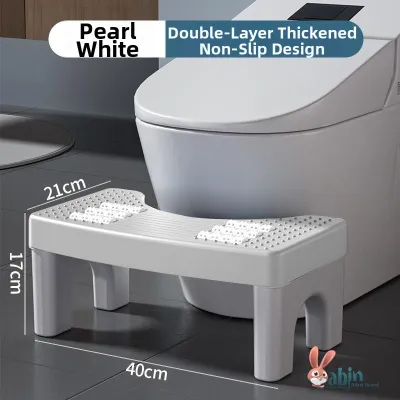
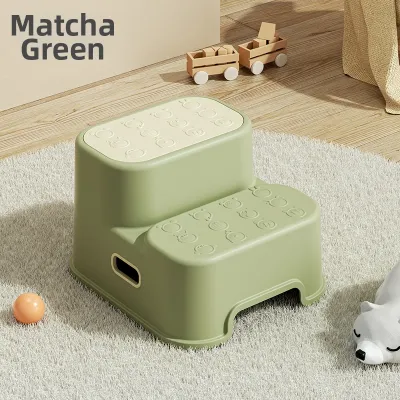
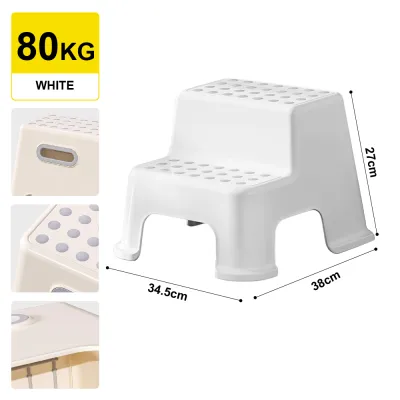
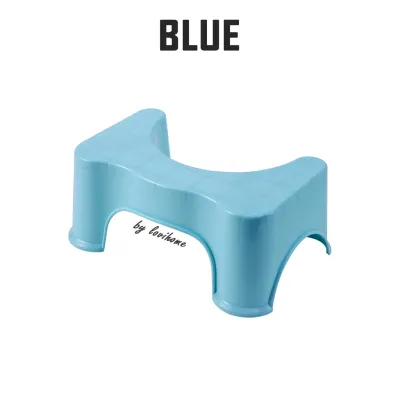
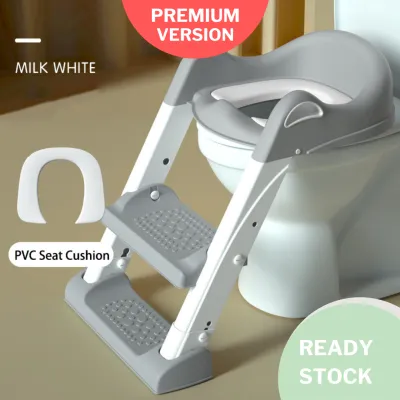
Prices are valid at publication and may change. Please refer to the product page for the latest price.
| Feature | Foldable Step Stools | Fixed Step Stools |
|---|---|---|
| Physical Footprint | Minimal; collapses flat for storage behind doors, in narrow gaps, or on wall hooks | Moderate to large; remains permanently on the bathroom floor |
| Setup Requirement | Requires adult or advanced toddler assistance to unfold and lock securely | None; always open and ready for immediate, independent use |
| Stability & Grip | Dependent on hinge integrity, locking pins, and non-slip rubber feet | High; solid single-piece or rigid construction with a wide base |
| Cleaning & Hygiene | Easy to hang dry; hinges require regular monitoring for rust, stiffness, or grime | Can trap water underneath; requires frequent lifting to clean the floor |
| Best Suited For | Shared HDB master/common bathrooms, small wet rooms, and families who travel | Dedicated children's bathrooms, spacious layouts, and highly independent toddlers |
Space Efficiency and Storage
In a compact 3-square-meter HDB common bathroom, every centimeter of floor space matters. A foldable step stool can be collapsed down to a thickness of just a few centimeters, allowing it to be tucked away into narrow gaps between the vanity and the toilet, placed behind the door, or hung on a wall hook. This capability keeps the floor clear for adult family members who share the same bathroom facilities throughout the day.
Fixed step stools, by contrast, occupy a permanent footprint on the floor. In tight layouts, a rigid stool can obstruct the path to the shower, block vanity cabinets, or create a constant tripping hazard for adults moving around in the dark. If your bathroom layout does not have a dedicated, out-of-the-way corner near the toilet bowl, a fixed stool may quickly become a source of daily frustration.
Stability and Slip Resistance
Safety is the most critical factor when a toddler is learning to balance on a elevated platform. Fixed step stools generally feature a wider base, a solid single-piece molded plastic or heavy wood construction, and a lower center of gravity. This structural rigidity minimizes the risk of the stool tipping over when a child steps near the outer edges or shifts their weight suddenly.
Foldable step stools rely on hinges, joints, and locking mechanisms to maintain their structural integrity. While high-quality models are engineered to support significant weight, they introduce potential failure points if the hinges wear out or if the locking pins are not fully engaged. Caregivers must verify that the folding mechanism is completely locked into place before allowing a child to step up, especially on smooth, wet bathroom tiles.
Toddler Independence and Usability
Potty training success is closely tied to a toddler’s sense of autonomy and their ability to respond to sudden bodily urges. A fixed step stool is always ready for use, allowing your child to walk into the bathroom, climb up independently, and position themselves on the toilet seat without waiting for assistance. This immediate access builds confidence and reduces the likelihood of accidents during the early, time-sensitive phases of training.
Foldable stools, however, often require an adult’s physical intervention to retrieve, unfold, and secure the device before the child can climb. This extra step can interrupt the child’s natural momentum and make the process feel more clinical or dependent on caregiver availability. If your goal is to foster complete self-reliance as quickly as possible, the physical barrier of a folded stool can be a notable drawback.
Cleaning and Humidity Management
Singapore’s tropical climate and high relative humidity create an environment where mold, mildew, and bacteria thrive, particularly in bathrooms that lack separate dry zones. Fixed step stools, especially those with hollow undersides or intricate structural ribbing, can trap stagnant water, hair, and soap scum underneath. This requires caregivers to frequently lift and scrub both the stool and the floor beneath it to maintain sanitary conditions.
Foldable step stools offer a distinct advantage in wet-room environments because they can be easily folded and hung on a wall hook or placed in a dry area after use. This allows the bathroom floor to dry completely and prevents moisture from pooling under the stool’s base. However, caregivers must inspect the metal screws, springs, or plastic hinges of foldable models regularly, as constant exposure to humidity can cause stiffness, rust, or structural degradation over time.
Foldable Potty Step Stools: Pros, Cons, and Best Use Cases
Foldable step stools are highly valued for their space-saving design and portability. These models are typically constructed from lightweight plastic with integrated hinges that allow the unit to fold flat with a single pulling motion. Many designs feature built-in carrying handles, making them easy for both adults and older children to transport from room to room.

The primary advantage of a foldable design is its ability to disappear when not in use. In shared family bathrooms where adults require unobstructed access to the toilet and shower, the ability to store the stool flat against a wall or inside a cabinet is invaluable. Additionally, these stools are highly portable, making them excellent options for families who travel frequently, visit grandparents, or need a consistent potty training setup across multiple locations.
Despite these benefits, foldable models have inherent limitations that caregivers must consider. The presence of moving parts introduces the risk of small fingers getting pinched in the hinges during folding or unfolding. Furthermore, if a child attempts to set up the stool themselves without proper coordination, they may fail to lock the platform completely, leading to a sudden collapse under weight. Caregivers must check the manufacturer’s weight capacity labels and inspect the locking mechanisms daily to ensure the safety pins remain robust and functional.
Best Use Cases: This style is highly recommended for shared master or common bathrooms with restricted floor space, homes with wet-room layouts where the floor is frequently sprayed with water, and families who require a highly portable training accessory for travel.
Fixed Potty Step Stools: Pros, Cons, and Best Use Cases
Fixed step stools are rigid, non-collapsible structures designed to remain in place. They are commonly made from heavy-duty molded plastic, wood, or bamboo, often featuring a wide, flared base to maximize contact with the floor. Many fixed models designed for potty training incorporate dual-height steps to accommodate growing children, along with textured top surfaces and robust rubberized bases to prevent sliding.
The outstanding benefit of a fixed step stool is its absolute stability and reliability. Because there are no moving parts, hinges, or locking pins, there is zero risk of mechanical failure or accidental collapse. Toddlers can step, turn, and sit with complete confidence, knowing the platform beneath them is solid. This permanent readiness is highly beneficial for encouraging independent bathroom visits, as the child does not need to ask for help or wait for setup.
However, the permanent physical presence of a fixed stool is its main drawback. In a small bathroom, a rigid stool can block cabinet doors, restrict access to the shower basin, and require adults to awkwardly step over or around it. Additionally, fixed stools are bulky to transport, making them impractical for travel or temporary setups outside the home. They also tend to accumulate dust and moisture underneath their wide footprints, requiring regular manual cleaning to prevent grime buildup.
Best Use Cases: This design is ideal for dedicated children’s bathrooms, larger master bathrooms with clear dry zones, and toddlers who are highly self-driven and possess the physical coordination to use the bathroom independently.
Decision Framework: Which Potty Step Stool Should You Buy?
To determine the best option for your household, assess your specific living conditions, bathroom layout, and your child’s developmental needs using the structured framework below.
- Choose a foldable stool if:
- Your bathroom floor space is highly restricted, and a permanent stool would block the shower door, vanity cabinets, or natural foot traffic.
- The bathroom is shared by multiple adults who require a clear floor space to prevent tripping, especially during nighttime use.
- You need a highly portable solution that can easily be packed into a car trunk or carried to a caregiver's or grandparent's home.
- Your bathroom is a wet-room design where the floor is frequently wet, requiring you to hang the stool up to dry to prevent mold growth.
- Choose a fixed stool if:
- You have a dedicated child's bathroom or a master bathroom with a clear, dry corner where the stool can remain permanently in place.
- Your toddler is highly independent and prefers to access the toilet without waiting for an adult to set up a stepping platform.
- Maximum physical stability and a high weight capacity are your top priorities for preventing falls and tipping incidents.
- You prefer a low-maintenance accessory with no moving parts, hinges, or pinch points to clean, inspect, or maintain.
- Neither option may fit if:
- Your bathroom floor is consistently wet, highly sloped for drainage, or tiled with extremely slick, non-textured ceramic tiles. In these conditions, any freestanding step stool can pose a severe slip hazard. Consider drying the floor completely before use, laying down a high-traction, mold-resistant bath mat, or utilizing an alternative toilet training seat that features integrated, secure steps designed to rest firmly on the toilet bowl itself.
- Verify first before purchasing:
- Check that the folding mechanism on a foldable model features a secure, child-proof lock that cannot be easily disengaged by accidental kicks or weight shifts.
- Measure the exact height of your toilet bowl and compare it to the stool's top step to ensure your child's knees will be slightly elevated above their hips when sitting, which is the anatomically optimal position for bowel movements.
- Confirm that the rubber feet on either design are compatible with your specific floor tiles and provide sufficient grip when exposed to moisture.
Safety and Setup Guidelines for Bathroom Step Stools
Regardless of the design you choose, safety must remain the primary focus during potty training. No step stool replaces active adult supervision. Caregivers should remain within arm’s reach of toddlers during use, especially during the initial stages of training when balance and coordination are still developing.
When setting up the stool, always place it on a flat, dry, and level surface. Avoid positioning the stool near low-hanging towel racks, glass shower screens, open shelves, or electrical cords that a child could grab or pull down while climbing. If the floor is wet from a recent shower, dry the area thoroughly before placing the stool down to ensure the non-slip rubber pads can grip the tiles effectively.
Regular maintenance checks are essential for long-term safety. For foldable models, inspect the plastic hinges for signs of stress whitening, structural cracks, or loose connection pins weekly. For fixed models, check the underside for mold accumulation and verify that the rubberized non-slip feet have not worn smooth or detached. Always adhere strictly to the manufacturer’s specified weight limits and age recommendations. If you observe any structural damage, deep cracks, or locking mechanism failures, stop using the stool immediately and consult the manufacturer for a replacement or professional advice.
Frequently Asked Questions (FAQ)
Can a regular household step stool be used for potty training?
While a standard household step stool can technically assist a child in reaching the toilet, potty-specific step stools are highly recommended. Potty-specific designs are engineered with appropriate heights to align a toddler’s body with standard toilet bowls, promoting a natural squatting posture that aids digestion. Furthermore, generic household stools often lack the specialized, high-traction non-slip surfaces and moisture-resistant materials required to remain safe on wet, slippery bathroom tiles.
At what age should a toddler transition from a step stool to using the toilet independently?
The transition away from a step stool depends on your child’s physical height, balance, and motor skill development rather than a strict age milestone. Most children continue to use a step stool until they can easily sit on the toilet seat with their feet resting flat on the floor, which typically occurs between four and six years of age. Observe your child’s ability to climb safely, maintain balance on the seat, and manage their clothing independently; if you have any concerns regarding their physical development or coordination, consult a pediatrician for personalized guidance.
Community discussion
Share your experience or ask a question. Comments are reviewed before publication.