
Quick Answer: Foam vs Liquid Bottle Cleanser
Choosing between a foam and a liquid milk bottle cleanser depends on your daily parenting routine, washing habits, and budget. Neither format is universally superior; instead, each serves different cleaning scenarios and lifestyles.
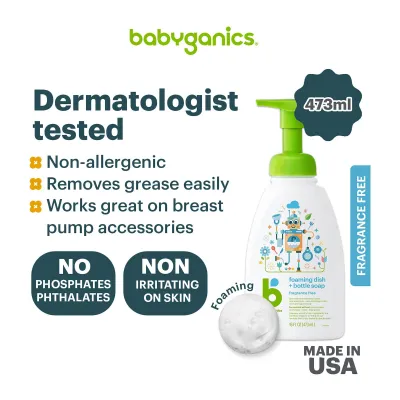
Foam cleansers excel in speed, physical convenience, and rapid rinsing. Because the soap is pre-aerated and dispenses as a rich lather from a pump, it is ideal for busy, one-handed washes immediately after a feeding. This format minimizes water use and reduces the risk of leaving soapy residue behind, making it highly practical for quick turnarounds.
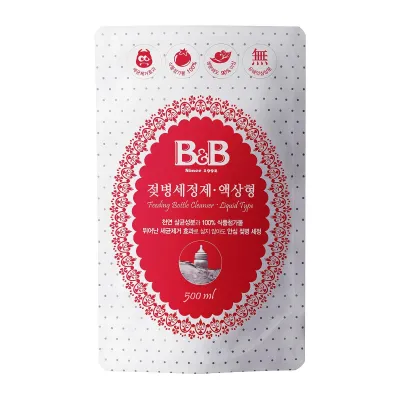
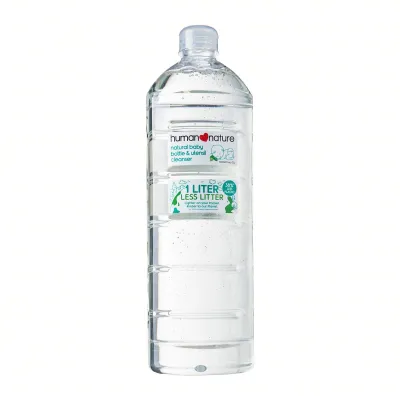
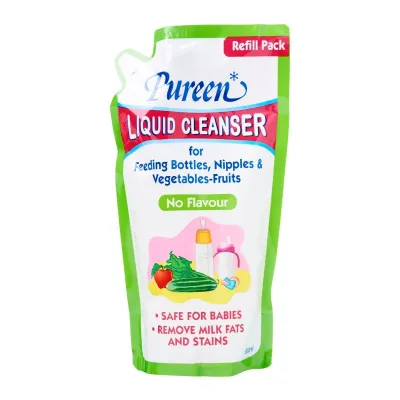
Liquid cleansers offer superior concentrated cleaning power and long-term financial value. They are highly effective for soaking multiple bottles, breast pump components, and accessories in a basin of warm water. This soaking action is crucial for breaking down dried, stubborn milk fats and hardened protein rings that foam cleansers might struggle to penetrate. For families dealing with high-volume washing, liquid refills provide a much lower cost per wash.
Products mentioned in this guide
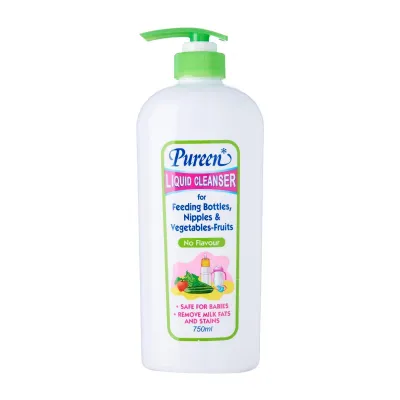
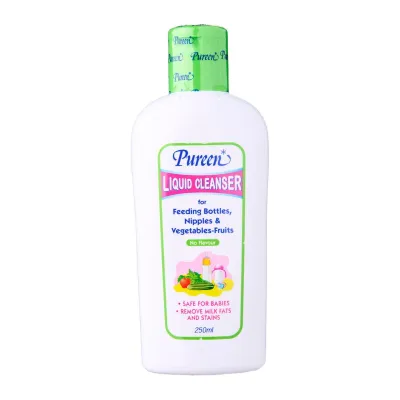
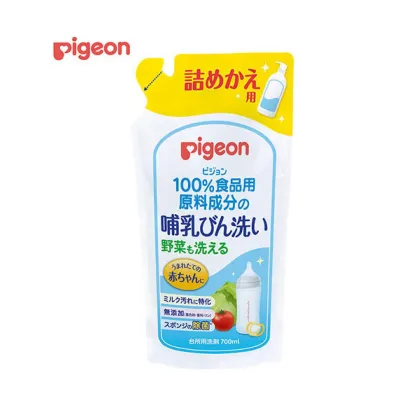
Prices are valid at publication and may change. Please refer to the product page for the latest price.
Tackling Milk Fat and Protein: Cleaning Effectiveness
Breast milk and infant formula are complex biological fluids containing proteins, carbohydrates, and a high concentration of lipids (fats). When milk sits in a bottle, these lipids naturally adhere to the hydrophobic surfaces of plastic feeding bottles, such as those made of polypropylene (PP) or polyphenylsulfone (PPSU). Meanwhile, milk proteins—particularly casein—can dry into a tough, sticky film that acts like a mild adhesive. Standard dishwashing liquids are formulated for general food grease, but a dedicated milk bottle cleanser is specifically engineered to target these stubborn milk residues safely.

Foam Cleansers: Surface Coverage and Quick Action
Foam cleansers utilize a specialized pump mechanism that mixes the liquid soap with air, instantly creating a light, aerated lather. This pre-aeration dramatically increases the surface area of the plant-based surfactants, allowing them to spread rapidly across the interior walls of the bottle and into the intricate crevices of collars and silicone nipples. Because the foam is lightweight, it clings to vertical surfaces rather than immediately pooling at the bottom of the bottle.
This physical behavior makes foam highly effective for immediate washing. When a bottle is rinsed and washed right after a feeding, the milk residue is still wet and loose. The micro-bubbles in the foam quickly surround the milk fat globules, lowering surface tension and lifting the residue away with minimal mechanical scrubbing. However, because foam contains a high ratio of air to liquid, it can dry out quickly when exposed to the air, making it less effective for breaking down residues that have already hardened.
Liquid Cleansers: Concentration and Soaking Power
Liquid cleansers are formulated as concentrated gels that do not contain pre-mixed air. Because they are not diluted to pass through a foaming mesh, they contain a significantly higher density of active surfactants per milliliter. This high concentration makes liquid cleansers the ideal choice for deep cleaning and managing delayed washes.
When bottles are left to sit in a sink or diaper bag, the milk proteins dry into a crusty, stubborn layer. A liquid cleanser diluted in a basin of warm water creates a sustained, highly active soaking environment. The water rehydrates the dried proteins, while the concentrated surfactants penetrate and emulsify the stubborn fat rings and calcium deposits. This chemical breakdown minimizes the need for aggressive scrubbing, which helps protect plastic bottles from developing micro-scratches where bacteria can accumulate.
Daily Convenience and Ease of Use
Washing baby bottles is a highly repetitive task that parents perform multiple times a day. The physical design of the cleanser packaging and the effort required to generate a lather can significantly impact your daily kitchen workflow.
The One-Handed Advantage of Foam Pumps
New parents frequently find themselves multitasking, often holding a baby or managing kitchen tasks with one hand while trying to wash feeding gear with the other. Foam cleansers are designed with this physical reality in mind. The sturdy pump dispensers can easily be operated with a single hand—simply press the pump down with your palm or the side of your hand directly onto a bottle brush or into the bottle.
Because the soap dispenses as a fully formed lather, you do not need to spend time or physical effort agitating the brush against the bottle walls to generate suds. This immediate readiness saves valuable seconds during each washing cycle. Over months of daily bottle maintenance, this minor time-saving feature significantly reduces cumulative wrist strain and physical fatigue.
The Flexibility of Liquid Squeeze Bottles
Liquid cleansers are typically packaged in squeeze bottles or standard liquid pumps, offering unmatched flexibility in dosage control. If you only need to clean a single pacifier, a small medicine dispenser, or a single bottle nipple, you can dispense a tiny, half-drop of liquid gel. This precise control prevents the product waste that often occurs with foam pumps, which dispense a fixed, pre-measured volume of foam regardless of the item’s size.
Conversely, when faced with a sink full of feeding accessories, a single squeeze of liquid cleanser into a basin of warm water creates a soapy bath that can clean a dozen bottles at once. While this method requires manual agitation with a bottle brush to generate lather, the combined mechanical action of scrubbing and the rich liquid soap is highly effective at physically dislodging stubborn debris from the deep corners of larger bottles.
Cost Per Wash and Long-Term Value
Evaluating the financial impact of your bottle cleanser requires looking beyond the initial retail price on the shelf. The concentration of the formula, the packaging design, and your specific feeding setup all play a role in determining the true cost per wash.
Liquid cleansers consistently offer the best long-term value and the lowest cost per wash. Because they are highly concentrated, a single bottle lasts significantly longer than an equivalent volume of foam cleanser. Furthermore, manufacturers widely distribute liquid cleansers in large, economical refill packs, often ranging from 500ml to 1000ml. These refill pouches allow parents to reuse their existing bottles, reducing plastic waste and lowering the unit cost per milliliter.
Foam cleansers carry a price premium, largely due to the specialized mesh pump mechanism required to aerate the liquid. Additionally, the liquid formulation inside a foam pump must be thin enough to pass through the foaming nozzle, meaning it is pre-diluted with water. Parents are essentially paying a higher price for a product that contains more water and fewer active surfactants per bottle than concentrated liquid gel.
Furthermore, the fixed-volume nature of foam pumps can accelerate consumption. A single pump may dispense more soap than is necessary for a small nipple or collar, leading parents to run through a bottle of foam cleanser much faster than a bottle of liquid gel.
In the Singapore market, standard liquid bottle cleansers and refill packs typically range from S$8 to S$18, while specialized foam pump bottles and their refills can range from S$12 to S$25, depending on the brand and organic certifications. For families with high-volume washing needs—such as those with multiples or mothers who are exclusively expressing breast milk—this price difference can accumulate to a substantial amount over a year. Calculating your budget based on your washing frequency and opting for liquid refills can maximize household savings.
Rinsing Effort and Safety Verification
A primary concern for parents is the risk of leaving chemical soap residue inside baby bottles. Residual surfactants can contaminate milk, alter its taste, and potentially irritate a baby’s sensitive gastrointestinal tract.
Foam cleansers offer a clear advantage in rinsing efficiency. Because the foam is pre-aerated and less dense than concentrated liquid gel, the bubbles collapse and wash away rapidly under running water. This quick-dissolving property makes it easy to see when the bottle is clean, reducing water consumption and giving parents confidence that no soapy film remains on the bottle walls.
Liquid cleansers, particularly when used in high concentrations, can generate a dense, slippery lather that requires more water and prolonged rinsing to clear completely. If too much liquid gel is used, a thin surfactant residue can cling to plastic or glass walls, requiring multiple rinses to eliminate entirely.
Regardless of the format you choose, safety must be verified by examining the product’s ingredient list rather than relying on marketing claims. Parents should check product labels to verify the following criteria:
- Plant-Based Surfactants: Look for formulations utilizing mild, plant-derived cleaning agents (such as those derived from coconut, decyl glucoside, or coco-glucoside).
- Fragrance-Free and Dye-Free: Avoid products containing synthetic perfumes or artificial colorants, as these are common irritants for sensitive infants.
- Food-Grade Ingredients: Ensure the cleanser is formulated with food-grade ingredients that rinse away cleanly without leaving harmful residues.
Additionally, always cross-check your chosen cleanser with the care instructions provided by your baby bottle manufacturer. Different materials—such as borosilicate glass, polypropylene (PP), polyphenylsulfone (PPSU), and medical-grade silicone—have varying chemical resistances. For example, some harsh chemical agents can cause PPSU bottles to cloud or degrade prematurely, while silicone nipples can absorb strong fragrances if the cleanser is not completely fragrance-free. If you use a UV sterilizer, ensure that all soap residue is completely rinsed off, as residual surfactants exposed to UV light can bake onto the plastic, causing discoloration and accelerated wear.
How to Choose: Decision Framework
To help finalize your choice, consider your specific daily routine, feeding setup, and household priorities. Use this structured framework to guide your purchasing decision:
Choose Foam if:
- Immediate Washing: You prefer washing each bottle and nipple immediately after use, before the milk has a chance to dry.
- One-Handed Convenience: You frequently find yourself multitasking and need to dispense soap with one hand while holding your baby.
- Water and Time Savings: You want a rapid rinsing process that uses minimal water and clears away instantly.
- On-the-Go Needs: You need a portable cleaning option for travel or daycare where quick, fuss-free rinsing is essential.
Choose Liquid if:
- Batch Washing: You accumulate bottles throughout the day and wash them in large batches at the end of the day.
- Soaking Routine: You regularly clean breast pump parts, silicone valves, and weaning accessories that benefit from a warm soaking bath to loosen dried milk.
- Budget-Conscious: You want the most economical option with the lowest cost per wash and prefer buying bulk refill packs.
- Precise Dosing: You want the flexibility to dispense a tiny drop for a single pacifier or a large amount for a full basin.
Verify first if:
- Sensitive Skin or Allergies: Always verify that the cleanser is hypoallergenic, pediatric-tested, and free from synthetic dyes and fragrances.
- Manufacturer Guidelines: Check the care instructions of your specific bottle brand to ensure compatibility with the cleanser’s ingredients, particularly for high-end plastic materials like PPSU.
Frequently Asked Questions (FAQ)
Can I use regular dish soap instead of a dedicated milk bottle cleanser?
Standard household dish soaps are formulated to strip heavy grease, oils, and cooked-on food residues from adult dishes. To achieve this, they often contain strong anionic surfactants, synthetic fragrances, and artificial dyes. These ingredients can be exceptionally difficult to rinse completely from plastic baby bottles and silicone nipples, often leaving a persistent chemical scent or soapy taste. If a baby drinks from a bottle with soap residue, it can irritate their highly sensitive digestive tract and lead to bottle rejection. Dedicated milk bottle cleansers are specifically formulated with mild, food-grade, plant-derived ingredients that target milk proteins and fats while rinsing away cleanly without leaving harmful residues.
Do I need a separate cleanser for breast pump parts?
No, a separate cleanser is not necessary. Both high-quality liquid and foam milk bottle cleansers are perfectly suited for cleaning breast pump components, as breast milk contains the same fats and proteins regardless of whether it is fed from a bottle or expressed through a pump. However, breast pump parts often feature intricate shapes, narrow suction channels, and delicate silicone membranes or valves. For these components, using a liquid cleanser in a warm water soaking bath is highly recommended, as it allows the soapy solution to penetrate hard-to-reach areas and loosen milk film without requiring abrasive scrubbing that could damage delicate parts. If you prefer foam, ensure you apply the foam directly into all crevices and use a specialized, soft-bristled detail brush to clean thoroughly before rinsing.
Community discussion
Share your experience or ask a question. Comments are reviewed before publication.