
When your baby starts sitting up, crawling, and pulling themselves up to stand, stumbles and falls become an everyday occurrence. In Singaporean homes, where hard flooring like homogeneous tiles, marble, and parquet are common, parents naturally look for ways to cushion these inevitable impacts. A baby fall protector can offer peace of mind during these active developmental milestones. However, finding a reliable product requires understanding the different types available, evaluating materials suitable for Singapore’s tropical climate, and knowing how to verify safety standards.
To choose the right option, you must first distinguish between wearable head cushions designed for infants learning to walk and bed rails or play mats meant for sleep and play zones. Trusted brands are those that prioritize lightweight, highly breathable materials, ergonomic strap designs, and verifiable non-toxic certifications. By focusing on these practical performance indicators rather than aesthetic appeal, you can select a protector that keeps your baby comfortable and safe without hindering their natural physical development.
Understanding Baby Fall Protectors: Head Cushions vs. Bed Rails
Baby fall protectors are not a single, one-size-fits-all solution. They fall into distinct categories designed for different developmental stages, environments, and safety needs. Using these products interchangeably or selecting the wrong type for your child’s age can compromise their safety and comfort.
Products mentioned in this guide
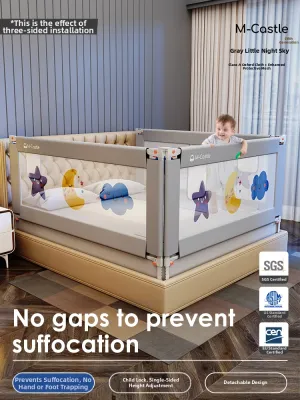
Prices are valid at publication and may change. Please refer to the product page for the latest price.
Learn-to-Walk Head Protectors (Backpack-Style and Padded Hats)
Wearable head protectors are designed specifically for infants who are actively practicing sitting, crawling, standing, and early walking—typically between the ages of 6 and 18 months. The most common design is the backpack-style cushion, which features padded shoulder straps and a circular or animal-shaped cushion that sits against the back of the child’s head and upper back. This design is engineered to absorb impact if the baby loses balance and falls backward.
Another wearable option is the padded safety helmet or hat, which provides 360-degree coverage around the forehead, sides, and back of the head. While these offer broader coverage, they cover more skin surface area, which is an important consideration in warmer climates. Both wearable styles are intended solely for active, supervised daytime play on flat indoor surfaces.
Bed Rails and Fall Prevention Mats
Unlike wearable cushions, bed rails and play mats are stationary safety tools designed for sleeping areas or designated play zones. Bed rails are mesh or fabric barriers that attach securely to the sides of an adult bed or a transitioning toddler bed. They are intended for older toddlers—typically 18 months and older—who are transitioning out of a crib and are at risk of rolling out of bed during sleep.
Fall prevention mats, often made of thick, high-density polyurethane (PU) or polyethylene (PE) foam, are laid directly on the floor to create a cushioned play zone. These mats serve as a permanent or semi-permanent buffer over hard flooring. Parents must recognize that wearable head cushions cannot replace bed rails for sleep safety, and bed rails are entirely unsuitable for preventing falls during active daytime walking practice.
Key Safety and Comfort Standards for Singapore's Climate
Singapore’s hot and humid tropical climate introduces unique challenges for wearable baby gear. Because infants have underdeveloped sweat glands, they are highly susceptible to overheating, heat rash, and skin irritation. Any wearable safety device must be carefully evaluated against local environmental conditions.

Breathability and Moisture-Wicking Fabrics
When a baby is active, they generate significant body heat. Wearable protectors made of dense, synthetic fabrics can trap heat and sweat against your baby’s back and neck, leading to severe discomfort and heat rash (miliaria). Look for brands that utilize multi-layered 3D air mesh fabrics. This material features a double-raschel knit structure that creates a breathable microclimate, allowing air to circulate freely and moisture to evaporate quickly.
Organic cotton and bamboo-derived fabrics are also excellent choices for the outer covers. These natural fibers are gentle on sensitive baby skin, highly absorbent, and naturally hypoallergenic. Avoid products filled with heavy, solid foam or non-breathable polyester fiberfill that lacks ventilation channels.
Weight, Bulkiness, and Ergonomics
An infant’s neck muscles and cervical spine are still developing and are highly sensitive to extra weight. A heavy or poorly balanced fall protector can strain your baby’s neck and alter their natural center of gravity. Instead of helping them balance, an overly heavy backpack cushion can actually pull them backward, increasing the frequency of falls.
When evaluating a wearable protector, check the manufacturer’s technical specifications for the product’s weight. Ideally, a wearable cushion for an infant aged 6 to 12 months should weigh under 150 to 200 grams. The profile of the cushion should be streamlined rather than excessively bulky, ensuring it does not interfere with the baby’s ability to turn their head or sit up straight.
Hygiene, Sweat Management, and Washability
With daily use in a humid environment, wearable protectors will inevitably accumulate sweat, drool, and household dust. If a protector is difficult to clean, it can quickly become a breeding ground for bacteria, mold, and dust mites, which can trigger pediatric allergies or eczema flare-ups.
Prioritize brands that offer fully machine-washable designs or feature removable, washable outer covers. Check the care label to ensure the product can withstand frequent laundering without losing its shape, clumping the internal padding, or degrading the elasticity of the straps. Quick-drying synthetic mesh materials are particularly advantageous in Singapore, as they dry rapidly even in high-humidity conditions.
Safety Labels and Material Verifications
Do not rely solely on attractive product images or generic online descriptions. Responsible parents should inspect the physical tags or official manufacturer documentation for verifiable safety certifications. Look for materials certified under international standards such as OEKO-TEX Standard 100, which guarantees the textiles are free from harmful levels of toxic chemicals, formaldehyde, and heavy metals.
If the protector contains plastic buckles, adjusters, or decorative elements, verify that these components are labeled as BPA-free, phthalate-free, and non-toxic. Because babies frequently explore objects with their mouths, any part of the protector that they can reach must be completely safe for oral contact.
What Trusted Brands Prioritize: Features to Evaluate
To distinguish high-quality safety gear from cheap novelty items, parents must look closely at the engineering, structural integrity, and ergonomic design of the product. Trusted manufacturers focus on functional safety rather than cute aesthetics.
Coverage Area and Range of Motion
A well-designed backpack protector should focus its cushioning on the primary impact zones: the occipital region at the back of the skull and the upper thoracic spine. The padding must be thick enough to prevent the head from contacting the floor during a backward fall, but it should not be so wide that it blocks the baby’s peripheral vision or restricts their lateral head movement.
Ensure the cushion does not cover or press against the baby’s ears, as this can muffle environmental sounds and affect their spatial orientation. The lower portion of the protector should taper off to avoid restricting the lower back and hips, allowing the baby to crawl, sit, and transition between positions naturally.
Strap Design, Adjustability, and Secure Fastening
The strap system is critical to both safety and comfort. Look for wide, flat shoulder straps made of soft, padded materials that distribute weight evenly across the shoulders without digging into the armpits or neck. Narrow, unpadded elastic bands can twist, pinch, and cause painful chafing on delicate skin.
Adjustability is essential to accommodate your baby’s rapid growth and different clothing thicknesses. Trusted brands often incorporate a horizontal chest strap (an H-shaped strap configuration) or a cross-chest buckle. This feature prevents the shoulder straps from slipping off narrow, sloping baby shoulders as they crawl and climb. Ensure that all buckles are quick-release for easy removal in an emergency, but positioned where the baby cannot easily reach or undo them.
Impact Absorption vs. Density
The internal padding of a fall protector must strike a careful balance between softness and structural firmness. If the padding is too soft, it will bottom out under the force of a fall, offering little protection against hard tile or parquet floors. Conversely, if the padding is too dense or rigid, it can cause a rebound effect, jarring the baby’s neck during impact.
High-quality brands often use multi-layered padding, combining a soft outer layer for comfort with a high-density, shock-absorbing inner core. Avoid thick, overly bouncy plush toys repurposed as protectors; these lack engineered impact-absorption properties and can act like a pendulum, destabilizing the baby during minor stumbles.
Choking Hazard Checks and Construction Quality
Before introducing any fall protector to your baby, conduct a thorough physical inspection of its construction. Check all seams, stitching, and strap attachments to ensure they are securely reinforced and will not unravel under tension. Loose threads can wrap around a baby’s fingers or toes, posing a tourniquet risk.
Examine the product for small, detachable parts. Many low-cost protectors feature decorative elements like plastic eyes, small buttons, felt noses, or poorly secured tassels. These decorative items can easily be chewed off or detached, presenting a severe choking hazard. Choose minimalist designs with integrated, embroidered details rather than glued-on or stitched-on accessories.
How to Verify Brand Reliability and Authentic Parent Reviews
With a vast array of baby products available online, sorting through marketing claims to find genuinely reliable brands requires a systematic approach. Parents should look for objective feedback and verified safety records.
Navigating Online Marketplaces and Official Brand Stores
When browsing ecommerce platforms or local online baby boutiques, filter the feedback to view only “Verified Purchases.” Focus your attention on reviews that include real-life photos or videos of the product in active use. These visual reviews allow you to assess the actual fit, fabric texture, and scale of the protector on a baby of a similar age or weight to yours.
Compare listings on official brand stores against third-party distributor pages. Reputable brands maintain detailed product listings that include clear age recommendations, maximum weight limits, material compositions, and specific care instructions, rather than relying on vague marketing slogans.
Identifying Red Flags in Reviews
Be analytical when reading product reviews. A high volume of generic, five-star ratings with repetitive phrasing (such as “excellent product,” “very cute,” or “highly recommend”) clustered around the same dates often points to incentivized or artificial reviews.
Look for detailed, balanced reviews from parents who discuss practical performance. Valuable reviews often highlight specific pros and cons, such as:
- How well the straps stayed in place during active crawling.
- Whether the fabric caused the baby to sweat after 15 minutes of play.
- How the cushion held up after being machine-washed multiple times.
- Whether the baby tolerated wearing the protector or repeatedly tried to pull it off.
Consulting Local Singaporean Parenting Communities
Local parenting communities are invaluable resources for unfiltered, real-world feedback. Seek advice on Singapore-specific parenting forums, neighborhood-specific parent groups, or active online chat groups for parents with babies of similar birth months.
When asking for recommendations, inquire specifically about how different brands perform in Singapore’s humid climate and on local flooring types. Parents who have already gone through the learning-to-walk phase can provide honest insights into which brands are durable, easy to clean, and genuinely accepted by babies, saving you from making unnecessary purchases.
Checking for Safety Notices and Recalls
Before finalizing a purchase from any brand—especially imported brands sold online—verify its safety record. Check local consumer safety portals, such as the Consumer Product Safety Office (CPSO) of Singapore or Enterprise Singapore’s safety alerts, to ensure the brand or specific model has not been flagged for safety violations or design hazards.
You can also cross-reference international safety databases, such as the United States Consumer Product Safety Commission (CPSC) or the European Union’s Rapid Alert System (RAPEX). If a brand has a history of recalls due to strap failures, choking hazards, or toxic materials, avoid it entirely.
Safe Usage Guidelines and When to Stop Using Them
Even the highest-quality baby fall protector is only effective when used correctly. Parents must treat these products as temporary, supplementary tools rather than absolute safety guarantees.
The Limits of Wearable Protection
It is vital to understand that wearable head protectors do not prevent all injuries. They are designed primarily to cushion the back of the head during backward falls from a sitting or standing position. They offer no protection for the face, forehead, jaw, or limbs if a baby falls forward or sideways.
Wearable protectors are never a substitute for active, hands-on caregiver supervision. A parent or caregiver must always remain within arm’s reach of an infant practicing physical milestones, ready to assist and guide them safely.
Proper Fitting and Adjustment Steps
To ensure the protector functions as intended without introducing new safety risks, follow these step-by-step fitting guidelines:
- Read the Instructions: Always review the manufacturer's user manual and weight guidelines before fitting the product.
- Position the Cushion: Place the protector on your baby's back, ensuring the circular head cushion aligns directly with the back of their head (the occipital area) when they are upright.
- Adjust the Shoulder Straps: Tighten or loosen the shoulder straps so they sit flat and secure. They should be snug enough to prevent the cushion from sliding to the side, but loose enough to allow you to easily slide two fingers between the strap and your baby's shoulders.
- Secure the Chest Strap: Fasten the horizontal chest strap or cross-buckle to keep the shoulder straps from slipping off. Double-check that the chest strap sits flat across the mid-chest and does not slide up toward the baby's throat or neck.
- Check for Red Marks: After a few minutes of wear, remove the protector and inspect your baby's skin. If you notice red marks or indentations around the shoulders, armpits, or chest, loosen the straps immediately.
Environmental Baby-Proofing as the Primary Defense
Rather than relying solely on wearable gear, focus on creating a safe physical environment for your baby to explore. This process, known as baby-proofing, is your primary line of defense against serious injury.
- Lay Down Play Mats: Cover primary play areas with high-quality, shock-absorbing foam play mats that are firmly joined together to prevent tripping.
- Secure Furniture: Anchor heavy furniture, such as bookshelves, chest of drawers, and television consoles, securely to the wall using anti-tip straps.
- Pad Sharp Edges: Install soft foam corner guards on sharp edges of coffee tables, TV consoles, and low shelving.
- Clear Walkways: Keep floors free of loose toys, electrical cords, clutter, and slippery rugs that could cause a baby or a supervising caregiver to trip.
When to Discontinue Use and Transition Away
Wearable fall protectors are temporary aids designed for a brief developmental window. You should stop using the product immediately if your baby shows signs of skin irritation, heat rash, or distress while wearing it, or if they consistently try to pull it off, which indicates discomfort.
As your baby gains confidence and develops a stable, independent walking gait—usually between 12 and 18 months—it is time to transition away from the protector. Experiencing minor, low-impact stumbles on a padded play mat is a necessary part of a child’s sensory-motor development. It teaches them spatial awareness, balance, and the natural protective reflex of putting their hands out to break a fall. Over-relying on a wearable cushion for too long can delay the development of these essential motor skills.
If you have any concerns regarding your baby’s physical development, muscle tone, balance, or if they experience frequent, unexplained falls, consult your pediatrician or a qualified pediatric physiotherapist for professional guidance.
Frequently Asked Questions (FAQ)
Are baby head protector backpacks safe for sleep?
No, wearable baby head protectors are strictly designed for active, supervised daytime play and must never be worn while your baby is sleeping or resting. Using these products in a cot, crib, or bed poses a severe risk of suffocation, strangulation from the shoulder straps, and Sudden Infant Death Syndrome (SIDS). Always remove all wearable gear, backpacks, and safety helmets before putting your baby down to sleep.
Do pediatricians recommend baby fall protectors?
Most pediatricians and child safety experts emphasize that wearable fall protectors are not medically necessary for typically developing infants. Instead, medical professionals recommend active caregiver supervision and a properly baby-proofed environment with soft play mats. Allowing babies to experience minor, low-impact stumbles on flat, cushioned surfaces is a crucial part of their sensory-motor development, helping them learn natural balance and protective reflexes.
How do I clean a baby head protector after heavy sweating?
Always refer to the manufacturer’s care label first. If the product is hand-wash only, submerge it in lukewarm water with a mild, baby-safe detergent, gently squeeze the padding to clean it, and rinse thoroughly to remove all soap residue. To prevent mold and mildew in Singapore’s humid climate, air-dry the protector completely in a well-ventilated indoor space or a shaded outdoor area away from direct, harsh sunlight. If the manufacturer permits machine washing, use a delicate cycle with a mesh laundry bag and tumble dry on a low, gentle setting.
Community discussion
Share your experience or ask a question. Comments are reviewed before publication.