
Choosing the right diaper cream for your baby in Singapore requires a careful understanding of your child’s specific skin condition and how local environmental factors affect their skin barrier. The combination of high tropical humidity and consistent heat means that moisture is easily trapped within a diaper, accelerating irritation and making the skin highly susceptible to chafing and rashes. While many parents look for popular solutions like Napitol cream, there is no single product that serves as a universal cure-all. The ideal choice depends entirely on whether your baby is experiencing mild friction redness, a persistent wetness rash, or has naturally sensitive skin that reacts to specific additives. By learning how to assess your baby’s skin, decode product ingredient labels, and adjust your daily diapering routine, you can select a cream that provides effective protection and supports natural healing.
Identifying Your Baby's Specific Diaper Skin Concern
To choose the most effective diaper care product, you must first identify the exact nature of the skin irritation your baby is experiencing. Diaper dermatitis is a spectrum of skin issues ranging from minor chafing to severe, compromised skin barriers. In Singapore’s climate, where ambient temperatures and humidity levels remain consistently high, sweat and urine can rapidly break down the skin’s outermost protective layer. Observing the visual appearance of the irritation and monitoring your baby’s comfort levels during diaper changes are the first steps in determining the appropriate course of action.
Mild redness typically presents as faint, pinkish patches localized to areas where the diaper rubs directly against the skin, such as the inner thighs, buttocks, or waistline. This irritation is often a form of friction or contact dermatitis, caused by the physical rubbing of the diaper material against damp skin. The skin remains mostly smooth to the touch, and your baby may not show significant signs of distress during cleaning. For mild redness, a light, preventative barrier cream is usually sufficient to minimize friction and shield the skin from occasional moisture.
Products mentioned in this guide
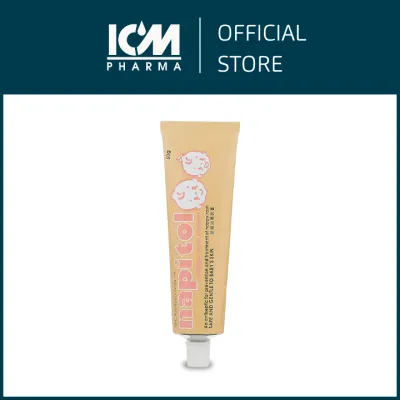

![Napitol Cream 50g [NUHS Pharmacy]](https://img.lazcdn.com/g/ff/kf/S98149106024b4e5cbda88d4d966fdad0v.png_400x400q80.png_.webp)
![CETAPHIL BABY Diaper Cream 70g with Organic Calendula & Sunflower Seed Oil [Gentle & Hypoallergenic]](https://img.lazcdn.com/g/p/377e7c5e4c852606b1cbc514019cd00c.png_400x400q80.png_.webp)
Prices are valid at publication and may change. Please refer to the product page for the latest price.
A severe diaper rash, by contrast, is characterized by intense, bright red or dark red patches that cover a larger surface area and may feel warm or slightly swollen. The skin may appear raw, cracked, or even exhibit tiny bumps and peeling. This level of irritation occurs when prolonged exposure to wetness, urine, and fecal enzymes breaks down the skin barrier completely. Babies with severe rashes often cry or show clear signs of discomfort during diaper changes, especially when the area is wiped. This condition requires a highly concentrated, thick barrier cream to completely isolate the skin from external irritants while it heals.
Some babies have naturally sensitive skin or underlying conditions like eczema, which makes them highly reactive to standard diapering products. Sensitive skin may not always look severely inflamed, but it can flare up quickly with dry, flaky patches, mild hives, or localized redness whenever a new product is introduced. If your baby has sensitive skin, your primary focus should be on avoiding potential irritants rather than simply applying thick barriers. This means selecting hypoallergenic, fragrance-free formulations and conducting careful patch tests before widespread application.
It is crucial for caregivers to recognize when a diaper concern has progressed beyond simple irritation and requires professional medical intervention. Fungal infections, most commonly caused by yeast, thrive in the warm, dark, and moist environment of a diaper, particularly in tropical climates. A fungal rash typically presents as bright red, defined patches with distinct “satellite lesions”—small, red spots or pustules spreading outward from the main rash area—and often settles deep within the skin folds. Bacterial infections may present with yellow crusting, pus-filled blisters, or rapidly spreading redness. If you observe these signs, or if a standard rash does not improve after several days of consistent care, you should stop using over-the-counter creams and consult a pediatrician for targeted prescription treatments.
Matching Cream Ingredients and Textures to Skin Conditions
Once you have identified your baby’s skin concern, the next step is to match the condition to the correct active ingredients and product textures. Diaper creams generally fall into two categories: preventative barrier creams and active treatment ointments. Understanding how different ingredients interact with the skin barrier allows you to make an informed decision based on the product label rather than relying on generic marketing claims.

Barrier ingredients sit on top of the skin, creating a physical shield that repels water, urine, and feces. Zinc oxide is one of the most common and effective barrier ingredients found in diaper care. It provides a durable, non-soluble layer that protects the skin while offering mild astringent properties to soothe irritation. For mild redness or daily prevention, a cream containing a lower concentration of zinc oxide (around 10% to 12%) is often ideal because it is easier to apply and wipe away. For severe rashes, a higher concentration (up to 40%) provides a much thicker, pastier barrier that remains intact even during prolonged exposure to wetness. Petrolatum, mineral oil, and lanolin are also widely used to lock in moisture and prevent transepidermal water loss, though lanolin should be used with caution if your baby has a known sensitivity to wool alcohols.
For babies with sensitive skin, the ingredient list must be scrutinized to eliminate potential allergens and sensitizing agents. Fragrances, whether synthetic or derived from natural essential oils, are a primary cause of contact dermatitis in infants. Even products labeled as “baby fresh” or “soothing lavender” can trigger adverse skin reactions. Look for products explicitly labeled as fragrance-free, hypoallergenic, and paraben-free. Preservatives and alcohol derivatives should also be minimized, as they can cause a stinging sensation when applied to already irritated or broken skin.
The texture of the cream plays a significant role in your daily diapering routine and the recovery process. Thick, paste-like formulations are excellent for overnight protection or when treating active, severe rashes, as they do not rub off easily onto the diaper. However, their heavy consistency can make them difficult to spread evenly over sore skin, which might cause discomfort to your baby during application. Lighter creams and lotions are much easier to apply and are suitable for quick daytime changes or mild chafing, but they wash away more quickly and require more frequent reapplication.
When selecting a product, always prioritize manufacturer instructions and pediatric guidelines over online trends or unverified reviews. Manufacturers formulate their products for specific age groups and skin types, and these details are clearly outlined on the packaging. If a product label does not specify that it is safe for newborns, or if it contains active ingredients like salicylic acid or camphor, it should be avoided. Consulting your pediatrician or a local pharmacist can help clarify which ingredient profile is safest for your baby’s current developmental stage.
Evaluating Napitol Cream and Other Diaper Care Options
When evaluating specific products like Napitol cream alongside other diaper care options in Singapore, parents must adopt a systematic approach based on verifiable product details. Because every baby’s skin chemistry is unique, a cream that works exceptionally well for one infant might not be suitable for another. Rather than looking for a universal “best” product, focus on how a cream’s specific formulation aligns with your baby’s current skin needs and your household’s diapering routine.
Start by carefully reviewing the ingredient list and intended use stated on the Napitol cream packaging. Check the active ingredients to determine if it is formulated primarily as a daily preventative barrier or as a targeted treatment for active irritation. Look for the presence of zinc oxide, petrolatum, or other skin-conditioning agents, and note their positions on the ingredient list to gauge their relative concentration. If your baby has a history of skin sensitivities, cross-reference the inactive ingredients against known irritants, ensuring there are no hidden fragrances, botanical extracts, or preservatives that could trigger a flare-up.
Next, compare the texture and formulation of the cream against the criteria you established for your baby’s skin condition. If you are dealing with a highly humid environment where sweat rash is common, you may want to evaluate how breathable the cream feels. A cream that is too heavy might trap sweat against the skin, worsening heat rash, while a cream that is too light might wash away too quickly under heavy wetness. Observe how the cream behaves when applied to a small patch of healthy skin: does it form a persistent, water-resistant layer, or does it absorb quickly like a standard moisturizer? This physical characteristic will dictate how often you need to reapply the product during the day.
It is also essential to check for any age restrictions, warnings, or specific application instructions provided by the manufacturer. Some diaper creams are formulated with ingredients that are perfectly safe for older infants but may be too harsh for the delicate, permeable skin of a newborn. Ensure that the product packaging explicitly states it is suitable for your baby’s age group. Additionally, look for clear instructions on how to remove the cream, as some high-zinc formulations require gentle oil-based cleansers to remove completely without scrubbing the skin.
Finally, when purchasing diaper creams in Singapore, always verify product authenticity and expiration dates. Whether you are buying from local brick-and-mortar pharmacies, department stores, or online marketplaces, ensure the packaging is sealed and tamper-evident. Counterfeit or improperly stored baby products can undergo chemical separation, rendering them ineffective or, worse, harmful to your baby’s skin. Check the expiry date printed on the crimp of the tube or the bottom of the tub, and avoid using products that have been opened for longer than the manufacturer’s recommended period (often indicated by a small open-jar icon on the label).
Safe Application Practices and Routine Adjustments
Choosing the right diaper cream is only half the battle; how you apply the product and manage your overall diapering routine is equally critical to your baby’s skin recovery. Even the highest-quality barrier cream cannot perform effectively if it is applied incorrectly or if the underlying causes of diaper irritation are not addressed. Implementing safe application practices ensures that the cream protects the skin rather than trapping harmful moisture underneath.
Before applying any diaper cream, you must ensure that your baby’s skin is completely clean and dry. Gently cleanse the diaper area using lukewarm water and a soft, reusable cloth or a fragrance-free, alcohol-free baby wipe. Avoid rubbing or scrubbing the skin, as this can worsen irritation and micro-tears in the skin barrier; instead, use a gentle patting motion. Once clean, allow the skin to air-dry completely for a few minutes. Applying a moisture-barrier cream over skin that is still damp will trap that moisture directly against the skin, which can exacerbate diaper rash and encourage fungal growth, especially in Singapore’s humid climate.
When applying the cream, follow the thickness guidelines directed by the product label or your healthcare provider. For daily prevention, a thin, translucent layer is generally sufficient to reduce friction. However, if you are treating an active rash, you should apply a thick, even layer—often described as being similar to frosting a cake—so that the irritated skin is completely invisible beneath the cream. This thick layer ensures that urine and feces cannot penetrate to the skin before the next diaper change. When cleaning during subsequent diaper changes, do not feel pressured to scrub off every trace of the remaining clean cream; doing so can irritate the healing skin. Simply wipe away the soiled top layer and apply a fresh layer over the clean base.
Adjusting your daily diapering habits is just as important as applying cream. Increase the frequency of diaper changes, especially during hot and humid days, to minimize the time skin is in contact with wetness. If possible, incorporate regular “diaper-free time” into your baby’s daily routine. Laying your baby on a clean, waterproof mat or towel without a diaper for 10 to 15 minutes several times a day allows the skin to breathe and dry naturally, which is one of the most effective ways to accelerate healing.
Lastly, establish clear boundaries for when to stop using over-the-counter creams and seek professional medical advice. If your baby’s skin condition does not show noticeable improvement within two to three days of consistent care, or if the rash spreads to the abdomen, back, or arms, stop using the cream and consult a pediatrician. You should also seek immediate medical attention if your baby develops a fever, if the rash begins to blister, bleed, or ooze fluid, or if your baby seems unusually distressed or in pain.
Frequently Asked Questions (FAQ)
Can I use diaper cream preventatively every day?
Yes, many diaper creams are formulated for daily preventative use, but you must check the product label to ensure it is designed for this purpose. Daily preventative creams typically contain lower concentrations of active barrier ingredients like zinc oxide or petrolatum, combined with skin-conditioning emollients. These formulations are designed to provide a light, breathable shield against friction and occasional wetness without drying out the skin. However, daily use should always be paired with proper skin hygiene. Ensure the skin is thoroughly cleaned and completely dry before each application. If your baby’s skin is healthy and you practice frequent diaper changes, you may occasionally omit the cream during dry periods to let the skin breathe naturally.
How long should I wait to see improvement after applying a new cream?
For mild diaper irritation or friction redness, you should generally begin to see a noticeable improvement within 24 to 48 hours of consistent application and proper diapering hygiene. The redness should fade, and the skin should begin to look smoother. If you are treating a more moderate rash, it may take up to three days for the skin barrier to visibly recover. If there is no improvement after 72 hours, or if the irritation worsens, spreads, or develops blisters or pustules, stop using the cream. This lack of progress often indicates that the rash is caused by a fungal or bacterial infection, which requires a targeted prescription treatment from a pediatrician rather than an over-the-counter barrier cream.
Are natural or organic diaper creams always safer for sensitive skin?
No, natural or organic diaper creams are not inherently safer for babies with sensitive skin. While these products often avoid synthetic chemicals, parabens, and artificial fragrances, they frequently contain botanical extracts, essential oils (such as lavender, chamomile, or tea tree), and nut oils (like almond or macadamia oil) that can be potent allergens. For an infant with a highly sensitive skin barrier or eczema, these natural ingredients can trigger allergic contact dermatitis or worsen existing irritation. When choosing a cream for sensitive skin, focus on finding products that are explicitly labeled as fragrance-free and hypoallergenic, and always read the full ingredient list. Performing a patch test on a small, unaffected area of your baby’s skin for 24 hours before full application is the safest way to verify compatibility.

Community discussion
Share your experience or ask a question. Comments are reviewed before publication.