
To keep your baby safe while using a baby crib net, you must ensure the netting remains completely out of your child’s reach, is securely anchored to prevent collapse, and is immediately discontinued once your baby reaches key developmental milestones like rolling over or pulling up. In warm, tropical climates like Singapore, where parents often use netting to protect infants from mosquitoes and other insects, selecting and installing these products requires strict adherence to manufacturer instructions to prevent serious hazards. While these nets offer peace of mind against pests, they introduce physical risks if they are not chosen, installed, and monitored with extreme care.
Identifying the Core Hazards of Baby Crib Nets
Understanding the physical risks associated with crib netting is the first step toward creating a secure sleep environment for your infant. The most critical hazard is entanglement, which can quickly lead to strangulation. If a net is loose, has dangling ties, or features decorative ribbons, a baby can easily pull the fabric into the crib. Once the fabric is within the baby’s reach, they can wrap it around their neck, limbs, or torso, creating a highly dangerous situation in a matter of seconds. Caregivers must recognize that even a seemingly harmless decorative bow can become a tight knot if a baby twists it during sleep.
Suffocation is another major concern that caregivers must actively prevent. If the netting material is too heavy, lacks breathability, or collapses onto the sleep surface, it can drape directly over the baby’s face. Infants do not possess the motor skills or strength to remove heavy, collapsed fabric from their airways. This risk is particularly high during unsupervised sleep times, making structural integrity and fabric choice paramount.
Products mentioned in this guide
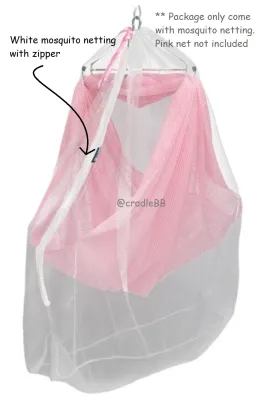


![[Infantods] Spring Cot Sarong Net. Manual Baby Cradle Net. Hammock Sarong Yao Lan. Spring Cot. Swing. Mosquito net. Baby sleep better and longer.](https://img.lazcdn.com/g/p/mdc/e81ed3d076c9d7e54b5400fb52d0510b.jpg_400x400q80.jpg_.webp)
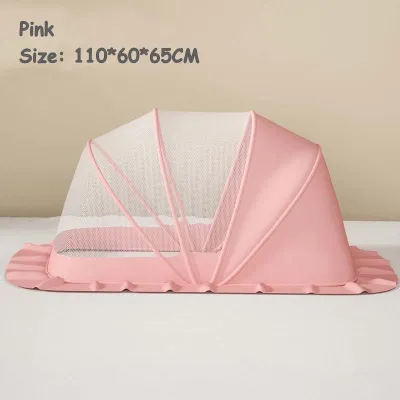
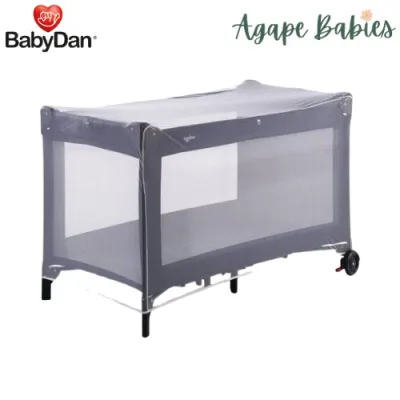
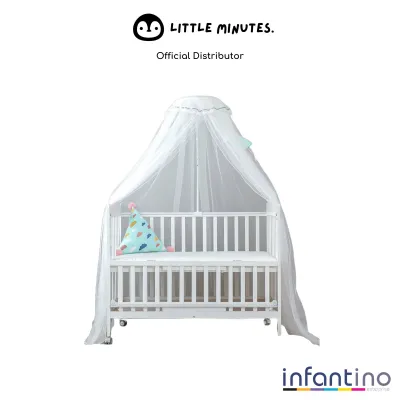
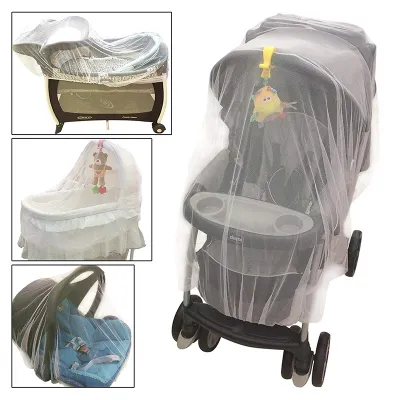
Prices are valid at publication and may change. Please refer to the product page for the latest price.
As babies grow and develop motor skills, crib nets can also present fall and climbing risks. If the net structure, support poles, or mounting hardware are positioned too close to the crib, an active baby may attempt to use them to pull themselves up. This can cause the mounting hardware to break, the frame to collapse inward, or the baby to lose their balance and fall out of the crib entirely.
Key Safety Features to Look for When Choosing a Net
When shopping for a crib net on online marketplaces or specialty baby stores, prioritizing safety features over aesthetics is essential. The first feature to evaluate is the mesh size and fabric breathability. The mesh must be fine enough to keep out tiny insects, yet open enough to allow continuous, unobstructed airflow. In humid climates, poor ventilation inside a draped crib can lead to rapid overheating, which is a known risk factor during infant sleep.

Structural simplicity is another key indicator of a safe crib net. Avoid products that feature long hanging ties, loose decorative ribbons, heavy fabric borders, or small detachable parts. These elements may look appealing in nursery photos, but they represent significant choking and strangulation hazards. Opt for minimalist designs where the netting is securely stitched to its frame with minimal excess trim.
Compatibility with your specific nursery setup is crucial for a secure fit. Before purchasing, measure your crib’s dimensions, the thickness of the mattress, and the distance to the nearest walls or ceiling. A net designed for a compact travel cot will not fit a standard wooden crib properly, potentially leaving gaps or creating dangerous tension points that could cause the frame to snap.
Finally, always verify the manufacturer’s labels and product documentation for explicit age, weight, and developmental stage limits. Many crib nets are designed strictly for newborns who cannot yet roll over or sit up. Reading these specifications before buying ensures you do not introduce a product that your baby has already outgrown developmentally.
How to Install the Net and Maintain Safe Clearance
Proper installation is just as important as choosing the right product. When anchoring the net, you must follow the manufacturer’s instructions precisely to secure the frame or canopy to the ceiling, wall, or crib structure. Ensure that all mounting brackets are screwed tightly into studs or solid surfaces, and that no loose loops, exposed cords, or dangling adjustment strings are left within the nursery.
Maintaining adequate height clearance is the most effective way to prevent entanglement. The entire netting assembly, including the frame and any mounting hardware, must remain completely out of your baby’s reach at all times. When calculating this distance, you must account for your baby’s growth and their ability to stand, stretch their arms upward, or pull themselves up on the crib rails.
If the net design requires tucking, you must secure the excess fabric tightly around the outside of the crib frame. No part of the netting should ever drape inside the sleep area or rest on the mattress surface. The fabric must be pulled taut so that it cannot be easily grabbed or bunched up by a curious infant reaching through the crib slats.
Before placing your baby in the crib for the first time after installation, perform a rigorous stability check. Apply gentle physical pressure to the mounting points, brackets, and frame joints to simulate a baby pulling on the structure. If you notice any wobbling, slipping, or sagging, immediately disassemble the setup and adjust the anchors or choose a more secure mounting location.
Daily Inspections and When to Stop Using the Crib Net
A safe crib net setup requires ongoing vigilance and daily maintenance. Before every nap and bedtime, conduct a quick visual and physical inspection of the entire netting system. Check for torn mesh, weakened seams, frayed edges, or loose mounting hardware. Even a tiny tear can quickly expand under tension, creating a loop that can trap a baby’s fingers, toes, or head.
Knowing when to stop using the crib net is vital for your baby’s safety. You must remove the net permanently as soon as your baby reaches key developmental milestones. These milestones include pushing up on hands and knees, sitting unassisted, rolling over, or pulling to a stand. Once a baby exhibits these movements, they can easily reach and pull down netting that was previously safe.
There are also immediate removal conditions that require you to take the net down without delay. If you ever observe your baby grabbing the fabric, or if you adjust the crib mattress to a higher position—which reduces the distance between the baby and the top of the crib—the net must be removed. Always prioritize your baby’s physical development over insect protection; if the net becomes a hazard, consult a professional about alternative pest control methods for the nursery, such as window screens or safe room-wide repellents.
Frequently Asked Questions (FAQ)
Are freestanding crib nets safer than ceiling-mounted ones?
Neither design is universally safer, as both carry distinct risks that you must manage. Freestanding frames run the risk of tipping over or collapsing inward if they are bumped or if a baby manages to pull on the fabric. Ceiling-mounted nets avoid the tipping hazard but present risks of falling hardware if they are not anchored securely into a ceiling joist. When choosing between the two, evaluate your room’s layout, wall materials, and your ability to install heavy-duty anchors, and always verify the manufacturer’s stability guidelines for your chosen model.
Can I use a baby crib net if my child has started rolling over?
Once your baby starts rolling over, the risk of using a crib net increases significantly. Rolling indicates increased mobility and strength, meaning the baby can easily move to the edge of the crib, grab the netting fabric through the slats, and pull it down into the sleep space. If your child has reached this milestone, you should consult your product manual and pediatric safety guidelines. In most cases, it is highly recommended to discontinue the use of any crib netting at this stage to prevent entanglement and suffocation hazards.
Community discussion
Share your experience or ask a question. Comments are reviewed before publication.