
A baby push walker can be a highly supportive tool to assist your child’s transitioning mobility, but its safety depends entirely on specific engineering features and how it is used. When choosing a baby push walker, the most critical safety features to look for include a wide and stable anti-tip base, adjustable wheel resistance or speed control, non-slip rubberized wheels, and an adjustable handlebar height. Verifying these physical attributes alongside official safety certifications ensures that the toy supports your baby’s physical development without introducing unnecessary hazards.
Understanding Push Walker Mechanics and Common Risks
To evaluate a baby push walker effectively, it is essential to understand how it functions and how it differs from other mobility toys. A baby push walker is designed as a walk-behind toy that your baby pushes from the rear while standing upright. This design is fundamentally different from traditional sit-in walkers, where a baby is suspended in a fabric seat inside a wheeled frame. Because sit-in walkers have been widely associated with serious safety hazards—such as falling down stairs or reaching dangerous heights—many pediatric experts and safety organizations discourage their use entirely.
While push walkers encourage a more natural walking posture and active muscle engagement, they introduce their own set of mechanical and environmental risks. The primary hazard occurs when a baby pulls themselves up to a standing position using the handlebar. If the walker is too light or poorly balanced, it can easily tip backward onto the child. Additionally, once the baby begins pushing, the walker can quickly gain momentum on smooth surfaces, moving faster than the baby’s legs can keep up and causing forward falls.
Products mentioned in this guide
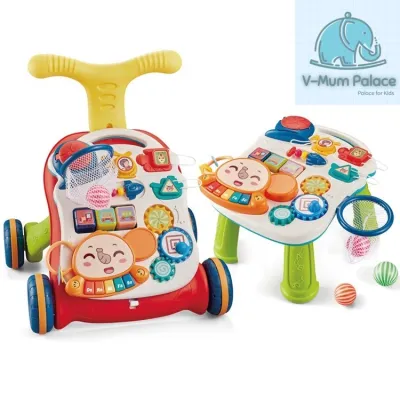
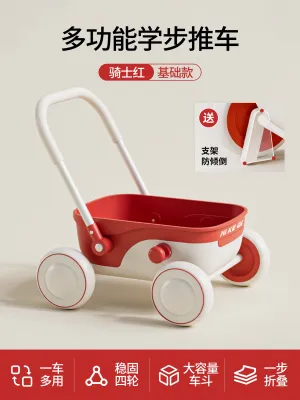
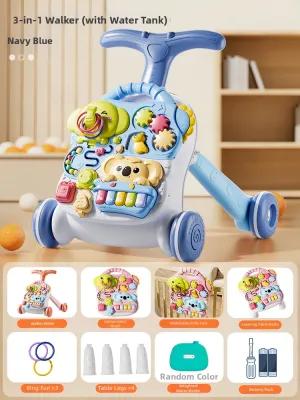
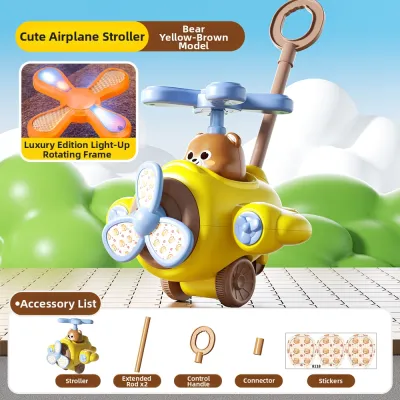
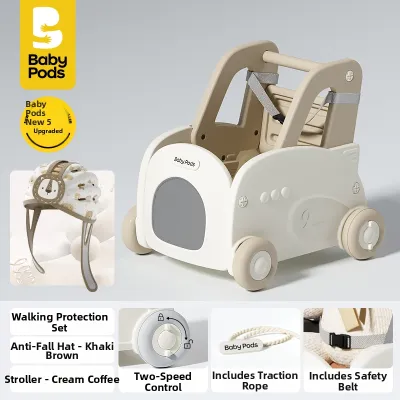
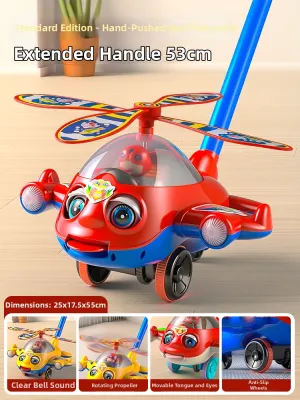
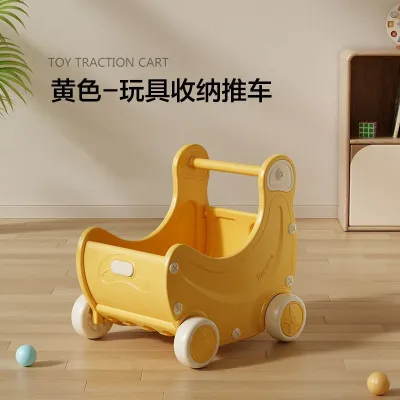
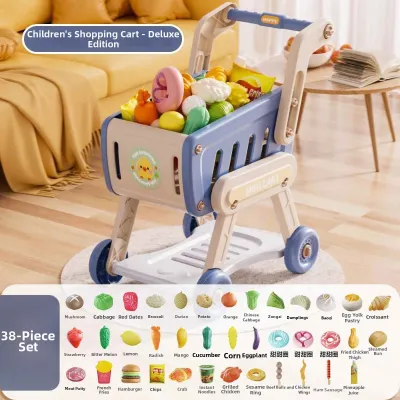
Prices are valid at publication and may change. Please refer to the product page for the latest price.
Understanding these physical dynamics helps parents realize that safety features are not merely cosmetic additions. Every design element, from weighted frames to friction pads, is engineered specifically to mitigate these tipping, speed, and traction hazards. By focusing on these mechanical solutions, you can select a toy that provides stable support as your child builds the strength and balance required for independent steps.
Evaluating Structural Stability and Anti-Tip Design
The structural integrity of a baby push walker is your first line of defense against tipping accidents. When examining different models, pay close attention to the base width and overall footprint of the frame. A high-quality walker should feature a wide, flared base that extends significantly beyond the perimeter of the handlebar. This design creates a lower center of gravity, distributing the weight outward and making it much harder for the toy to roll over sideways or capsize during sudden turns.

Weight distribution plays an equally vital role in preventing backward tips. When your baby is learning to stand, they will naturally grab the handlebar and pull downward and backward with their entire body weight. If the front of the walker is too light, the entire unit will pivot upward. Look for models that place the bulk of their weight near the front wheels or base, or those that feature a hollow compartment designed to be weighted down with water, sand, or heavy toys.
Furthermore, inspect the frame for specific physical anti-tip mechanisms. Many well-engineered push walkers feature rear wheel extensions or physical stoppers that project backward near the ground. These extensions act as a physical block, stopping the frame from rotating backward even if a substantial pulling force is applied to the handlebar. When shopping, place your hands on the handlebar and simulate a baby’s pulling force to verify how much resistance the frame offers before the front wheels lift off the ground.
Checking Brakes, Wheel Resistance, and Speed Control
Controlling the speed of a baby push walker is crucial for preventing runaway falls, especially during the early stages of walking. Look for models equipped with adjustable wheel resistance or speed control systems. These mechanisms typically consist of tension dials, friction pads, or clickable resistance settings located directly on the wheels. By tightening these controls, you can increase the friction required to turn the wheels, slowing the walker down to match your baby’s slow, hesitant steps. As your child’s coordination and lower-body strength improve, you can gradually loosen the resistance to allow for smoother movement.
Locking brakes are another indispensable safety feature, particularly for multi-functional walkers that double as standing activity tables. When your baby is not yet ready to walk or simply wants to play with the interactive panels, the wheels must lock securely in place. A reliable, easy-to-engage locking brake prevents the walker from sliding out from under your baby when they lean against it to play. Always test the locking mechanism to ensure the wheels remain completely stationary under pressure.
The material of the wheels also directly impacts speed and traction, which is a key consideration for Singapore homes. Many apartments in Singapore feature polished tiles, marble, or smooth vinyl flooring, which can be incredibly slippery. Hard plastic wheels often slide across these surfaces without rotating, rendering speed-control mechanisms useless and causing the walker to slip sideways. Instead, prioritize wheels made of rubber or those with thick, non-slip rubberized tread strips. These materials grip smooth indoor floors securely, ensuring that the built-in resistance features function exactly as intended.
Inspecting Ergonomics, Adjustability, and Physical Safety
A safe baby push walker must support your child’s physical development by promoting healthy posture and preventing minor injuries. Adjustable handle height is a critical ergonomic feature to verify. If the handlebar is too low, your baby will be forced to hunch forward, putting strain on their developing spine and shifting their center of gravity too far forward. If it is too high, their arms will be positioned at an awkward, tiring angle, reducing their control over the walker. Look for a model with multiple height settings so you can adjust the handlebar to rest comfortably at your baby’s chest or waist level as they grow.
The handle grip itself should be designed to prevent slips. Look for textured, rubberized, or contoured grips that allow small hands to maintain a firm hold even if their palms become sweaty. Avoid smooth, hard plastic handles that can easily slip out of a baby’s grasp, which often leads to sudden chin or chest impacts against the handlebar.
Finally, conduct a thorough physical inspection of the walker’s frame and any attached activity panels to eliminate physical hazards. Run your fingers along all edges to ensure they are rounded and smooth, with no sharp plastic seams or wooden splinters. Pay close attention to folding joints, hinges, and moving parts where tiny fingers could easily get pinched. If the walker includes an interactive toy panel, check that all components are securely attached and do not pose a choking hazard. Verify that there are no small detachable parts or loose screws that a baby could swallow.
Verifying Safety Certifications and Manufacturer Limits
While physical inspections are invaluable, you should always back up your observations by verifying official safety certifications and manufacturer specifications. Do not rely solely on marketing claims like “completely safe” or “pediatrician approved.” Instead, look for recognized toy safety standards printed directly on the packaging or product documentation. For instance, you can look for European safety standards such as EN 71 (which covers toy safety) or EN 1273 (which outlines safety requirements for walking frames), as well as American standards like ASTM F963. These certifications indicate that the product has undergone rigorous mechanical, chemical, and flammability testing.
Furthermore, always check and strictly adhere to the manufacturer’s stated age, weight, and developmental stage limits. These limits are not arbitrary; they are calculated based on the structural limits of the materials and the physical capabilities of children at various stages. Placing a baby who cannot yet support their own weight or who exceeds the maximum weight limit onto a walker can lead to structural failure or severe falls. Always read the product label carefully to ensure your child falls squarely within the recommended parameters.
Before finalizing your purchase, it is also highly recommended to check for active product recalls. In Singapore, consumer product safety is monitored by local regulatory bodies such as Enterprise Singapore. You can visit their official consumer safety portals to verify that the specific brand and model of the baby push walker you are considering has not been flagged for safety defects or recalled due to injury reports. Taking a few minutes to verify these records provides an essential layer of protection for your family.
Preparing Your Home Environment for Safe Use
Even the most advanced safety features on a baby push walker cannot replace a safe home environment and vigilant caregiving. Before letting your baby use the walker, you must thoroughly scan and clear the room of potential environmental hazards. Ensure that all access to stairs, steps, or balcony areas is securely blocked with certified safety gates. Remove loose rugs, slippery mats, electrical cords, and low-lying obstacles that could catch the wheels and cause the walker to tip over. If your home has transitions between different flooring types, such as from tile to carpet, supervise these areas closely, as the change in friction can cause sudden stops or slips.
Active adult supervision is absolutely non-negotiable whenever your baby is using a push walker. A safety-engineered walker is designed to reduce risks, but it does not make the environment foolproof. A caregiver must remain within arm’s reach at all times to intervene immediately if the baby loses balance, encounters an obstacle, or moves toward a restricted area. Never leave a child unattended with a push walker, even for a brief moment.
Lastly, know when it is time to retire the toy. A baby push walker is a transitional tool meant to bridge the gap between crawling and independent walking. Once your child is able to stand steadily and walk confidently across the room without holding onto furniture or the walker, the toy has served its developmental purpose. Continuing to use the walker past this stage can sometimes encourage improper gait patterns or lead to high-speed collisions with furniture. Transition your child to free-walking activities to support their natural motor skill progression.
Frequently Asked Questions (FAQ)
Are push walkers safer than traditional sit-in walkers?
Yes, push walkers are generally considered much safer than traditional sit-in walkers. Sit-in walkers place babies in an artificial upright position before their muscles are ready, allowing them to move at high speeds and reach hazardous areas like hot stoves or staircases. Push walkers, by contrast, require the baby to actively balance, stand, and push using their own physical strength, which supports natural muscle development. While push walkers still carry risks of tipping or slipping, these hazards are much easier to manage through speed-control features, proper wheel traction, and active adult supervision.
At what age should my baby start using a push walker?
Rather than focusing strictly on chronological age, you should look for specific developmental milestones. A baby is typically ready to use a push walker when they can independently pull themselves up to a standing position using furniture and can bear their full weight on their legs. This milestone often occurs between 9 and 12 months of age, though every child develops at their own pace. Introducing a push walker before your baby has developed the core and leg strength to stand independently can lead to frequent falls, joint strain, and improper posture. Always consult your pediatrician if you have questions about your baby’s physical readiness.
Community discussion
Share your experience or ask a question. Comments are reviewed before publication.