
When your little one reaches the developmental stage where they are eager to explore their surroundings, finding the right tools to support their curiosity is a top priority. Selecting a safe walker forbaby requires a clear understanding of the mechanical and ergonomic designs that protect infants from injury. While these devices offer a temporary vantage point for an active infant, they also introduce unique mobility risks that require careful evaluation. By focusing on certified safety features, robust frame structures, and proper usage boundaries, you can create a secure environment for your child’s early physical development.
Understanding the Risks: Why Safety Features Matter
Before evaluating specific models, it is essential to understand why safety mechanisms are so strictly regulated on modern baby walkers. Traditional walkers allow infants to move at speeds of up to one meter per second, far faster than their natural reaction times or those of an supervising adult. This rapid mobility dramatically increases the risk of accidental falls, particularly down steps or over thresholds between rooms. In a typical home layout, even a minor floor transition can cause an unstable walker to tip over, potentially leading to head or limb injuries.
Beyond falls, elevated mobility grants babies access to hazards that would otherwise remain far out of reach. A child seated in a walker can suddenly reach table edges, dangling electrical cords, hot beverages, or household cleaning supplies stored on countertops. Because the baby’s chest and arms are positioned higher than when crawling, their reach radius expands significantly.
Products mentioned in this guide
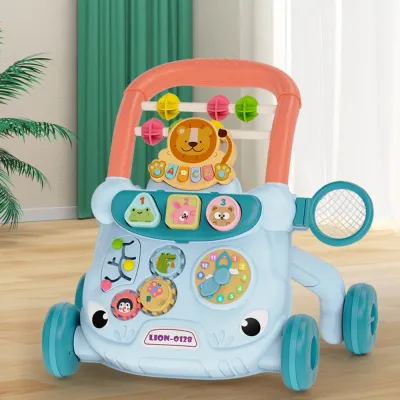
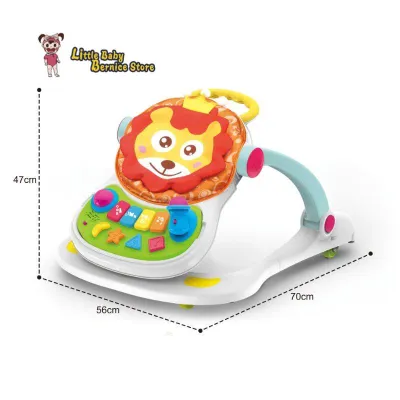
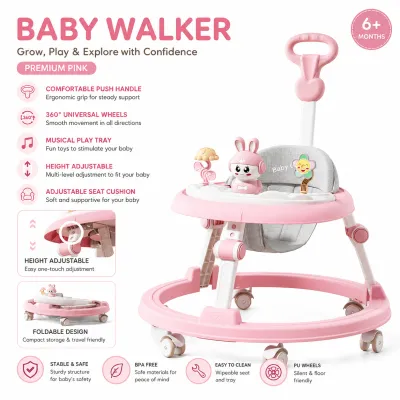
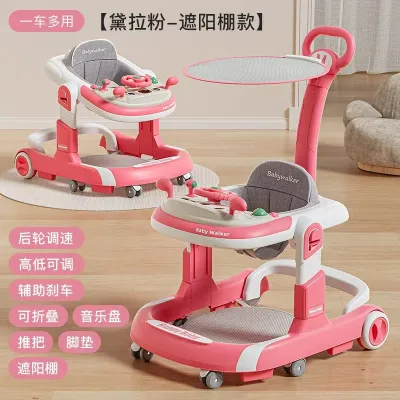
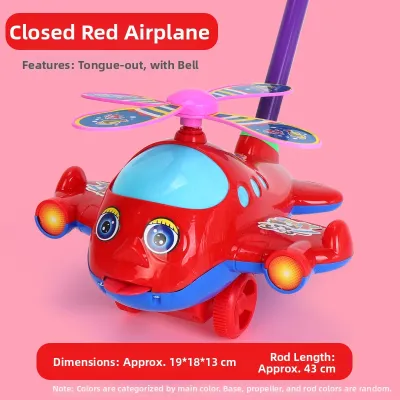

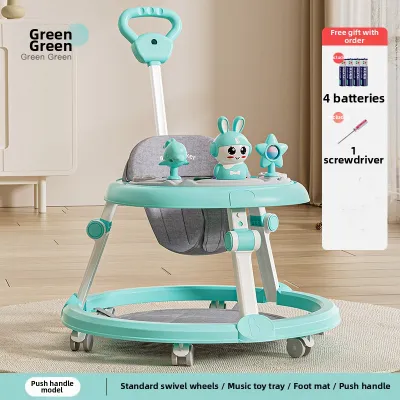
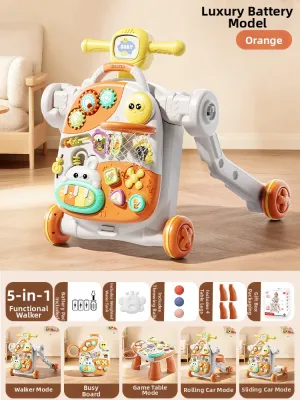
Prices are valid at publication and may change. Please refer to the product page for the latest price.
It is vital to recognize that no mechanical safety feature can ever replace active, direct adult supervision. A baby walker is designed solely as a temporary mobility aid, not a passive containment device or a babysitter. Robust safety components are engineered to mitigate immediate physical dangers and buy precious seconds for a caregiver to intervene, but they do not eliminate environmental hazards. Maintaining a continuous line of sight and physically staying within arm’s reach of your child remains the most critical safety practice during any session.
Choosing a Safe Walker forbaby: Critical Mechanical and Structural Safety Features
When shopping for a walker, your primary focus should be on the physical engineering of the device. High-quality construction prevents mechanical failures and ensures the walker behaves predictably on different flooring materials.

Stair Fall Prevention and Wheel Mechanisms
One of the most critical safety innovations in modern baby walkers is the integration of friction strips or automatic braking mechanisms. These components are usually located on the underside of the walker’s bottom frame.
- Friction Strips and Grip Pads: These rubberized or high-friction pads are designed to immediately grip the floor if one or more wheels lose contact with the ground, such as when transitioning over a step. The friction stops the forward momentum of the walker, preventing it from tumbling down stairs.
- Wheel Locks and Speed Restrictors: High-quality walkers feature adjustable speed settings or manual wheel locks on the rear casters. These restrictors prevent the walker from accelerating to unsafe speeds on smooth hard floors, such as polished tiles or vinyl common in Singapore homes.
- Testing the Mechanism: Before placing your baby in the walker, physically test the wheel resistance on your home's actual flooring. Press down on the frame to ensure the friction pads engage correctly when the walker is tilted slightly, and verify that any locking mechanisms click firmly into place without slipping.
Base Stability and Tip-Over Resistance
A stable walker must resist tipping even when a child leans their entire body weight over the edge to reach for an object.
- Wide, Heavy Base Design: Look for a walker with a base that is significantly wider than the upper tray. A broad footprint lowers the overall center of gravity, making it physically difficult for the baby to tip the unit over during sudden turns or collisions with furniture.
- Frame Geometry: The frame should feature a trapezoidal or flared shape, ensuring that the wheels remain at the outermost boundary of the device. This geometry prevents the baby from shifting their weight outside the wheel support zone.
- Material and Weight Limits: Verify the manufacturer's stated weight and height limits, which typically cap around 11 to 12 kilograms. Ensure the frame is constructed from impact-resistant, high-density plastics and reinforced with steel or aluminum fasteners rather than flimsy, lightweight materials that flex under pressure.
Ergonomic and Developmental Safety Considerations
In addition to preventing physical accidents, a safe walker must support your baby’s physical development without causing long-term muscular or skeletal strain.
- Adjustable Seat Height: A walker must feature multiple height adjustment settings. When your baby is seated, their feet must be able to rest flat on the floor with a slight bend in the knees. If the seat is too high, the baby will be forced to walk on their tiptoes, which can lead to shortened Achilles tendons and abnormal calf muscle development. Conversely, if the seat is too low, it can cause excessive hip strain and improper leg alignment.
- Supportive Seating and Harnesses: The seat bucket should be rigid and well-padded, providing firm lumbar support to prevent the baby from slumping or sliding to one side. Look for a secure, adjustable three-point safety harness that holds the baby firmly in the center of the seat, preventing them from attempting to stand up or climb out of the walker.
- Restricting Daily Usage Time: Pediatricians and developmental specialists recommend limiting walker sessions to short, supervised intervals of no more than 15 to 20 minutes once or twice a day. Prolonged containment in a walker can delay the development of essential crawling and independent standing muscles, as the device artificially supports the baby's weight and balance.
Verifying Safety Standards and Brand Reliability
With numerous brands available on the market, parents must look past marketing claims and verify a product’s safety credentials through independent standards and consumer databases.
- Look for Certified Safety Labels: Reputable manufacturers clearly display safety compliance certifications on the product packaging, the frame itself, or within the user manual. Look for recognized standards such as ASTM F977 (the standard consumer safety specification for infant walkers in the United States) or EN 1273 (the European safety standard for baby walkers). These certifications guarantee that the walker has undergone rigorous testing for dynamic stability, stair-fall prevention, and structural integrity.
- Local Compliance Verification: In Singapore, children's products must comply with safety requirements monitored by the Consumer Product Safety Office (CPSO) under Enterprise Singapore. Before purchasing, check if the brand or model is registered or complies with local safety guidelines.
- Researching Brand Reputation and Recalls: Avoid purchasing unbranded or generic walkers from unregulated online marketplaces. Research the brand's history by searching official consumer safety databases for any past product recalls related to structural collapses, choking hazards from attached toys, or failing brake pads. Additionally, read verified customer reviews, paying close attention to feedback regarding long-term wear, loose components, or customer service responsiveness when replacing worn parts.
Safe Usage Boundaries and When to Stop
Establishing strict boundaries for where and when the walker is used is just as important as choosing a high-quality model.
- Environmental Preparation: Before placing your baby in the walker, completely baby-proof the designated play area. Ensure all access to stairs, steps, balconies, and bathrooms is securely blocked with safety gates. Remove loose rugs, electrical cords, and low-lying decorative objects. Keep the walker strictly on flat, even surfaces, and never use it near open water sources, hot surfaces, or outdoor areas with uneven terrain.
- Recognizing Developmental Milestones to Stop: A baby walker is a transitional tool with a limited operational window. You must discontinue use immediately when your baby reaches any of the following milestones:
- The baby can stand or walk independently without support.
- The baby's height or weight exceeds the maximum limits specified by the manufacturer.
- The baby attempts to climb out of the seat or can easily lift their feet fully off the ground while the walker is at its highest setting.
- Safe Storage Practices: When the walker is not in active, supervised use, fold it down and store it in a secure location out of your child's reach. This prevents older siblings from playing with the device or the baby from crawling over and using the folded frame to pull themselves up, which could lead to finger pinching or tipping injuries.
Frequently Asked Questions (FAQ)
Are baby walkers banned in any countries?
Yes, some countries have implemented strict bans on traditional baby walkers due to safety concerns. Notably, Canada banned the sale, importation, and advertisement of baby walkers in 2004, making it illegal to even resell used walkers. In Singapore, while baby walkers are not banned, they are subject to safety guidelines monitored by the Consumer Product Safety Office. Parents are strongly advised to purchase only compliant models that meet international safety standards like ASTM F977 or EN 1273.
What is the safest alternative to a traditional baby walker?
The safest alternatives to traditional seated walkers are stationary activity centers and walk-behind push toys. Stationary activity centers allow babies to bounce, spin, and play with integrated toys in a fixed position, completely eliminating the rolling hazards associated with stair falls and access to elevated dangers. Walk-behind push toys, which require the baby to stand and push the toy forward, promote natural walking posture, balance, and core strength without artificially suspending the baby’s weight.
Community discussion
Share your experience or ask a question. Comments are reviewed before publication.