
Grooming a squirming infant requires tools designed specifically to protect delicate skin while ensuring a clean cut. When choosing baby hair scissors, the primary safety features to look for are rounded or blunt tips, short and highly controlled blades, ergonomic non-slip handles, and rust-resistant stainless steel. These specialized features work in tandem to minimize the risk of accidental pokes, slips, and skin irritation. While high-quality safety features significantly lower the risk of injury, they must always be paired with attentive caregiver supervision, proper handling techniques, and a cooperative baby to ensure a completely safe grooming experience.
Quick Answer: Essential Safety Features at a Glance
Selecting the right grooming tools for your baby can feel overwhelming with the sheer volume of baby care products available on the market. To simplify your decision, prioritizing a few non-negotiable safety features will help you identify a reliable pair of scissors. The table below outlines the core components that distinguish specialized baby hair scissors from standard household shears.
| Safety Feature | Primary Benefit | What to Look For |
|---|---|---|
| Rounded or Blunt Tips | Prevents accidental puncture wounds and skin nicks during sudden movements. | Spherical or heavily curved metal ends instead of sharp points. |
| Short, Wide Blades | Enhances visibility and provides maximum control over each cut. | Blade lengths typically under 5 centimetres. |
| Non-Slip Ergonomic Grip | Prevents the scissors from slipping out of the caregiver's hands. | Textured plastic, rubberized loops, or silicone inserts. |
| High-Quality Stainless Steel | Resists rust and maintains clean, hygienic cutting edges. | Food-grade or medical-grade stainless steel specifications. |
While these engineering details provide a physical defense against accidents, they do not replace the need for careful technique. Even the safest pair of scissors requires a steady hand, a calm environment, and a structured approach to grooming. Always read the manufacturer’s product documentation to verify the age suitability and specific usage instructions before your first trim.
Products mentioned in this guide
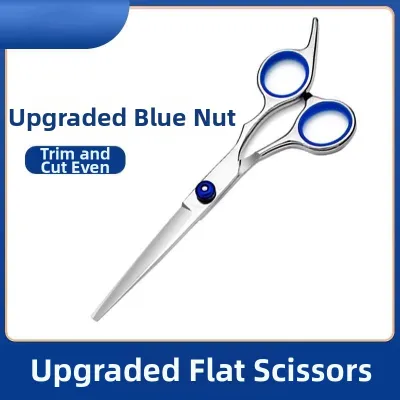
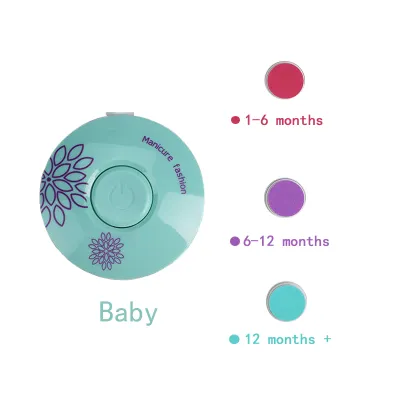
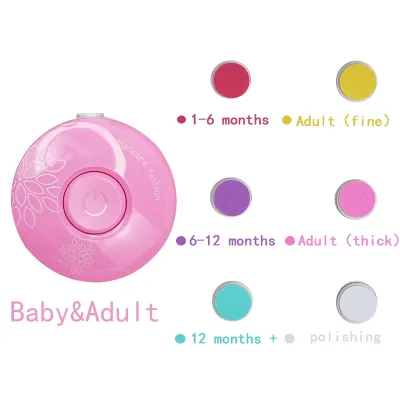
Prices are valid at publication and may change. Please refer to the product page for the latest price.
Blade Design: Preventing Pokes, Snags, and Pulls
The business end of any cutting tool poses the most immediate risk to a baby’s delicate scalp, ears, and neck. Standard scissors rely on sharp, pointed tips to puncture or start cuts, which is highly hazardous when working with an infant who may flinch or turn their head without warning. Specialized baby hair scissors address these hazards through deliberate modifications to the blade architecture.

Rounded or Blunt Tips The most critical safety feature of infant grooming scissors is the presence of rounded or blunt tips. Instead of terminating in a sharp point, the blades end in smooth, bulbous, or spherical shapes. This design ensures that if your baby makes a sudden, unpredictable movement, the tip of the scissors will simply nudge the skin rather than pierce or scratch it. This physical barrier is especially vital when trimming hair near highly sensitive and curved areas, such as around the ears, across the forehead, and near the nape of the neck.
Blade Length and Width The physical dimensions of the blades play a significant role in how much control you maintain during a haircut. Baby hair scissors feature much shorter blades than adult styling shears, typically measuring only a few centimetres in length. Shorter blades keep the cutting action close to your fingers, which naturally increases your leverage and precision. Additionally, shorter blades prevent you from accidentally catching large sections of hair or cutting too close to the scalp, keeping your line of sight clear so you can see exactly where the metal meets the hair.
Sharpness vs. Snagging There is a common misconception that baby scissors should be dull to prevent cuts. In reality, dull blades are highly dangerous because they bend and pull the fine, soft hair of an infant rather than cutting it cleanly. This pulling sensation causes physical discomfort, which can make your baby cry, squirm, or panic mid-cut. Look for scissors with blades that are precision-ground to cut fine hair effortlessly in a single snip, while relying entirely on the rounded tips and your careful handling to protect the skin. You can verify blade quality by checking product descriptions for terms like “honed” or “micro-serrated,” and by reading user feedback regarding whether the scissors cut cleanly without snagging.
Ergonomics and Grip: Maximizing Caregiver Control
The safety of a baby’s haircut depends heavily on the stability of the caregiver’s hand. If your fingers slip, or if your hand becomes fatigued during a slow, meticulous trim, the risk of an accidental nick increases dramatically. Ergonomic handle designs are engineered to keep the scissors securely anchored in your hand throughout the grooming session.
Non-Slip Handles Cutting hair often involves working with slightly damp hair or clean, freshly washed hands. In Singapore’s warm and humid climate, hands can easily become damp or sweaty, making smooth plastic handles slippery and difficult to control. Look for baby hair scissors that feature non-slip materials integrated into the finger loops. Soft-touch elastomer, textured silicone, or ribbed plastic grips provide the necessary friction to keep the scissors stable, even if your hands are moist or soapy from bath time.
Finger Rests (Tang) and Loop Sizing A finger rest, also known as a tang, is a small molded extension on the outer edge of one of the finger loops. This feature allows your pinky finger to rest comfortably, distributing the weight of the scissors across your entire hand and providing a crucial pivot point for steadying your cuts. Furthermore, the finger loops themselves should be sized appropriately for adult fingers. Loops that are too small can restrict blood flow and cause hand cramping, while loops that are too large allow your fingers to slide around, reducing your overall control.
Lightweight Construction Infant grooming is rarely a fast process; it requires a slow, cautious pace to match the baby’s comfort level. Heavy metal shears can quickly cause wrist fatigue and subtle hand tremors over a prolonged session. Lightweight scissors, often constructed with a combination of durable plastic handles and compact stainless steel blades, reduce physical strain. This lightweight profile allows you to make micro-adjustments smoothly and maintain a steady hand from the first snip to the last.
Handedness Designs Using scissors designed for the wrong hand compromises both cutting efficiency and safety. Left-handed caregivers using right-handed scissors must apply unnatural lateral pressure to get the blades to cut, which quickly leads to hand fatigue and uneven trims. When purchasing baby hair scissors, check the packaging to verify if they are specifically configured for right-handed use, left-handed use, or feature a symmetrical, truly ambidextrous design that offers equal comfort and control for either hand.
Material and Hygiene: Ensuring Skin Safety and Cleanliness
A baby’s skin barrier is thinner and more sensitive than an adult’s, making it highly susceptible to irritation, allergic reactions, and localized infections. The materials used to manufacture baby hair scissors must be carefully selected to support absolute hygiene and prevent adverse skin reactions.
High-Quality Stainless Steel The blades of baby hair scissors should always be made from high-quality, medical-grade or high-grade stainless steel. In Singapore, where indoor humidity levels are consistently high, low-quality metals can rust quickly, even when stored inside drawers or grooming kits. Rust not only ruins the cutting edge, making it dull and prone to snagging, but it also poses a serious infection hazard if it comes into contact with minor skin abrasions. Stainless steel resists corrosion, maintains its sharpness longer, and is highly durable.
Hypoallergenic Properties Infants can exhibit sensitivities to various metals, with nickel being a common trigger for contact dermatitis. High-quality stainless steel alloys are typically formulated to minimize the release of sensitizing metals, offering hypoallergenic properties that protect sensitive skin. When choosing scissors, check the manufacturer’s product specifications to ensure the materials are free from harmful toxins, lead, and high-nickel alloys, ensuring that any accidental contact with the baby’s scalp or face remains completely safe.
Ease of Cleaning Grooming tools can easily collect fine hair clippings, skin oils, moisture, and airborne dust, creating a breeding ground for bacteria if not cleaned properly. Look for scissors designed with smooth, streamlined surfaces, minimal crevices, and simple, tightly sealed hinge mechanisms. Avoid designs with deep decorative grooves or complex joints where debris can hide. After each use, wipe the blades clean and follow the manufacturer’s specific instructions for washing, disinfecting, or sterilizing the tool to ensure it remains sanitary for the next use.
Safe Grooming Practices: Setting Boundaries During the Haircut
Even the most advanced safety features on a pair of baby hair scissors cannot prevent accidents if the grooming environment is chaotic or if safety protocols are ignored. Establishing strict boundaries and utilizing proper physical techniques are essential to ensuring a tear-free, safe haircut.
Environmental Setup Before you begin, set up a dedicated grooming space that maximizes your visibility and physical stability. Choose a well-lit room, utilizing direct overhead lighting or a bright floor lamp to eliminate shadows around the baby’s head. Both you and the baby must be securely positioned; if the baby is old enough to sit independently, use a stable high chair with safety straps to limit sudden torso movements. Keep your grooming tools organized on a nearby flat surface, completely out of the baby’s reach, so you do not have to turn your back or stretch awkwardly to grab what you need.
Baby’s State and Timing Timing is everything when it comes to infant grooming. Attempting to cut a baby’s hair when they are hungry, tired, or overstimulated is a recipe for sudden movements and distress. Choose a window when your baby is naturally calm, such as shortly after a nap and a full feed. Establish a firm boundary: if your baby begins to fuss, cry, or show signs of distress, stop the haircut immediately. It is far safer to leave a haircut half-finished and resume it another day than to push through and risk an injury due to a sudden struggle.
Handling Techniques When cutting, always use your non-dominant hand as a physical shield. Place your fingers flat against the baby’s scalp, holding the section of hair you wish to cut between your index and middle fingers. Snip the hair above your fingers, keeping your hand as a protective barrier between the metal blades and the baby’s skin. Cut only tiny sections of hair at a time, keeping your movements deliberate and slow. Never leave a pair of scissors open on a changing table or chair, and never allow a baby to hold or play with the scissors, even if the blades are capped.
When to Seek Professional Help It is important to recognize your own limits as a caregiver. If your baby is exceptionally active, highly sensitive to sensory stimulation, or if you feel anxious about using scissors near their face, do not hesitate to step back. Similarly, if you are attempting a complex style rather than a basic maintenance trim, home scissors may not be the appropriate choice. In these scenarios, consider visiting a professional salon that specializes in children’s haircuts, where experienced staff and specialized equipment can complete the task safely and efficiently.
Frequently Asked Questions (FAQ)
Are electric baby hair trimmers safer than scissors?
Electric baby hair trimmers and manual scissors each have distinct safety profiles, and the right choice depends largely on your baby’s temperament. Electric trimmers eliminate the risk of an exposed cutting edge because they utilize a protective guard or ceramic blades designed not to cut skin. However, the noise and vibration of an electric motor can frighten some infants, leading to sudden movements or distress. Manual baby hair scissors are completely silent and allow for highly precise, quiet snips, but they require greater manual control and dexterity from the caregiver. Always check the manufacturer’s age and usage guidelines for both tools to determine which aligns best with your child’s developmental stage.
At what age is it safe to start using baby hair scissors?
There is no single, universally recommended age to begin using baby hair scissors, as hair growth and physical development vary widely among infants. Some babies are born with a full head of hair that requires a trim within the first few months, while others may not need a haircut until after their first birthday. Safety readiness depends on your baby’s ability to maintain steady neck control and sit relatively still with gentle guidance. Before planning a haircut, review the age recommendations on your specific scissors’ packaging and consult your pediatrician if you have any concerns about your baby’s developmental readiness or skin sensitivity.
Can I use regular small scissors instead of specialized baby scissors?
You should never use regular household, craft, nail, or office scissors to cut a baby’s hair. Standard scissors are designed with sharp, pointed tips that can easily puncture or lacerate delicate skin with the slightest sudden movement. Furthermore, household scissors lack the specialized ergonomic grips, lightweight materials, and non-slip coatings required to maintain precise control over a moving child. Using non-specialized tools significantly increases the risk of serious injury; always invest in a dedicated pair of baby hair scissors engineered specifically for infant safety.
Community discussion
Share your experience or ask a question. Comments are reviewed before publication.