
When choosing a baby walker in Singapore, safety must be your absolute priority. A safe baby walker should feature a wide, stable base that is significantly larger than the seat frame to prevent tipping, a low center of gravity, and reliable stopping mechanisms such as friction pads to halt the walker at floor transitions. Additionally, look for secure seat ergonomics that support healthy posture, adjustable height settings, and recognized safety certification marks on the packaging.
Before making a purchase, always verify the manufacturer’s weight and height limits to ensure the product is appropriate for your child’s developmental stage. While these devices can offer a fun vantage point for your little one, they require active supervision and a carefully baby-proofed environment to prevent accidents. Taking the time to evaluate these key features will help you select a model designed with your child’s protection in mind.
Essential Design and Structural Safety Features
The physical design of a baby walker directly impacts your child’s stability and physical support. Evaluating how structural integrity, wheel design, and seat positioning work together is essential to minimize the risk of tipping or structural failure during active play.
Products mentioned in this guide
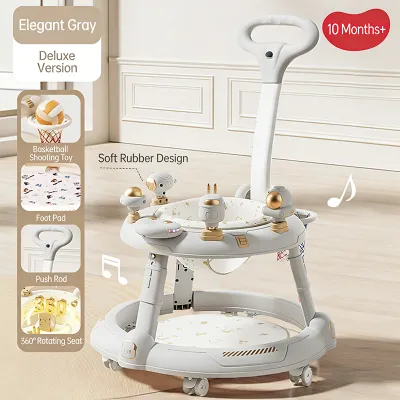

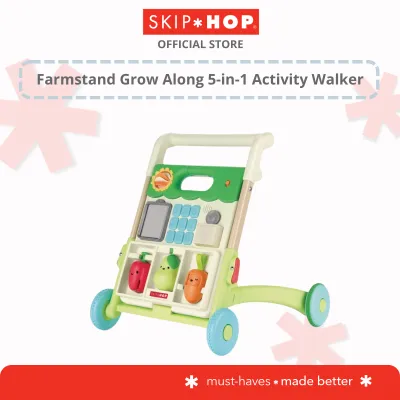
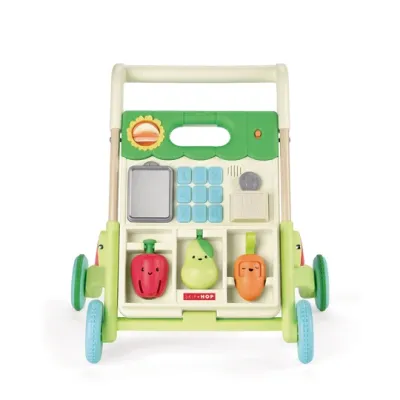

Prices are valid at publication and may change. Please refer to the product page for the latest price.
Stability and Base Design
A stable base is the foundation of walker safety. When inspecting a walker, compare the width of the bottom base to the width of the upper seat frame. A base that is significantly wider than the top section provides a broader footprint, which helps distribute weight evenly and prevents the unit from tipping over when your baby leans sideways to reach for toys.
Look for anti-slip pads or rubberized grip strips on the bottom edge of the base. These components are designed to catch on floor transitions, thresholds, or minor unevenness, stopping the walker’s momentum before it can tip. In Singapore homes, where tiled or vinyl flooring is common, these grip pads provide essential friction to prevent uncontrolled sliding.
Assess the overall weight of the unit before buying. A walker with a heavier, sturdier base generally has a lower center of gravity, making it much more resistant to tipping. While the walker should still be light enough for your baby to move comfortably, avoiding overly lightweight or flimsy plastic models is a key step in ensuring structural stability.
Braking and Stopping Mechanisms
Effective braking systems are critical for preventing falls, especially if your home has steps, split-level flooring, or raised thresholds. Many modern walkers are equipped with stair-fall prevention features, such as friction pads or automatic braking blocks. These pads deploy and grip the floor immediately if a wheel drops off an edge, halting the walker’s forward movement.
Manual locking mechanisms or wheel locks are also highly beneficial. These locks allow you to temporarily convert the mobile walker into a stationary play or feeding station. This feature is particularly useful when you need to keep your baby in one secure spot while you interact with them, preventing them from rolling toward hazards.
Always test the responsiveness of the brakes and wheel locks on a flat, safe surface before allowing your baby to use the walker. If you are purchasing in a physical store, test the mechanism on the display model. If you are ordering online, perform this check immediately upon delivery and before assembling the unit fully for use.
Seat Ergonomics and Posture Support
The seat of the walker must support your baby’s developing spine and hips. Look for a seat with a high, rigid, and well-padded backrest. This structural support prevents your baby from slumping or leaning excessively to one side, which can place unnecessary strain on their delicate back muscles.
Adjustable height settings are another non-negotiable feature. The walker must adjust so that your baby’s feet can rest flat on the floor, rather than just their toes touching. Walking on tiptoes can cause tight calf muscles and alter natural walking development, so the ability to customize the height as your baby grows is essential.
Verify that the seat material is breathable to keep your baby comfortable in Singapore’s warm, humid climate. The leg openings should be padded to prevent chafing, and any built-in harness must be secure and adjustable without restricting your baby’s natural breathing or circulation.
Preventing Common Walker Hazards at Home
Even the most robustly designed walker cannot eliminate all environmental risks. Managing your home layout and understanding potential hazards is just as critical as selecting a high-quality product.

Stair and Fall Prevention
Falls down stairs are among the most severe hazards associated with baby walkers. Physical barriers, such as hardware-mounted safety gates, are your primary line of defense. Never rely solely on the walker’s built-in brakes or friction pads to stop a fall down a flight of stairs; gates must be securely installed at all stair entry points.
Keep walkers far away from elevated surfaces, balconies, patio doors, pools, and uneven flooring transitions. A baby in a walker can move surprisingly fast—often faster than a caregiver can react—making open doors to balconies or steps extremely dangerous.
Constant, direct adult supervision is absolutely mandatory whenever your baby is in a walker. You must remain within arm’s reach at all times. A walker is not a substitute for a playpen or a babysitter, and leaving a child unattended in one, even for a brief moment, increases the risk of injury.
Speed Control and Pinch Points
Babies can build up significant speed in a walker, which can lead to hard collisions with walls, doors, or furniture. Look for models that feature adjustable speed restrictors or friction controls on the wheels. These allow you to increase resistance, slowing down the walker’s movement as your baby learns to navigate.
Carefully inspect the folding mechanisms, joints, and frame of the walker. Ensure that all hinges are enclosed or covered to prevent your baby’s fingers or toes from getting pinched when the walker is in use or when it is being folded for storage.
Check the entire unit for small, detachable parts, loose screws, or easily breakable toy attachments. Babies naturally explore with their mouths, so any component that can be pulled off easily poses an immediate choking hazard. Ensure all attached toys are securely fastened and made of durable materials.
Material Safety and Toxicity
Babies frequently chew on the walker’s front tray and toy attachments, making material safety a top priority. Check the product packaging or manufacturer specifications for clear declarations that the materials are BPA-free, phthalate-free, and lead-free.
Ensure the plastic tray and any attached toys are completely smooth, with no sharp edges, burrs, or peeling paint finishes. High-quality plastics that do not splinter or crack easily under impact are essential for long-term safety.
Verify that the fabric seat cover is easily removable and machine washable. Regular washing is necessary to maintain hygiene, remove sweat, drool, and food spills, and prevent skin irritation or rashes in Singapore’s humid weather.
How to Verify Safety Standards and Certifications
When shopping for a baby walker, do not rely on vague marketing claims like “safety tested” or “approved by experts.” Instead, look for recognized international safety standard codes printed directly on the product, its packaging, or within the user manual. Common standards to look for include the European Standard EN 1273 or the American Standard ASTM F977, both of which outline strict structural and safety requirements for baby walkers.
If the safety labels are unclear, missing, or difficult to interpret, take the initiative to verify compliance. You can check the manufacturer’s official website or contact their customer service department directly to request official compliance documentation or test certificates.
Avoid purchasing unbranded or exceptionally cheap walkers from unverified online marketplaces or third-party sellers. These products often bypass local safety checks and may lack critical safety features like friction pads, secure harnesses, or non-toxic materials. Investing in a reputable brand from a trusted retailer ensures that the product has undergone rigorous safety auditing.
Safe Usage Limits and When to Transition
To ensure your baby’s safety, you must strictly adhere to the manufacturer’s specified weight, height, and developmental limits. These limits are calculated based on the structural strength of the walker and the height of the safety frame; exceeding them increases the risk of structural failure or tipping.
When to stop using the walker:
- Developmental milestones: Discontinue use immediately once your baby can stand or walk independently, or if they attempt to climb out of the walker seat.
- Physical limits: Stop using the product if your baby's head or chest extends significantly above the upper protective frame, or if they exceed the maximum weight limit.
- Structural wear: Retire the walker if you notice cracked plastic, loose joints, worn-out friction pads, or broken wheels.
Limit your baby’s daily time in the walker to short sessions, such as 15 to 20 minutes per day. Overuse can lead to muscle strain and limit the essential floor time your baby needs for natural motor development, such as crawling, rolling, and pulling themselves up to stand. Always inspect the walker for signs of wear, loose screws, or compromised brakes before placing your baby inside.
Frequently Asked Questions (FAQ)
Are baby walkers banned in any countries?
Yes, some countries, such as Canada, have completely banned the sale, import, and advertisement of baby walkers due to the high rate of injuries associated with their use. In Singapore, baby walkers are not banned, but they are subject to consumer product safety regulations. This means walkers sold locally must comply with recognized safety standards. Regardless of local regulations, parents must remain highly vigilant, ensure proper baby-proofing, and maintain constant supervision to mitigate the inherent risks of walker use.
Do baby walkers help babies learn to walk faster?
No, pediatric consensus indicates that baby walkers do not help babies learn to walk faster and can actually delay independent walking. Walkers teach babies to propel themselves forward using their toes, which strengthens the wrong leg muscles and does not help them develop the balance needed for independent walking. To encourage natural motor skills, prioritize floor play, tummy time, and stationary activity centers that allow your baby to practice balancing, pulling up, and standing naturally.
Community discussion
Share your experience or ask a question. Comments are reviewed before publication.