
A toddler push walker is an exciting milestone toy that supports your child’s transition from crawling to independent walking. However, because your child is still developing balance, coordination, and muscle strength, choosing a model with the right design elements is critical. Evaluating physical stability, wheel speed controls, material safety, and structural integrity before making a purchase helps prevent common tipping accidents and falls.
Quick Safety Checklist: What to Inspect Before You Buy
Before purchasing a toddler push walker, parents should run through a quick inspection checklist to ensure the toy is structurally sound and safe for active use. These non-negotiable safety elements include:
- A wide wheelbase: Provides a low center of gravity and stable foundation.
- Adjustable wheel resistance: Prevents the walker from rolling away too quickly.
- Non-toxic finishes: Ensures paints, varnishes, and plastics are safe for teething children.
- No small detachable parts: Eliminates potential choking hazards.
Beyond the physical features of the toy, safety depends heavily on developmental readiness and active supervision. A child must already be able to pull themselves up to a standing position independently before they begin using a toddler push walker. Introducing the toy too early can strain their developing joints and lead to frequent falls. Additionally, remember that no safety feature can replace the active, watchful eye of a caregiver; always supervise your toddler closely during play sessions.
Products mentioned in this guide
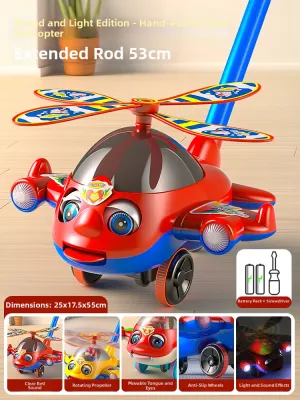
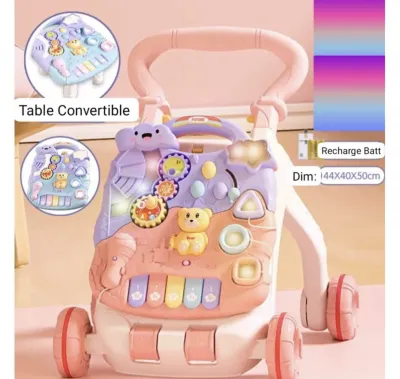
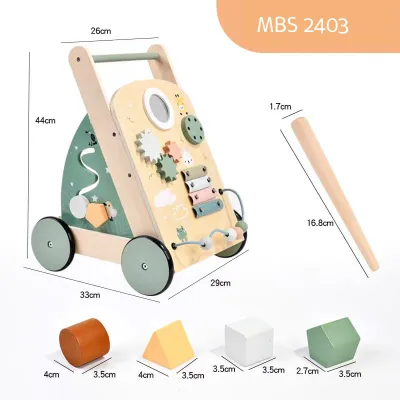
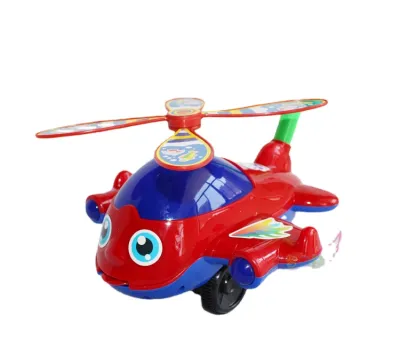
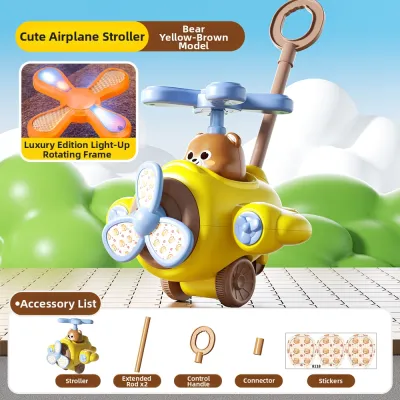
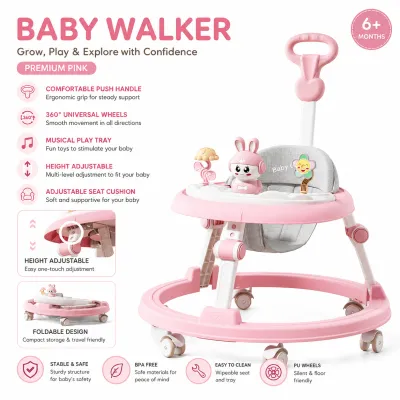
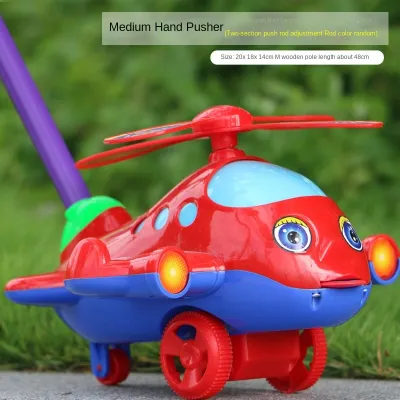
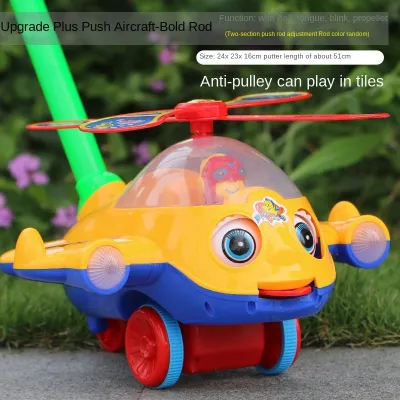
Prices are valid at publication and may change. Please refer to the product page for the latest price.
Base Stability and Anti-Tip Mechanisms
The physical footprint and weight distribution of a toddler push walker are your primary defenses against tipping accidents. When a toddler is learning to walk, they do not just push forward; they also lean heavily on the handlebar, pull themselves up from the floor, and push unevenly to the sides. A walker with a narrow base or a high center of gravity can easily flip over under these uneven forces. To prevent this, prioritize models designed with a wide wheelbase that extends well beyond the frame of the walker, lowering its overall center of gravity and distributing weight more evenly across the floor.

To further enhance rearward stability, look for walkers that feature weighted bases or lower storage compartments. Some wooden models include a built-in toy chest or a bottom shelf where you can place heavy books or toys. This added weight at the very bottom of the frame acts as an anchor, making it significantly harder for the walker to tip backward when your child pulls themselves up using the handlebar. Conversely, be cautious of lightweight plastic models with top-heavy activity panels. If the front of the walker is packed with heavy electronic toys while the base remains feather-light, the entire unit can easily flip forward or backward when your child leans their weight onto the handle.
Before allowing your child to use a new walker, physically test its stability. You can do this in-store or immediately upon delivery in your home. Place the walker on your floor and apply downward and backward pressure on the handlebar, simulating a toddler pulling themselves up. The front wheels should remain firmly on the ground. Next, push the handlebar sideways to see if the frame wobbles or tips easily. If the walker lifts off the ground with minimal pressure, it lacks the structural stability required for a child who is still unstable on their feet.
Wheel Resistance and Speed Control Features
One of the most common causes of falls with a toddler push walker is the “runaway toy” scenario. On smooth indoor surfaces—such as the polished marble, ceramic tiles, or vinyl flooring common in Singapore apartments—a lightweight walker can easily roll forward faster than a toddler can step. This causes the child’s feet to slip behind them, leading to a forward fall onto their hands or face. To mitigate this risk, look for walkers equipped with adjustable wheel resistance or speed control mechanisms.
These speed control features typically consist of tension dials, friction pads, or adjustable screws located on the rear wheels. By tightening these components, you increase the resistance of the wheels, forcing the walker to move at a slow, controlled pace even when pushed with force. Some models also feature rubberized wheel treads or silicone strips. These rubber bands provide essential traction on slick flooring, preventing the wheels from sliding laterally or spinning out of control.
Another valuable feature is lockable wheels, which allow you to lock the wheels completely. This is particularly useful if the walker includes an interactive front activity panel. By locking the wheels, you transform the walker into a stationary play station, allowing your baby to sit and play with the front panel without the toy rolling away. As your child grows stronger, more confident, and improves their balance, you can gradually loosen the wheel tension to match their walking speed. Regularly inspect the wheel tension dials, as daily use can sometimes loosen the screws, requiring periodic readjustment to maintain a safe speed.
Material Toxicity and Choking Hazard Prevention
Toddlers explore their world not just with their hands and feet, but also with their mouths. Teething toddlers will often chew on the handlebar or the sides of their toys. Therefore, verifying the safety of the materials used in the construction of a toddler push walker is non-negotiable. If you are buying a wooden walker, ensure that the wood is smooth, free of splinters, and finished with water-based, non-toxic paints or varnishes. For plastic models, verify that the material is entirely BPA-free, PVC-free, and phthalate-free.
Physical construction quality is equally important for preventing injuries. Run your hands along the entire frame of the walker to check for sharp edges, rough seams, or exposed metal screws. If the walker features a folding mechanism for easy storage, inspect the hinges closely. Ensure that the folding joints lock securely into place and feature guard mechanisms to prevent tiny fingers from getting pinched. Wooden models should be checked regularly for minor cracks or structural loosening that could lead to splinters or unstable joints over time.
The activity panel itself requires careful evaluation. Many walkers come decorated with spinning gears, sliding beads, shape sorters, and musical buttons. While these are excellent for sensory development, they can become severe choking hazards if they break off. Ensure that all attached toys are securely fastened to the panel and cannot be easily pried off by a determined toddler. Avoid models that include small, detachable accessories unless they are large enough to pass standard choke-tube dimensions. If any accessory can fit entirely inside a standard toilet paper roll, it is too small for a child under three years old and should be put away until they are older.
Verifying Safety Certifications and Weight Limits
When shopping for a toddler push walker, it is easy to get swayed by attractive designs and enthusiastic product descriptions. However, parents should look past marketing claims and verify legitimate safety certifications. Look for recognized international toy safety standard marks physically printed on the packaging or the product’s permanent label. These standards—such as EN 71 in Europe, ASTM F963 in the United States, or local safety marks regulated by enterprise and consumer protection bodies—indicate that the toy has undergone rigorous testing for physical stability, mechanical safety, flammability, and chemical toxicity.
Be particularly cautious when purchasing toys from third-party sellers on online marketplaces or ecommerce platforms. Some of these products may bypass standard import inspections and fail to meet local safety regulations. Always verify the manufacturer’s details, check for importer information, and look for clear safety labeling. If a product lacks clear brand information, manufacturer contacts, or safety warning labels, it is best to avoid it in favor of a verified, reputable brand.
Additionally, always check and strictly adhere to the manufacturer’s recommended age grading and maximum weight limit. A toddler push walker is designed to support a specific weight range, typically up to 15 to 20 kilograms. Exceeding this weight limit can compromise the structural integrity of the frame, causing the joints to buckle or the anti-tip mechanisms to fail. Age grading is also a helpful guide, as it reflects both the physical size of the walker and the developmental stage of the child it was designed to support.
Setting Up a Safe Environment for Walker Use
Even the safest toddler push walker can become hazardous if used in an unsafe environment. Before introducing the walker to your living space, you must thoroughly child-proof the area. Start by clearing away common household obstacles. Remove loose rugs, mats, or slippery carpets that can bunch up under the walker’s wheels and cause a sudden trip. Secure loose electrical cords, chargers, and cables along the baseboards so they do not catch on the walker’s frame.
Pay close attention to changes in flooring and elevation. Block off access to stairs, steps, and balconies with secure safety gates. In many apartments, small thresholds between rooms or sliding door tracks leading to balconies can catch the wheels of a walker, causing it to stop abruptly while the child’s momentum carries them forward. Ensure these thresholds are either ramped or blocked off. Keep low coffee tables clear of hot liquids, sharp objects, and heavy items that your child could reach or knock over as they stand up using the walker.
Finally, establish clear behavioral boundaries for your child. A toddler push walker is designed solely for walking support on flat, indoor surfaces. It should never be used as a ride-on toy, a climbing frame, or a cart for pushing other children or heavy household items. If you observe your child attempting to climb onto the tray, stand on the seat (if it has a convertible design), or push the walker while running at high speeds, immediately pause the activity. Gently redirect them to a safer play option and explain the rules of using the walker to build safe habits early.
Frequently Asked Questions (FAQ)
Are push walkers safer than traditional sit-in baby walkers?
Yes, push walkers are widely considered much safer and more developmentally beneficial than traditional sit-in baby walkers by pediatricians and child development experts. Traditional sit-in walkers suspend a baby in a seat, allowing them to move at high speeds before their muscles and balance are naturally ready. This high speed increases the risk of severe injuries, such as tipping over thresholds or falling down stairs. Furthermore, sit-in walkers do not encourage natural weight-bearing or balance. In contrast, a toddler push walker requires the child to actively stand, bear their own weight, and balance themselves. If they lose stability, they can simply let go and drop safely onto their bottom, which is a natural and necessary part of learning to walk.
At what age or developmental stage should my toddler stop using a push walker?
Toddlers typically outgrow a push walker once they can walk confidently and run independently without needing any external support for balance. This milestone is usually reached between 15 to 18 months of age, though every child develops at their own pace. You should also discontinue use immediately if your child reaches the manufacturer’s maximum weight limit, which is a critical safety threshold for the toy’s structural integrity. Finally, if your toddler starts using the walker in unintended, risky ways—such as trying to climb onto the handlebar, using it as a step stool to reach high surfaces, or attempting to ride inside the toy storage compartment—it is time to retire the walker to prevent tipping accidents.
Community discussion
Share your experience or ask a question. Comments are reviewed before publication.