
Choosing a baby walker requires a careful evaluation of design elements to protect your child from common household hazards. While these devices can keep an infant entertained, they also introduce risks like tipping, falling down steps, and accessing out-of-reach hazards. To select a safe model, you must check for critical features such as automatic stair-fall brakes, a wide anti-tip base, secure locking wheels, and certified non-toxic materials. Understanding these physical features and safety standards is essential before introducing any mobile device into your home.
Quick Safety Checklist for Baby Walkers
Before purchasing or setting up a baby walker, parents should run through a quick inspection of its core safety features. Walkers inherently increase a baby’s speed and height, making them susceptible to rapid movements toward hazards like stairs, sharp furniture corners, and electrical cords. A robust safety design mitigates these risks by physically limiting where and how fast the walker can travel.
Use this quick-reference checklist to evaluate any model before buying:
Products mentioned in this guide

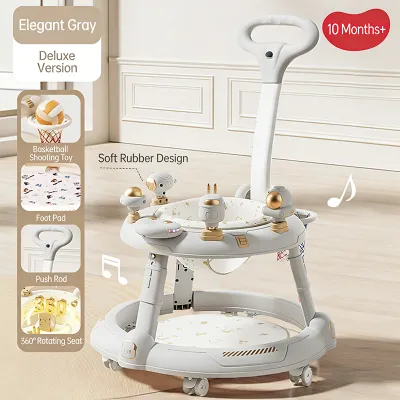
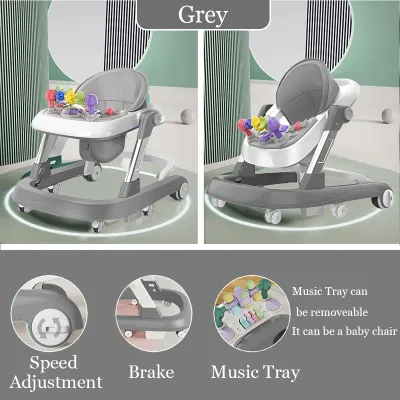
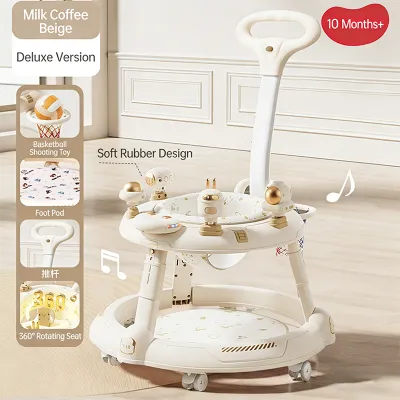
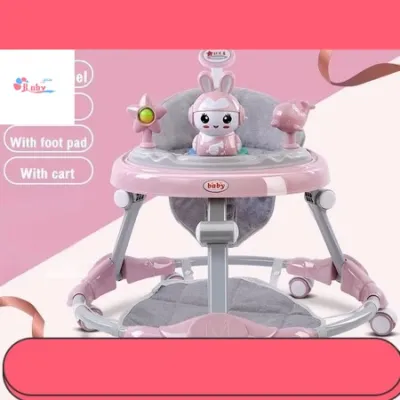
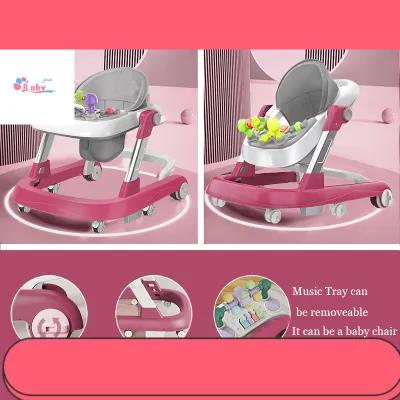
Prices are valid at publication and may change. Please refer to the product page for the latest price.
- Stair-fall braking pads: Non-slip friction strips on the bottom of the frame that stop the wheels at a ledge.
- Extra-wide base: A chassis that is wider than the top tray to prevent tipping and keep fingers from getting crushed against walls.
- Wheel locks: Sturdy mechanisms to lock the wheels and convert the unit into a stationary play station.
- High-back secure harness: A supportive, deeply recessed seat with heavy-duty buckles or snaps to prevent slips.
Always remember that no physical safety feature can replace active adult supervision. Preparing a dedicated, flat, and hazard-free play environment is a mandatory prerequisite before your baby ever takes their first steps in a walker.
Structural Stability and Braking Mechanisms
Evaluating the physical build and wheel configuration of a baby walker is crucial to prevent tipping and uncontrolled rolling. A baby’s center of gravity shifts constantly as they lean, reach, or push against household obstacles.

Wide Base Design for Tipping Prevention
A safe baby walker must feature a broad, oversized chassis footprint. This wide base ensures that even if your baby leans heavily to one side or bumps into a threshold, the center of gravity remains securely within the frame’s perimeter. The wide frame also acts as a physical bumper, keeping your baby’s hands and upper body at a safe distance from walls, door frames, and furniture edges where fingers could easily be pinched.
Wheel Grip and Friction Rings
Examine the wheels closely before buying. High-quality models feature wheels wrapped in rubberized grip materials or integrated friction rings rather than slick, hard plastic. These friction rings provide necessary resistance on smooth surfaces like polished tiles or vinyl flooring, preventing the walker from accelerating to dangerous speeds. They also help slow the walker down when it encounters uneven surfaces or minor floor transitions.
Stationary Locks and Activity Modes
Look for walkers equipped with robust wheel locks or a retractable base that converts the mobile frame into a stationary activity center. This feature is invaluable when you need to keep your baby in one spot while they play with the built-in toy tray. The locking mechanism should be simple for an adult to engage but completely inaccessible or too stiff for a child to release from inside the seat.
Weight Capacity and Center of Gravity
Always check the manufacturer’s specified weight and height limits on the product packaging or user manual. A walker that is too light or has a high center of gravity can easily capsize when a heavier or taller baby leans over the edge. Ensure the weight is evenly distributed across the lower frame, keeping the base heavy and stable while the upper tray remains lightweight.
Fall Prevention and Stair Safety Features
Falls down staircases remain one of the most severe risks associated with mobile baby walkers. Understanding how modern safety features combat this hazard can help you choose a much safer product.
Under-Chassis Brakes and Friction Pads
Modern safety-conscious walkers are equipped with stair-fall brakes or rubberized friction pads located on the underside of the lower frame. These pads are designed to immediately grip the floor surface the moment a wheel drops over an edge, such as a step or a threshold. The friction created by these pads stops the walker’s forward momentum, preventing the entire unit from tumbling down.
Pre-Use Testing on Step Edges
Before placing your baby in a new walker, perform a manual safety test. Hold the empty walker securely with both hands and push it slowly toward a small step or threshold in your home. Observe whether the under-chassis friction pads make firm contact with the floor and successfully halt the forward roll of the wheels. If the walker slides easily over the edge without stopping, the braking mechanism may be insufficient or incompatible with your flooring.
Environmental Limitations and Safety Gates
While under-chassis brakes provide an excellent secondary line of defense, they are not foolproof and should never be relied upon as your primary safety measure. In homes with stairs, split levels, or raised balconies, you must install hardware-mounted safety gates at both the top and bottom of every staircase. Physical barriers are the only guaranteed way to prevent catastrophic fall injuries.
Surface Compatibility and Floor Types
The performance of stair-fall brakes can vary dramatically depending on your home’s flooring. Friction pads are highly effective on flat, hard surfaces like ceramic tiles, wood, or laminate, but they may fail to engage properly on thick carpets, rugs, or highly polished marble. Check the manufacturer’s instructions to verify if the walker is rated for use on your specific floor type, and inspect the grip regularly for wear and tear.
Pinch Points, Entrapment, and Material Safety
A thorough physical inspection of the walker’s components is necessary to protect your baby’s delicate skin, fingers, and toes from painful pinches or entrapment.
Folding Hinges and Moving Parts
Many baby walkers are designed to fold flat for easy storage and travel. However, these folding hinges and height-adjustment sliders can easily trap tiny fingers if they are poorly designed. Inspect these joints to ensure there are no gaps or scissor-like mechanisms that remain exposed during use. Verify that all locking pins or safety latches click firmly into place so the walker cannot collapse unexpectedly while your baby is inside.
Tray and Toy Safety
The activity tray is a major point of interaction for your baby. Ensure that all attached toys, steering wheels, and buttons are securely fastened to the tray and cannot be pried loose. Check for small, detachable parts or loose plastic pieces that could present a choking hazard. If the walker features an electronic toy bar, verify that the battery compartment is securely screwed shut and completely inaccessible to children.
Seat Fabric, Stitching, and Hip Support
The seat fabric must be durable, breathable, and easy to clean. Inspect the stitching along the seams and attachment points to ensure it can support your baby’s weight without tearing. The seat depth should be sufficient to prevent your baby from slouching or slipping through the leg openings, and the crotch strap must be wide and padded to support healthy hip development and prevent hip dysplasia.
Frame Inspection and Smooth Edges
Run your hands along the entire plastic and metal frame of the walker. Check for sharp edges, rough mold seams, or exposed screws that could scratch your baby’s legs or feet. Any metal tubing should be free of rust, and all plastic components should feel sturdy and rigid rather than thin or flexible under pressure.
How to Verify Safety Certifications and Labels
Never rely solely on marketing claims of safety. You must know how to locate and verify authentic safety certifications and labels on the product.
Locating Safety Marks on the Chassis
Legitimate safety labels and compliance marks are typically printed on a permanent sticker located on the underside of the walker’s chassis, on the metal seat frame, or clearly displayed on the original packaging. Avoid buying products that lack these permanent labels, as they may be cheap counterfeits or untested imports that do not meet basic consumer safety requirements.
Recognizing International Compliance Standards
Look for labels indicating that the baby walker complies with recognized international safety standards. Common standards include EN 1273 (the European standard for baby walkers) or ASTM F977 (the American standard). In Singapore, consumer products must align with safety guidelines enforced by Enterprise Singapore. Verifying these specific standards ensures the product has undergone rigorous testing for stability, dynamic strength, and stair-fall prevention.
Reading Manufacturer Warnings and Milestones
Always read the user manual and on-product warnings regarding developmental milestones and physical limits. Most manufacturers specify that a baby walker is only suitable for infants who can sit up unassisted (typically around 6 months of age) and must be discontinued as soon as the baby can walk independently, climb out of the seat, or reaches a specific weight limit (often around 11 to 12 kilograms).
Registration and Tracking Recalls
Once you purchase a certified baby walker, fill out the manufacturer’s product registration card or register the purchase online. This simple step ensures that you will be contacted directly and immediately if the manufacturer or consumer safety authorities issue a product recall due to newly discovered safety defects.
Safe Usage Boundaries and Supervision Rules
Even the most advanced safety features cannot eliminate the risks of a baby walker if the device is used incorrectly. Establishing strict usage boundaries is vital for your baby’s physical development and safety.
Daily Time Limits for Healthy Development
Pediatricians and pediatric physiotherapists generally recommend limiting your baby’s time in a walker to no more than 15 to 20 minutes per day. Extended use can negatively impact motor development, as walkers encourage babies to stand on their tiptoes and rely on artificial support rather than developing the core and leg muscles needed for natural crawling, standing, and walking.
Constant Caregiver Supervision
A baby in a walker can travel at speeds of up to one meter per second, allowing them to reach hazards far faster than you might expect. Never leave your baby unattended in a walker, even for a few seconds to answer the door or grab a phone. An adult must remain in the same room, keeping the baby within direct line of sight and arm’s reach at all times.
Environmental Preparation and Room-Proofing
Before placing your baby in the walker, you must thoroughly prepare the room. Secure all dangling tablecloths, window blind cords, and electrical wires that your baby could pull down. Block access to hot liquids, household cleaning chemicals, sharp table corners, and heavy objects. Remove loose rugs or mats that could cause the walker to trip or slide unpredictably.
When to Retire the Walker
You must stop using the baby walker immediately when your baby meets any of the following conditions: they reach the manufacturer’s maximum weight or height limit, they show signs of being able to climb out of the seat, or they begin to walk independently. Continuing to use the walker past these developmental milestones significantly increases the risk of falls and tipping. If you are unsure about your baby’s developmental readiness or physical safety, consult a pediatrician or pediatric physiotherapist for professional guidance.
Frequently Asked Questions (FAQ)
Are baby walkers banned or restricted in any regions?
Yes, baby walkers are banned or highly restricted in several regions due to safety concerns. For example, Canada banned the sale, importation, and advertisement of baby walkers in 2004 to protect infants from serious injuries. In other markets, including Singapore, they remain available but are subject to strict consumer safety regulations. Major pediatric organizations, including the American Academy of Pediatrics, strongly advise against their use due to the high risk of accidents and potential delays in motor development, urging parents to consider safer alternatives.
What is the safest alternative to a traditional baby walker?
The safest alternative to a traditional seated baby walker is a push walker (also known as a walk-behind toy). Unlike seated models, push walkers require your baby to stand on their own feet, supporting natural walking mechanics, balance, and muscle development without trapping them in a seat. Another excellent option is a stationary activity center or exersaucer. These units provide a safe, contained space for your baby to play with interactive toys and practice standing without the mobility-related hazards of rolling wheels.
Community discussion
Share your experience or ask a question. Comments are reviewed before publication.