
When shopping for a baby walker in Singapore, safety must be your absolute priority. While these devices offer a mobile vantage point for your little one, they also introduce specific physical risks that require careful evaluation. To protect your child, you must look for a walker with a wide, stable base that prevents tipping, integrated friction pads to halt movement at step edges, adjustable height settings for proper foot alignment, and secure folding locks. Verifying international safety standards like EN 1273 or ASTM F977 on the product label is also essential before making a purchase.
Quick Answer: Core Safety Checklist for Baby Walkers
Before purchasing a baby walker, parents should run through a non-negotiable safety checklist to ensure the model meets basic protective design requirements:
- Wide, Stable Base: The bottom frame must be physically wider than the top tray and seating area to prevent the walker from tipping over when your baby leans sideways or forward.
- Friction Pads and Braking Mechanisms: Look for rubberized strips or grabber pads on the underside of the base that grip the floor and stop the walker if a wheel loses contact with the flat ground.
- Adjustable Height Settings: Multiple height positions are crucial to ensure your baby's feet rest in a natural, supportive position rather than forcing them to walk on their tiptoes.
- Secure Folding Locks: Dual-action locking mechanisms ensure the walker frame does not accidentally collapse while your baby is active inside.
Essential Structural and Design Safety Features
Evaluating the physical build of a baby walker requires a hands-on inspection of its frame, wheels, and seating system before bringing it into your home.
Products mentioned in this guide
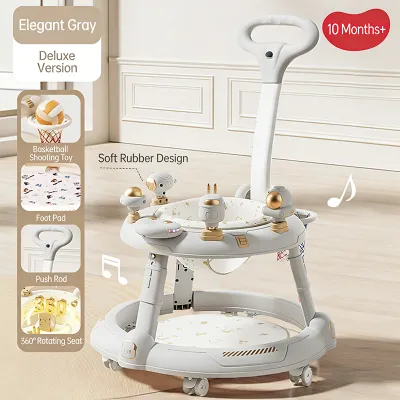
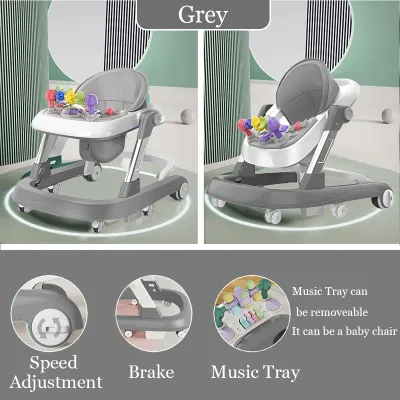
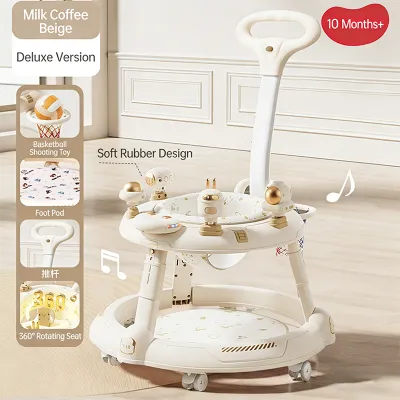
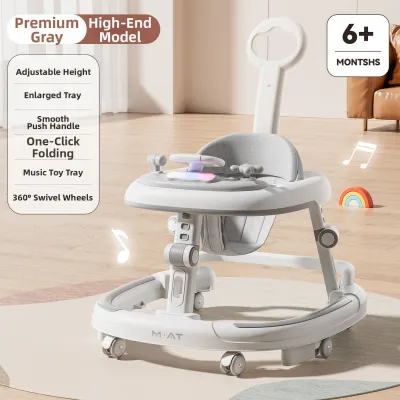
![[SG STOCK]Musical Baby Walker Toddler Push Learning Walker with Fun Music Safe & Engaging](https://img.lazcdn.com/g/p/8c3e60d5e6e338d9bcfce4cbd1b16270.png_400x400q80.png_.webp)
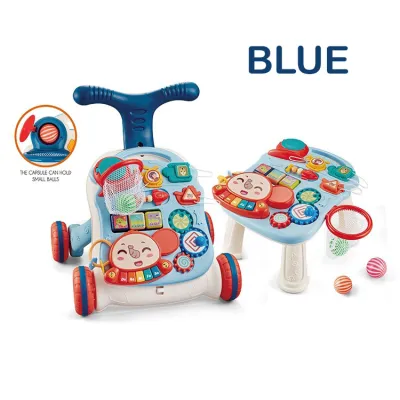
Prices are valid at publication and may change. Please refer to the product page for the latest price.

A high-quality baby walker must have a broad, heavy base that lowers the overall center of gravity. When a baby leans over the side to reach for an object, a narrow base can easily tip. Look for models where the bottom frame extends significantly past the seating area in all directions. The wheel configuration also plays a role; while multi-directional wheels allow for easy maneuvering, they must be paired with a sturdy, rigid frame that resists flexing under your baby’s weight.
Stair-fall prevention mechanisms are critical safety features designed to grip the floor if the walker moves over an edge. These friction pads, usually made of rubber or slip-resistant material, are located on the underside of the base. However, parents must understand the physical limitations of these pads on different floor types common in Singapore homes. While they may grip textured surfaces effectively, their performance can vary on highly polished glazed tiles, smooth vinyl, or laminate flooring. Regular cleaning of both the pads and your floors is necessary to prevent dust buildup from reducing their grip.
The seat of the walker must support your baby’s pelvis securely without allowing them to slump or slide out. Look for a deep, padded seat with a high backrest that provides adequate trunk support. Adjustable height ranges are equally important. If the walker is too high, your baby will be forced to walk on their tiptoes, which can strain developing calf muscles and tendons. If it is too low, their knees will bend excessively, leading to poor posture. The height should be adjusted so that your baby’s feet can rest flat or comfortably touch the floor.
Carefully inspect the walker’s frame for potential pinch points where tiny fingers could get caught, especially around folding joints, height-adjustment latches, and the underside of the toy tray. Run your fingers along all plastic edges to ensure there are no sharp seams or rough flashing from the manufacturing process. Additionally, examine any attached toys or activity consoles. Ensure there are no small, detachable parts that could easily break off and pose a choking hazard to an infant.
Navigating Safety Standards and Compliance Labels
Understanding how to read and verify safety certifications is a vital step in choosing a reliable baby walker.
When browsing options in Singapore, look for recognized international safety standards printed directly on the product, its packaging, or within the user manual. The European standard EN 1273 (specifically safety requirements for baby walkers) and the American standard ASTM F977 are two of the most rigorous frameworks. These marks indicate that the product has undergone testing for stability, structural integrity, and the presence of safety features like friction pads.
It is important to distinguish between mandatory local retail regulations and voluntary international safety testing. While products sold in Singapore must comply with general consumer product safety requirements, specific baby walker standards like EN 1273 are often voluntary certifications obtained by manufacturers to demonstrate superior safety engineering. Actively seeking out these voluntary marks provides an extra layer of assurance that the walker has been designed to mitigate common risks.
Be cautious of products that lack clear labeling, safety warnings, or manufacturer information. Red flags include generic packaging with no brand name, missing instruction manuals, or safety labels written in poorly translated languages. If a seller cannot provide documentation verifying compliance with recognized safety standards, it is best to avoid the purchase entirely.
Before finalizing your purchase, especially if you are buying online or considering a second-hand model, check official consumer protection channels for recent product recalls. Enterprise Singapore regularly publishes safety alerts and recalls for consumer goods. You can also search international recall databases using the specific brand and model number to ensure the walker has not been flagged for structural failures or safety hazards.
Safe Usage Boundaries and Environmental Hazards
Even the most advanced safety features cannot replace safe usage practices and a secure environment.
Always consult the product documentation to verify the recommended age, weight, and developmental milestones for the walker. Typically, walkers are intended for babies who can sit up unassisted—usually around six months of age—but who cannot yet walk independently. Never place a baby in a walker if they are too small to sit securely in the seat, or if they exceed the maximum weight limit specified by the manufacturer.
Singapore homes, though often single-level apartments, contain numerous hazards for a mobile baby. Identify and block off potential danger zones before placing your baby in the walker. These include sliding door tracks leading to balconies, bathroom thresholds with steps, kitchen entryways, and loose rugs that could cause the walker to trip. Ensure that hot liquids, electrical cords, heavy objects on table edges, and household chemicals are kept completely out of reach, as a walker allows a baby to reach much higher than they normally could.
A baby walker is not a babysitting tool or a safe containment device. Direct, uninterrupted adult supervision is mandatory at all times during use. A baby in a walker can move surprisingly fast, covering significant distances in a fraction of a second. Never leave your child unattended in a walker, even for a brief moment to answer the door or phone.
Knowing when to permanently stop using the walker is just as important as knowing when to start. Discontinue use immediately if your baby can pull themselves up to a standing position while inside the walker, as this increases the risk of them climbing out and falling. You should also stop using the device once your baby begins to take independent steps or when they reach the manufacturer’s maximum height or weight limits.
Frequently Asked Questions (FAQ)
Are baby walkers banned or restricted in Singapore?
Baby walkers are not legally banned from sale or import in Singapore, and they remain widely available across local retail stores and online marketplaces. However, local pediatricians, healthcare professionals, and the Ministry of Health generally advise against their use due to the inherent risks of falls and developmental concerns. Parents who choose to use them must take full responsibility for ensuring a highly controlled, supervised environment and verifying all safety features.
At what age should a baby stop using a walker?
You should stop using a baby walker as soon as your child reaches the maximum weight or height limit specified in the manufacturer’s manual, which is often around 11 to 12 kilograms or when the baby’s chest is no longer fully supported by the frame. Additionally, developmental milestones signal the end of walker use; once your baby can pull themselves up to stand, crawl actively, or take independent steps, the walker should be retired to prevent climbing accidents.
Do baby walkers delay walking or cause developmental issues?
Many pediatric experts and developmental specialists suggest that excessive use of baby walkers can alter natural motor development. Walkers encourage babies to push with their toes rather than practicing the heel-to-toe movement required for independent walking, and they do not engage the core and hip muscles in the same way crawling does. To support healthy physical milestones, prioritize supervised floor-time activities, such as tummy time and crawling, which naturally build the strength and coordination needed for walking.
Community discussion
Share your experience or ask a question. Comments are reviewed before publication.