
Quick Answer: Essential Safety Features for Newborn Swings
When selecting a baby cradle swing for a newborn, safety must be your absolute priority. The most critical features to verify before purchase include a wide, stable base that resists tipping, and a secure five-point harness to keep your infant properly positioned.
It is vital to understand that cradle swings are designed solely for supervised, awake soothing and are not safe for unsupervised sleep. Before placing your baby in any swing, always consult the manufacturer’s documentation to verify the specific weight, age, and developmental limits.
Evaluating Base Stability and Tipping Risks
A stable foundation is the first line of defense against accidental tipping or shifting while the swing is in motion. When evaluating a baby cradle swing, closely examine the physical footprint of the frame. A wider footprint generally provides a lower center of gravity relative to the seat height, which significantly reduces the risk of the unit tipping over during operation.
Products mentioned in this guide
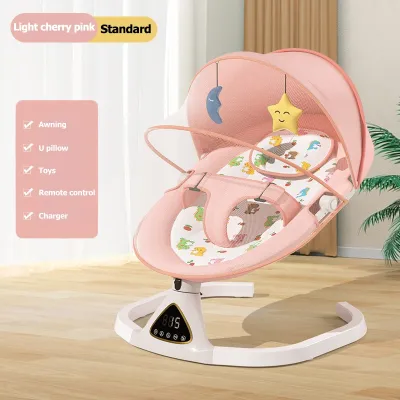
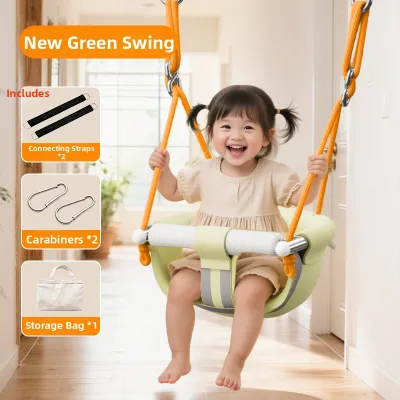
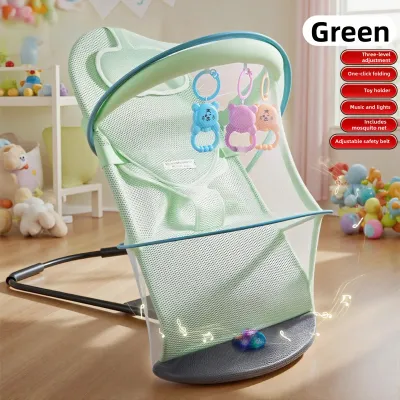
Prices are valid at publication and may change. Please refer to the product page for the latest price.

The type of flooring in your home plays a major role in how stable the swing remains. In many modern apartments and homes, smooth flooring materials such as polished marble, ceramic tiles, or vinyl are standard. A swing’s motion can cause the frame to slowly “walk” or slide across these slick surfaces. To prevent this, verify that the bottom of the base is equipped with durable, non-slip rubberized pads or grips that hold the frame firmly in place.
Before committing to a purchase, physically inspect the frame joints and locking mechanisms if you are shopping in a physical store. If you are purchasing online, look for detailed user reviews or manual diagrams that illustrate how the frame pieces connect. Press down firmly on the assembled frame to ensure there is no unexpected wobbling, loose play, or structural flexing. Any folding joints designed for storage must lock securely into place with an audible click or a secondary manual lock to prevent the frame from collapsing while your baby is inside.
Choosing the Right Harness and Restraint System
Newborn babies lack the core strength and head control necessary to support themselves, making a reliable restraint system absolutely essential. When comparing models, look closely at the harness design. A five-point harness—which secures the baby at the shoulders, hips, and crotch—is highly recommended over a three-point system for newborns. The shoulder straps prevent the infant from slumping forward or sliding sideways, keeping them centered in the safest position.
The buckle mechanism itself must be robust and secure. It should require an intentional, multi-step action or a specific amount of physical force to open. This design prevents the buckle from being accidentally released by the baby’s movements or easily manipulated by curious older siblings who might interact with the swing.
Adjustability is another key factor to verify. The harness straps must be easily adjustable to ensure a snug fit against your baby’s shoulders and waist. There should be no excessive slack in the straps, as loose webbing can pose an entanglement risk or allow a small newborn to slip down into a dangerous position. Check the manufacturer’s instructions to learn how to adjust the straps properly as your baby grows.
Understanding Sleep Boundaries and Positioning Safety
It is crucial to distinguish between using a swing for supervised soothing and using it as a place for sleep. Pediatricians and child safety organizations emphasize that infant swings are not approved for unsupervised or overnight sleep. The semi-reclined position of a swing seat is not safe for an sleeping baby, as it can lead to serious airway obstruction.
When a newborn is placed in a semi-reclined seat, their heavy head can easily fall forward, causing the chin to rest on the chest. This position can compress the infant’s soft airway, leading to positional asphyxia. To mitigate this risk during awake use, look for swings that feature adequate, adjustable head and neck support inserts designed specifically for newborns to help keep their head upright and their airway clear.
Always maintain active supervision while your baby is in the swing. If your newborn begins to fall asleep, you must immediately transfer them to a flat, firm sleep surface, such as a crib, cot, or bassinet. For detailed guidance on safe sleep practices and positioning, always consult your pediatrician or a qualified healthcare professional.
Checking Moving Parts and Electrical Hazards
Because a baby cradle swing relies on mechanical motion, you must carefully inspect the unit for potential physical and electrical hazards. All moving hinges, gears, and folding mechanisms must be completely enclosed or shielded by protective housing. This prevents tiny fingers, clothing, or blankets from getting pinched or caught in the machinery while the swing is operating.
For battery-operated models, examine the battery compartment closely. The compartment cover must require a tool, such as a screwdriver, to open. This safety feature prevents older children from accessing the batteries, which pose severe choking and chemical burn hazards if swallowed.
If you choose a plug-in model, evaluate the cord management system. The power cord must be kept completely out of reach of the swing’s path and away from areas where children walk or crawl. Loose cords present a tripping hazard for family members and an entanglement risk for infants. Ensure the cord is positioned safely against a wall and secured so it cannot be pulled or played with.
Matching Weight, Age, and Developmental Milestones
Every baby cradle swing is engineered to support a specific weight range and developmental stage. Before using a swing, locate the manufacturer’s stated maximum weight and age limits, which are typically printed on a physical label on the frame or detailed in the user manual. Never assume a swing is suitable for your baby based solely on the product name or visual appearance.
Developmental milestones are often more critical than weight limits when determining when to stop using a swing. Even if your baby is well under the maximum weight limit, you must immediately discontinue use if they reach any of the following milestones:
- Attempting to roll over
- Pushing up on their hands and knees
- Attempting to sit up unassisted
- Showing signs of trying to climb out of the seat
Using a swing past its intended capacity or developmental stage poses severe risks. An older, more active baby can shift their weight dynamically, which can cause structural failure of the frame, motor burnout, or a dramatic shift in the center of gravity that leads to a dangerous fall.
Identifying Valid Safety Certifications and Labels
To ensure the swing you choose has undergone rigorous safety testing, look for physical labels or packaging marks indicating compliance with recognized national or international safety standards. For infant seating and play products, standards such as those from ASTM International or European Standards (EN) are common benchmarks of quality and safety.
Be cautious of generic, unverified marketing phrases such as “safety tested,” “expert approved,” or “pediatrician recommended.” These claims are often self-declared by manufacturers and do not guarantee that the product has passed independent, standardized testing. Look for official certification seals or registration numbers printed directly on the product’s warning labels.
If you are purchasing a swing online from an ecommerce platform and cannot physically inspect the labels, take the time to verify the product’s credentials. Visit the manufacturer’s official website to view their safety documentation, or contact their customer service department to request verification of compliance with recognized safety standards before making your purchase.
Frequently Asked Questions (FAQ)
Can a newborn sleep in a cradle swing overnight?
No, a newborn should never sleep in a cradle swing overnight or unsupervised. Swings are designed solely for awake, supervised soothing. The semi-reclined angle of the swing seat poses a risk of positional asphyxia, where the baby’s head can tilt forward and block their airway. If your baby falls asleep while in the swing, you must immediately transfer them to a firm, flat sleep surface, such as a crib or bassinet, to ensure they can breathe safely.
When should I stop using the baby cradle swing?
You must stop using the baby cradle swing as soon as your baby reaches the manufacturer’s maximum weight limit or begins to hit key developmental milestones. These milestones include attempting to roll over, pushing up on hands and knees, or trying to sit up unassisted. Continuing to use the swing after your baby has gained this mobility greatly increases the risk of the unit tipping over or the baby falling out of the seat.
Community discussion
Share your experience or ask a question. Comments are reviewed before publication.