
To help your child transition to using the adult toilet independently, a reliable toddler step stool is an essential tool. However, the bathroom presents unique hazards—wet floors, hard surfaces, and elevated heights—making safety the absolute priority. The most critical safety features to look for in a toddler step stool include robust non-slip floor grips, a highly textured stepping surface, a wide and stable base that resists tipping, a verified manufacturer-stated weight limit, and smooth, rounded edges.
While these physical design features significantly reduce the risk of slips and accidental falls, active adult supervision remains crucial during the early stages of potty training. No safety feature can replace the watchful eye of a parent or caregiver as a child learns to navigate heights. By understanding what makes a stool structurally sound, you can confidently select a model that supports your child’s physical development and keeps them secure.
Base Stability and Weight Limits: Choosing a Safe Toddler Step Stool
When evaluating a toddler step stool, the foundation is the most critical element to inspect. A stool must remain completely immobile when a child climbs, stands, or shifts their weight. Toddlers do not climb in a controlled, vertical line; they often step on the outer edges, lean sideways to reach for toilet paper, or jump down. To counteract these unpredictable movements, look for a stool with a wide, flared base—often referred to as a pyramid design—where the bottom footprint is significantly wider than the top stepping surface. This structural shape lowers the center of gravity, making it highly resistant to tipping even when weight is applied unevenly.
Products mentioned in this guide
![[MUMof2boys] Kids 2-Step Anti-Slip Stool for Bathroom & Toilet Training – Toddler Safety Step Stool](https://img.lazcdn.com/g/p/0d6a554073a6670e74e3dea27b2520f7.png_400x400q80.png_.webp)
![[SG] Potty Seat Training ✨ Kids Toilet Bowl Baby Toilet Toddlers Toilet Seat Step Stool Ladder](https://img.lazcdn.com/g/p/8fd2f836cfed025e2c5dd11fe85211ba.jpg_400x400q80.jpg_.webp)
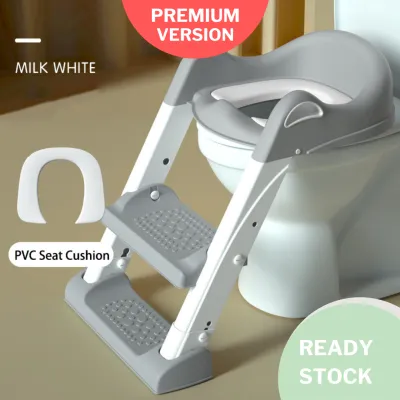
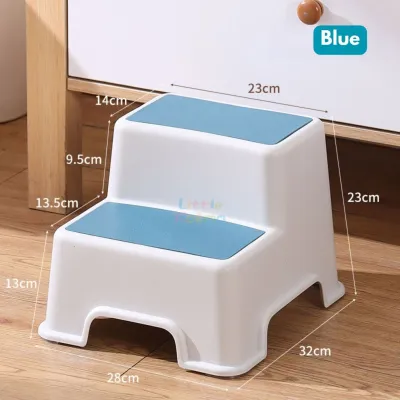
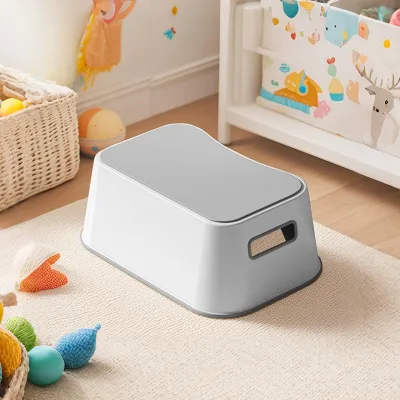
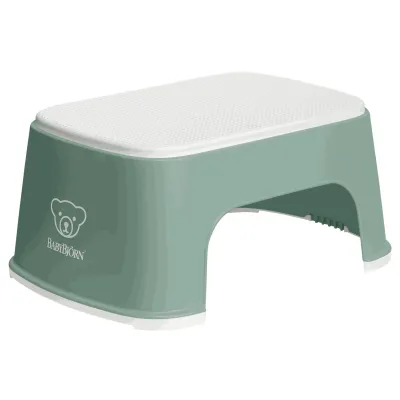
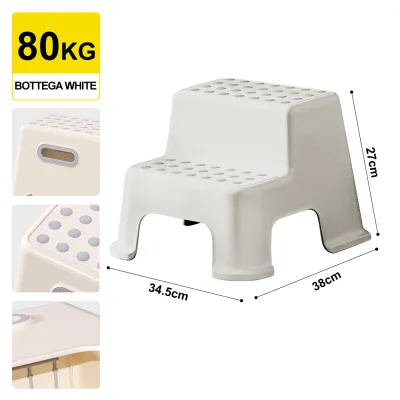
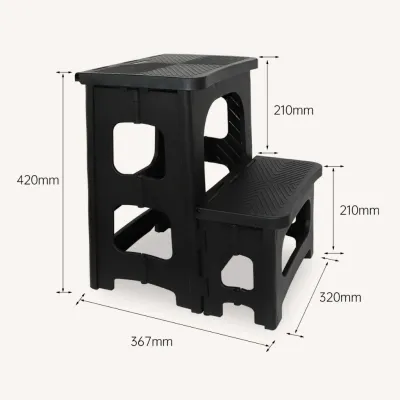
Prices are valid at publication and may change. Please refer to the product page for the latest price.
Weight capacity verification is another non-negotiable step before introducing a stool to your bathroom. Parents should always check the manufacturer’s documentation or product label for the official weight limit. It is vital to remember that a child’s dynamic weight—the force they exert while stepping, hopping, or climbing—is much higher than their static weight when standing still. Choose a stool with a weight limit that safely accommodates your child’s current weight with a generous margin for rapid growth. Never assume a stool is safe based on appearance alone; lightweight plastic models without clear weight ratings should be avoided.
Tipping risks increase dramatically when a stool is placed on uneven surfaces. Bathrooms often feature plush bath mats, transition strips between flooring types, or slightly sloped floors for drainage. If a narrow or top-heavy stool is placed partially on a thick bath mat, its stability is compromised. This uneven footing can cause the stool to wobble or flip when the child steps on it. To prevent this, always ensure the stool rests on a flat, bare floor surface during use.
Before allowing your child to use a new stool, perform a quick pre-use stability test. Place the stool in its designated spot and apply firm downward and lateral pressure with your hands on all four corners and edges. If the stool rocks, tilts, or slides easily under your hand pressure, it is not stable enough for a toddler. Adjust its position or verify if the floor surface is uneven before proceeding.
Slip Resistance: Floor Grips and Stepping Surface Traction
Slip resistance is a two-part safety requirement: the stool must grip the floor, and the child’s feet must grip the stool. Bathroom floors in Singapore are predominantly made of ceramic, porcelain, or homogenous tiles. While durable and easy to clean, these smooth tiled surfaces become exceptionally slick when exposed to moisture from showers, baths, or sink splashes. To prevent the stool from sliding out from under your child, look for models equipped with robust floor-anchoring mechanisms. Continuous rubberized borders or wide silicone feet on the underside of the stool offer far superior traction compared to small, isolated plastic pegs, which can easily slide on damp tiles.

The stepping surface itself requires equal attention. Toddlers frequently use the bathroom with bare feet, wet socks, or damp soles after a bath. A smooth, glossy plastic surface offers virtually no traction under these conditions, presenting a severe slip hazard. Opt for a toddler step stool that features a heavily textured, grooved, or rubberized top surface. Many high-quality stools utilize a dense pattern of raised rubber dots or a textured elastomer inlay that provides a reliable grip even when wet.
Moisture is inevitable in a shared family bathroom. Beyond visible puddles, high humidity can cause a thin layer of condensation to form on plastic and wooden surfaces alike. When evaluating a stool, look for designs that incorporate drainage channels or patterns that prevent water from pooling on the stepping surface. Regularly wiping down the stool and ensuring the bathroom is well-ventilated will help maintain the integrity of the non-slip materials over time.
Structural Design: Height, Edges, and Material Safety
An ideal toddler step stool must align ergonomically with your bathroom fixtures. A stool that is too short will force your child to overstretch, lean forward precariously, or pull themselves up by the toilet bowl, increasing the risk of a fall. Conversely, a stool that is too tall makes climbing difficult and elevates the fall height. Measure the height of your toilet bowl and sink, then compare it to the stool’s step height. For potty training, the stool should allow your child to sit on the toilet seat with their feet resting flat on the step. This foot support is not just for balance; physically, having the feet supported with the knees slightly elevated above the hips mimics a natural squatting position, which significantly eases bowel movements.
Inspect the physical construction of the stool for edge and joint finishing. Run your hands along all edges, corners, and underside lips. Children often carry or drag their stools around, so every surface must be smooth and rounded to prevent scratches, cuts, or bruises. Examine the joints where different materials meet; there should be no gaps, sharp plastic flashing from the molding process, or exposed screws that could snag skin or clothing.
Material safety and environmental durability are crucial, particularly in humid bathroom settings. If choosing a plastic stool, verify that the manufacturer states it is made from BPA-free, non-toxic materials. If you prefer a wooden stool, ensure it is treated with a water-resistant, non-toxic sealant. Untreated wood can absorb moisture, leading to warping, splintering, or mold growth, which compromises both hygiene and structural integrity.
Additionally, be cautious of complex mechanisms. While folding stools are appealing for space-saving reasons, they often feature multiple moving parts, hinges, and locking joints. If these components are poorly constructed or lack secure locking mechanisms, they can pinch small fingers during setup or collapse under your child’s dynamic weight. For daily potty training, a solid, single-piece molded plastic or sturdy wooden stool is generally the safest and most durable choice.
Safe Usage Boundaries and When to Retire the Stool
Establishing clear safety boundaries in the bathroom helps prevent accidents as your child gains independence. During the initial phases of potty training, never leave your child unattended in the bathroom, even if your stool has excellent safety ratings. Keep the bathroom environment secure by closing the toilet lid when not in use, storing cleaning chemicals out of reach, and removing loose, slippery rugs or bath mats from the immediate area surrounding the toilet and sink.
Proper placement of the stool is essential for daily use. Always push the stool completely flush against the base of the toilet or the sink cabinet. This eliminates any dangerous gaps where a child’s foot could slip down, potentially trapping their leg or causing them to lose balance and fall backward. Teach your child to step onto the center of the stool rather than the very edge, and encourage them to use both hands to stabilize themselves if they are transitioning to the toilet seat.
Over time, even the most durable toddler step stool will wear out or be outgrown. Parents must regularly inspect the stool for signs of degradation. Look for stress cracks in plastic, loose joints in wooden models, or rubber feet that have worn smooth, cracked, or detached. If any of these issues are present, the stool is no longer safe and should be retired immediately.
Furthermore, monitor your child’s physical growth. Once your child’s weight approaches the manufacturer’s stated limit, or if they have grown tall enough to comfortably reach the toilet and sink with their feet flat on the floor, it is time to transition away from the step stool entirely.
Frequently Asked Questions (FAQ)
Are foldable step stools safe for potty training?
Foldable step stools carry inherent risks that make them less ideal for independent toddler use. The hinges and folding joints can easily pinch delicate skin or small fingers if the stool is collapsed or opened improperly. Additionally, if the locking mechanism is not fully engaged, the stool can fold unexpectedly under a child’s weight, leading to a fall. While convenient for travel, a solid, fixed-base toddler step stool is highly recommended for daily, unsupervised potty training access due to its superior structural stability.
How do I clean a step stool without ruining the non-slip grips?
To preserve the slip-resistant properties of the floor grips and stepping surface, clean the stool using mild dish soap, warm water, and a soft microfiber cloth or soft-bristled brush. Avoid using harsh chemical cleaners, bleach, ammonia, or highly abrasive scrubbing pads. These harsh agents can degrade rubberized floor pads, dry out silicone feet, and wear down the molded texture on the stepping surface, drastically reducing the stool’s slip resistance over time.
Can a regular household step stool be used for potty training?
Using a standard household step stool designed for adults is not recommended for potty training. Adult stools are typically taller, narrower, and lack the specific safety features required for toddlers, such as extra-wide bases to prevent tipping and highly textured, child-sized stepping surfaces. They also rarely fit flush against the curved base of a standard toilet, leaving dangerous gaps that can cause a toddler to slip, lose balance, or fall.
Community discussion
Share your experience or ask a question. Comments are reviewed before publication.