
When shopping for a baby walker, prioritizing safety features and verified certifications is the most critical step in protecting your child. A safe baby walker must feature a wide, stable base that prevents tipping, automatic friction pads or braking mechanisms to stop the device at steps, a deep seat with a secure harness, and a design free from pinch points. Additionally, parents should verify compliance with recognized international safety standards, such as ASTM F977 or EN 1273, by checking physical labels rather than relying solely on online marketplace descriptions. While these physical safeguards significantly reduce mechanical risks, they are designed to assist—not replace—continuous, direct adult supervision. Understanding how to inspect these features and verify compliance ensures you make an informed, safety-first decision for your nursery.
Understanding the Risks: Why Safety Features Are Non-Negotiable
Baby walkers grant infants a sudden, unexpected level of mobility before their cognitive and physical abilities are fully developed. In a walker, a baby can move at speeds of up to one meter per second, far faster than a caregiver’s typical reaction time. This rapid movement dramatically increases the risk of serious accidents, particularly tipping over on uneven surfaces or falling down stairs. The elevated height also allows babies to reach items that would normally be out of their grasp, such as hot liquids on countertops, electrical cords, or household chemicals.
A child’s natural curiosity drives them to explore, but they lack the spatial awareness or reflex control to stop themselves from rolling into danger. Because their center of gravity is relatively high when seated in a walker, any sudden change in floor level or contact with a small obstacle can cause the entire unit to tip over. This can lead to head injuries, fractures, or trapped limbs.
Products mentioned in this guide
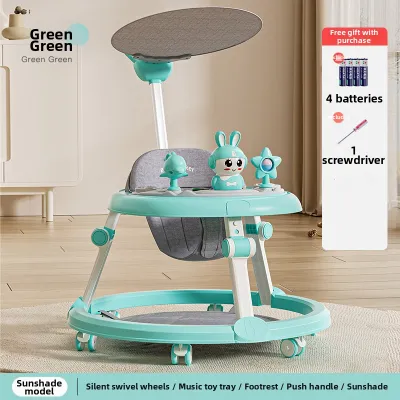
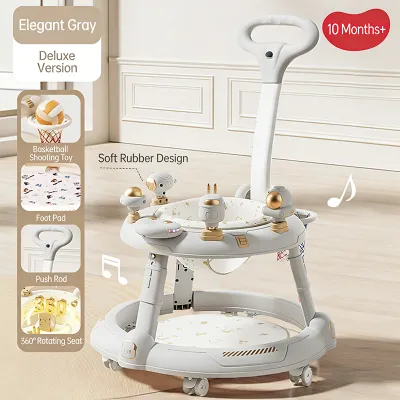
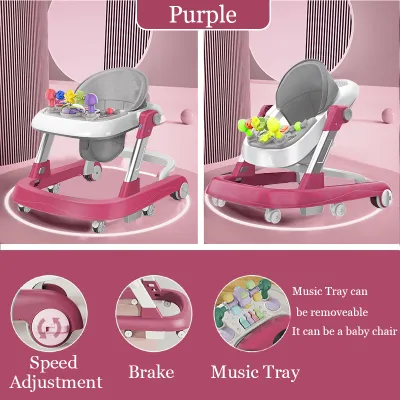
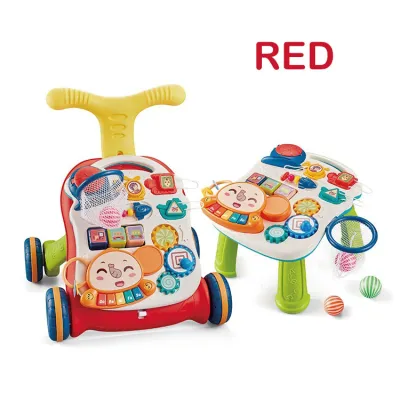
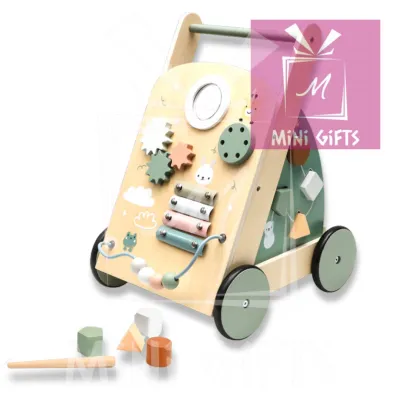
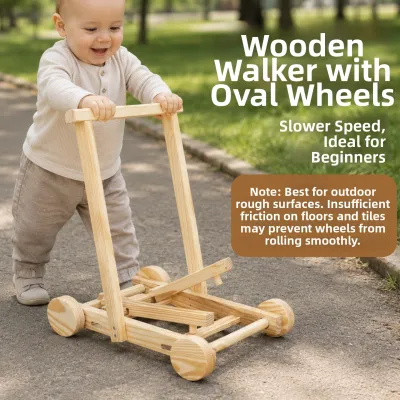
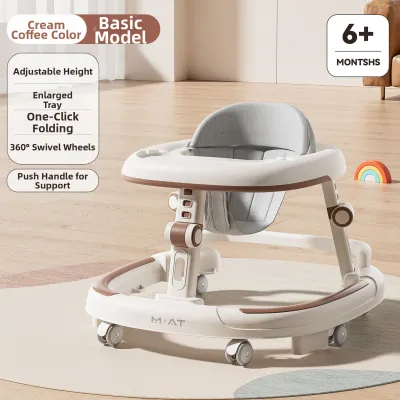
Prices are valid at publication and may change. Please refer to the product page for the latest price.
While modern engineering has introduced robust safety features to mitigate these mechanical hazards, no device is entirely self-safeguarding. Built-in brakes and wide frames are secondary lines of defense. They exist to buy precious seconds or reduce the severity of an impact, but they do not eliminate the absolute necessity of having a dedicated adult in the same room, keeping eyes on the child at all times.
Essential Physical Design Features to Inspect Before Buying
Before purchasing any baby walker, a hands-on inspection of its physical build is essential to ensure it meets basic safety expectations.

Base and Wheel Design
The base of the baby walker should be significantly wider than the top tray and frame. A broad, flared base lowers the unit’s center of gravity, making it much harder for an active baby to tip the walker over when leaning sideways or backwards. The base should also be heavy enough to resist tipping while remaining light enough for the baby to maneuver safely on flat surfaces. Inspect the wheels carefully; they should roll smoothly but offer enough resistance to prevent the walker from accelerating uncontrollably. High-quality models often feature multidirectional front wheels for steering, paired with unidirectional rear wheels that help maintain a straight, predictable path.
Braking and Stopping Mechanisms
One of the most critical safety innovations in modern baby walkers is the inclusion of automatic braking mechanisms or friction pads. These components are typically located on the underside of the walker’s base. When the walker moves over an edge, such as a step or a threshold, or when the wheels lose contact with flat ground, these pads immediately grip the floor to halt forward momentum. When inspecting a walker, look for thick, rubberized friction strips or spring-loaded brake blocks. Ensure these pads are securely attached and made of durable, non-slip materials that will not wear down rapidly after a few weeks of use on home flooring.
Seat and Harness Security
The seat of the walker must support the baby’s weight securely while keeping them in an upright, stable position. Look for a deep, well-padded seat bucket that prevents the baby from sliding out of the bottom or climbing over the sides. The seat fabric should be sturdy, with reinforced stitching at all load-bearing points. Additionally, check for an adjustable safety harness—ideally a three-point or five-point system—that keeps the child centered and restricts excessive leaning. The harness buckles should be easy for an adult to secure and adjust but completely inaccessible or too difficult for a child to undo.
Finger and Toe Clearance
Because baby walkers are designed to fold flat for storage, they contain numerous hinges, joints, and folding brackets. These moving parts present significant pinch hazards for tiny fingers and toes. Carefully examine the folding mechanisms to ensure they feature safety locks that prevent accidental collapse while the child is inside. There should be no open gaps, exposed springs, or sharp metal edges within the child’s reach. Run your fingers along the plastic seams and underside of the tray to check for rough edges or manufacturing defects that could scratch or cut sensitive skin.
How to Verify Safety Certifications and Compliance Labels
With many products sold through online marketplaces and global ecommerce platforms, parents must take active steps to verify that a baby walker complies with established safety standards.
Do not rely solely on product descriptions or promotional graphics on retail websites, as these claims can sometimes be inaccurate or misleading. Instead, look for official certification marks printed directly on the product’s physical tracking label, molded into the plastic frame, or detailed within the official user manual. Legitimate safety labels will reference specific, recognized standards, such as ASTM F977 (the standard consumer safety specification for infant walkers in the United States) or EN 1273 (the European standard for baby walking frames).
To ensure the certification is genuine, cross-reference the manufacturer’s name, model number, and certification claims with official safety databases or the manufacturer’s official website. In Singapore, consumer products are regulated to ensure they meet safety requirements. You can check the guidelines provided by the Consumer Product Safety Office (CPSO) under Enterprise Singapore to verify if the product category requires specific registration or meets local safety benchmarks.
If you find a walker that lacks clear certification labels, has misspelled safety warnings, or features labels that appear easily peeled off or tampered with, avoid purchasing it. A lack of transparent certification indicates that the product may not have undergone rigorous independent testing. In such cases, it is best to consult the retailer for official compliance documentation or choose an alternative model from a transparent, reputable manufacturer.
Safe Usage Boundaries and When to Stop Using the Walker
Even the safest, most certified baby walker can become hazardous if used outside its intended operational limits or in an unprepared environment.
Every manufacturer specifies strict weight and height limits, as well as developmental milestones, that dictate when a child must stop using the walker. Generally, walkers are designed for infants who can sit up unassisted but cannot yet walk independently. Once your baby can pull themselves up to a standing position, reaches the maximum weight limit (typically around 11 to 15 kilograms, though you must check your specific manual), or can touch the floor with their feet flat while their knees are bent, it is time to retire the walker. Continuing use past these milestones increases the risk of the child climbing out or tipping the unit over.
Before placing your baby in the walker, prepare the environment thoroughly. Block off all stairways, steps, and raised thresholds using secure, hardware-mounted safety gates; pressure-mounted gates may not withstand the force of a rolling walker. Secure or remove loose rugs, electrical cords, and low-lying obstacles that could catch the wheels and cause a tip-over. Ensure that all hazardous items, including hot drinks, cleaning supplies, sharp objects, and heavy decorations, are moved well out of reach of an elevated baby.
Supervision must be continuous and active. Never leave your child unattended in a walker, even for a moment to answer the door or grab a phone. You must remain in the same room, with an unobstructed view of the child. Finally, establish clear stop-use conditions. Inspect the walker weekly for signs of wear, such as degraded wheel grip, cracked plastic, loose stitching on the seat, or malfunctioning folding locks. If you notice any damage, or if the manufacturer issues a product recall, stop using the walker immediately.
Frequently Asked Questions (FAQ)
Are baby walkers banned or restricted in any countries?
Yes, baby walkers are subject to strict bans and regulations in several parts of the world. For instance, Canada implemented a complete ban on the sale, import, and advertisement of baby walkers in 2004 due to high rates of injuries associated with their use. Other regions, including the European Union and the United States, do not ban them outright but enforce stringent mandatory safety standards that manufacturers must meet before their products can be sold. In Singapore, consumer safety authorities monitor nursery furniture closely. Parents should consult the latest advisories from local consumer safety bodies to understand current import restrictions and safety compliance guidelines before purchasing a walker from overseas sellers.
Do baby walkers help babies learn to walk faster?
No, major pediatric associations and child development experts agree that baby walkers do not help infants learn to walk faster; in fact, they can actually delay independent walking. When seated in a walker, a baby is supported in an unnatural upright position, which prevents them from practicing essential weight-bearing, balance, and trunk control. It also encourages them to walk on their tiptoes, which can tighten the heel cords and alter natural muscle development in the legs. To support healthy gross motor development, experts recommend floor-based play, such as supervised tummy time, crawling, and pulling up on sturdy, stationary furniture, which naturally builds the core strength and coordination needed for walking.
Community discussion
Share your experience or ask a question. Comments are reviewed before publication.