
To choose a safe indoor swing for kids, you must verify recognized safety certifications, evaluate physical security features like multi-point harnesses and stable frames, and match the product strictly to your child’s age, weight, and developmental milestones. Ensuring a secure play environment requires active verification of safety labels, correct structural installation, and continuous caregiver supervision.
While an indoor swing for kids offers an engaging way to support sensory integration and active play inside the home, safety must remain the primary consideration. By systematically checking certification standards, structural designs, and installation requirements, you can create a secure play space that minimizes the risk of accidents or mechanical failures.
How to Verify Safety Certifications and Testing Standards
When evaluating an indoor swing for kids, the first line of defense is verifying legitimate safety certifications on the product packaging, labels, and user manuals. Parents must distinguish between a manufacturer’s self-declaration of safety and independent, third-party testing. A self-declaration is simply an unverified claim by the producer, whereas third-party testing means an accredited, independent laboratory has subjected the swing to rigorous physical and chemical stress tests to ensure it meets strict safety criteria.
Products mentioned in this guide
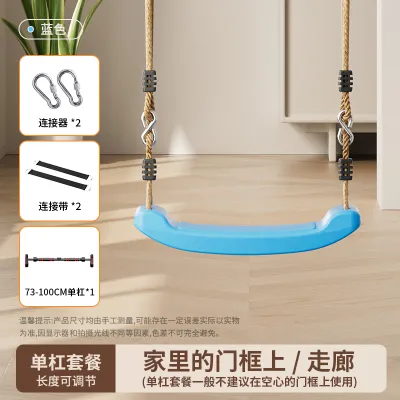
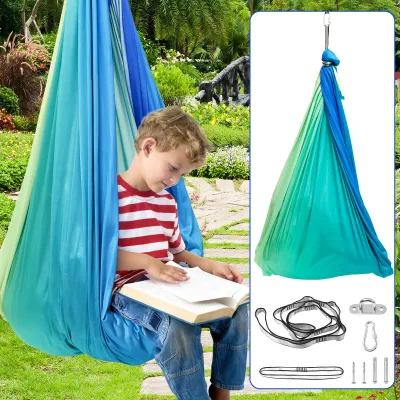
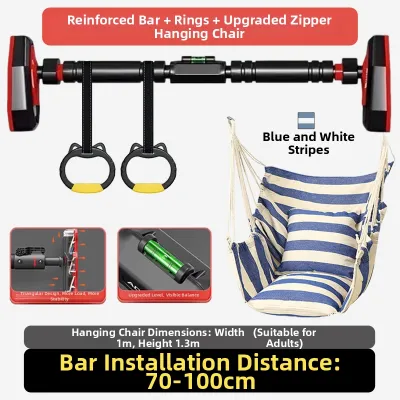
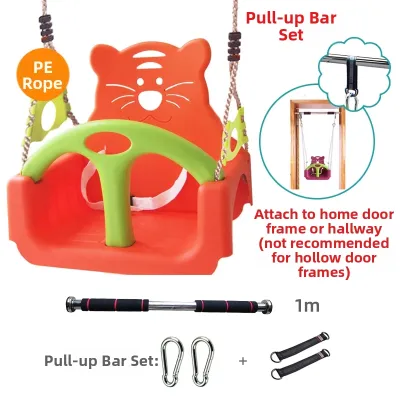
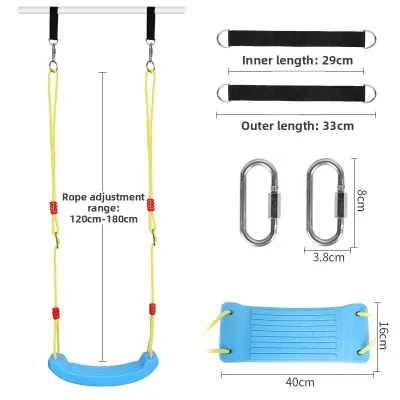

Prices are valid at publication and may change. Please refer to the product page for the latest price.
Always look for recognized international safety standards on the product label. For nursery equipment and toys, prominent standards include ASTM F2088 (specifically for infant swings) or ASTM F963 (for toy safety) in the United States, and EN 71 or EN 16232 in Europe. In Singapore, consumer products must comply with the Consumer Protection (Safety Requirements) Regulations. Look for clear indications that the product meets these international or local benchmarks, which are often listed on the manufacturer’s specification sheet.
It is critical to check for age-appropriate testing certifications. Infant swings have much stricter structural, angle, and restraint requirements than swings designed for older children. A certification for an older child’s swing does not guarantee safety for a baby who cannot yet sit up unassisted. Always verify the recommended age, developmental stage, weight range, and caregiver supervision requirements directly from the specific product documentation. Never assume a swing is suitable for your child based solely on the product name or marketing category.
Finally, remember that safety certifications apply only to specific product models, not to a brand as a whole. When reviewing safety documentation or online product listings, locate the exact model number of the swing you plan to purchase and match it to the model number listed on the test report or compliance certificate. If the model numbers do not align, or if the seller cannot provide verifiable certification documents, it is best to choose a different product.
Critical Design Features for Stability and Security
Evaluating the physical build of an indoor swing goes far beyond its aesthetic appeal or how well it matches your home decor. Because a swing is a dynamic product subjected to constant movement and shifting weight, its structural design must be robust enough to withstand repetitive forces.

Every physical design feature must be carefully matched to your child’s current developmental stage, weight, and mobility level. A swing that is perfectly safe for a stationary infant can become a tipping hazard if used by an active toddler who leans, twists, or attempts to climb out during motion.
Harness Systems and Fall Prevention
A secure restraint system is essential to prevent falls, which are among the most common causes of swing-related injuries. For infants and toddlers who are still developing trunk control, a 5-point harness—which secures the child at the shoulders, hips, and crotch—is highly recommended because it prevents the child from sliding out or climbing upward. For older children with strong core stability, a 3-point harness may be sufficient, but the system must still be verified for fit and security.
The harness must feature adjustable, secure buckles that require a level of finger strength or a dual-action mechanism that a young child cannot easily unfasten from the inside. Parents should test the buckle mechanism to ensure it locks with a clear, physical click and remains locked under tension.
Additionally, check the physical characteristics of the harness straps. The webbing must be wide enough to distribute pressure evenly and prevent the straps from cutting into or chafing the child’s skin. The crotch strap must also be adjustable to prevent the child from slipping downward beneath the tray or front bar, which poses a serious entrapment hazard.
Frame Stability and Base Construction
For freestanding indoor swings, the design of the frame and base determines whether the unit will remain upright during active use. Look for swings that feature a wide, weighted base or an established A-frame construction. These geometries distribute the dynamic forces of swinging over a larger surface area, significantly reducing the risk of the frame tipping over when the child swings vigorously.
To prevent the frame from shifting during use, ensure the base is equipped with high-friction, anti-slip rubber feet. On smooth indoor flooring common in Singapore, such as polished tile, vinyl, or hardwood, a swing without proper grip can slowly “walk” across the floor, leading to instability or collisions with nearby walls and furniture.
During your physical inspection, carefully examine all frame joints, folding mechanisms, and hinges. Ensure there are no open pinch points, sharp metal edges, or exposed hardware that could catch on clothing or pinch small fingers. Moving parts should be fully enclosed or designed with safety clearances that remain consistent throughout the swing’s motion.
Material Safety and Non-Toxic Finishes
Children frequently interact with their surroundings using their hands and mouths, making material safety a critical priority. Examine product labels to confirm that all plastic, wood, and metal parts are free from lead, phthalates, BPA, and other heavy metals. Painted wooden swings or plastic components must use non-toxic, food-grade finishes to ensure safety if a teething child decides to chew on the frame or safety bar.
Fabric seats must be breathable, durable, and easy to clean. In Singapore’s warm and humid climate, breathable fabrics help prevent heat rash and keep the child comfortable. The fabric portion should be easily removable and machine-washable to prevent the accumulation of sweat, spilled milk, mold, and bacteria.
Lastly, inspect the swing for any small, detachable decorative parts, toys, or loose cords. For children under three years old, any component that can be detached with moderate force poses a severe choking hazard. Avoid swings with hanging elements that do not meet strict toy safety standards or those with long cords that could present a strangulation risk.
Matching Weight Limits and Age Recommendations to Your Child
Maximum weight limits provided by manufacturers are strict structural boundaries calculated through engineering tests, not approximate guidelines. Exceeding these limits can cause metal fatigue, joint failure, or rope breakage. When calculating your child’s weight, always factor in the weight of any heavy clothing, diapers, or handheld toys they might bring into the swing with them.
Minimum age recommendations are closely tied to physical and cognitive developmental milestones rather than size alone. For example, a baby must possess complete head and neck control and be able to sit unassisted before transitioning to an upright swing. Placing an infant in a swing designed for older children can lead to airway obstruction if their head slumps forward, or physical injury if they slide through the harness.
Avoid the temptation to transition your child to a larger swing prematurely. Even if a child meets the minimum weight for an older kid’s swing, they may lack the cognitive ability or physical coordination to hold onto the ropes or sit securely without slipping. Always wait until your child meets both the physical milestones and the age minimums specified by the manufacturer.
Because children grow rapidly, it is easy to lose track of when they are approaching a swing’s physical limits. Keep the original product manual in a safe place, or take a high-resolution photo of the specification and warning labels on the underside of the swing. This allows you to quickly verify weight and height limits as your child grows, ensuring you retire or replace the swing before it becomes a safety hazard.
Safe Installation and Placement Guidelines for Indoor Use
Proper installation is just as critical as the physical safety features of the swing itself. If you are installing a hanging or ceiling-mounted indoor swing, never mount the hardware directly into drywall, plaster, or false ceilings. Standard ceiling boards cannot support the dynamic, pulling forces of a swinging child and will fail catastrophically. The mounting hardware must be anchored securely into a solid wood structural joist or a reinforced concrete ceiling slab.
Before performing any installation, check the manufacturer’s manual for the swing and the structural specifications of your ceiling. If instructions conflict, the ceiling structure is unidentified, or the installation method is not explicitly covered, stop immediately and consult a qualified structural engineer or professional contractor. Utilizing heavy-duty, load-tested expansion bolts and carabiners is essential to ensure the connection point can handle several times the child’s weight.
When positioning any indoor swing, establish a clear safety zone around the entire unit. There must be adequate clearance in the front, back, and sides to prevent the child from colliding with obstacles at the peak of their swing path. Measure the maximum swing amplitude and add a generous safety margin of at least two meters of clear space in the direction of travel.
Keep the swing well away from potential household hazards. This includes glass windows, ceiling fans, electrical outlets, sharp-edged furniture, and window blinds with looped cords, which present a severe strangulation risk. The swing area should be completely free of obstructions that a child could reach or strike during motion.
To mitigate the risk of accidental falls, place thick, impact-absorbing play mats directly underneath and around the swing area. While these mats provide excellent cushioning on hard indoor tile or concrete floors, they do not replace the need for proper harness use and active adult supervision. Always ensure the floor surface beneath the mat is clean and dry to prevent the mat itself from sliding.
Maintenance, Wear Signs, and When to Stop Using the Swing
Regular maintenance is essential to keep an indoor swing safe over its entire lifespan. Establish a weekly routine to inspect the swing for physical signs of wear. Check for fraying ropes, cracked plastic components, loose screws, squeaking joints, and worn-out harness webbing. Pay close attention to high-friction areas where ropes or chains connect to the mounting hardware, as these spots are highly susceptible to gradual wear.
Before assembling a second-hand swing or bringing a stored swing back into use, check local consumer protection portals and the manufacturer’s official website for product recalls. Recalls are frequently issued for design flaws that only become apparent after prolonged market use. Operating a recalled swing poses an unacceptable risk to your child’s safety.
Define clear stop-use conditions for your household. You must stop using the swing immediately if you observe any of the following issues:
- Missing, bent, or broken structural hardware
- Hairline cracks in load-bearing plastic parts
- Fraying or tearing in the harness straps or fabric seat
- The child exceeds the manufacturer's maximum weight or height limit
- The child attempts to climb out or shows signs of outgrowing the physical restraint system
Dynamic motion naturally loosens mechanical connections over time. Use a screwdriver or wrench to periodically tighten all bolts, screws, and mounting brackets. Do not over-tighten, as this can strip the threads or crack plastic housings, but ensure every connection is firm and wiggle-free before allowing your child to play.
Frequently Asked Questions (FAQ)
Is it safe to hang a kids' swing from a standard ceiling?
No, it is not safe to hang a swing from standard ceiling materials like plasterboard, drywall, or decorative false ceilings. These materials lack the structural strength to support the dynamic weight of a moving child and will collapse under tension. Any ceiling installation must target solid wood joists or concrete structural beams using load-tested hardware. If you are unsure of your home’s ceiling construction, consult a qualified contractor or structural engineer before proceeding.
Can I use an outdoor swing set inside the house?
You should avoid using an outdoor swing set indoors unless the manufacturer’s documentation explicitly states it is designed for dual-use. Outdoor swings typically feature wider bases, require much larger clearance zones, and lack floor-protecting rubber feet, which can damage indoor flooring and cause the frame to slide dangerously. Always select a dedicated indoor swing designed for the spatial constraints and flooring surfaces of a home.
Community discussion
Share your experience or ask a question. Comments are reviewed before publication.