
Selecting a breast pump bag is one of the most practical decisions an active breastfeeding mother will make. A high-quality bag does far more than simply carry your equipment; it serves as a mobile lactation station that protects delicate electronic pump motors, maintains the safety and freshness of expressed breast milk, and keeps sterile accessories organized. In Singapore’s warm and humid climate, these functions become even more critical, as high ambient temperatures accelerate bacterial growth in milk and increase the risk of condensation damaging sensitive electronics. Finding a bag that balances these technical requirements with your personal style and daily commute is key to a sustainable pumping journey.
Quick Guide: Core Features of a Functional Breast Pump Bag
For mothers balancing work, travel, and family life, efficiency is everything. A functional breast pump bag must address three primary challenges: equipment protection, thermal control, and hygienic organization. When evaluating your options, prioritize exact pump compatibility, dedicated insulated storage, organized accessory pockets, and wipeable, water-resistant materials.
The ideal choice depends heavily on your specific pump model, your transit method, and your workplace facilities. A mother commuting via public transport may prioritize a lightweight backpack, while someone with a dedicated office desk might prefer a structured professional tote. Regardless of your daily routine, ensuring your bag meets these core criteria will protect your investment in your pumping equipment and support your breastfeeding goals.
Products mentioned in this guide
![[ARIA] Breast Pump Pouch | Breast Pump Storage Bag | Breast Pump Bag | Food Storage Bag | Food Container](https://img.lazcdn.com/g/ff/kf/S58e14a65e2f14be1b6f1487bbb0b967cF.jpg_400x400q80.jpg_.webp)
Prices are valid at publication and may change. Please refer to the product page for the latest price.
Essential Specifications for Daily Pumping Needs
To ensure your breast pump bag performs reliably day after day, you must look closely at its structural specifications. A bag that is too small will strain seams and damage equipment, while one with poor insulation can compromise the safety of your expressed milk.

Size and Pump Compatibility
Relying on generic “universal fit” labels is a common pitfall when shopping for a breast pump bag. Pump motors vary significantly in dimensions, weight, and shape, ranging from heavy hospital-grade double electric pumps to compact, wearable hands-free units. Before purchasing any bag, physically measure your pump motor, including any protruding dials, power buttons, or cord ports.
Adequate clearance within the pump compartment is essential. If the compartment is too tight, the constant pressure can crush delicate silicone tubing, bend valves, or crack plastic connectors. These minor physical damages can lead to air leaks, which directly compromise the suction power of your pump and decrease your milk expression efficiency. Always check the internal dimensions of the bag’s dedicated pump pocket against the manufacturer’s specifications for your specific pump model to ensure a comfortable, secure fit.
Insulated Storage and Milk Safety
In Singapore’s tropical climate, maintaining a strict cold chain is non-negotiable for preserving the nutritional value and safety of expressed breast milk. A dedicated, well-insulated cooler compartment is a vital feature of any high-quality breast pump bag. This compartment must be physically separated from the pump motor and electronics to prevent condensation from seeping into the electrical components, which can cause short circuits and void your pump’s warranty.
When evaluating insulation, look for thick, high-density thermal walls and high-quality PEVA or foil linings rather than relying on vague, unverified claims about how many hours the bag can keep items cold. The cooling duration depends heavily on the quality and number of ice packs you use, as well as the external temperature. Additionally, ensure the cooling compartment features heat-sealed, leak-proof seams to contain any accidental milk spills or melting condensation, preventing liquid from ruining the rest of your bag’s contents.
Organization and Cross-Contamination Prevention
Maintaining strict hygiene is one of the greatest challenges of pumping on the go. To prevent cross-contamination, your breast pump bag must feature dedicated, easy-to-reach pockets designed specifically for clean flanges, bottles, and nursing pads. Keeping these sterile items completely separate from your personal belongings—such as keys, coins, mobile phones, and makeup—is essential for protecting your baby’s health.
Look for bags that offer structured compartments, zippered mesh pockets, or removable pouches. Removable wet bags or waterproof pouches are particularly useful for storing used, damp pump parts after a session, keeping them isolated until you can wash and sterilize them at home. As your pumping frequency and accessory needs change over time, adjustable dividers or modular compartments will provide the flexibility needed to repurpose the bag for standard diaper storage or personal use.
Material Durability and Cleaning
A breast pump bag is subjected to heavy daily wear, frequent spills, and varying environmental conditions. The exterior material should be highly durable and water-resistant, such as high-denier nylon, treated polyester, or premium vegan leather. These materials protect your expensive equipment from sudden tropical downpours during your commute and can be easily wiped clean with a damp cloth.
For the interior, opt for light-colored, wipeable linings. Dark interiors make it difficult to spot small parts, dust, or dried milk spills, whereas a light lining allows you to quickly identify areas that need cleaning. Avoid heavy, highly absorbent fabrics like untreated canvas or cotton, which can trap moisture, breed bacteria, and retain sour milk odors if a leak occurs. Always consult the manufacturer’s care instructions to verify how the bag should be cleaned and dried, ensuring the thermal lining is not exposed to harsh chemicals that could degrade its insulating properties.
Matching Bag Styles to Your Commute and Work Environment
The physical design of your bag should align with your daily lifestyle, transit habits, and professional setting. Choosing the right style ensures comfort and convenience throughout your breastfeeding journey.
Backpack-Style Bags for Hands-Free Transit
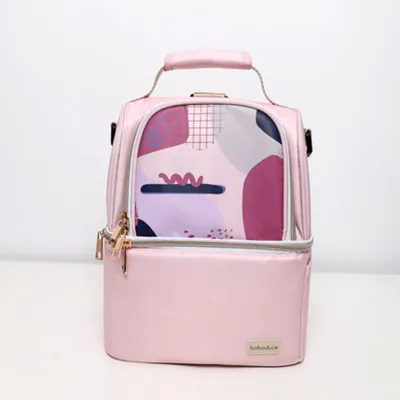
Backpack-style breast pump bags are highly favored by mothers who commute via public transport, walk long distances, or need to carry their baby simultaneously. By distributing the weight of the pump, ice packs, and accessories evenly across both shoulders, a backpack minimizes physical strain on your back and neck. This ergonomic design is particularly beneficial during long transits or when navigating crowded MRT stations.
The primary advantage of a backpack is hands-free mobility, allowing you to hold handrails, carry groceries, or push a stroller with ease. However, backpacks do have minor drawbacks, such as requiring you to take the bag off completely to access your gear, and they may project a more casual aesthetic that might not suit highly formal corporate environments. When choosing a backpack, look for wide, padded shoulder straps, a breathable mesh back panel to prevent sweating in warm weather, and a structured base that keeps the bag upright when placed on the floor.
Tote and Shoulder Bags for Professional Settings
For mothers working in corporate offices or professional environments, tote and shoulder bags offer a classic, discreet appearance. These designs often mimic high-end work bags or laptop totes, blending seamlessly into meetings and professional settings without explicitly advertising that you are carrying a breast pump.
Totes provide the convenience of wide, top-open access, making it incredibly easy to quickly retrieve or pack away your pump parts in an office lactation room or a private booth. The main trade-off is the physical strain of carrying a heavy, fully loaded bag on a single shoulder, which can lead to muscle fatigue over time. To mitigate this, select a tote with wide, padded shoulder straps, or look for convertible designs that include a detachable crossbody strap to help distribute weight more comfortably.
Compact Bags for Minimalist or Short-Trip Needs
If you use a lightweight manual pump, a single electric pump, or compact wearable pump shields, a full-sized backpack or tote may be unnecessarily bulky. Compact breast pump bags are designed for minimalist needs, short outings, or mothers who only need to pump once during a brief trip away from home.
These smaller bags are highly portable and can easily be tucked inside a larger standard work bag or carried independently. While they minimize bulk, they do have clear limitations regarding cooler capacity and accessory storage, making them less practical for full-day exclusive pumping or long workdays. If you opt for a compact design, ensure it still features sufficient padding to protect your portable pump motor from accidental drops or impacts.
Practical Design Details for Discretion and Convenience
Beyond the main compartments and materials, several subtle design details can significantly improve your daily pumping experience. Paying attention to these features will ensure your bag is both highly functional and convenient to use in real-world scenarios.
- Noise Dampening: Pumping in a quiet office or a shared restroom stall can sometimes feel uncomfortable due to the mechanical sound of the pump motor. Bags designed with thick, padded compartment walls can help muffle the vibration and noise of the motor, providing an extra layer of privacy and peace of mind.
- Cord Management and Power Access: Modern breast pump bags often feature built-in grommets, pass-through ports, or elastic cord organizers. These details allow you to connect your pump to an external power bank or wall outlet while keeping the motor safely protected inside the bag, preventing tangled cables and reducing wear on the charging ports.
- Privacy and Security: If you prefer discretion during your commute or at work, look for bags with smooth, quiet zippers that close completely, opaque storage pockets, and an exterior design that does not feature prominent branding related to baby gear. This ensures your personal pumping routine remains entirely private.
- Stability: A structured, flat bottom—ideally reinforced with protective metal or plastic feet—is a crucial feature. This structural stability allows the bag to stand upright on its own, preventing it from tipping over on narrow office shelves, restroom countertops, or lactation room tables, which protects your expressed milk and expensive equipment from accidental spills.
Pre-Purchase Checklist: Verifying Fit and Care Requirements
Before making your final decision, use this practical checklist to verify that your chosen breast pump bag will work seamlessly with your existing equipment and lifestyle:
- Measure Your Gear: Do not rely on generic compatibility lists. Physically measure your pump motor, assembled bottles, flanges, and the specific ice packs you plan to use. Compare these measurements directly against the bag's listed internal dimensions to ensure everything fits comfortably without forcing the zippers.
- Verify Care Instructions: Carefully check the product label or manufacturer guidelines to confirm how the bag should be cleaned. Ensure that the thermal lining and water-resistant exterior do not require specialized cleaning agents or dry cleaning, which can be inconvenient and costly over time.
- Review Warranty and Returns: Look for manufacturer warranties that cover common wear-and-tear issues, such as zipper failure, strap tearing, or thermal seam separation. Additionally, verify the retailer's return policy to ensure you can return or exchange the bag if your pump does not fit as expected upon arrival.
- Check Safety Guidelines: Always review the manufacturer warnings for both your pump and the bag. If you have any concerns regarding the safety of your milk storage or experience any discomfort during expression, consult a qualified lactation consultant or healthcare professional.
Frequently Asked Questions (FAQ)
Can I use a regular diaper bag or laptop bag instead?
While you can physically fit a pump into a standard diaper bag or laptop tote, these bags generally lack the specialized features required for safe, hygienic pumping. Regular bags typically do not have dedicated insulated compartments, which can lead to condensation building up and damaging your pump’s sensitive electronic motor. Furthermore, they lack the specific compartmentalization needed to keep sterile pump parts isolated from personal items, increasing the risk of cross-contamination.
How should I clean the interior if milk or condensation spills?
If a spill occurs, wipe the interior immediately with a clean, damp cloth and a mild, baby-safe soap. Avoid using harsh bleach, abrasive scrubbers, or strong chemical disinfectants, as these can degrade the waterproof coating or damage the thermal lining. After wiping, leave the bag fully open in a well-ventilated area to air-dry completely before closing it, which prevents the growth of mold, mildew, and unpleasant odors.
Is a built-in cooler compartment enough, or do I need a separate cooler bag?
A built-in insulated cooler compartment is generally sufficient for standard daily commutes, provided it has enough space to hold high-quality ice packs alongside your milk bottles. However, if you are an exclusive pumper with a high milk output, or if you need to store milk for extended periods without access to a workplace refrigerator, a separate, dedicated cooler bag may be necessary to accommodate the extra volume and maintain safe temperatures.

Community discussion
Share your experience or ask a question. Comments are reviewed before publication.