
Choosing the right baby hipseat carrier requires balancing your child’s physical development with your own physical comfort. A supportive hipseat carrier must distribute your baby’s weight evenly across your hips and shoulders while maintaining the baby’s natural leg and spine alignment. By focusing on specific structural elements, you can protect your baby’s developing joints and prevent caregiver fatigue during daily use.
Unlike traditional soft structured carriers, a hipseat carrier features a firm, shelf-like seat that supports the baby in a sitting position. This design alters how weight is distributed, making it highly effective for older infants but requiring careful attention to specific ergonomic features to ensure safety and comfort for both parent and child.
Ergonomic Features for Baby's Hip and Spine Positioning
To support your baby’s natural physical development, look for a carrier with a wide, padded seat base. The seat must support the baby’s thighs all the way to the knee joints, allowing the legs to spread naturally. This configuration promotes the recommended “M-shape” hip position, where the baby’s knees sit slightly higher than or level with their hips, reducing stress on developing hip joints.
Products mentioned in this guide
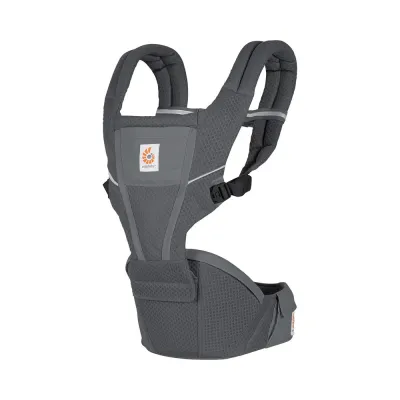

Prices are valid at publication and may change. Please refer to the product page for the latest price.
The back panel of the carrier should offer both height and width adjustability to accommodate your growing baby. A well-designed panel supports the natural “C-curve” of an infant’s spine without forcing it into an unnaturally straight position. The fabric must hold the baby snugly against your torso to prevent slumping, which can restrict their airway or place uneven pressure on their lower back.
For infants who are still developing upper body strength, adequate head and neck support is essential. Look for a carrier with a structured, adjustable neck collar or a supportive hood that can be secured when the baby falls asleep. This feature prevents the baby’s head from tilting too far backward or sideways, ensuring stable alignment during movement.
Design Elements That Reduce Parent Back and Shoulder Strain
The waistband is the foundation of a hipseat carrier’s weight-distribution system. A wide, highly structured waistband with thick, high-density foam padding is essential for long-term comfort. This design transfers a significant portion of the baby’s weight directly to your pelvis and hips, protecting your lower lumbar spine from carrying the entire load.

Shoulder strap configuration also plays a critical role in preventing muscle fatigue. Padded, breathable mesh straps help distribute the remaining weight across your upper back and shoulders without digging into your skin. Many carriers offer a choice between cross-back (X-back) straps, which distribute weight diagonally, and H-back straps secured with a chest clip; both styles should be easily adjustable to pull the baby’s center of gravity close to your body.
The angle of the solid seat insert affects your posture and balance. Look for a hipseat with a slight upward tilt, typically angled between 15 and 30 degrees toward your body. This tilt prevents the baby from sliding forward, which would otherwise force you to lean backward or arch your spine to maintain balance.
How to Verify Fit, Comfort, and Safety Before Use
Before using your carrier, perform a quick visual check of your baby’s positioning. Ensure their face is fully visible, their chin is off their chest, and their airways remain completely clear at all times. Verify that their knees are bent in a clear M-shape and that the back panel supports their spine comfortably without causing them to slump.
To assess your own comfort, wear the carrier around your home for a short trial period. If you feel pressure on your lower back or shoulders, adjust the waistband so it sits higher on your hips, closer to your natural waist. The baby should be positioned high enough on your chest that you can easily kiss the top of their head without straining.
Always consult the manufacturer’s guidelines for specific weight limits, age recommendations, and fitting instructions. Different brands design their hipseats for different developmental stages, and exceeding these limits can compromise the carrier’s structural integrity. Regularly inspect all buckles, zippers, and safety fasteners to ensure they are fully functional before every use.
Frequently Asked Questions (FAQ)
At what age or weight can a baby safely use a hipseat carrier?
Babies typically transition to a hipseat carrier once they have developed strong head, neck, and upper body control, which usually occurs around six months of age. Because the hipseat provides a firm, flat surface, the baby must be able to sit independently or maintain a stable upright posture with minimal support. Always verify the exact minimum weight and age thresholds specified in your specific carrier’s instruction manual, as structural designs and weight limits vary significantly between models.
Can a hipseat carrier cause back pain if used incorrectly?
Yes, improper fit or incorrect positioning can lead to caregiver back and shoulder strain. If the waistband is worn too loose or too low on the hips, the baby’s weight will pull the carrier forward, forcing the parent to arch their lower back to stay balanced. Ensure the waistband is fastened snugly around your waist before placing the baby on the seat. If you experience persistent back, hip, or shoulder pain despite adjusting the fit, stop using the carrier and consult a healthcare professional.
Community discussion
Share your experience or ask a question. Comments are reviewed before publication.