
Choosing between Ergobaby and BabyBjörn often comes down to how each brand approaches ergonomic design, hip support, and caregiver comfort. While both brands offer highly regarded carriers designed to promote healthy hip development, they utilize different adjustment mechanisms, seat structures, and fabric styles to achieve this. To determine which carrier is better for your baby’s hip health, you must evaluate how specific models support the natural “M-shape” positioning, how easily the seat width adjusts as your baby grows, and how well the carrier fits your own body.
Navigating the transition into parenthood involves making numerous decisions about baby gear, and few items are as essential as a reliable baby carrier. In urban environments where navigating public transport, escalators, and crowded shopping centers is a daily occurrence, a high-quality carrier offers unmatched mobility. However, because an infant’s skeletal system is rapidly developing, the carrier you choose must provide optimal physical support. Understanding the design philosophies of these two leading brands will help you make an informed decision that prioritizes your baby’s physiological needs.
Understanding Hip-Healthy Positioning in Baby Carriers
To evaluate any baby carrier’s design, you must first understand the baseline medical and ergonomic criteria for infant hip development. At birth, a baby’s hip joints consist largely of soft cartilage rather than hard bone. The femoral head—the ball at the top of the thigh bone—needs to sit securely and deeply within the acetabulum, which is the hip socket. If a baby’s legs are allowed to dangle straight down, the constant downward pull of gravity can stretch the joint capsule, potentially increasing the risk of hip dysplasia or joint instability.
Products mentioned in this guide
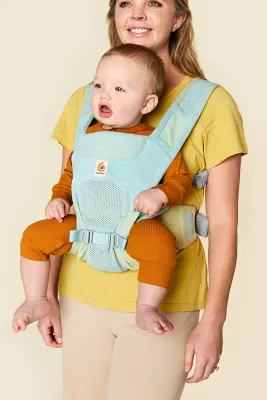
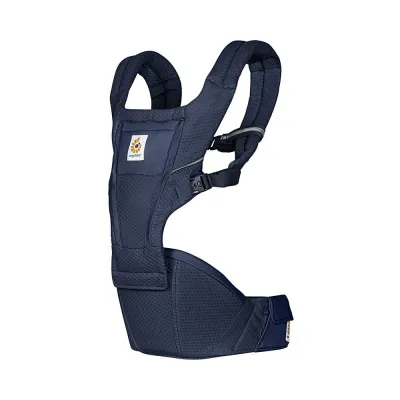
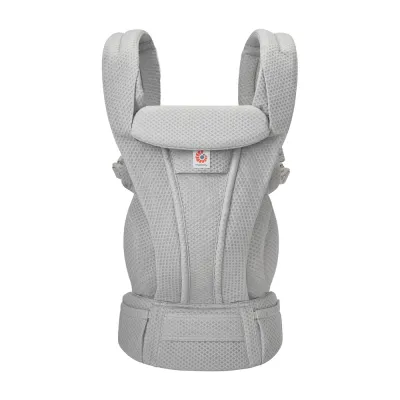
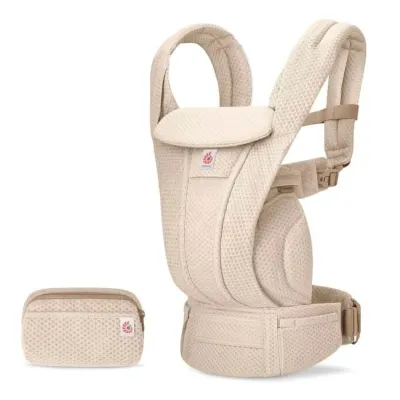
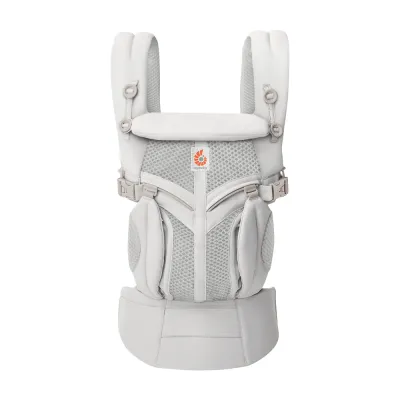
Prices are valid at publication and may change. Please refer to the product page for the latest price.
To prevent undue stress on these developing joints, pediatric orthopedists recommend carrying infants in the “M-shape” or “frog-leg” position. In this position, the baby’s hips are flexed, and their knees are spread wide, positioned slightly higher than or level with their bottom. This natural alignment allows the thigh bones to support the weight of the lower legs, taking the pressure off the hip joints and encouraging healthy socket development.
When shopping for a carrier, caregivers can use a simple checklist to verify hip-healthy claims. First, check for official recognition from the International Hip Dysplasia Institute (IHDI) on the manufacturer’s website or product tags, which indicates the product has been evaluated as “hip-healthy” when used as directed. Second, inspect the seat design to ensure the fabric supports the baby’s thighs all the way from knee to knee, rather than letting the legs hang straight down. Finally, verify that the seat width can be adjusted as the baby grows to maintain this knee-to-knee support across different developmental stages.
Ergobaby Carrier Design and Ergonomic Features
Ergobaby carriers are widely recognized for their structured, ergonomic bucket seats, which are engineered to naturally guide the baby into the recommended M-shape position. A key strength of Ergobaby’s design philosophy is its focus on seat width adjustability. In popular models like the Omni series, the seat width is customized using a system of internal velcro tabs, buttons, or sliders located along the inside of the waistband. This allows caregivers to incrementally widen the seat as the baby’s hip span increases, ensuring continuous knee-to-knee support from infancy through toddlerhood without forcing the legs into an unnaturally wide split.

Caregiver comfort is another central element of the Ergobaby design. These carriers typically feature robust lumbar support pads integrated into the waistband, which help distribute the baby’s weight evenly across the wearer’s hips and lower back. The shoulder straps are heavily padded and, on many models, can be crossed in the back to create a customized fit that reduces strain on the thoracic spine. This heavy-duty support system is particularly beneficial for longer carrying sessions or as the baby grows heavier.
Depending on the specific model you select, Ergobaby carriers offer up to four carrying positions: front inward-facing, front outward-facing, hip carry, and back carry. It is important to note that the suitability of these positions depends entirely on the exact model and your baby’s developmental stage. Caregivers must always consult the product manual to verify the minimum age, weight, and physical milestones required for each carrying position to ensure safety and proper ergonomic alignment.
BabyBjörn Carrier Design and Ergonomic Features
BabyBjörn has significantly evolved its carrier designs over the years, moving from early narrow-seat models to modern, highly ergonomic options like the BabyBjörn One, Move, and Harmony. A defining feature of many BabyBjörn carriers is the built-in infant seat design. This integrated system allows caregivers to use the carrier for newborns without needing a separate infant insert. By adjusting internal buckles or zippers, the carrier’s height and seat width can be tailored to fit a tiny newborn securely, simplifying the process for new parents.
To support healthy hip positioning, modern BabyBjörn models feature adjustable leg position settings. These are typically controlled by external zippers or sliding buckles located along the outer panel of the seat. Opening these zippers widens the seat to provide proper thigh support for older babies, while closing them accommodates the narrower hip span of a newborn. Additionally, BabyBjörn carriers are known for their sturdy, integrated head and neck support, which can be adjusted using external straps to keep a newborn’s head secure and stable.
BabyBjörn carriers generally offer front inward-facing, front outward-facing, and back carrying positions, depending on the model. Their entry-level models are often optimized for front-carrying during the first year, while premium models accommodate heavier weight limits and back carrying. A signature feature of the BabyBjörn design is the front-opening harness system, which allows caregivers to unbuckle the entire front panel to transfer a sleeping baby to a crib without disturbing them, making it highly practical for daily use.
Direct Comparison: Ergobaby vs BabyBjörn for Hip Health
When comparing Ergobaby and BabyBjörn, both brands offer excellent ergonomic support, but they achieve it through distinct design mechanisms. The table below highlights the key differences in how these carriers approach newborn readiness, seat adjustability, carrying positions, and caregiver fit.
| Feature | Ergobaby (e.g., Omni Series) | BabyBjörn (e.g., Carrier One / Harmony) |
|---|---|---|
| Newborn Readiness | Built-in adjustable seat (some older models require a separate insert; check manual) | Built-in adjustable seat height (no separate insert required) |
| Seat Width Adjustability | Internal velcro tabs, buttons, or sliders on the waistband | External zippers or sliding buckles on the seat panel |
| Carrying Positions | Up to 4 positions (Inward, Outward, Hip, Back) | Up to 3 or 4 positions (Inward, Outward, Back; hip carry generally not supported) |
| Caregiver Fit | Wide waistband with lumbar support pad; crossable shoulder straps | Structured back yoke or harness; front-buckling system for quick adjustments |
| Fabric Options | Cotton canvas, lightweight mesh, and sustainable fabrics | Soft jersey, woven cotton, and highly breathable 3D mesh |
These design differences present distinct trade-offs for parents. Ergobaby’s internal velcro and button adjustments allow for a highly customized, incremental seat width, which is excellent for maintaining a perfect M-shape as your baby grows. However, making these adjustments often requires taking the carrier off to reposition the velcro tabs. In contrast, BabyBjörn’s external zipper system is incredibly quick and intuitive to adjust on the fly, though it offers fewer incremental width settings compared to Ergobaby’s velcro system.
In warm, tropical climates, babywearing can quickly become uncomfortably hot for both the caregiver and the baby. When comparing these brands, opting for their specialized breathable fabrics—such as Ergobaby’s mesh variants or BabyBjörn’s 3D mesh—is essential for maintaining airflow and preventing heat rash. Always verify the specific model specifications on the brand’s official website, as features, fabric weights, and weight limits vary significantly between different product lines within each brand.
How to Choose the Right Carrier for Your Baby
To select the carrier that best fits your family’s lifestyle, consider a condition-based decision framework that balances your baby’s developmental needs with your personal comfort.
Choose Ergobaby if:
- You prioritize long-term carrying versatility and want the option of a hip carry position in addition to front and back carries.
- You prefer a highly structured lumbar support system that distributes weight heavily onto your hips, which is ideal for longer walks or hiking.
- You want a seat width that adjusts incrementally via internal tabs to grow precisely with your child's unique hip span.
Choose BabyBjörn if:
- You prefer a minimalist, streamlined design with built-in newborn support that does not require separate accessories.
- You value a quick, front-buckling harness system that is easy to put on and adjust without assistance, especially when sharing the carrier between multiple caregivers of different sizes.
- You primarily plan to use front-carrying positions (inward and outward) during your baby's first year.
Verify first if:
- Your baby has a diagnosed hip condition, joint instability, or a family history of hip dysplasia. In these cases, always consult a pediatric orthopedist or pediatrician before using any baby carrier.
- You are purchasing a secondhand carrier. Carefully inspect the fabric for wear, ensure all buckles click securely, check that no straps are frayed, and verify on official safety portals that the specific model has not been subject to any product recalls.
Frequently Asked Questions (FAQ)
Can a baby carrier cause hip dysplasia?
Properly designed, ergonomic baby carriers do not cause hip dysplasia. However, if a baby has an underlying, undiagnosed hip instability or mild dysplasia, using a carrier that holds the legs in an unhealthy position—such as letting the legs hang straight down with the knees together—can worsen the condition. To protect your baby’s hips, always ensure the carrier seat is wide enough to support the thighs from knee to knee, keeping the hips in the recommended M-shape. If you have any concerns about your baby’s hip development, consult a pediatrician for a professional evaluation.
When can my baby face outward in a carrier?
Babies should only be placed in the front outward-facing position once they have developed strong, consistent head and neck control, and their chin completely clears the top of the carrier panel. This developmental milestone typically occurs around 5 to 6 months of age. Caregivers must verify the specific weight and age minimums in their carrier’s instruction manual before attempting this position. Additionally, outward-facing carries should be limited to short intervals (approximately 15 to 20 minutes) to prevent overstimulation and reduce strain on the caregiver’s back. Never allow a baby to sleep in an outward-facing position, as their head can chin-tuck and compromise their airway; always turn them inward if they show signs of sleepiness.
Community discussion
Share your experience or ask a question. Comments are reviewed before publication.