
Choosing the right swim diaper for your baby in Singapore involves balancing two critical priorities: keeping pool water clean and minimizing your environmental footprint. In a tropical climate where swimming is a year-round activity, the sheer volume of disposable swim diapers ending up in landfills can quickly accumulate. Reusable swim diapers offer a sustainable alternative, but selecting one requires understanding how they function in water and how to evaluate their eco-friendly claims.
Unlike regular diapers, swim diapers are not designed to absorb liquids. Their primary job is to contain solid waste while allowing water to pass through, preventing the diaper from ballooning and dragging your baby down. To find a reusable option that performs reliably in Singapore’s public pools and private condominiums, you must look closely at material construction, fit adjustability, and local pool regulations.
Defining Eco-Friendly Performance and Containment Standards
To evaluate the true environmental impact of a reusable swim diaper, you must look beyond the “eco-friendly” label and examine the actual materials used. Many standard reusable swim diapers are made from virgin synthetic fabrics like polyester or nylon, which are derived from petrochemicals. While these materials are durable and water-resistant, they carry a high environmental footprint. Truly eco-friendly options often utilize recycled polyester (rPET) made from post-consumer plastic bottles, which diverts waste from landfills and reduces the demand for raw petroleum.
Products mentioned in this guide
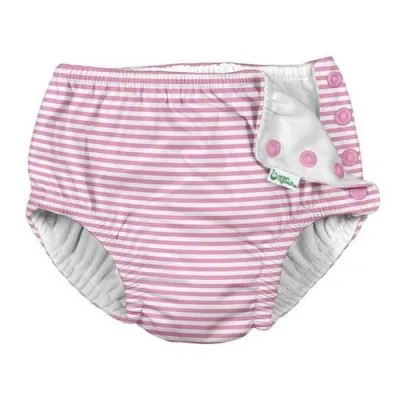
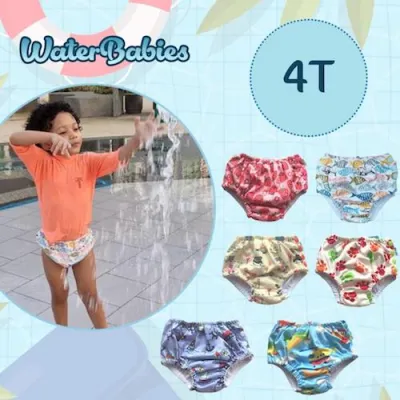
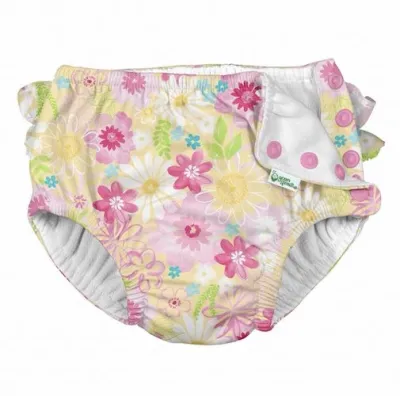
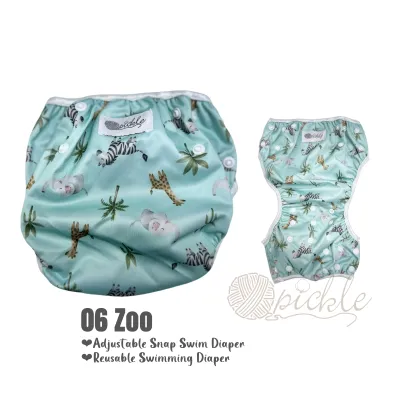
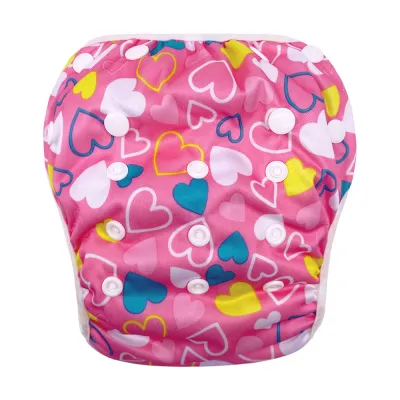
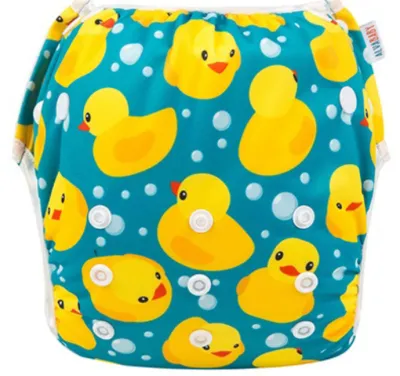
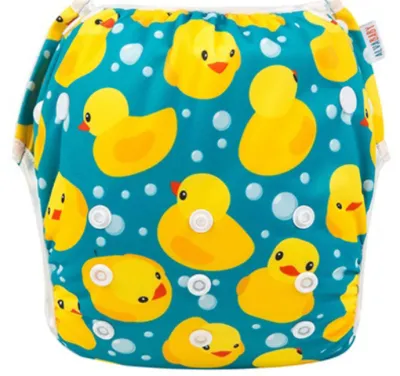
Prices are valid at publication and may change. Please refer to the product page for the latest price.
It is also important to understand the functional distinction between the outer and inner layers of a swim diaper. The outer layer is typically made of Polyurethane Laminate (PUL) or Thermoplastic Polyurethane (TPU), which provides a water-resistant barrier to help contain solids. The inner lining is usually a lightweight polyester mesh.
You might wonder why natural fibers like organic cotton or bamboo are rarely used in the core of swim diapers. The reason is functional: natural fibers are highly absorbent. If a swim diaper had an absorbent core, it would immediately soak up pool water, become extremely heavy, sag, and lose its ability to seal around your baby’s legs, creating a severe leak risk and a safety hazard.
Therefore, the environmental value of a swim diaper is not determined by its absorbency, but by its durability and total product lifespan. A high-quality reusable swim diaper should withstand dozens of wash cycles, exposure to chlorine, salt water, and intense tropical sunlight without losing its elasticity or waterproofing. By replacing hundreds of single-use disposable swim diapers over your child’s swimming years, a single durable reusable diaper significantly reduces waste, making product longevity the ultimate metric of sustainability.
Design Features That Prevent Leaks in the Water
Reliable containment in the water relies entirely on the physical design and fit of the swim diaper. The most critical structural elements to inspect are the elastic leg and waist gussets. These elastics must create a snug, continuous seal against your baby’s skin to ensure that solid waste cannot escape into the pool.

Look for double-gusset designs around the legs, which provide an extra barrier of protection. The elastics should be firm enough to prevent gaps when your baby kicks and splashes, yet soft enough not to leave deep, painful red welts on their delicate skin.
Another key design choice is the closure system, which typically comes down to adjustable snaps versus hook-and-loop fasteners. Snap closures, usually made of durable resin, are highly favored for swim diapers. They allow you to adjust the waist and rise settings independently, accommodating your baby’s growth over several months or even years.
Snaps are also highly resistant to the degrading effects of chlorine and salt water, and they are difficult for curious toddlers to undo themselves. Hook-and-loop fasteners offer infinite micro-adjustability for a custom fit, but they can collect lint, lose their grip over time, and snag other garments in the wash.
Inside the diaper, the mesh lining plays a vital role in containment. This lining should be soft against the skin but structurally tight enough to trap even loose stools. A high-quality interior mesh allows water to flow through freely while keeping solids securely contained until you can reach a changing station. When evaluating a diaper’s design, ensure the interior lining is securely sewn to the outer shell to prevent shifting or bunching during active water play.
Verifying Sustainability Claims and Avoiding Greenwashing
As eco-friendly baby products grow in popularity, so does the presence of greenwashing. To ensure you are investing in a genuinely sustainable product, you must learn to verify brand claims rather than relying on vague marketing buzzwords. Start by examining the brand’s official website for detailed transparency regarding their supply chain.
Reputable eco-friendly brands will clearly state where their materials are sourced, how their fabrics are manufactured, and whether their production facilities adhere to fair labor standards. Look for specific material breakdowns rather than generic terms like “natural” or “green.” For instance, a brand should specify the exact percentage of recycled content in their fabrics, such as “85% recycled post-consumer polyester.”
Additionally, consider the brand’s secondary environmental practices. Do they ship their products in plastic-free, compostable, or recycled packaging? Do they offer clear instructions on how to recycle or responsibly dispose of the diaper at the end of its useful life? A brand that considers the entire lifecycle of its product is far more likely to be genuinely committed to sustainability.
Be skeptical of brands that make grand environmental claims without providing supporting evidence or certifications that you can independently verify. If a brand claims its products are certified by third-party environmental or safety organizations, check for the specific certification numbers or look up the brand in the certifying body’s public database. If a brand uses eco-friendly imagery but offers zero concrete details about their manufacturing processes or material origins, it is advisable to look elsewhere.
Navigating Sizing, Fit, and Singapore Pool Policies
Achieving a secure fit is the single most important factor in preventing pool contamination. When purchasing a reusable swim diaper, never rely solely on your baby’s age or general clothing size. Instead, use a soft measuring tape to measure your baby’s waist and the thickest part of their thighs.
Compare these measurements directly against the brand’s specific sizing chart. Because babies grow at highly individual rates, a diaper that fits a six-month-old perfectly might be too tight or too loose on another baby of the exact same age.
Once you put the diaper on your baby, perform a quick fit check before entering the water. Gently slide your finger under the elastic bands at the waist and thighs; it should feel snug, like a comfortable pair of socks, with no visible gaps. If you can easily pull the elastic away from the skin, or if you see gaps when your baby bends their knees, the diaper is too large and will leak.
Conversely, if the diaper leaves deep, dark red marks that persist long after the diaper is removed, it is too small and could restrict circulation or cause chafing.
In Singapore, pool hygiene is taken very seriously to prevent waterborne illnesses. Public pools managed by ActiveSG, private condominium pools, and commercial swim schools all have strict water quality guidelines. Many of these facilities require infants and toddlers who are not yet toilet-trained to wear appropriate swim diapers.
Some swim schools and private pools enforce a strict double-diapering policy. This means your baby must wear a snug-fitting reusable swim diaper over another swim diaper (which can be a disposable or a lightweight reusable liner) to provide a secondary layer of defense against leaks. Always check the specific rules of your swimming venue before you arrive to ensure compliance.
Washing and Care Routines to Extend Product Life
Proper maintenance is essential to preserve the functionality of your reusable swim diaper and maximize its eco-friendly value. The care routine begins the moment your baby steps out of the pool. Immediately rinse the diaper in cool, clean tap water to remove chlorine, salt, and chemicals, which can slowly degrade the elastic fibers and waterproof laminate over time.
If a solid accident has occurred, shake the solids into a toilet and rinse the diaper thoroughly before storing it in a waterproof wet bag for the journey home.
When it is time to wash the diaper, consult the manufacturer’s care label for specific temperature limits. Generally, a warm machine wash (around 30°C to 40°C) with a standard, residue-free detergent is highly effective.
Avoid using fabric softeners, as they leave a waxy coating on the fibers that can reduce the diaper’s breathability and cause the fabric to repel water in a way that compromises containment. Similarly, avoid chlorine bleach, which can weaken the waterproof membrane and cause the elastics to snap or lose their stretch prematurely.
Drying your reusable swim diapers correctly is just as important as washing them. In Singapore’s warm, humid climate, air-drying is the most sustainable and fabric-safe option. Hang the diapers to dry in a well-ventilated, shaded outdoor area or indoors near a window.
While a brief period of sunlight can help sanitize fabrics, avoid leaving waterproof diapers in direct, intense tropical sunlight for extended periods, as extreme heat can melt or crack the laminate backing. Never use a high-heat tumble dryer or place the diapers directly on hot radiators, as this will permanently damage the waterproof barrier and ruin the elastics.
Frequently Asked Questions (FAQ)
Do reusable swim diapers hold urine?
No, reusable swim diapers do not hold urine. They are designed specifically to contain solid waste while allowing liquids to pass through. If a swim diaper were designed to absorb urine, it would also absorb the pool water, instantly becoming heavy, sagging, and pulling away from your baby’s body, which would cause solid waste to leak out. To prevent accidents before you reach the pool, keep your baby in a regular diaper and change them into their swim diaper just before they enter the water.
How many reusable swim diapers do I need for a holiday?
For a short holiday or a weekend staycation, having two to three reusable swim diapers is usually sufficient. This inventory allows your baby to wear one diaper while the second one is washing or drying. Because Singapore’s high humidity can extend air-drying times, having a third diaper on hand provides a reliable backup, ensuring you always have a clean, dry diaper ready for spontaneous pool sessions without needing to rely on a tumble dryer.

Community discussion
Share your experience or ask a question. Comments are reviewed before publication.