
Finding the right diaper for a growing toddler is a highly individual process, as no single brand serves as a universal solution. The ideal diaper for your child depends heavily on their unique body shape, daily activity level, skin sensitivity, and your household diapering budget. In Singapore’s humid climate, finding a balance between reliable containment and skin breathability becomes even more critical as toddlers transition into larger sizes like XXXL.
Quick Answer: Which Brand Should You Choose?
To help you make an efficient decision, the three major brands can be summarized by their primary design advantages:
- Drypers XXXL is generally favored by parents seeking a budget-conscious option for bulk buying, offering highly reliable everyday absorbency without a premium price tag.
- Pampers is typically preferred for highly active toddlers who require a slim, flexible fit that moves naturally with them during play and minimizes bulkiness under clothing.
- Huggies is frequently chosen for toddlers with chunkier thighs or rounder bellies, as well as those who need robust, heavy-duty leak protection and maximum absorbency for long overnight stretches.
Before committing to any bulk purchase, it is vital to remember that sizing terms like “XXXL” are not standardized across manufacturers. Always verify the specific weight range in kilograms printed on the diaper packaging, as one brand’s XXXL may fit quite differently from another’s.
Products mentioned in this guide
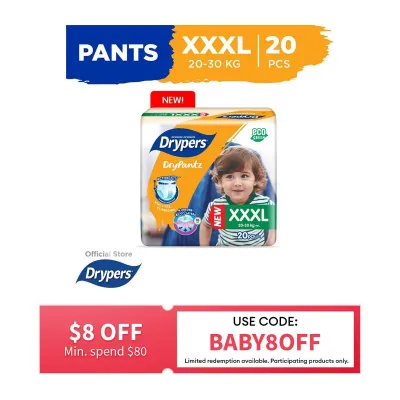
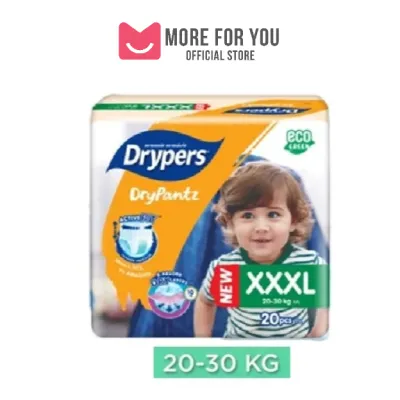
![[SUPER PROMO] Drypers Drypantz Baby Pants Diapers (XXXL20s/XXXXL18s) - Single Pack](https://img.lazcdn.com/g/p/3da60b91ce7a0e2f94155ed228073745.jpg_400x400q80.jpg_.webp)
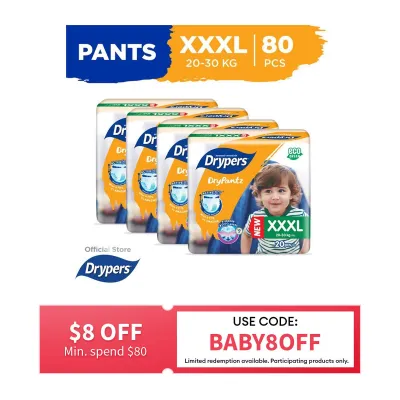
![[Best Deal] - Drypers DryPantz XXXL20 - [2/ 4/ 6/ 8]](https://img.lazcdn.com/g/p/e2ae0753e83edf505529950113f7cee4.png_400x400q80.png_.webp)
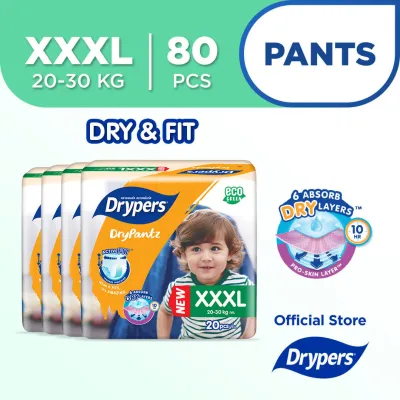
Prices are valid at publication and may change. Please refer to the product page for the latest price.
Understanding the Contenders: Sizing and Product Lines
Navigating the diaper aisle in Singapore requires a clear understanding of the specific product lines offered by each major brand. Drypers, Pampers, and Huggies each distribute distinct sub-lines in larger sizes, each engineered with different materials and structural designs. For instance, Drypers is widely known for its Wee Wee Dry (tape) and Drypantz (pants) lines, which focus on practical, everyday comfort. Pampers offers its Baby Dry line for reliable, cost-effective protection, alongside the Premium Care line, which emphasizes softness and a more tailored fit. Huggies provides Huggies Dry as its standard dependable option, while Huggies Platinum represents its premium tier, focusing on ultra-soft materials and advanced breathability.

Because sizing nomenclature is completely determined by the manufacturer, relying solely on letters like “XXL” or “XXXL” can lead to frequent leaks or uncomfortable binding. A toddler who comfortably wears an XXL in one brand might actually require an XXXL in another due to differences in the cut of the waistband and the elasticity of the leg gathers. Parents should strictly rely on the manufacturer’s stated weight range in kilograms, which is clearly displayed on the front of the packaging. This weight guideline serves as the most accurate starting point for ensuring a proper fit and preventing premature leaks.
However, a child’s weight is only one part of the sizing equation. If your toddler falls between two size ranges or is approaching the upper weight limit of their current size, you may need to size up early. This is especially true if your child has a rounder tummy, thicker thighs, or is experiencing frequent leaks despite the diaper not being visibly full. Sizing up provides a larger absorbency core and taller leak guards, which can quickly resolve recurring containment issues.
It is also important to note that manufacturers periodically update their product formulations, elastic materials, and specific sub-lines. The diaper design that worked well for an older sibling a few years ago may have been updated with new materials or a slightly different cut today. Regularly checking the current packaging details and product specifications ensures you are always aware of any design changes that could affect how the diaper fits your child.
Comparing Fit and Leak Protection for Active Toddlers
As toddlers grow more active, running, climbing, and tumbling, the physical structure of their diaper is put to the test. A diaper must remain securely in place while adapting to constant movement, which requires high-quality engineering in the waistband, tabs, and leg cuffs. Tape diapers rely on the strength and adjustability of their adhesive or hook-and-loop tabs, whereas pants formats rely on a 360-degree elastic waistband that mimics regular underwear. The height and tension of the double-layered leg cuffs, or leak guards, play a critical role in stopping liquid from escaping during sudden movements.
To ensure your toddler’s diaper is fitted correctly at home, you can use a simple three-step inspection routine:
- The Waistband Check: Slide two fingers easily inside the waistband at the front and back. The band should feel snug against the skin to prevent slipping, but it must not leave deep red indentations or restrict your toddler's breathing or movement.
- The Leg Cuff Check: Run your finger along the inside of the leg openings to ensure the outer ruffles are pulled completely outward and are not tucked inward. Tucked ruffles are one of the most common causes of immediate leg leaks.
- The Alignment Check: Ensure the diaper sits symmetrically on your child's body, with the front and back waistlines level. A diaper that is pulled too high in the front or sagging in the back is highly prone to leaking.
Active toddlers present a unique challenge because constant motion can cause a diaper to bunch up or shift downward. When shopping, look for packaging claims that highlight 360-degree stretchable waistbands, flexible side panels, or specific anti-slip designs engineered to keep the diaper secure during high-energy play. These features help the diaper maintain its shape and contact with the body, reducing the risk of gaps forming around the waist or thighs.
No single diaper brand can be declared entirely leak-proof, as leaks are almost always a symptom of an incorrect fit or mismatched size rather than a manufacturing defect. If you experience persistent leaks, work through a systematic troubleshooting process. First, verify if the diaper is saturated, which indicates a need for more frequent changes or a higher-capacity nighttime diaper. Next, check if the leg cuffs are properly flared out. Finally, consider if your toddler’s body shape has changed, as a sudden growth spurt can make a previously perfect size too small around the thighs, necessitating a transition to a larger size or a different brand’s cut.
Absorbency, Breathability, and Skin Comfort
Managing moisture and protecting delicate skin is a continuous priority for parents, particularly in Singapore’s hot, humid tropical climate. The way a diaper handles liquid differs significantly between daytime and nighttime use. During the day, toddlers are changed more frequently, meaning the primary focus should be on a slim, lightweight profile and high breathability to prevent heat rash. At night, however, a diaper must perform reliably for 10 to 12 hours. This requires a highly sophisticated absorbent core with lock-away technology that pulls wetness deep inside, keeping the surface dry against the skin to prevent diaper dermatitis.
To make daily monitoring easier, many modern large-size diapers include a built-in wetness indicator. This is usually a colored line on the outside of the diaper that changes shade when exposed to moisture. This feature allows caregivers to quickly assess whether a change is needed without having to unfasten tape tabs or pull down pants, which is especially helpful when out in public or during quiet rest times.
In high-humidity environments, breathability is essential for maintaining healthy skin. Parents should look for packaging claims that specify breathable back sheets, micro-pores, or advanced airflow channels. These designs allow hot air and moisture vapor to escape from inside the diaper while keeping liquid securely contained. Without adequate airflow, the skin remains damp, making it highly susceptible to irritation, chafing, and yeast infections.
For toddlers with highly sensitive skin, choosing the right diaper requires extra care. Carefully review the packaging and manufacturer documentation for details regarding added botanical lotions, synthetic fragrances, or specific dermatological testing claims. If your child is prone to eczema or contact allergies, it is highly recommended to purchase a single, small trial pack to conduct a home patch test before buying in bulk. If you observe persistent redness, swelling, or a severe rash, immediately stop using the diaper and consult a qualified pediatrician or medical professional for guidance.
Evaluating Value: Price Per Piece and Shopping Smart
When diapering a toddler in the larger size ranges, the cost can accumulate quickly, making a systematic approach to budgeting highly beneficial. Evaluating value based on the shelf price of a single pack can be highly misleading because different brands and sub-lines pack vastly different quantities into their bags. Instead, the most accurate way to compare costs is by calculating the price per piece. To do this, simply divide the total purchase price of the pack by the exact number of diapers contained inside. This unit price allows you to make direct, objective comparisons between budget and premium options.
In Singapore, parents have access to several distinct retail channels to compare prices and secure the best deals:
- Local Supermarkets: Convenient for quick purchases and regular weekly promotions, though stock of larger sizes like XXXL can sometimes be limited.
- Official Brand Stores on Reputable Ecommerce Platforms: Often offer the most competitive pricing when buying in bulk, especially during monthly shopping festivals or seasonal sales events.
- Warehouse Sales and Baby Fairs: Excellent opportunities to purchase cartons at wholesale rates, though this requires upfront transportation planning and physical storage space at home.
While searching for the lowest price, it is critical to buy exclusively from authorized retailers and official brand stores. Purchasing from unauthorized third-party sellers or unverified online listings carries a significant risk of acquiring counterfeit, expired, or improperly stored products. Counterfeit diapers may use substandard materials, unsafe chemical adhesives, or lack proper hygiene controls during manufacturing, presenting severe skin irritation and health hazards for your toddler.
When balancing your budget, remember that the cheapest diaper on the shelf is not always the most economical choice in the long run. A low-cost diaper that suffers from frequent leaks or tears easily can quickly become more expensive than a premium option. Each leak results in extra laundry cycles, ruined clothing, and the immediate waste of a diaper, which rapidly drives up your overall household expenses. Choosing a slightly more expensive, highly absorbent diaper that performs reliably can often save both money and time.
Final Verdict: How to Decide Based on Your Toddler's Needs
To make a confident final decision for your toddler, it is helpful to align each brand’s specific strengths with your family’s daily routine and your child’s physical build. By analyzing these factors systematically, you can select the diaper that offers the best balance of comfort, containment, and value.
You should consider choosing Drypers XXXL if your primary goal is practical, budget-friendly diapering for everyday use. This option is ideal for parents who practice frequent daytime changes and want to minimize their cost per piece. It is well-suited for toddlers with a standard, proportional build who fit comfortably within the brand’s standard weight guidelines.
You should consider choosing Pampers if your toddler is constantly on the move, running, climbing, and exploring. Its slim, highly flexible design is excellent for minimizing bulk under clothing, allowing for unrestricted movement. This brand is particularly beneficial if you prefer a lightweight diaper that closely follows the contours of an active child’s body.
You should consider choosing Huggies if your toddler has a sturdier build with chunkier thighs or a rounder tummy, as the brand’s generous cut and robust leg cuffs offer excellent coverage. It is also a premier choice if you require maximum absorbency for long overnight sleep stretches or if you frequently struggle with side leaks during naps.
Before making a final purchase, always verify if your toddler has any specific skin sensitivities that require fragrance-free options, check where they fall on the manufacturer’s weight chart, and decide whether a tape or pants format fits your current lifestyle better. Because every toddler’s body shape is entirely unique, purchasing a single trial pack is always the safest and most practical first step before committing to a full carton.
Frequently Asked Questions (FAQ)
How do I know if my toddler needs to size up from XXXL diapers?
Your toddler may need to transition to a larger size or a different brand’s cut if you observe clear physical indicators of a poor fit. These signs include deep, persistent red marks around their waist or thighs, frequent leaks occurring around the leg cuffs even when the diaper is not fully saturated, or the waistband sitting significantly below their belly button. Additionally, if the diaper looks extremely tight, stretched, or difficult to fasten securely, it is time to size up. Always remember that weight guidelines on the packaging are general recommendations, and a child’s unique body shape may require a larger size early.
Are pull-up pants better than tape diapers for toddlers in XXXL sizes?
Pull-up pants are generally highly convenient for active, standing toddlers who resist lying down on a changing mat, as they can be slipped on quickly while the child is standing. They also assist with early potty training by allowing toddlers to practice pulling their own underwear up and down. Conversely, tape diapers provide a highly customizable and adjustable fit around the waist and legs, which can be particularly beneficial for preventing nighttime leaks or for toddlers with highly specific body proportions. Parents should verify if their preferred brand offers both formats in the XXXL size range, as retail availability can vary.
Community discussion
Share your experience or ask a question. Comments are reviewed before publication.