
When setting up your baby’s nursery, selecting a toy storage cabinet is about more than matching the aesthetic of the room. A nursery is a dynamic environment where a crawling baby or an active toddler will eventually test the limits of every piece of furniture. Before purchasing any toy storage cabinet, you must verify that it possesses critical safety features designed to prevent tip-overs, chemical exposure, pinch injuries, and entrapment.
While a storage unit might look sturdy on a showroom floor, its performance changes when subjected to the daily physical actions of a growing child. Knowing what structural, chemical, and mechanical features to look for allows you to make an informed decision that protects your child while keeping their play area organized.
Quick Safety Checklist for Toy Storage
Before committing to a purchase, use this quick checklist to evaluate the safety profile of any nursery toy storage cabinet:
Products mentioned in this guide
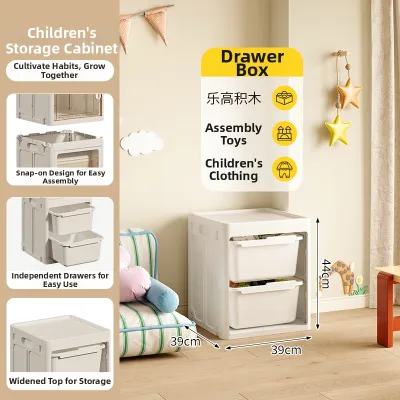
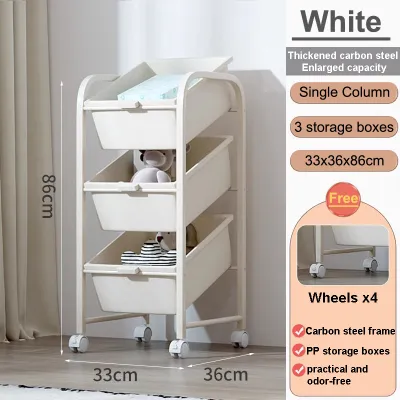
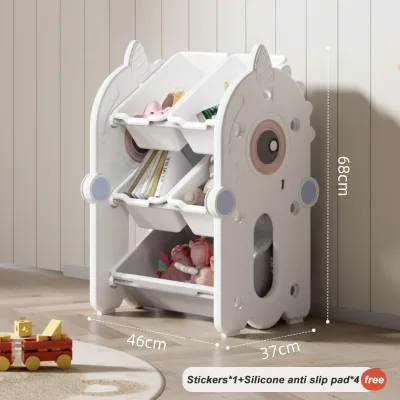
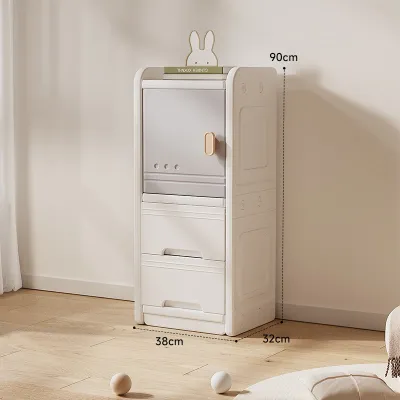
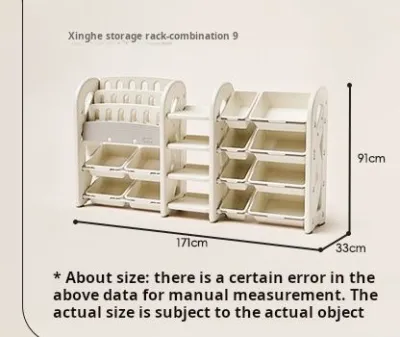
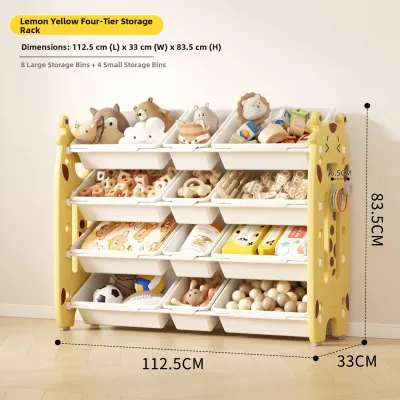
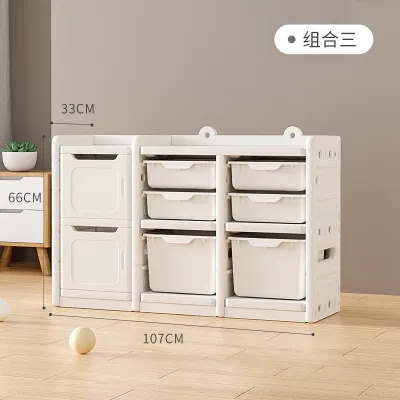
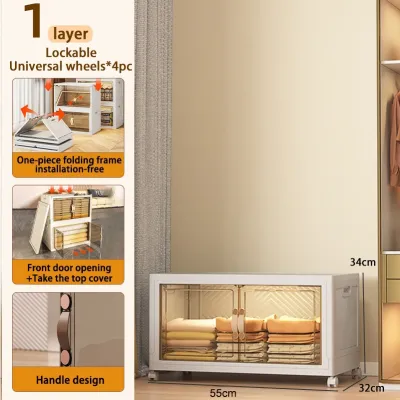
Prices are valid at publication and may change. Please refer to the product page for the latest price.
- Wall Anchors (Anti-Tip Kits): Essential hardware that secures the cabinet to the wall to prevent accidental tip-overs when a child climbs or pulls on drawers.
- Rounded Corners and Edges: Smooth, curved profiles that minimize the risk of severe impact injuries if your baby bumps or falls against the unit.
- Certified Non-Toxic Finishes: Finishes that are verified to be free from harmful heavy metals, formaldehyde, and high levels of volatile organic compounds (VOCs).
- Soft-Close Hinges or Lid-Free Designs: Mechanisms that prevent heavy doors or lids from slamming onto small hands, or open-bin configurations that eliminate lids entirely.
- Secure, Non-Removable Hardware: Knobs, pulls, and screws that are tightly fastened from the inside so they cannot be detached and become choking hazards.
Ensuring Structural Stability and Anti-Tip Protection
A toy storage cabinet must have a low center of gravity and a wide, stable base. When drawers are pulled out or bins are loaded unevenly, a top-heavy unit can easily tip forward. Check the physical dimensions and weight distribution; units with heavier bottom sections or wider bases are inherently more stable.

Anti-tip hardware is a non-negotiable safety component for any nursery cabinet, regardless of its height. Toddlers frequently use open drawers, shelves, or decorative elements as steps to climb up and reach toys on higher levels. An unsecured cabinet can easily fall forward under their weight, leading to severe crush injuries. Always verify if the manufacturer includes an anti-tip kit—such as heavy-duty straps, metal brackets, or wall anchors—in the product packaging.
In Singapore, nursery setup requires specific attention to wall construction. Most HDB flats and condominiums feature internal walls made of reinforced concrete or solid brick, rather than the drywall common in Western countries. Standard plastic drywall anchors included in imported furniture kits will not hold securely in concrete. You must purchase appropriate masonry plugs, such as nylon expansion plugs, and use a rotary hammer drill to secure the anti-tip brackets. If you are unsure of your wall type or lack the necessary tools, consult a professional handyman to ensure a secure installation.
Furthermore, consider the durability of the anchoring materials in a tropical climate. High humidity can cause certain nylon fabric straps to degrade or lose elasticity over time. Opting for metal brackets or steel cable anti-tip kits provides a more robust, long-term anchoring solution that withstands environmental wear.
Verifying Material Safety and Non-Toxic Finishes
Nursery furniture materials directly affect the indoor air quality of your baby’s room. Many budget-friendly toy storage cabinets are constructed from engineered wood, such as medium-density fibreboard (MDF) or particleboard. These materials are manufactured using chemical adhesives that can off-gas formaldehyde, a known respiratory irritant. If you choose engineered wood, ensure the product is labeled as compliant with low-formaldehyde emission standards, such as California Air Resources Board (CARB) Phase 2 or TSCA Title VI.
In Singapore’s warm and humid climate, high indoor humidity levels can cause low-grade engineered wood to absorb moisture, swell, and weaken over time. This structural degradation can cause screws to loosen, directly compromising the integrity of joints and anti-tip brackets. If you choose engineered wood, ensure it is high-density and properly sealed on all sides to resist moisture intrusion.
Solid wood is generally a safer, more durable alternative, but it must still be finished with non-toxic coatings. Babies often explore their environment with their mouths, especially during teething phases, making safe finishes critical. Check product labels for low-VOC (volatile organic compounds) or zero-VOC paints and water-based stains.
Do not rely on unregulated marketing terms like “eco-friendly,” “natural,” or “baby-safe” without verification. Instead, look for independent, reputable certifications on the manufacturer’s website or product tags. Common international standards to look for include Greenguard Gold, which tests for low chemical emissions, and EN71-3, the European safety standard for toy safety that regulates heavy metal migration in finishes.
Checking Design Details: Edges, Hinges, and Hardware
Beyond structural integrity and materials, the physical construction details of a toy storage cabinet determine how safe it is for daily use. Inspecting the moving parts, corners, and hardware can help you identify potential hazards before the furniture enters your home.
Rounded Edges and Corners
Active babies and toddlers are prone to losing their balance as they learn to sit, crawl, and walk. A sharp, 90-degree corner on a wooden cabinet can cause severe cuts or bruising during a fall. Look for cabinets designed with soft, rounded edges and chamfered corners that distribute impact force more safely. If you are shopping in-store, run your hand along the edges to check for rough spots or sharp angles. For online purchases, zoom in on product photos and read customer reviews to verify the smoothness of the finish.
Safe Hinges and Lid Supports
Toy chests with heavy, lifting lids pose a significant risk of head, neck, and hand injuries if the lid slams shut unexpectedly. If you choose a storage cabinet with a lid, it must be equipped with safety lid supports or soft-close tension hinges that hold the lid open at any angle and prevent it from dropping under its own weight. Alternatively, consider lid-less designs, open cubbies, or lightweight fabric storage bins. These options are inherently safer for young babies because they eliminate the risk of heavy impact entirely.
Secure Hardware and Choking Hazards
Toddlers are remarkably adept at unscrewing loose fittings or pulling off decorative elements. Inspect all knobs, drawer pulls, and decorative hardware to ensure they are securely fastened from the inside of the cabinet. Avoid cabinets with small, glued-on decorative pieces or fragile plastic components that could snap off. Ensure all assembly screws, shelf support pins, and dowels fit tightly and cannot be easily removed by curious little fingers.
Preventing Ventilation and Entrapment Risks
The risk of entrapment is a serious, often overlooked danger associated with large, enclosed storage units. Curious toddlers may view a large cabinet compartment as a hiding spot or a play tunnel, climbing inside and accidentally shutting themselves in. If a cabinet has solid doors that latch or close tightly, it must feature adequate ventilation. Look for units with open back panels, built-in ventilation slots, or breathable backing materials to ensure a continuous supply of fresh air if a child becomes trapped inside.
Pinch points are another common hazard in moving furniture parts. Gaps between doors and the cabinet frame, or between drawers and the main unit, can easily trap and crush tiny fingers. Look for cabinet designs that incorporate finger-guard clearances—gaps wide enough that fingers cannot be pinched—or soft-close dampers that slow down the closing action. Sliding doors should have built-in stops to prevent them from slamming against the side frames where a child’s hand might be resting.
Reading Safety Labels and Manufacturer Instructions
Before finalizing your purchase, carefully review the manufacturer’s official documentation. Look for explicit age recommendations, maximum weight limits, and load capacities for individual shelves or drawers. A cabinet designed for older children may not have the same stability or material safety standards required for an infant’s nursery.
Cross-reference any appealing marketing claims with the actual warning labels and instruction manuals. If a product description claims to be “completely tip-proof” but the manual insists on wall anchoring, always follow the manual’s safety instructions.
During assembly, if you find that the instructions are unclear, parts are missing, or the pre-drilled holes do not align correctly, stop immediately. Do not attempt to modify the physical design of the cabinet or skip critical assembly steps. Contact the manufacturer’s customer service or return the product, as improper assembly can compromise the structural safety of the entire unit.
Frequently Asked Questions (FAQ)
Are open shelving units safer than cabinets with doors for a nursery?
Both styles have distinct safety considerations. Open shelving units eliminate the risk of finger pinching and entrapment but present a higher risk of toys falling off the shelves if a child pulls on them. Cabinets with doors conceal clutter but introduce pinch and entrapment risks. Regardless of the style, both types of furniture require secure anti-tip wall anchoring to be safe for a nursery.
Can I use a regular living room storage cabinet in the nursery?
You can use standard household furniture in a nursery, provided it meets all the safety criteria outlined in this guide. You must verify that the finish is non-toxic, the unit is securely anchored to the wall, all sharp corners are cushioned or rounded, and there are no small, detachable parts. However, nursery-specific furniture is often preferable as these safety features are integrated into the design by default.
How often should I check the anti-tip anchors?
You should perform a visual and physical check of the anti-tip anchors at least once every six months. Inspect the straps or brackets to ensure they have not become loose, frayed, or damaged. Pay close attention if you have recently moved the furniture to clean behind it, if the wall material shows signs of cracking or wear, or as your child grows more active and begins pulling on the unit with greater force.
Community discussion
Share your experience or ask a question. Comments are reviewed before publication.