
When setting up your baby’s nursery, creating a beautiful, cozy, and comfortable space is often a top priority. However, when it comes to crib bumpers, pediatric health authorities and consumer safety organizations worldwide offer clear, unequivocal advice: crib bumpers are not safe for infant sleep. While these padded accessories remain widely available and can look highly appealing in a beautifully styled nursery, they pose serious, preventable risks to your baby’s breathing and physical safety.
Many parents consider buying bumpers to prevent their babies from bumping their heads against the hard wooden slats of the crib or getting their limbs caught. While these concerns are understandable, the actual risks associated with using bumpers far outweigh the minor, temporary discomfort of a bumped limb. Understanding the physical hazards of these products and learning how to set up a safe sleep environment will help you make the best choices for your child’s nursery.
Understanding the Risks: Suffocation, Entrapment, and SIDS
To understand why pediatricians strongly advise against crib bumpers, it helps to look at the physical design of these products. Crib bumpers are thick, padded fabric panels that tie or fasten to the inside of a crib’s slats. Because infants lack the head control, neck strength, and motor skills to pull themselves away from obstructions, rolling face-first into a soft, plush bumper can easily block their nose and mouth. This physical obstruction can lead to suffocation or rebreathing, a dangerous state where the baby breathes in their own exhaled carbon dioxide, reducing their oxygen levels.
Products mentioned in this guide
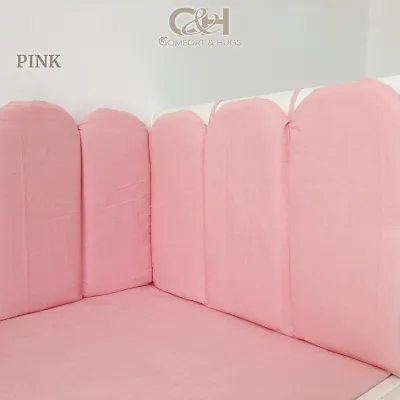
Prices are valid at publication and may change. Please refer to the product page for the latest price.
Another major hazard is physical entrapment. As babies begin to wiggle, roll, and explore their sleep space, they can easily become wedged between the bumper, the crib mattress, and the wooden slats. If a baby’s head or neck becomes trapped in these tight gaps, it can restrict their airway and lead to positional asphyxia. This risk is particularly high if the bumper is not perfectly secured or if it begins to sag over time, creating deep pockets where a baby can slip and become stuck.
General pediatric guidelines emphasize a direct relationship between soft bedding in the sleep environment and an increased risk of Sudden Infant Death Syndrome (SIDS). A bare, firm sleep surface is widely recognized as the single most effective way to reduce SIDS risks. Introducing soft, pillowy items like bumpers, heavy quilts, and stuffed toys into the crib disrupts this safe environment by trapping heat, restricting fresh airflow, and creating unnecessary physical hazards that a sleeping infant cannot navigate.
Navigating Safety Standards and Product Labels
When shopping for nursery items, parents often assume that if a product is on store shelves or available on online marketplaces, it must be safe. However, regulatory landscapes vary significantly across different regions. While some countries have implemented strict bans on the sale of traditional padded crib bumpers, these products are still manufactured and sold globally. This regulatory gap means parents must take an active role in verifying safety claims and reading product labels carefully.

When evaluating nursery accessories, always read the product labels for age restrictions, safety warnings, and material composition. Be highly skeptical of marketing buzzwords such as “safety-tested,” “pediatrician-approved,” or “fully breathable.” These terms are often self-applied by manufacturers and do not necessarily mean the product has undergone rigorous, independent safety testing for infant sleep environments. Look closely at the packaging to see if the manufacturer explicitly warns against overnight use or advises removing the product once the baby reaches a certain developmental milestone, such as rolling over.
It is also essential to check for recognized safety certification marks on nursery furniture and accessories before making a purchase. Look for standards such as the European Standard (EN) or the American Society for Testing and Materials (ASTM) certifications on your crib and mattress. However, keep in mind that a certification on a crib does not extend to aftermarket accessories like bumpers. Even if a bumper claims to fit a certified crib, the addition of the soft padding itself compromises the safety of the certified sleep space.
Creating a Safe Sleep Environment: Alternatives to Bumpers
Fortunately, you can easily address the common concerns that lead parents to buy bumpers without introducing unnecessary risks into the crib. If you are worried about your baby feeling cold during the night, especially in air-conditioned nurseries, wearable blankets or sleep sacks are an excellent alternative. These garments keep your baby warm and cozy throughout the night without the risk of loose fabric covering their face or obstructing their breathing. When choosing a sleep sack, select a lightweight option with an appropriate thermal overall grade (TOG) rating suitable for your nursery’s temperature.
To prevent your baby’s limbs from getting caught between the crib slats, focus on ensuring a proper, snug mattress fit rather than covering the slats with padding. There should be no significant gaps between the edges of the mattress and the crib frame. A simple way to verify this is the two-finger test: if you can fit more than two fingers between the mattress and the crib sides, the mattress is too small for the crib, creating an entrapment hazard. Replacing an ill-fitting mattress with one that fits snugly is a much safer solution than using bumpers to fill the gaps.
Ultimately, the safest sleep environment for an infant is a completely bare crib. This means the crib should contain only a firm, flat mattress covered by a tight-fitting sheet. Avoid placing pillows, quilts, sheepskins, stuffed animals, or decorative cushions in the crib. While a bare crib might look sparse to adult eyes, it provides the clean, unobstructed airflow and secure surface that your baby needs to sleep safely during their first year of life.
Action Plan: What to Do If You Already Own a Crib Bumper
If you have already installed a crib bumper in your baby’s nursery, or if you received one as a beautiful gift, the safest and most immediate step you can take is to remove it. Untie or unfasten all the panels, strings, and fasteners from the crib slats and take them out of the sleep space entirely. Removing these items immediately eliminates the risks of suffocation, entrapment, and strangulation from loose ties.
Once the bumper is removed, take a few minutes to inspect the crib itself to ensure the bare environment is secure. Check that the crib slats are spaced no more than 6 centimeters apart—roughly the width of a standard soda can. This spacing is designed to prevent a baby’s head from slipping through the slats. Additionally, verify that all screws, bolts, and brackets on the crib are tight and secure, and that the mattress platform is set to the correct height for your baby’s current developmental stage.
If you are hesitant to throw away a beautifully designed or expensive bumper, you can easily repurpose it for non-sleep use. The padded panels can make excellent wall cushioning in a playpen, or they can be laid out on the floor to provide extra padding during supervised tummy time. You can also store the bumper safely away until your child transitions to a toddler bed, where it can be used as a decorative element or a soft wall barrier, well past the age where suffocation and SIDS are a primary concern.
Frequently Asked Questions (FAQ)
Are mesh crib liners safer than padded bumpers?
Mesh crib liners are often marketed as a safer, highly breathable alternative to traditional padded bumpers because they allow air to flow more freely. While they do reduce the risk of suffocation, they are still not recommended by major pediatric safety organizations. Mesh liners can still pose entanglement risks if the ties or fasteners come loose. Furthermore, as your baby grows and begins to pull themselves up, they can step on the mesh liner, using it as a foothold to climb out of the crib, which increases the risk of dangerous falls.
At what age is it safe to introduce soft bedding to a crib?
Pediatric guidelines generally recommend keeping the sleep environment completely bare of soft bedding, including pillows, blankets, and bumpers, until your baby is at least twelve months old. By this age, infants have developed the physical strength, coordination, and head control necessary to roll over, push objects away from their faces, and clear their own airways if they become obstructed. However, many parents choose to maintain a minimalist crib environment until their child transitions to a toddler bed, as loose bedding is not strictly necessary for comfort and a bare crib remains the simplest way to ensure a safe night’s sleep.
Community discussion
Share your experience or ask a question. Comments are reviewed before publication.