
Feeding a newborn is a deeply rewarding experience, but the physical demands of holding a baby for multiple hours every day can quickly take a toll on your body. Many new parents in Singapore experience muscle strain in their neck, shoulders, and lower back due to prolonged, hunched feeding postures. Choosing a high-quality breast feed pillow can significantly alleviate this physical stress by elevating your baby to the correct height and supporting your arms. However, because every parent’s body shape and feeding routine are unique, there is no single brand or model that works perfectly for everyone. To find the most comfortable and supportive option, you must compare how different pillow structures, firmness levels, and fabric compositions perform in real-world scenarios.
Quick Answer: Which Nursing Pillow Design Fits Your Feeding Routine?
To narrow down your choices among the popular brands available in Singapore, it helps to match the pillow’s structural design with your primary feeding goals and lifestyle. Use this quick decision framework to guide your selection:
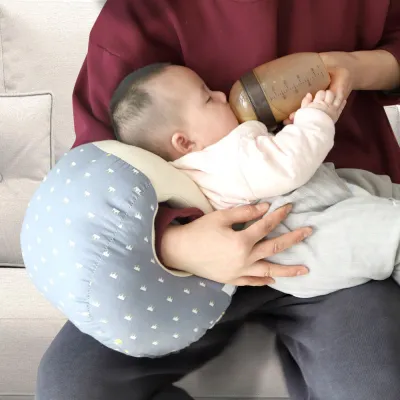
- Choose a firm, wrap-around or C-shaped pillow if you require strict lumbar support, arm relief, and precise latch positioning. These designs are highly recommended for long, structured feeding sessions, especially during the first few weeks postpartum when establishing a latch is most critical. They are also excellent for parents recovering from a C-section, as they provide a firm barrier that protects the sensitive abdominal incision site from direct pressure.
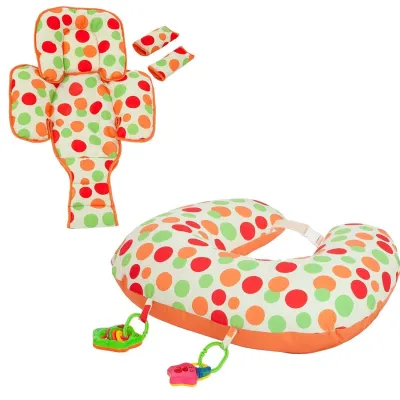
- Choose a softer, U-shaped or multi-purpose pillow if you prioritize long-term versatility. These pillows offer a larger surface area that accommodates different feeding positions as your baby grows, and they easily transition into supportive cushions for tummy time, lounging, and helping older babies learn to sit up.
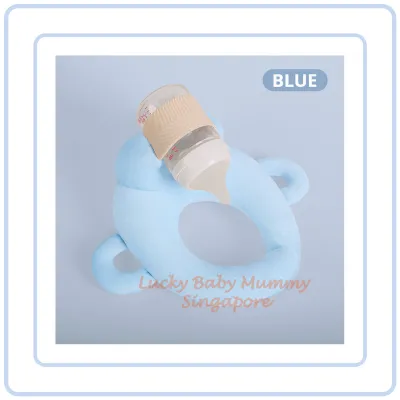
- Choose a compact, inflatable, or crescent-shaped pillow if you travel frequently, commute often, or need a portable option that fits easily into a stroller basket or diaper bag for outings around Singapore.
- Verify the cover material before making your final decision. Given Singapore's warm and humid tropical climate, selecting a highly breathable cover fabric is essential to prevent heat rash and keep both you and your baby cool during close, skin-to-skin contact.
Key Features to Compare: Firmness, Shape, and Fabric
When comparing different nursing pillow brands, it is easy to get distracted by aesthetic designs or brand reputation. However, the actual comfort and ergonomic support of a breast feed pillow are determined by the interaction of its shape, filling material, and cover fabric. A well-designed pillow should comfortably wrap around your waist or sit securely on your lap, filling the gap between your body and the baby.
Products mentioned in this guide
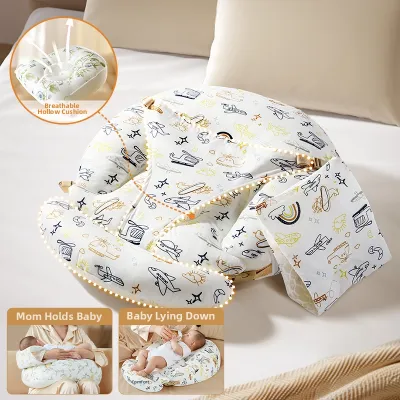
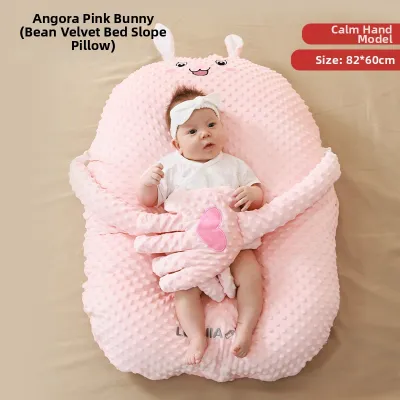
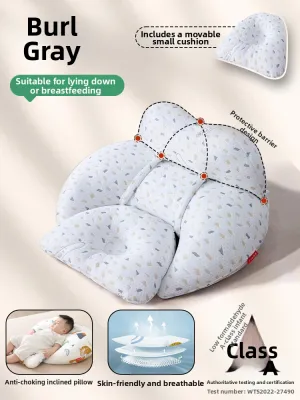
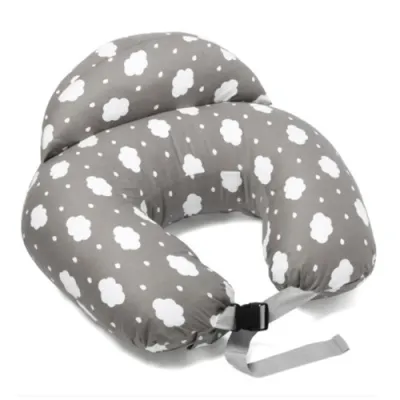
Prices are valid at publication and may change. Please refer to the product page for the latest price.

To evaluate a pillow’s ergonomic value, pay close attention to its thickness and height. The pillow must elevate your baby to the level of your breast or bottle without requiring you to lean forward or hunch your shoulders. If a pillow is too thin, you will find yourself slouching to meet your baby, which defeats the purpose of ergonomic support. Conversely, if it is too thick, it may force your baby’s head too high, making a comfortable latch difficult to achieve.
Filling Materials and Firmness Levels
The interior filling of a nursing pillow directly dictates its firmness, weight, and long-term durability. Popular brands in Singapore typically utilize one of three common filling materials, each offering distinct physical properties:
- Polyester Fiberfill: This is the most common and affordable filling material. It provides a plush, soft feel and is often fully machine-washable. However, fiberfill varies significantly in firmness and can clump or flatten over time with heavy, daily use, requiring regular fluffing to maintain its height.
- Memory Foam: Known for contouring closely to the body, memory foam provides a highly stable, flat, and firm platform. It does not sag under the baby's weight, making it excellent for maintaining consistent latch alignment. However, memory foam naturally retains body heat and can feel warm during extended use.
- Microbeads: These tiny polystyrene beads allow the pillow to be highly moldable, conforming easily to your baby's body shape. While comfortable, microbeads can shift during use, which may cause the pillow to lose its structural height under weight if not adjusted properly.
Regardless of the material you choose, the pillow must be firm enough to prevent your baby from sinking deeply into the surface. A surface that is too soft can compromise the baby’s airway or cause their head to tilt at an awkward angle, disrupting their latch. Always check the manufacturer’s product labels for filling density and firmness descriptions to ensure the pillow provides adequate resistance.
Cover Fabrics for Humid Climates
In Singapore’s tropical climate, where indoor air-conditioning and outdoor humidity constantly interact, the choice of cover fabric is a major comfort factor. During feeding sessions, close physical contact between you and your baby generates significant body heat, which can quickly lead to sweating and discomfort if the fabric is not breathable.
Natural fibers, such as organic cotton or bamboo-derived rayon, are highly recommended for nursing pillow covers. These materials are exceptionally soft, hypoallergenic, and gentle on a newborn’s sensitive skin. Bamboo blends, in particular, offer natural moisture-wicking and cooling properties that help regulate temperature, keeping both parent and baby dry. In contrast, synthetic polyester blends, while highly durable and stain-resistant, tend to trap heat and may cause sweat buildup.
Hygiene is another critical consideration. Because milk spills, spit-ups, and drool are inevitable, the outer cover must be easy to maintain. Ensure the pillow features a removable, machine-washable cover with a high-quality, concealed zipper that won’t scratch your baby’s skin.
How Different Pillow Designs Deliver Comfort and Support
Instead of searching for a single “best” brand, it is more practical to compare the structural archetypes that dominate the Singapore market. Most popular brands design their products around specific shapes, each offering a unique balance between dedicated ergonomic support and multi-purpose versatility.
C-Shaped and Wrap-Around Pillows for Targeted Latch Support
C-shaped and wrap-around pillows are specifically engineered to provide maximum support during feeding. The classic C-shape curves snugly around the front of your waist, resting on your lap to support your forearms and keep your baby close to your torso. This targeted support minimizes the muscular effort required to hold your baby, significantly reducing tension in your upper back and neck.
Premium wrap-around versions take this ergonomic support a step further by incorporating adjustable straps, belts, or silent-release buckles. These features allow you to secure the pillow tightly against your body, eliminating any gaps where your baby might slip down between your abdomen and the cushion. The adjustable strap also ensures a customized fit that can be modified as your body changes postpartum.
While these highly specialized designs offer superior ergonomic alignment for feeding, they do have trade-offs. Their rigid structure and snug fit make them less adaptable for other uses, and they tend to be bulkier to store or transport compared to simpler designs.
U-Shaped and Multi-Purpose Pillows for Versatility
U-shaped pillows feature a wider, more open curve that slides easily around the waist without the need for straps or fasteners. This open design makes them highly versatile, accommodating a wider range of body sizes and allowing you to easily switch between different feeding positions, such as the cradle hold or the football hold.
The primary appeal of a U-shaped pillow lies in its multi-stage usability. Beyond feeding, these pillows are designed to support your baby through various developmental milestones. They can be used to prop up your baby during supervised lounging, provide a comfortable incline for tummy time, and act as a protective cushion when your baby is learning to sit up independently.
However, this versatility comes with an ergonomic compromise. Because U-shaped pillows are typically softer and lack securing straps, they can shift or slide away from your body during active feeding. This shifting may require you to constantly readjust the pillow or slouch forward, which can diminish the ergonomic benefits during long newborn feeding sessions.
Compact and Travel-Friendly Pillows for On-the-Go Feeding
For active parents in Singapore who frequently travel, visit family, or navigate public transit, standard nursing pillows can be too cumbersome to carry. Compact and travel-friendly options, such as inflatable wedges, foldable cushions, or small crescent-shaped pillows, are designed specifically to address this issue.
These portable pillows fit easily into diaper bags or stroller storage baskets, allowing you to maintain some level of feeding support while away from home. Inflatable models are particularly convenient, as they can be deflated and packed flat when not in use, then quickly inflated to your desired firmness when it is time to feed.
The trade-off with compact travel pillows is the level of ergonomic support they provide. Because of their reduced size and surface area, they do not offer the same comprehensive back or arm support as full-sized home pillows. Consequently, you may need to adjust your seating posture more frequently or use additional support, such as a rolled-up blanket or a chair armrest, to maintain a proper latch.
What to Verify Before Buying a Breast Feed Pillow in Singapore
To ensure you select a safe, durable, and practical breast feed pillow, there are several critical factors you must verify before finalizing your purchase:
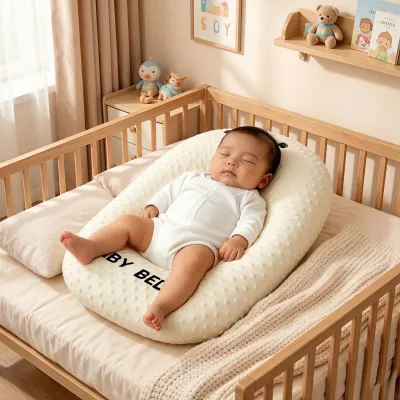
- Safety Boundaries: First and foremost, nursing pillows are strictly designed for supervised feeding sessions. They must never be used for unsupervised infant sleep, lounging, or as a sleep positioner. Safe sleep guidelines emphasize that babies should always sleep on a firm, flat, and clear surface to prevent the risk of Sudden Infant Death Syndrome (SIDS) and accidental suffocation. If your baby falls asleep on the nursing pillow, immediately transfer them to a safe crib or bassinet.
- Hygiene and Care: Milk spills, drool, and sweat can quickly lead to bacterial growth, especially in Singapore's humid climate. Verify that the outer cover is fully machine-washable and that the inner core can be easily spot-cleaned. If the manufacturer states the inner core is washable, ensure you have a well-ventilated space to dry it completely. Any residual moisture trapped inside the filling can lead to mold and mildew.
- Purchasing Channels: When shopping for a nursing pillow, buy from official brand stores, authorized maternity retailers, or established online marketplaces. This ensures you receive an authentic product made from non-toxic materials, and that you are covered by the manufacturer's warranty or return policies. Be cautious of counterfeit products sold at unusually low prices, as they may use low-quality fillings or unsafe chemical dyes.
- Physical Verification: If possible, visit a physical maternity boutique in Singapore to test different pillows before buying. This allows you to feel the actual firmness of the filling, test the adjustability of the straps, and check how comfortably the pillow fits around your waist. If you are purchasing online, carefully read customer reviews regarding the pillow's long-term durability and review the seller's return policy in case the fit is not suitable for your body.
Frequently Asked Questions (FAQ)
Can a nursing pillow prevent back and neck pain during breastfeeding?
A nursing pillow is an excellent tool for reducing physical strain, but it is not a guaranteed cure-all for back and neck pain. The pillow’s primary function is to support your baby’s weight so your arms and shoulders can relax. However, if your overall seating posture is poor, or if your baby’s latch is shallow, you may still experience discomfort. To maximize the ergonomic benefits, always sit in a supportive chair that keeps your back upright, keep your feet flat on the floor or on a footrest, and bring your baby to your breast rather than leaning down to them.
How do I clean a nursing pillow if milk spills on it?
As soon as a spill occurs, remove the outer cover and wash it according to the care instructions on the fabric label, using a gentle, baby-safe laundry detergent. For the inner core, check the manufacturer’s instructions first. If it is not machine-washable, spot-clean the soiled area using a damp cloth and a mild soap solution. It is crucial to let the inner core dry completely in a well-ventilated area, away from direct heat, before putting the cover back on. In Singapore’s humid weather, incomplete drying can trap moisture and encourage mold growth.
At what age should I stop using a breast feed pillow?
There is no universal age at which you must stop using a nursing pillow; it depends entirely on your baby’s physical development and your personal comfort. Many parents find the pillow most helpful during the first three to four months when the baby is small and needs significant elevation. Once your baby develops strong head and neck control, can sit up with minimal support, and has grown long enough to reach your breast comfortably without extra elevation (typically around 4 to 6 months), you can gradually phase out the pillow. At this stage, the pillow can often be repurposed for supervised tummy time or sitting practice.
Community discussion
Share your experience or ask a question. Comments are reviewed before publication.