
Finding the right children bed mattress in Singapore can feel like a complex task because there is no universal standard for firmness. Different brands use their own proprietary scales, material compositions, and marketing terms, meaning a “medium-firm” label from one manufacturer might feel completely different from another’s. To make a safe and comfortable choice, you must look past the brand names and evaluate how a mattress’s support core and comfort layers align with your child’s specific age, weight, and sleeping position. This guide will help you decode brand labels, compare material structures, and apply practical testing strategies to find the ideal match.
Understanding Firmness Needs for Growing Children
Children’s bodies develop rapidly, and their skeletal systems require targeted support that changes as they grow. During infancy and early toddlerhood, a highly firm sleep surface is essential to prevent suffocation risks and support a developing spine. As children transition into preschool and primary school ages, their bones continue to grow, but their increased body weight requires a balance of firm support and pressure relief.
Your child’s preferred sleeping position plays a major role in determining the necessary firmness level. Back and stomach sleepers generally require a firmer surface to prevent the hips and pelvis from sinking, which can lead to spinal misalignment and back strain. Conversely, side sleepers need a slightly more forgiving surface—often a medium-firm profile—to allow the shoulders and hips to sink just enough to keep the spine straight.
Products mentioned in this guide
![[PRE-ORDER] Getha Sunny 5 Kids Mattress / Eco Latex Mattress](https://img.lazcdn.com/g/p/0d0e2c046017d2c742bed193ef79dfaf.jpg_400x400q80.jpg_.webp)
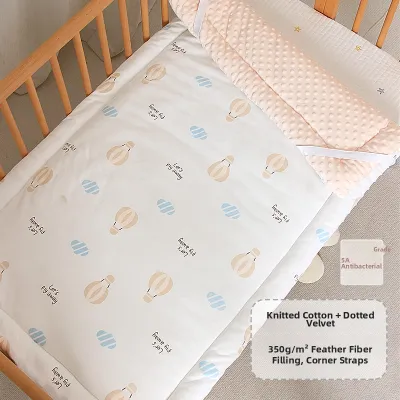
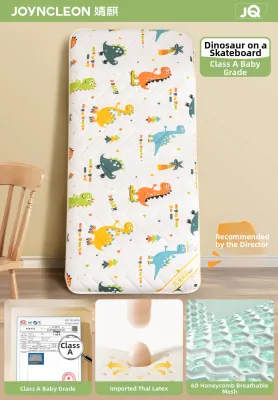
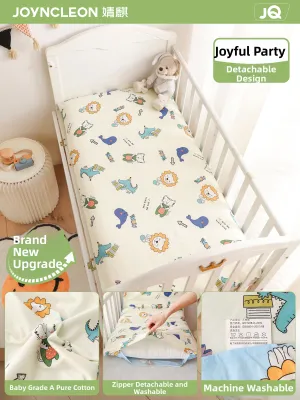
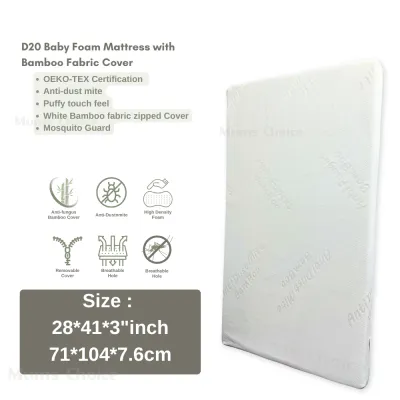
Prices are valid at publication and may change. Please refer to the product page for the latest price.
It is vital to distinguish between “support” and “comfort” when evaluating a children bed mattress. Support refers to the mattress’s ability to maintain a neutral spinal alignment, which is driven by the deep core layers of the mattress. Comfort, on the other hand, is the initial surface feel determined by the top layers. A mattress can feel soft and cozy on the surface while still providing excellent, firm structural support underneath.
How Brands Categorize and Label Firmness
When browsing mattress options in Singapore, you will encounter various rating systems, most commonly a 1-to-10 scale where 1 represents ultra-soft and 10 represents extra-firm. However, because there is no centralized regulatory body standardizing these ratings, these numbers are highly subjective. A rating of 7 from a brand specializing in memory foam might feel softer than a 7 from a brand utilizing traditional innersprings.

The materials a brand uses directly dictate the mattress’s overall firmness and feel. High-density polyurethane foam is frequently used to create a consistent, supportive base, while pocketed spring systems offer responsive, zoned support that adapts to movement. Natural latex is another popular choice, known for its resilient, springy firmness that supports the body without the deep “sinking” sensation associated with some memory foams.
To address the changing needs of growing children, several brands offer dual-sided or flippable mattresses. These designs typically feature a very firm side engineered for toddlers and a medium-firm side designed for older children. This flippable structure provides a cost-effective way to transition your child’s bed as they grow, extending the usable lifespan of the mattress.
Core Dimensions for Comparing Brand Firmness
To compare different brands objectively, you must look closely at the technical specifications of the core support layers. For foam mattresses, ask about the foam density (measured in kilograms per cubic meter), as higher density generally correlates with better structural integrity and long-term firmness retention. For hybrid or spring mattresses, inquire about the coil gauge and count, which indicate the strength and responsiveness of the support system.
The comfort layer materials require equal scrutiny, as they determine the immediate pressure relief your child experiences. Brands often layer materials like memory foam, latex, or fiber batting over the support core. You should evaluate how these layers behave under pressure; for instance, memory foam contouring can feel warmer and more restrictive, whereas latex offers a quicker bounce-back that makes it easier for children to turn over.
Edge support is another critical dimension that is often overlooked but significantly impacts the usable sleep surface. High-quality mattresses reinforce the perimeter with denser foam or thicker coils to prevent the edges from sagging when a child sits or sleeps near the border. Robust edge support ensures consistent firmness across the entire mattress, preventing the sensation of rolling off.
In Singapore’s hot and humid climate, breathability and temperature regulation are directly linked to how firmness is perceived. Many foam materials tend to trap heat, which can cause them to soften and lose support during warm nights. Look for brands that incorporate open-cell foams, natural latex, or cooling gel infusions, as these materials help dissipate heat and maintain consistent firmness regardless of the ambient temperature.
Decision Framework: Matching Firmness to Your Child
To simplify your decision, you can use a structured framework based on your child’s physical profile and sleep habits. If your child is younger, lighter, or primarily sleeps on their back or stomach, prioritize a firmer mattress profile. This ensures their hips do not sink too deeply, keeping their spine in a healthy, neutral position during these critical developmental years.
If your child is older, heavier, or primarily a side sleeper, a medium-firm mattress is usually the more appropriate choice. This profile provides the necessary cushioning for the shoulders and hips, reducing pressure points while still offering a supportive foundation underneath to prevent spinal curvature.
Before finalizing any purchase, verify whether the brand offers a transparent sleep trial or a clear return and exchange policy. Because firmness is highly subjective, your child may need several weeks to adjust to a new mattress. A risk-free trial period allows you to evaluate the mattress’s real-world performance in your own home.
Be cautious if a brand lacks transparent material specifications, clear weight limits, or verifiable safety certifications. If you cannot find detailed information about foam densities, coil counts, or chemical safety standards, it is best to look elsewhere. A lack of transparency makes it difficult to guarantee that the mattress will provide safe, durable support for your child.
Verifying Firmness Claims and Testing Strategies
When shopping in retail stores or communicating with online customer service, do not hesitate to ask specific questions about the mattress construction. Request details on the foam density, spring counts, and the origin of the materials used. Reliable brands should readily provide this information or point you to official product documentation and safety certifications.
If you are testing mattresses in a showroom, use practical evaluation techniques rather than just letting your child bounce on the bed. Perform a hand-press test by pushing down firmly on the center and edges of the mattress to gauge its resistance. More importantly, have your child lie down on the mattress in their typical sleeping position for at least 10 minutes to see if their spine remains straight and if they feel comfortable.
Once the mattress is in your home, monitor your child’s sleep patterns and physical comfort during the first few weeks. Watch for signs that the firmness may not be correct, such as your child waking up with stiffness, tossing and turning excessively, or complaining of discomfort. Additionally, inspect the mattress regularly for any early signs of visible sagging or indentations, which could indicate a structural defect.
Frequently Asked Questions (FAQ)
Can a mattress be too firm for a child?
Yes, a mattress can be excessively firm, which can lead to discomfort and poor sleep quality. If a mattress lacks sufficient comfort layers, it can create painful pressure points on a child’s shoulders, hips, and knees, particularly for side sleepers. This discomfort can cause frequent tossing and turning, disrupting their sleep cycle and preventing them from getting deep, restorative rest.
While firm support is essential for spinal alignment, it must be balanced with adequate pressure relief. If you notice your child waking up with limb numbness, stiffness, or a reluctance to go to bed, the mattress may be too hard. In such cases, adding a temporary mattress topper or exchanging the mattress for a slightly softer model may be necessary.
Do children's mattresses soften over time?
Yes, almost all mattresses undergo a natural break-in period during the first few weeks of regular use. The fibers and foams in the comfort layers will gradually soften and adapt to your child’s body weight and movement. This initial softening is completely normal and should not be confused with structural failure or sagging.
To ensure even wear and prolong the life of the mattress, it is a good practice to rotate it 180 degrees every few months. However, if you notice deep, permanent indentations that do not recover after your child gets out of bed, or if the mattress begins to sag significantly in the center, this indicates a loss of structural integrity rather than normal softening, and you should contact the manufacturer regarding their warranty.
Community discussion
Share your experience or ask a question. Comments are reviewed before publication.