
Managing baby essentials requires a reliable system, and a diaper caddy organizer is often the centerpiece of this setup. Choosing the right model depends heavily on your daily routine, your home’s layout, and how often you travel.
To make an efficient decision, consider these primary use cases:
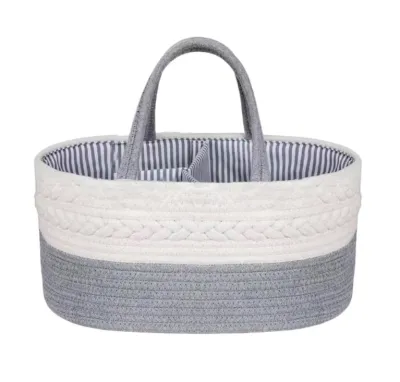
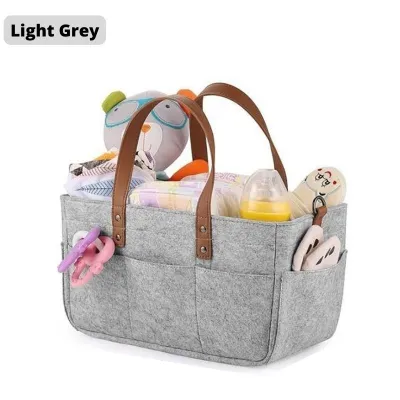
- Stationary Nursery Stations: If your caddy will remain on a changing table or a dedicated shelf, prioritize a large, multi-compartment felt or cotton rope caddy. These designs offer high storage volume and keep multiple days of supplies within arm's reach.
- On-the-Go and Travel: If you frequently move between rooms, travel by car, or need a reliable setup for outdoor trips, choose a compact, wipeable, or insulated caddy. These models prevent spills and are easier to clean when exposed to the elements.
Before purchasing any model, always verify the exact physical dimensions and compartment configurations against your preferred diaper sizes and wipe packaging to ensure a seamless fit.
Products mentioned in this guide

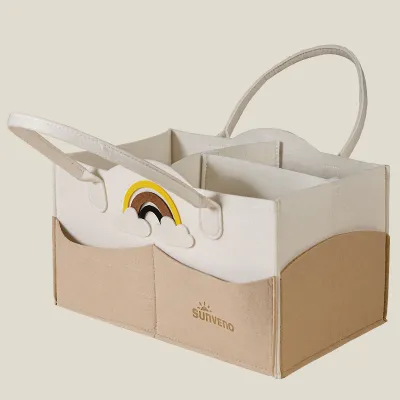
![[Local Shop] Baby Diaper Caddy Organizer Nursery Room Storage Bag](https://img.lazcdn.com/g/p/97b826d1268580040c9334c054e0a4ad.jpg_400x400q80.jpg_.webp)
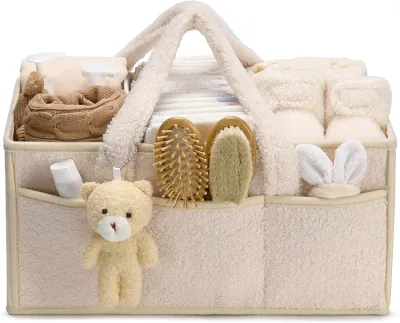
Prices are valid at publication and may change. Please refer to the product page for the latest price.
Key Dimensions for Comparing Diaper Caddy Organizers
When shopping for a diaper caddy organizer, it is easy to get swayed by aesthetic designs or vague marketing promises of “maximum storage.” To find a truly functional organizer, you must focus on objective, measurable specifications.
Evaluating a caddy based on physical data ensures it will actually fit your changing station and hold your essential gear without collapsing. Always check the manufacturer’s product labels and specifications for exact dimensions, material composition, and maximum weight limits before making a decision.
Storage Capacity and Compartment Layout
The internal architecture of a diaper caddy organizer determines how effectively you can separate diapers, wipes, creams, and grooming tools. A well-designed layout prevents you from rummaging around in the dark during middle-of-the-night changes.
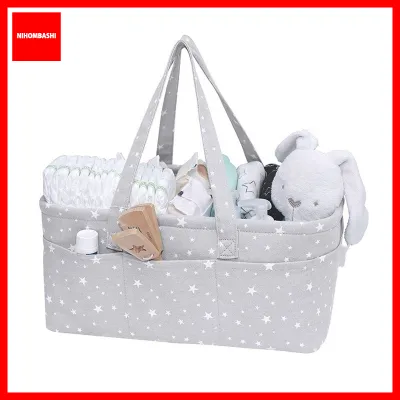
One of the first structural decisions you will face is choosing between an open-top design and a zippered or lidded option. Open-top caddies offer immediate, one-handed access, which is incredibly helpful when you are balancing a baby on a changing pad. However, zippered or lidded caddies provide excellent dust protection and keep curious pets or toddlers out of the supplies.
Removable dividers are another crucial feature to evaluate. Many brands use hook-and-loop strips to let you customize the internal compartments. This adaptability is essential as your baby grows; newborn diapers are small and allow you to pack dozens into a single section, but larger toddler diapers require wider compartments. Adjustable dividers let you transition the caddy from a diaper station into a toy organizer or a book bin later on.
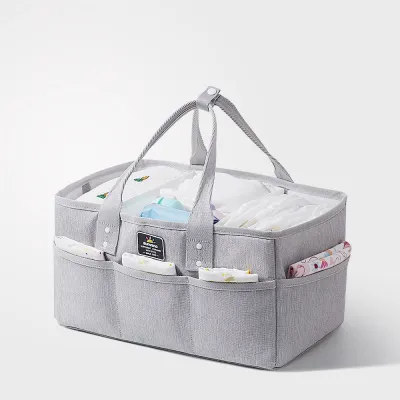
Do not overlook the external pockets. Deep, elasticized, or zippered outer pockets are perfect for high-use items that you need to grab in a split second, such as diaper rash creams, pacifiers, hand sanitizers, or nasal aspirators. Ensure these pockets are positioned so they do not spill their contents when the caddy is lifted or carried.
Material, Build Quality, and Portability
The materials used to construct a diaper caddy organizer directly impact its durability, structural integrity, and how easy it is to keep hygienic. Because baby gear is prone to spills, leaks, and cream smudges, understanding material limits is vital.
Common materials include felt, cotton rope, vegan leather, and hard plastic, each offering distinct trade-offs:
- Felt: Lightweight and highly structured, felt caddies often feature customizable dividers. However, they can pill over time and are prone to staining if liquids spill.
- Cotton Rope: Soft, flexible, and aesthetically pleasing, rope caddies fit well in modern nurseries. They are highly durable but may lose their shape if overloaded or washed incorrectly.
- Vegan Leather: Highly durable and water-resistant, this material offers a premium look and can be wiped clean instantly. It is generally heavier and more expensive than fabric options.
- Hard Plastic: The most hygienic option, plastic caddies are completely waterproof and can be sanitized easily. They lack the soft aesthetic of fabric and are entirely rigid, making them less comfortable to carry against your body.
Handle design is another critical factor for portability. Look for handles that feature reinforced stitching at the attachment points, as a fully loaded caddy can weigh several kilograms. Padded handles or longer shoulder straps offer greater comfort when carrying the organizer from room to room, especially when your hands are already full.
Finally, always review the product care labels. Some fabric caddies are strictly spot-clean only, while others can survive a gentle machine wash. Knowing these maintenance requirements beforehand helps you choose a caddy that fits your tolerance for cleaning chores.
Matching Caddy Features to Your Parenting Routine
No single diaper caddy organizer is perfect for every family because parenting routines vary wildly. The ideal combination of features depends entirely on where and how you plan to use the caddy on a daily basis.

Before choosing a model, take a walk through your home and map out your typical changing routine. Consider your living space layout, whether you have stairs, and how often you leave the house with your baby.
For the Nursery and Stationary Use
If your diaper caddy is destined to live permanently on a nursery changing table, dresser, or dedicated shelf, portability takes a backseat to sheer storage capacity and stability.
For stationary setups, prioritize maximum storage volume so you do not have to constantly restock supplies from a closet. Look for caddies with wide, sturdy bases that prevent the organizer from tipping over when you pull a wipe out quickly. A heavy base is actually an advantage here, as it keeps the caddy anchored to the table.
Some stationary designs feature tiered compartments or attached changing pad holders, creating a self-contained changing station. Because the caddy will be a permanent fixture in your nursery, you can also focus more on how its material and color integrate with your room’s decor, opting for elegant cotton rope or structured felt that matches your nursery theme.
For Travel and On-the-Go Changes
For parents who need to move their diapering supplies between rooms, take them in the car, or travel frequently, portability and security are the top priorities.
An on-the-go caddy must be lightweight and feature secure closures, such as zippers, snaps, or fold-over lids. These closures prevent diapers from scattering across your car trunk or backseat during sudden stops. The interior should feature easy-to-clean, water-resistant linings that can handle spilled lotions or leaky bottles without ruining the entire caddy.
A compact footprint is also essential for travel. The caddy should fit comfortably on a car seat, in a footwell, or inside a stroller basket without taking up all your available space. Additionally, look for models with insulated pockets; these are incredibly useful for keeping baby wipes moist and cool, or protecting temperature-sensitive creams from overheating in warm climates.
How to Evaluate Brands and Models Before Buying
With dozens of diaper caddy organizer brands available on online marketplaces and in local boutiques, making a final choice requires a systematic evaluation process.
Follow this practical checklist to ensure you get the best value and performance for your money:
- Measure Your Supplies: Do not guess if your preferred brands will fit. Measure the length and width of your favorite baby wipe tubs and diaper packs, then cross-reference these measurements with the caddy's internal compartment dimensions.
- Analyze Customer Reviews: Look closely at verified buyer feedback on online marketplaces. Search specifically for comments regarding long-term durability, handle tearing, and whether the internal dividers stay securely in place when the caddy is fully loaded.
- Weigh Price against Utility: Diaper caddies in Singapore typically range from budget-friendly options around S$15 to premium designer models costing over S$50. Avoid paying a premium for aesthetic extras or complex strap systems if you only need a simple, stationary basket for your nursery.
- Verify Return Policies: Ensure the retailer or brand offers a clear return policy. If the caddy arrives and does not fit your changing table or is too small for your specific diaper brand, you want the flexibility to exchange it without hassle.
Frequently Asked Questions (FAQ)
How many diapers and wipes can a standard diaper caddy hold?
The exact capacity of a diaper caddy organizer depends entirely on its physical dimensions and the size of the diapers you are using. For example, a standard-sized caddy (approximately 38 x 26 x 18 cm) can typically hold around 20 to 30 newborn diapers alongside a full tub of baby wipes. However, as your baby grows and transitions to larger diaper sizes, the same caddy may only accommodate 12 to 15 diapers. When planning your setup, calculate whether you want a single-day supply or a multi-day stock, and make sure to leave ample room for auxiliary items like creams, changing mats, and spare onesies.
Are hard plastic caddies better than fabric ones for cleaning?
Hard plastic and wipeable vegan leather caddies are generally much easier to clean and sanitize than fabric alternatives. If a tube of diaper cream leaks or a bottle of lotion spills, you can simply wipe the surface clean with a damp cloth or rinse a plastic caddy under the tap. Fabric caddies, such as those made of felt or cotton rope, offer a softer look but require more maintenance. Spills on fabric often require immediate spot cleaning or even a full machine wash, which can temporarily take the caddy out of service and potentially alter its shape. Choose the material that best matches your tolerance for cleaning and the likelihood of messy accidents in your home.
Community discussion
Share your experience or ask a question. Comments are reviewed before publication.