
When comparing the firmness of a Clevermama baby mattress to other popular brands in Singapore, the key lies in evaluating core material density, structural support, and safety certifications. Infant mattresses must be significantly firmer than adult mattresses to prevent suffocation risks and support a baby’s rapidly developing spine. While Clevermama utilizes specific high-density materials designed to offer a resilient, flat sleep surface, other brands in the market utilize alternative structures such as traditional innersprings, coconut husk fiber, or specialized polymer matrices. To determine which mattress provides the right support for your baby, you must look beyond brand marketing and directly compare physical specifications, certified safety standards, and structural design features.
Choosing a baby mattress in Singapore involves navigating a climate with high humidity and warm temperatures, which directly impacts material performance and hygiene. A mattress that is too soft can conform to a baby’s face, creating a dangerous carbon dioxide rebreathing environment or blocking the airway entirely. Therefore, comparing Clevermama against other options requires a systematic look at how different manufacturers achieve and maintain firmness over time. By analyzing core materials, edge support, and cover breathability, parents can make an informed decision that balances safety, comfort, and durability.
Understanding Baby Mattress Firmness and Safety Standards
Infant sleep safety guidelines globally emphasize that a baby’s sleep surface must be firm and flat. During the first year of life, a baby’s spine grows rapidly, and their bones are still soft and developing. A soft mattress that allows the baby’s head or body to sink can lead to spinal misalignment and, more critically, increases the risk of Sudden Infant Death Syndrome (SIDS) and suffocation. If a baby rolls onto their stomach on a soft surface, their nose and mouth can become obstructed by the depressed material, limiting their oxygen supply. This is why adult mattresses, which are designed for comfort and contouring, are highly dangerous for infants.
Products mentioned in this guide
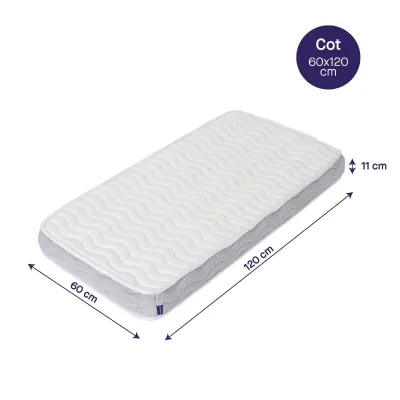
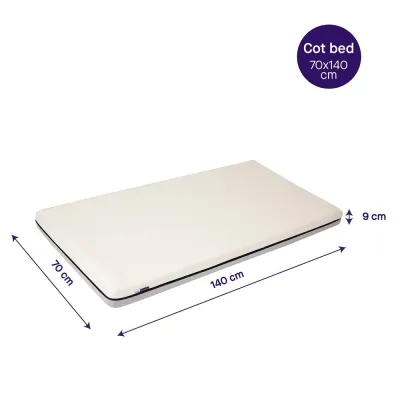
Prices are valid at publication and may change. Please refer to the product page for the latest price.
To verify if a mattress is sufficiently firm, parents can perform a simple, practical at-home test known as the hand-press test. Place the mattress on a flat, stable surface and press your palm firmly down into the center of the mattress. When you release your hand, the surface should spring back immediately to its original flat shape without leaving any lingering indentation or handprint. If the material takes several seconds to recover or conforms easily to the shape of your hand like memory foam does, it is too soft for a newborn or infant.
Additionally, parents must carefully inspect the manufacturer labels and product documentation before purchase. These labels often specify the intended age range, weight limits, and developmental stages for which the mattress is certified. Some mattresses feature dual-sided designs with a firmer side for newborns and a slightly more cushioned side for toddlers. Verifying these specifications ensures that the mattress matches your baby’s current physical development and weight, preventing premature wear or safety hazards.
How to Evaluate Clevermama Mattress Specifications
When researching Clevermama mattresses, the first step is to locate the official technical specifications on the manufacturer’s product tags or official website. Look closely at the core material composition. Many modern baby mattresses, including Clevermama models, utilize high-density polyurethane foam or specialized polymer structures rather than traditional metal innersprings. High-density foam provides a uniform, flat surface that distributes weight evenly, whereas innerspring systems rely on individual coils that must be properly spaced and tensioned to prevent sagging. Understanding these material differences helps you evaluate how well the mattress will support your baby over months of continuous use.

Breathability is another critical specification to evaluate, especially in Singapore’s warm and humid climate. Look for details regarding the mattress core’s airflow design, such as ventilated channels, open-cell foam structures, or 3D mesh materials. A breathable core helps dissipate heat and moisture away from the baby’s body, reducing the risk of overheating and skin irritation. Additionally, check how the mattress handles moisture; some designs integrate a water-resistant or waterproof inner layer that protects the core from spills and accidents while still allowing air to circulate through the outer cover.
Finally, verify that the mattress complies with recognized international safety standards, such as the European standard EN 16890 or local consumer safety guidelines. These certifications indicate that the mattress has undergone rigorous testing for firmness, durability, and chemical safety. You should also review the specific care and cleaning instructions provided by the manufacturer. Improper washing of the cover or exposing the core material to high heat can degrade the structural integrity, leading to premature softening and a reduction in safety.
Key Dimensions for Comparing Competing Brands
To make a meaningful comparison between Clevermama and other popular baby mattress brands in Singapore, you must evaluate several key structural dimensions. The first dimension is the core support material. While memory foam is popular for adult bedding, it is generally unsuitable for infants because it contours to the body and retains heat. Instead, look for high-resilience polyurethane foam, coconut coir, or food-grade polymer matrices. High-resilience foam offers excellent bounce-back and durability, while coconut coir provides natural, highly firm support but can be heavier and more susceptible to moisture retention if not properly sealed. Polymer matrices represent a newer technology that allows water and air to pass directly through the core, offering high breathability and complete washability.
Another critical dimension is edge support and anti-sagging design. When a baby grows and begins to stand or walk along the edges of their cot, weak mattress edges can compress, causing the baby to slip or get trapped between the mattress and the cot frame. High-quality mattresses often feature reinforced borders or high-density foam encasements around the perimeter to maintain structural integrity. A firm, stable edge ensures that the mattress fits snugly within the cot without creating dangerous gaps, even when weight is applied to the very edge.
The functionality of the mattress cover is the third key dimension to compare. A baby mattress cover must be easy to remove, wash, and reattach, as frequent cleaning is inevitable. However, the cover must fit tightly over the mattress core after washing without shrinking or warping. A shrunken cover can cause the mattress to bow or curl at the corners, creating gaps in the cot, while a loose cover creates folds of fabric that pose a suffocation hazard. Look for covers with high-quality zippers, pre-shrunk fabrics, and clear washing instructions that preserve both hygiene and safety.
Comparison Matrix: Clevermama vs. Other Popular Options
To help you organize your research and compare Clevermama with other brands available in Singapore, use the following comparison matrix. Because product specifications, materials, and pricing can change over time, treat this matrix as a template to record and verify the latest details directly from official manufacturer listings or authorized retailers before making your purchase.
| Brand / Model | Core Material | Official Firmness / Stage | Breathability Features | Washable Cover | Estimated Price Range (S$) |
|---|---|---|---|---|---|
| Clevermama (Standard Models) | High-Density Foam / Polymer | Firm (Infant to Toddler) | Ventilated channels / 3D mesh | Yes (Removable zipper cover) | S$120 – S$250 |
| Brand A (Natural Coir) | Coconut Coir & Latex | Extra Firm (Infant) | Natural fibrous airflow | Yes (Removable cover) | S$150 – S$300 |
| Brand B (Innerspring) | Steel Coils & Foam Wrap | Firm (Dual-sided option) | Open coil ventilation | No (Spot clean only) | S$100 – S$220 |
| Brand C (Polymer Matrix) | 3D Woven Polymer | Firm (Infant to Toddler) | Fully washable open-air core | Yes (Fully machine washable) | S$300 – S$500 |
When using this matrix as a shopping checklist, prioritize safety certifications and physical dimensions over price alone. Ensure that the mattress dimensions match your cot exactly, as even a small gap of a few centimeters can pose a severe entrapment risk. Additionally, verify whether the estimated price range includes delivery and any warranty coverage, which can provide peace of mind regarding the long-term durability of the mattress materials.
Making the Final Decision: Which Mattress Fits Your Baby?
Selecting the right baby mattress ultimately depends on matching specific product specifications with your family’s unique needs and your baby’s developmental stage. You should consider choosing a Clevermama mattress if its verified material composition, local availability in Singapore, and specific structural features align with your cot’s dimensions. If you prefer a lightweight mattress with a highly breathable core that is easy to lift and clean, and the dimensions fit your cot perfectly, it represents a practical and supportive option for everyday use.
On the other hand, alternative brands may be more suitable if you have specific requirements that Clevermama does not meet. For instance, if you have an imported or non-standard cot size that requires a custom-fit mattress, you will need to look for brands that offer bespoke sizing. Similarly, if you prefer completely natural, organic materials like certified organic coconut coir and natural latex, or if you require a specialized medical-grade orthopedic mattress, exploring alternative brands with those specific material certifications is the best path forward.
Most importantly, if your baby has specific health considerations, such as severe gastroesophageal reflux, allergies, or respiratory concerns, you must consult a pediatrician before making a final decision. A qualified medical professional can provide tailored recommendations, such as whether a specific incline, hypoallergenic material, or specialized sleep surface is medically necessary for your baby’s health and safety. Never attempt to diagnose or treat sleep-related health issues without professional medical guidance.
Frequently Asked Questions (FAQ)
Does a baby mattress get softer over time?
Yes, baby mattresses can naturally lose some of their original firmness and compress over time due to regular use, the baby’s growing weight, and environmental factors like humidity. Foam and spring materials gradually wear down, which can lead to sagging in the areas where the baby sleeps most frequently. To monitor for safety, you should regularly perform visual and physical checks by pressing down on the mattress to ensure it still springs back quickly and remains completely flat. If you notice any visible sagging, permanent indentations, or soft spots, you should replace the mattress immediately to maintain a safe sleep environment, following the manufacturer’s guidelines for product lifespan.
Can I use a mattress topper to adjust the firmness?
No, you should never use a mattress topper, padded mattress pad, or any additional soft layers on top of a baby mattress. Infant mattresses are engineered, tested, and certified as a complete system to provide a specific level of firmness that prevents suffocation and supports the spine. Adding a soft topper introduces a significant safety hazard, as the extra cushioning can conform to your baby’s face if they roll over, blocking their airway. The sleep surface must remain exactly as tested and certified by the manufacturer, without any aftermarket modifications or additions.
How do I know if the mattress fits the cot properly?
To ensure a safe fit, there should be no significant gaps between the edge of the mattress and the inner frame of the cot. You can perform a simple, practical check often referred to as the two-finger rule: slide your index and middle fingers between the mattress edge and the cot side. If you can fit more than two fingers into the gap, the mattress is too small for the cot and poses a dangerous entrapment hazard where a baby’s limbs or head could get stuck. Always measure the inner dimensions of your cot precisely and match them exactly to the mattress specifications before purchasing.

Community discussion
Share your experience or ask a question. Comments are reviewed before publication.