
Quick Answer: Chicco Mattress Firmness at a Glance
When evaluating the firmness of Chicco baby mattresses, the primary rule is that all compliant models are engineered to be exceptionally firm. This is not an accidental design choice; it is a strict safety requirement established by pediatric health organizations to ensure a safe sleep environment. For parents accustomed to plush adult beds, a compliant baby mattress can initially feel surprisingly rigid. However, “firm” in the context of infant sleep does not mean uncomfortable. Instead, it refers to a flat, highly supportive surface that does not yield or contour to the baby’s head or body, keeping their airway entirely unobstructed.
While this baseline safety standard is consistently maintained across the Chicco product line, the physical feel, thickness, and core construction vary depending on the specific sleep setup. Standard nursery crib mattresses are built with high-density cores designed for long-term, primary sleep from infancy through the toddler years. Bedside sleeper mattresses, such as those for the Chicco Next2Me series, utilize thinner, highly compacted structures optimized for early-month room-sharing. Travel cot mattresses, like those in the Chicco Lullaby range, feature segmented, foldable bases that prioritize portability while still providing a flat, rigid foundation. Understanding these differences allows parents to choose the correct mattress for their specific lifestyle needs without compromising on safety.
Why Mattress Firmness Is Critical for Infant Safety
The critical need for a firm baby mattress is rooted in the unique anatomy and developmental stage of an infant. During the first year of life, a baby’s skeletal system is highly flexible and rapidly developing. Their bones are composed largely of pliable cartilage, and their muscular strength is still developing. A firm, flat sleep surface provides the necessary resistance to support the natural, healthy alignment of the infant’s spine. If a baby sleeps on a surface that is too soft, the heavier parts of their body—specifically the head and the torso—will sink unevenly into the material, potentially leading to spinal misalignment or muscle strain during these crucial growth phases.
Products mentioned in this guide
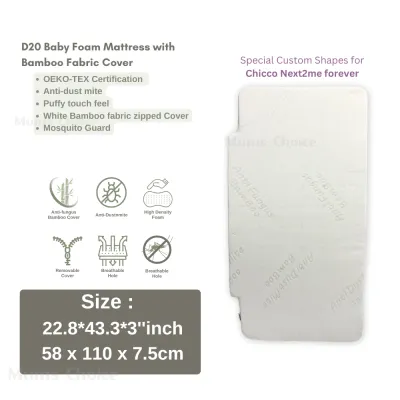

Prices are valid at publication and may change. Please refer to the product page for the latest price.

Beyond skeletal support, mattress firmness is a vital safeguard against respiratory hazards, including Sudden Infant Death Syndrome (SIDS) and accidental suffocation. Newborns and young infants lack the neck strength and motor coordination required to easily lift or turn their heads if they find themselves face-down. On a soft mattress, a baby’s face can sink into the plush surface, creating a localized depression or pocket. This pocket can trap the baby’s exhaled carbon dioxide, leading to “rebreathing” where the baby inhales carbon dioxide instead of fresh oxygen. A firm surface ensures that even if an infant rolls onto their stomach, the mattress remains flat, allowing air to circulate freely around their nose and mouth.
Furthermore, soft bedding and yielding sleep surfaces are directly linked to an increased risk of physical entrapment. If a mattress conforms to a baby’s body, it restricts their ability to roll back over or adjust their position. International safety standards and local pediatric guidelines in Singapore strongly emphasize that parents must never prioritize adult perceptions of comfort over safety. A mattress that feels “cozy” to an adult is a severe hazard for an infant. Parents should always consult their pediatrician or a qualified healthcare professional if they have specific concerns regarding their baby’s sleep safety or physical development.
Comparing Firmness Across Chicco Sleep Product Categories
Standard Crib Mattresses
Standard crib mattresses from Chicco are designed to serve as the primary, long-term sleep surface for a baby, typically fitting into standard full-size or mini wooden nursery cribs. Because these mattresses are intended to support a child from birth through their toddler years, they feature the highest density and most robust structural support in the Chicco lineup. The core of these mattresses is commonly constructed from high-density polyurethane foam or highly compressed polyester fiber matrices. These materials are chosen specifically for their ability to distribute weight evenly and resist sagging under continuous, long-term use.
The structural integrity of a standard crib mattress is critical for maintaining a safe sleep environment over several years. As an infant grows into a heavier toddler, a low-density mattress would gradually develop a permanent sag in the center, which compromises safety. Chicco’s high-density foam cores are engineered to rebound completely after pressure is applied, ensuring the surface remains perfectly flat and supportive day after day. Additionally, the outer covers of these standard mattresses are often designed with water-resistant or waterproof barriers to protect the internal core from diaper leaks and spills, which could otherwise degrade the foam and soften the mattress over time.
Portable and Bedside Sleeper Mattresses
Bedside co-sleepers, represented by the popular Chicco Next2Me range, require a specialized mattress design that balances safety with a compact form factor. These mattresses are significantly thinner than standard crib mattresses, typically measuring between 3 and 5 centimeters in thickness. Despite their slim profile, they are engineered to be exceptionally firm. The core is usually composed of a highly compacted polyester fiber pad or a dense, low-profile foam layer supported by a rigid baseboard. This construction ensures that the mattress does not bend, sag, or create gaps when attached to the parent’s bed frame.
This high level of firmness is essential because bedside sleepers are designed specifically for newborns and infants during their first six months of life—the period of highest vulnerability to sleep-related accidents. The compact, firm design keeps the baby on a level, stable surface that matches the structural requirements of the co-sleeper. Parents must strictly adhere to the manufacturer’s weight and age limits for these products, which typically cap usage at 9 kilograms or when the baby begins to sit up, kneel, or pull themselves up. Once these developmental milestones are reached, the baby must be transitioned to a larger, deeper sleep environment such as a standard crib.
Travel Cot Mattresses
Travel cots, such as the Chicco Lullaby or Zip & Go series, are engineered for portability, convenience, and temporary use. To allow the travel cot to fold compactly for transport, the accompanying mattress is typically segmented into folding panels. These panels consist of rigid internal support boards wrapped in a thin layer of high-density padding. The resulting mattress is highly firm and offers virtually no sinkage, providing a very solid foundation for the baby.
While some parents may look at a travel cot mattress and worry that it appears too thin or hard, it is designed precisely to meet rigorous international safety standards for portable sleep environments. The rigid boards prevent the mattress from bunching or folding when the baby moves, which is critical for preventing entrapment. Parents must never add extra padding, foam toppers, or folded household blankets to a travel cot mattress to make it feel softer. Doing so creates a highly dangerous environment where a baby can become wedged between the added padding and the flexible mesh sides of the travel cot, leading to a high risk of suffocation.
Key Dimensions to Evaluate Beyond Basic Firmness
- Edge Support: When comparing baby mattresses, edge support is a vital safety dimension that goes beyond simple center-surface firmness. As babies develop motor skills, they begin to roll, crawl, and eventually stand, often moving toward the edges of their sleep space. If a mattress has weak, soft edges, the perimeter can easily collapse under the baby's weight. This collapse can cause the baby to roll off or become trapped in the narrow gap between the mattress and the crib frame. High-quality Chicco mattresses are engineered with reinforced borders or consistent, high-density edge-to-edge construction to ensure the surface remains flat and rigid even when pressure is applied directly to the perimeter.
- Breathability and Cover Materials: A mattress's firmness must work in harmony with its cover materials to ensure a safe and comfortable sleep environment. Many Chicco mattresses feature advanced cover technologies, such as 3D breathable mesh fabrics. These materials facilitate continuous airflow beneath and around the sleeping infant, which is highly beneficial in warm, humid climates like Singapore's. This enhanced breathability helps dissipate body heat and moisture, reducing the risk of overheating—a known contributor to SIDS. Crucially, these breathable covers are designed to fit snugly over the firm core without bunching, ensuring that the safety of the flat surface is never compromised by loose fabric.
- Thickness and Weight Limits: The thickness of a baby mattress is not a direct measure of its firmness, but it does dictate how the mattress handles weight over time. A thin mattress that is perfectly safe and firm for a 4-kilogram newborn may "bottom out" under the weight of an 11-kilogram toddler, meaning the child's body presses completely through the padding to the hard frame below. Parents must always consult the specific user manual and product documentation for their Chicco mattress model to verify the maximum weight and age limits. Using a mattress beyond its designed specifications can cause premature wear, permanent sagging, and a loss of supportive firmness.
- Two-Stage Designs: Some premium baby mattresses incorporate a two-stage or dual-sided design to extend the product's usable lifespan while meeting changing developmental needs. The infant side of the mattress is engineered with maximum firmness and rigidity to provide the uncompromising support required during the high-risk first year of life. The reverse side, designed for toddlers, offers a slightly more pressure-relieving, cushioned feel while still maintaining a safe, supportive base. Parents should carefully check the labels on their Chicco mattress to verify if it features a two-stage design and ensure the mattress is flipped to the correct side according to their child's current age and weight.
How to Test and Verify Chicco Mattress Firmness
- The Hand Press Test: Parents can easily perform a simple, hands-on test to verify the firmness of any baby mattress before or after purchase. To conduct the hand press test, place the mattress on a flat, solid surface. Press your open palm down firmly into the center of the mattress with significant force, then repeat this action along the outer edges and corners. When you release your hand, the mattress surface should immediately rebound to its original, flat shape. If your hand leaves a visible indentation that takes more than a split second to disappear, or if the mattress feels soft and yields easily to gentle pressure, it does not provide the safety-mandated firmness required for an infant.
- Checking Labels and Certifications: While physical tests are helpful, they should always be backed by official safety certifications. When purchasing a Chicco mattress, parents should inspect the product tags, packaging, or manufacturer documentation for compliance with recognized safety standards. In European and international markets, including Singapore, the primary standard for baby mattress safety is BS EN 16890. This standard involves rigorous laboratory testing, including a standardized ball-drop test, to verify that the mattress surface is firm enough to prevent suffocation and that the dimensions are precise enough to prevent entrapment. Ensure these compliance marks are clearly visible on the product.
- Inspecting for Wear: Whether you are using a new mattress, reusing one for a second child, or evaluating a pre-owned option, regular inspections for wear and tear are essential. Over time, the internal foam or fiber cores of a mattress can degrade, especially when exposed to moisture, humidity, or repeated pressure. Parents should regularly run their hands across the entire surface of the mattress, checking for any localized dips, soft spots, or permanent sagging where the baby's heavier areas rest. If you detect any unevenness, or if the internal materials have become soft, crumbly, or fail to rebound, the mattress's safety has been compromised, and it must be replaced immediately.
Decision Framework: Which Chicco Mattress Setup Fits Your Needs?
- Choose a Standard Chicco Crib Mattress if: You are setting up a permanent nursery with a full-size or mini wooden crib and plan to use the same sleep surface from birth through the toddler years. This option provides the thickest, most durable, and highest-density support, making it an excellent long-term investment for parents who want maximum edge support and structural longevity.
- Choose a Chicco Portable/Bedside Mattress if: Your primary goal is room-sharing during the first six months of your baby's life, and you are using a compatible bedside sleeper like the Chicco Next2Me. This setup provides a highly specialized, ultra-firm, and low-profile mattress designed to fit the exact dimensions of the co-sleeper frame, ensuring a safe and close sleep environment during the early months.
- Verify First if: You are planning to pair a Chicco mattress with a non-Chicco crib or bassinet frame. In this scenario, you must measure the interior dimensions of the frame and the mattress precisely. There must be no gaps wider than 3 centimeters (roughly the width of two adult fingers) between the mattress and the frame sides to prevent dangerous entrapment. Furthermore, if you are considering a pre-owned mattress, you must thoroughly verify that the core remains perfectly firm, flat, and free of any foam degradation, and that the cover is completely intact.
Frequently Asked Questions (FAQ)
Is it safe to add a soft mattress topper to a Chicco mattress?
No, it is highly unsafe to add a soft mattress topper, mattress pad, or any extra padding to a Chicco baby mattress. All compliant Chicco mattresses are engineered to meet strict international safety standards for firmness. Adding a soft layer on top defeats this safety engineering, creating a surface that can easily conform to your baby’s face, block their airway, and trap exhaled air.
To ensure your baby’s safety, you should only use a tight-fitting, breathable mattress protector and a fitted sheet designed specifically for the dimensions of your Chicco mattress model. If you are concerned about your baby staying warm, use a wearable blanket or sleep sack appropriate for the room temperature instead of placing soft blankets or pads on the mattress surface. If your baby exhibits signs of discomfort or sleep difficulties, consult a pediatrician or sleep specialist rather than altering the sleep environment.
Community discussion
Share your experience or ask a question. Comments are reviewed before publication.