
Evaluating baby urine mats in Singapore requires balancing reliable leak protection with the practical realities of daily cleaning. With the tropical climate bringing high humidity and warm temperatures year-round, parents must select a mat that not only prevents liquid from ruining mattresses and changing tables but also dries quickly and remains hygienic. Because specific brand models and product lines are updated frequently, declaring a single universal winner is impractical. Instead, comparing mats based on their material composition, construction, and care requirements allows you to make an informed decision tailored to your household routine.
The core difference among popular options lies in how they balance waterproofing with ease of maintenance. Some designs utilize highly absorbent fabric top layers paired with a waterproof inner membrane, requiring regular machine washing. Others feature smooth, synthetic surfaces that can be wiped clean in seconds, making them highly convenient for quick diaper changes but less breathable for extended use. By understanding these material trade-offs, you can select a mat that protects your home surfaces while keeping your baby comfortable.
Evaluating Waterproof Performance and Leak Protection
To understand how different baby urine mats prevent leaks, you must look closely at the waterproof backing materials listed on product labels. The most common barrier materials are Thermoplastic Polyurethane (TPU), Polyvinyl Chloride (PVC), and Polyethylene Vinyl Acetate (PEVA). TPU is a popular choice for premium fabric mats because it is laminated directly to the textile, creating a flexible, waterproof barrier that still allows microscopic air molecules to pass through. This breathability helps reduce heat buildup, which is a significant consideration in Singapore’s warm climate.
Products mentioned in this guide
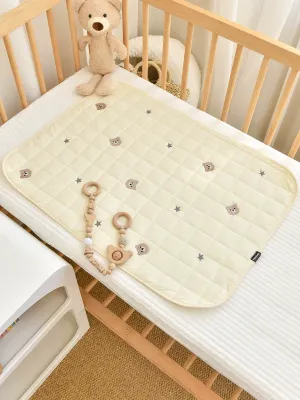
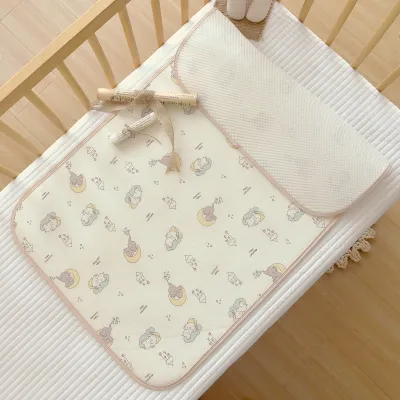
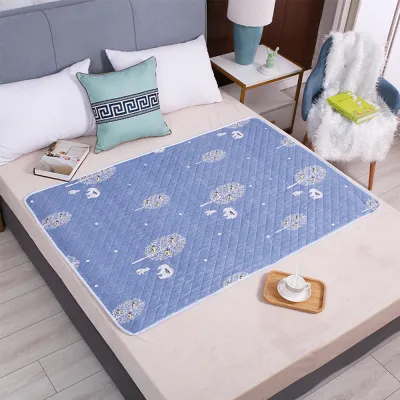
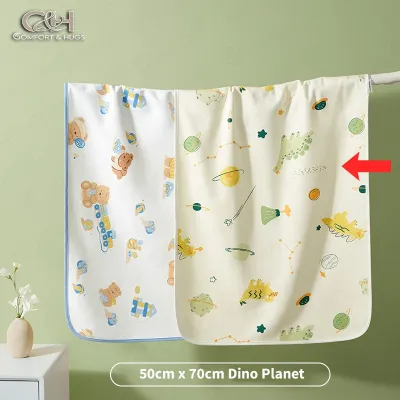
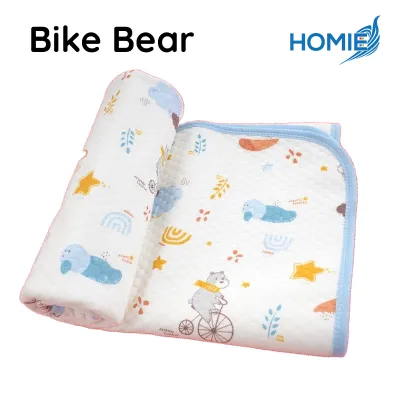
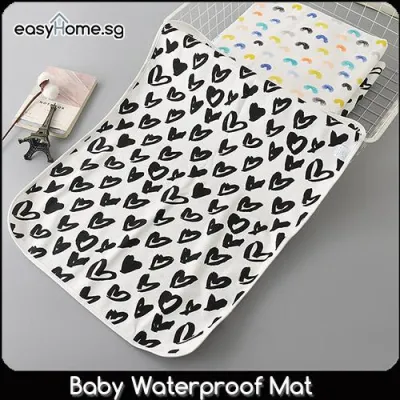
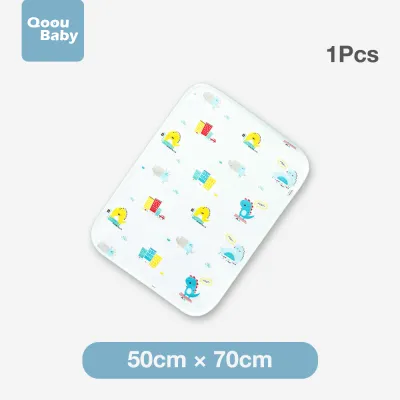
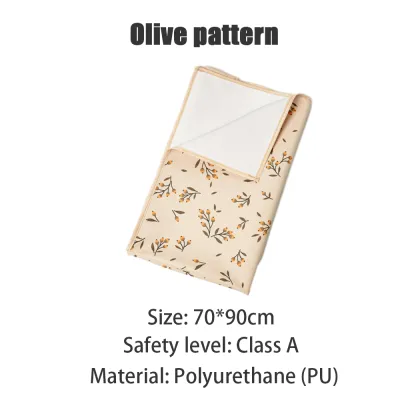
Prices are valid at publication and may change. Please refer to the product page for the latest price.
In contrast, PVC and PEVA are completely non-porous synthetic plastics. While they offer an absolute barrier against liquids and are exceptionally easy to wipe dry, they lack breathability. If your baby lies on a non-breathable surface for extended periods, sweat can accumulate quickly, potentially leading to skin discomfort. When evaluating these materials, check the product packaging or the manufacturer’s official specifications to verify whether the waterproof layer is free from harmful plasticizers and phthalates.
Beyond the flat surface of the mat, edge construction plays a critical role in containing liquid spread. Active babies tend to wiggle during diaper changes, which can cause urine to run off the sides of a poorly designed mat. Look for mats with bound edges, reinforced piping, or slightly raised borders. These structural features help channel liquids inward, giving you precious seconds to clean up before a spill reaches your bedsheets or changing table cover.
Finally, verify any manufacturer claims regarding waterproof ratings or hydrostatic head tests. Some brands publish specific water-resistance ratings on their official product pages or packaging. If a brand claims high-performance waterproofing, look for evidence of standardized testing, such as a hydrostatic pressure rating, which measures the fabric’s ability to resist water penetration under pressure. If no such rating is provided, treat the waterproofing as suitable for standard diaper changes rather than prolonged liquid containment.
Assessing Cleaning Convenience and Fabric Maintenance
The top layer of a baby urine mat is what directly contacts your baby’s skin, making its material composition vital for both comfort and cleaning convenience. Common top-layer materials include organic cotton, bamboo blends, and synthetic microfibers. Cotton is highly favored for its natural softness and breathability, making it gentle on sensitive skin. However, cotton fibers absorb liquids deeply, meaning the mat must be laundered after every wet incident to prevent staining and odor buildup.

Bamboo blends offer similar softness and are often marketed for their natural hypoallergenic properties. While bamboo is highly absorbent, it tends to retain moisture longer than synthetic fabrics. Microfiber top layers, on the other hand, absorb liquids rapidly and dry much faster than natural fibers, but they are more prone to holding onto stubborn odors if not washed thoroughly with an appropriate baby-safe detergent.
Before purchasing any mat, carefully read the care label instructions to understand the long-term maintenance requirements. Many fabric-based mats are machine-washable, but they often come with strict temperature limits—typically recommending water temperatures below 30°C or 40°C. Washing a laminated TPU mat in hot water or using a high-heat tumble dryer cycle can cause the waterproof membrane to crack, peel, or delaminate from the fabric, rendering the mat useless. If you do not have the time to line-dry mats, look specifically for brands that explicitly state their products can tolerate low-heat tumble drying.
In Singapore’s humid environment, drying time is a crucial factor in maintaining hygiene. Thick, multi-layered fabric mats can trap moisture within their inner layers, creating an ideal breeding ground for mold, mildew, and bacteria if they remain damp for too long. To prevent this, perform regular visual and olfactory checks on your mats. If you notice any dark spots or a persistent musty smell, it is time to replace the mat. Always follow the manufacturer’s drying instructions, which may recommend flat drying in a well-ventilated, shaded area to protect the waterproof backing from direct, intense sunlight.
Building a Specification Checklist for Brand Comparison
When comparing different baby urine mat brands online or in physical stores, having a standardized set of criteria helps you cut through marketing jargon. Use the following checklist to evaluate and compare the specifications of each product:
- Dimensions: Measure your changing table, crib, or travel diaper bag beforehand. A mat that is too large will bunch up, while one that is too small won't provide adequate coverage during active changes.
- Layer Count: Determine if the mat is a simple two-layer design (top fabric and waterproof backing) or a three-layer design (top fabric, absorbent middle core, and waterproof backing). Three-layer mats offer better absorption but take longer to dry.
- Backing Material: Verify if the backing is TPU, PEVA, or PVC, and check for non-slip textures to ensure the mat stays securely in place on smooth surfaces.
- Washing Restrictions: Check the care label for machine-washability, maximum washing temperatures, and tumble-drying compatibility.
- Safety Certifications: Look for independent textile certifications, such as the Oeko-Tex Standard 100 label. This certification indicates that the fabric has been tested for harmful substances. Rather than assuming a brand's entire catalog is certified, verify that the specific mat model you are buying carries a valid, current certification label.
You must also weigh the trade-offs between mat thickness and portability. Thick, padded mats provide excellent cushioning, making them ideal for use on hard floors or wooden changing tables. However, this padding makes them bulky and difficult to roll up tightly. If you need a mat primarily for your diaper bag to use while running errands or traveling, a thin, lightweight, and highly foldable mat is much more practical, even if it offers less cushioning.
Decision Framework: Matching the Mat to Your Daily Routine
To choose the right baby urine mat, match the product’s design strengths to your specific caregiving habits and household setup. If your primary goal is to find a mat for routine home use on beds, sofas, or changing tables, a multi-layer cotton or bamboo mat with a breathable TPU backing is highly suitable. This setup prioritizes your baby’s skin comfort during longer changing sessions and allows you to toss the mat directly into your regular laundry cycle.
If you travel frequently, live in a smaller apartment with limited drying space, or simply want a hassle-free backup mat, a smooth-surface PEVA or wipeable synthetic mat is the more practical choice. These mats do not absorb liquids, allowing you to sanitize and wipe them dry instantly with a baby wipe or damp cloth. This rapid cleanup capability eliminates the need for frequent machine washing and ensures the mat is ready for immediate reuse, making it an excellent companion for diaper bags.
Finally, if your baby has known skin sensitivities, eczema, or diagnosed material allergies, prioritize skin safety over convenience. Synthetic top layers or chemically treated fabrics can sometimes trigger irritation on compromised skin barriers. In these cases, consult your pediatrician or dermatologist to identify safe material options. Always wash any new fabric mat with a gentle, fragrance-free baby detergent before its first use to remove any manufacturing residues.
Frequently Asked Questions (FAQ)
Can I use a regular waterproof mattress protector instead of a dedicated baby urine mat?
While a regular waterproof mattress protector shares similar liquid-barrier properties, it is generally not designed to replace a dedicated baby urine mat. Mattress protectors are typically sized for entire beds, making them bulky, difficult to fold, and impractical for quick diaper changes or travel. Additionally, they often lack the non-slip backing and reinforced edge containment found in purpose-built changing mats, which can lead to slipping on smooth changing tables. For safety and convenience, it is best to use products designed specifically for diaper changes and to follow all manufacturer safety guidelines.
How often should I wash the baby urine mat to prevent odors and maintain waterproofing?
The frequency of washing depends entirely on the mat’s material and how it is used. If you are using a fabric-faced mat and it becomes directly soiled with urine or stool, you should wash it immediately to prevent stains, bacteria growth, and persistent odors. For routine, unsoiled use, washing the mat every few days is sufficient to remove sweat and skin oils. For wipeable synthetic mats, spot-cleaning and sanitizing after every diaper change is standard, with a deeper wash performed weekly. Always adhere to the specific brand’s care label, avoiding harsh detergents, bleach, or fabric softeners, as these chemicals can rapidly degrade the waterproof membrane.
Community discussion
Share your experience or ask a question. Comments are reviewed before publication.